
Your cart is currently empty!
Gen Z Scored Lower Than Millennials on Every Cognitive Measure, and a Neuroscientist Just Told Congress Why

For more than two centuries, a quiet pattern held steady across the developed world. Each generation of children grew up to be a little sharper, a little more capable, a little better equipped for the cognitive demands of modern life than the generation before them. It was one of the most reliable trends in recorded human development, a steady upward climb measured through standardized tests, academic benchmarks, and IQ assessments dating back to the late 1800s. Parents could reasonably expect their children to outperform them, and their grandchildren to go even further.
Contents
show
A neuroscientist recently stood before a US Senate committee and delivered a finding that should stop every parent, teacher, and policymaker mid-scroll. According to Dr. Jared Cooney Horvath, a former educator who now studies how the brain processes learning, one generation has broken that 200-year pattern, and the cause is something most of us carry in our pockets every single day.
A 200-Year Streak, Broken
Horvath, who has taught at Harvard and the University of Melbourne, appeared before the Senate Committee on Commerce, Science, and Transportation on January 15 to present data that paints an uncomfortable picture. Gen Z, the cohort born between 1997 and 2010, has become the first generation in modern history to score lower on standardized academic tests than the generation that preceded them.
Every cognitive measure tells the same story. Attention spans have shrunk. Memory performance has weakened. Reading comprehension, mathematical ability, executive function, and general IQ have all declined compared to those of Millennials at the same age. What makes these numbers even more alarming is that Gen Z has spent more cumulative time in formal education than any generation before them. More years in school produced worse results, a paradox that Horvath and his fellow researchers traced back to a single variable.
Screens Replaced Study, and Brains Paid for It

Horvath’s argument rests on a simple biological reality. Over millions of years, human beings developed brains wired for a specific kind of learning. We absorb knowledge best when we sit across from another person, wrestle with a difficult text, and work through a problem without shortcuts. Our neural architecture was built for depth, sustained effort, and real human connection. Gen Z grew up in a world that offered the opposite.
“More than half of the time a teenager is awake, half of it is spent staring at a screen,” Horvath told the Senate committee. “Humans are biologically programmed to learn from other humans and from deep study, not flipping through screens for bullet point summaries.”
Screen exposure does more than eat up hours that could be spent reading or problem-solving. According to Horvath, the very act of staring at a screen disrupts the biological processes through which our brains store information and build deep understanding. It weakens our ability to focus for extended periods, and it trains the mind to expect rapid-fire stimulation rather than sustained intellectual engagement. None of these effects requires a teenager to be watching anything harmful or wasting time on frivolous content. Even educational screen use, Horvath argued, works against the grain of how human cognition actually functions.
Our species did not spend millennia developing complex social learning systems only to replace them with YouTube summaries and AI-generated study guides. Yet that is precisely what has happened on a massive scale, and the data reflects it.
EdTech in Classrooms Made It Worse
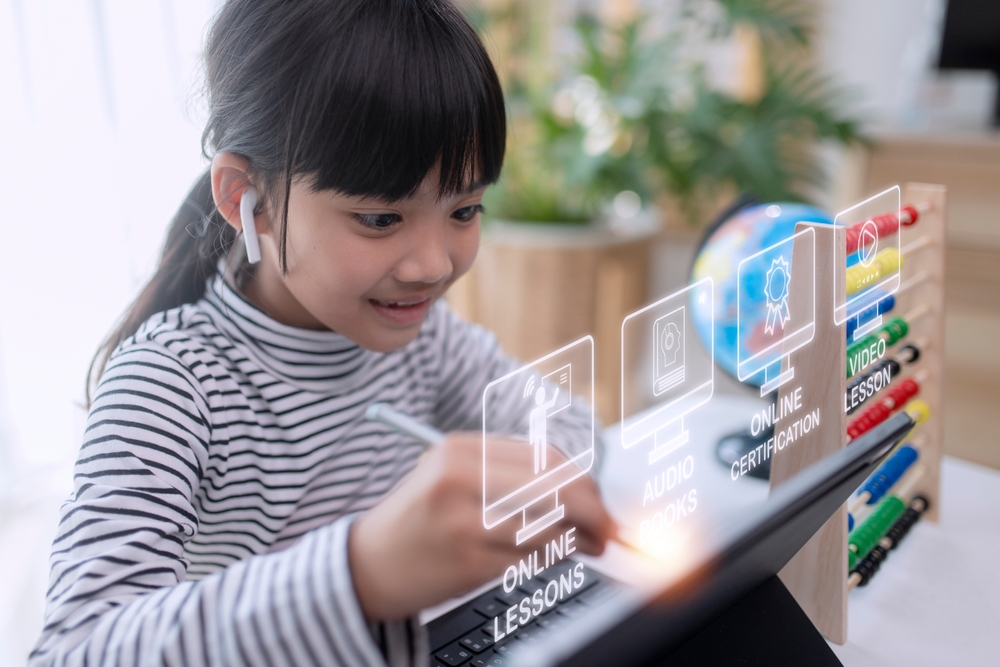
If screen time at home were the only factor, the problem might be easier to contain. But Horvath pointed to something more systemic. Schools themselves have become part of the issue.
Over the past fifteen years, educational technology, commonly known as EdTech, has swept through classrooms around the world. Governments and school districts invested billions in tablets, laptops, and digital learning platforms, betting that putting devices in students’ hands would produce better outcomes. Horvath’s research, which covered 80 countries and examined six decades of data, found the opposite.
“If you look at the data, once countries adopt digital technology widely in schools, performance goes down significantly,” Horvath told lawmakers.
His findings were not limited to a single country or educational system. Across every region he studied, the same pattern repeated itself. Once digital devices became a standard part of the classroom experience, academic performance either plateaued or declined. In the United States, data from the National Assessment of Educational Progress, known as NAEP, reinforced the pattern. When states implemented one-to-one device programs, giving every student a personal tablet or laptop, scores flattened or dropped soon after.
Even moderate use proved problematic. Students who spent just five hours a day on computers for schoolwork scored lower than peers who rarely or never used technology in class. Horvath stressed that the issue was not poor implementation or a lack of teacher training. Better apps and slicker interfaces would not solve the problem because the technology itself conflicts with how our brains naturally process, retain, and build upon information.
Around 2010, Horvath noted, cognitive abilities among young people began to plateau before entering a clear decline. Schools had not undergone any other major structural change that year. Human biology evolves far too slowly to account for such a sudden shift. What did change, rapidly and irreversibly, was the penetration of digital devices into every corner of the educational experience.
Skimming Instead of Thinking
Beyond the raw data, Horvath described a behavioral shift that anyone who has watched a teenager do homework will recognize. Students on computers do not read. Students on computers skim.
“What do kids do on computers? They skim. So rather than determining what do we want our children to do and gearing education towards that, we are redefining education to better suit the tool. That’s not progress, that is surrender,” Horvath warned.
Rather than expecting students to wrestle with a full novel, many classrooms now assign digital summaries. Rather than requiring a student to sit with a difficult math problem until something clicks, apps offer step-by-step walkthroughs that remove the cognitive effort entirely. Horvath argued that this shift represents a fundamental abandonment of educational purpose. Instead of asking what students need to learn and designing instruction around that goal, schools have quietly reshaped their entire approach to fit the limitations and habits encouraged by screens.
Outside of school, the reinforcement continues. Gen Z spends its leisure hours scrolling through TikTok captions, firing off short messages, and consuming information in fragments designed for maximum speed and minimum effort. Many schools, observing how students prefer to receive information, have adapted their teaching methods to mirror those platforms. Short videos, bullet-point presentations, and bite-sized content have replaced sustained reading and complex assignments. In Horvath’s view, this creates a self-reinforcing cycle in which each year’s students arrive less prepared for intellectual depth, and each year’s curriculum demands less of it.
Overconfident and Unaware

Perhaps the most striking element of Horvath’s testimony was not the decline itself but the attitude surrounding it. According to his research, many Gen Zers are unaware that they are falling behind. Worse, a significant number believe they are actually smarter than previous generations.
Horvath described a troubling inverse relationship between perceived and actual intelligence among young people. Overconfidence and cognitive ability have moved in opposite directions. Students who scored lower on objective measures of intelligence often rated themselves higher on self-assessments of their own intellectual ability. Comfort with technology, it seems, has created a false sense of mastery. Being able to find an answer in seconds on a smartphone feels like knowledge, even when the information disappears from memory moments later.
Having grown up with instant access to every fact, opinion, and summary ever published online, many young people have confused the ability to retrieve information with the ability to understand it. Horvath made clear that these are fundamentally different cognitive skills, and that only the latter represents genuine learning.
What Experts Want Done About It
Horvath was not the only expert to speak at the January hearing, and the collective recommendations from the panel carried a sense of urgency that went beyond typical policy debates. Experts at the hearing described the cognitive decline among Gen Z as a “societal emergency,” a phrase that captures the scale and speed of the problem.
Among the specific proposals discussed were delaying the age at which children receive smartphones, reintroducing basic flip phones for young children who need a communication device, and implementing nationwide limits on technology use during school hours. Several experts pointed to Scandinavian countries as a model worth examining. Nations like Sweden and Finland, early adopters of EdTech, have already begun pulling digital devices back out of classrooms after observing declines in student performance.
Horvath framed his position carefully. He told the committee he is not opposed to technology and does not want a return to some idealized pre-digital past. His stance, as he put it, is “pro-rigor.” He wants schools to recognize that cognitive development requires effort, discomfort, and sustained engagement with difficult material. Devices that remove those elements, no matter how well-designed, undermine the very process they claim to support.
Looking forward, Horvath expressed cautious hope that Generation Alpha, the children born after 2010 who are now entering schools, might benefit from the lessons learned through Gen Z’s decline. But that outcome depends entirely on whether lawmakers, school administrators, and parents are willing to make difficult decisions about how children spend their time, both inside and outside the classroom.
For two centuries, every generation climbed a little higher than the one before. Gen Z was the first to slip. Whether the next generation reverses that slide or continues it may well depend on choices being made right now, in Senate hearing rooms, school board meetings, and living rooms across the country.