
Your cart is currently empty!
Humans Emit a Faint Light That Vanishes After Death, Study Finds

At any given moment, the human body is quietly emitting a faint light, far too subtle to be seen but constant enough to be measured. This glow is not symbolic or imagined; it is rooted in the chemistry of life itself. Only recently have advances in imaging allowed scientists to observe it with precision, raising new questions about what this hidden signal reveals and what it means when it disappears.
Contents
show
A Hidden Light Within Living Organisms

Across forests, oceans, and even within the human body, life quietly produces a form of light invisible to the naked eye. Scientists refer to this phenomenon as ultraweak photon emission (UPE), a natural byproduct of cellular activity that occurs in all living organisms, from plants and animals to bacteria.
This faint glow is not the same as bioluminescence seen in fireflies or deep-sea creatures. Instead, it arises from ordinary metabolic processes. When cells generate energy, they also produce reactive oxygen species. These molecules can interact with fats, proteins, and other cellular components, releasing tiny amounts of light in the process.
Research has shown that this emission is constant but extremely weak, typically thousands of times below what human eyes can detect. Advanced imaging technologies, however, have allowed scientists to observe and measure it. In controlled laboratory settings, researchers have captured subtle variations in this light, linking it to biological rhythms and cellular stress.
The existence of this glow offers a glimpse into the inner workings of life at the molecular level. Rather than being a curiosity, it may serve as a real-time indicator of physiological activity, revealing how organisms respond to their environment, manage energy, and maintain internal balance.
What Happens to the Glow at the Moment of Death

While ultraweak photon emission is present throughout life, recent research suggests that it does not persist indefinitely. In carefully controlled experiments involving mice and plant leaves, scientists observed a striking pattern: this faint light rapidly diminished after death.
Using highly sensitive cameras capable of detecting single photons, researchers tracked emission levels before and after death. In living organisms, the glow followed expected biological patterns, fluctuating with metabolic activity. However, once life processes ceased, the light dropped sharply, in some cases nearly disappearing altogether.
This change is closely tied to the halt of cellular metabolism. The production of reactive oxygen species, which contributes to photon emission, depends on active biochemical reactions. When circulation stops and oxygen is no longer delivered to cells, these processes break down. As a result, the chain of reactions that produce light is interrupted.
The findings provide a measurable distinction between living and non-living tissue at a microscopic level. Rather than a symbolic or philosophical marker, the fading of this light reflects a physical transition: the end of organized biological activity.
Although the experiments were conducted on non-human subjects, researchers believe the same underlying mechanisms apply broadly across living systems. The disappearance of this glow is not dramatic or visible without specialized equipment, but it offers a subtle, scientific perspective on what changes in the body when life ends.
The Biochemical Mechanisms Behind Cellular Light Emission
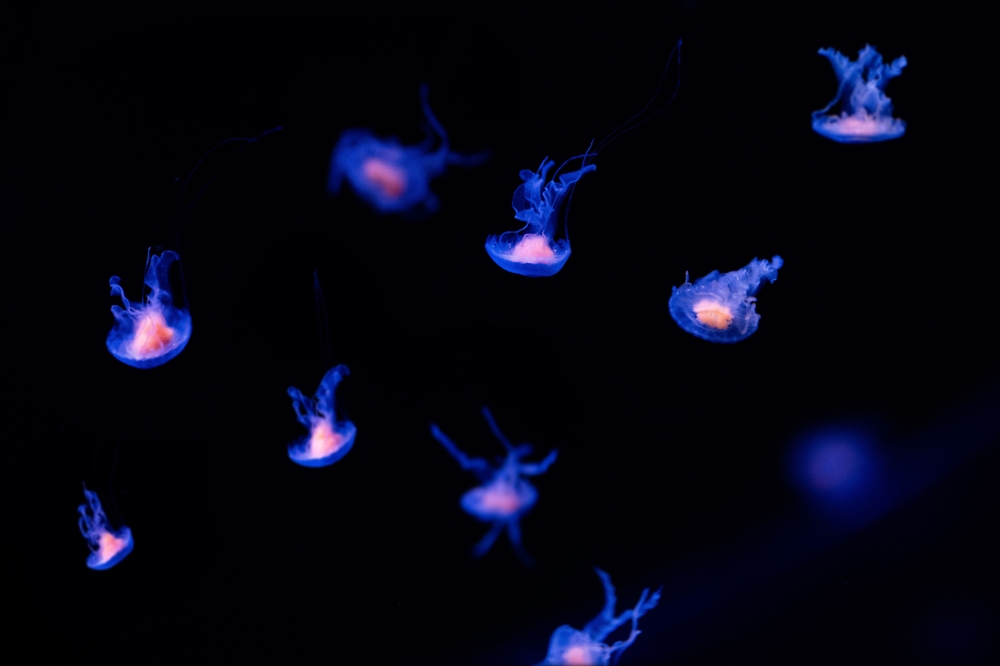
The faint light observed in living organisms is rooted in oxidative metabolism, the process cells use to generate energy. Within this system, small amounts of reactive oxygen species are produced as natural byproducts of cellular respiration.
These reactive molecules can interact with lipids, proteins, and other cellular components, creating short-lived excited states. As these molecules return to their normal state, they release excess energy in the form of photons. This chain of reactions gives rise to ultraweak photon emission.
Importantly, the intensity of this light is not fixed. Studies have shown that photon emission increases under conditions of oxidative stress, when cells experience higher levels of chemical reactivity. This pattern has been observed in plant tissues exposed to environmental strain and in animal cells under metabolic pressure.
Because of this relationship, researchers are exploring UPE as a potential indicator of cellular health. Changes in emission levels may reflect shifts in stress, inflammation, or energy balance, offering a non-invasive way to monitor biological processes.
Rather than being incidental, this glow reflects the constant exchange of energy within living systems. It provides a measurable signal of the chemical activity that sustains life at the most fundamental level.
Emerging Medical and Scientific Uses of Biophoton Research
Beyond its biological curiosity, ultraweak photon emission is drawing attention for its potential applications in science and medicine. Because the light reflects ongoing cellular activity, researchers are exploring whether it can serve as a non-invasive way to monitor health.
Early studies suggest that changes in photon emission may correspond with shifts in physiological states. For example, increased emission has been linked to higher levels of oxidative stress, a factor associated with aging, inflammation, and various chronic conditions. In plant science, similar measurements have already been used to assess stress responses to environmental changes such as drought or temperature fluctuations.
In medical research, the ability to detect subtle changes in cellular activity without invasive procedures is particularly appealing. Scientists are investigating whether UPE could one day complement existing diagnostic tools by providing real-time insights into tissue health, metabolic function, or disease progression.
At the same time, researchers caution that this field is still developing. Current observations are largely limited to controlled environments, and translating these findings into clinical or everyday use will require further validation. Factors such as background noise, measurement sensitivity, and biological variability present ongoing challenges.
Even with these limitations, the study of this faint glow is opening new avenues of inquiry. It encourages a shift in perspective, suggesting that the body’s most subtle signals may hold valuable information about how life functions and how it changes under stress or decline.
A Subtle Reminder of Life’s Fragility and Complexity

The discovery that living organisms emit a faint light that fades at death offers more than a scientific insight. It reflects the continuous, interconnected processes that sustain life at the cellular level. What appears invisible is, in reality, a constant signal of activity, balance, and adaptation within the body.
For researchers, this phenomenon opens new paths for understanding health, stress, and disease through non-invasive observation. For a broader audience, it provides a grounded perspective: life is not defined by a single moment, but by an ongoing network of processes that can now be measured in increasingly precise ways.
As technology advances, the ability to interpret these subtle signals may reshape how biological change is understood. This nearly invisible glow serves as a quiet reminder that life is always in motion, even when it cannot be seen, and that its smallest signals may hold the deepest insights.
Source:
- Salari, V., Seshan, V., Frankle, L., England, D., Simon, C., & Oblak, D. (2025). Imaging Ultraweak Photon Emission from Living and Dead Mice and from Plants under Stress. The Journal of Physical Chemistry Letters, 16(17), 4354–4362. https://doi.org/10.1021/acs.jpclett.4c03546