
Your cart is currently empty!
Eight Babies Died in One State. Their Parents Had Refused a Simple Shot

On a recent day at an Idaho hospital, half the newborns on Dr. Tom Patterson’s ward did not receive their vitamin K shots. On another day, more than a quarter went without. In every case, parents refused to allow it.
Contents
show
Patterson has practiced pediatrics for close to three decades. He has administered vitamin K injections to more babies than he can count, a routine measure given at birth since 1961 to prevent dangerous, sometimes fatal bleeding. Yet in 2026, he watches growing numbers of unprotected newborns leave his hospital, heading home without a safeguard that takes seconds to deliver and has prevented countless deaths over six decades. Something is shifting inside American delivery rooms. And vitamin K is only part of the story.
Refusals Are Climbing and Crossing Into Other Interventions
A recent study published in the Journal of the American Medical Association, analyzing more than 5 million births across the country, found that vitamin K shot refusals nearly doubled between 2017 and 2024, rising from 2.9 percent to 5.2 percent. Behind that number sits a pattern that worries doctors even more. Research shows that parents who decline vitamin K are far more likely also to refuse the hepatitis B birth vaccine and erythromycin eye ointment, two other standard measures given to newborns in their first hours of life.
Hepatitis B vaccination rates at birth have dropped in recent years. Doctors in multiple states confirm that refusals of eye medication are also increasing. In Highland Park, Illinois, pediatrician Dr. Susan Sirota encountered a family that turned down a simple heel stick to monitor blood sugar for a baby at high risk of life-threatening hypoglycemia.
Care refusals are not a new phenomenon. Dr. Kelly Wade, a Philadelphia neonatologist, says she has seen them for 20 years. But until recent years, they were rare. What was once an occasional conversation has become a regular part of the job for pediatricians and neonatologists nationwide.
What These Measures Actually Prevent
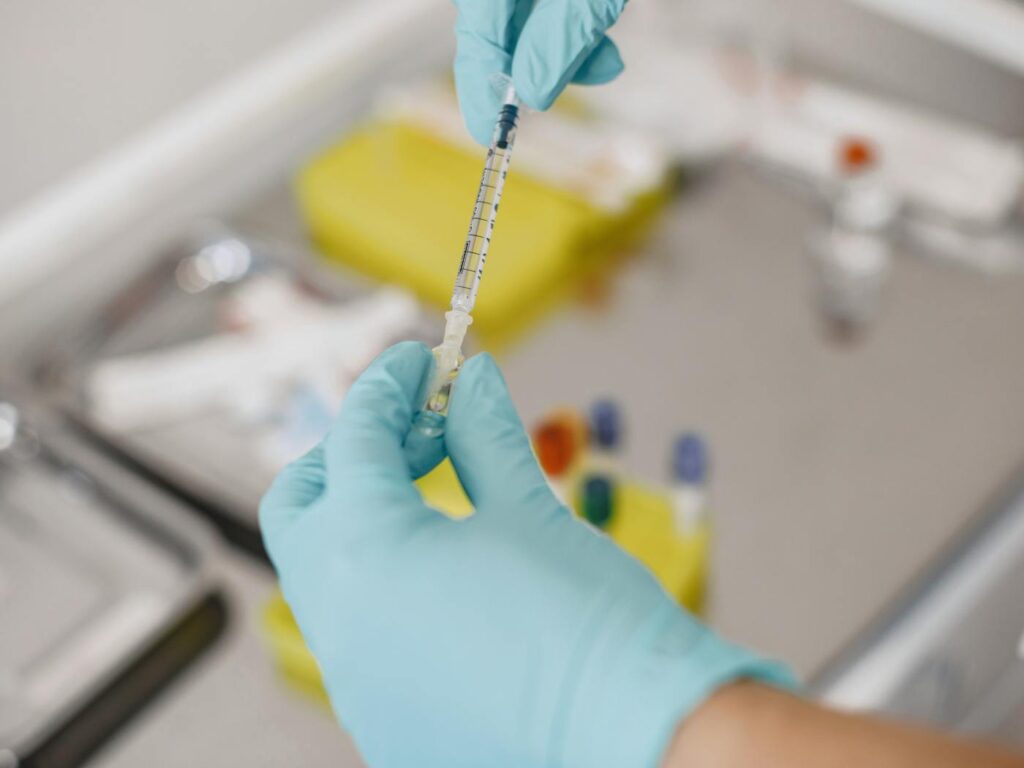
Babies arrive in the world with low levels of vitamin K, a substance essential for blood clotting. Their intestines cannot produce enough of it until they begin eating solid foods around 6 months of age. Before injections became routine, up to 1 in 60 newborns suffered vitamin K deficiency bleeding, a condition that can affect the brain and gastrointestinal tract. Research shows that babies who skip the shot are 81 times more likely to develop severe bleeding than those who receive it.
Dr. David Hill, a Seattle pediatrician and researcher, has treated the consequences firsthand. He cared for a toddler whose parents had declined the injection. As a newborn, the child suffered what amounted to a stroke, leaving the toddler with severe developmental delays and ongoing seizures.
At a February meeting of the Idaho chapter of the American Academy of Pediatrics, physicians reported eight deaths from vitamin K deficiency bleeding in the state over the preceding 13 months. Patterson, who serves as chapter president, shared those numbers with a room full of colleagues who recognized the trend in their own practices.
Erythromycin eye ointment, another standard newborn treatment, protects against gonorrhea that can be contracted during birth and potentially cause blindness if left untreated. Hepatitis B vaccination guards against a virus capable of causing liver failure, liver cancer, and cirrhosis. Even when a pregnant woman tests negative for both infections, no screening test is perfect, and she may become infected after testing, putting her child at risk during delivery.
Each of these interventions exists because the disease it prevents can be devastating. And each is being refused at rates that alarm the physicians who see the consequences up close.
Why Parents Are Saying No
Motivations vary. Some parents fear side effects. Others do not want their newborns to experience pain. Many express a preference for what they describe as a natural birth philosophy, one that minimizes medical interventions in the first hours of life.
Dr. Steven Abelowitz, founder of Ocean Pediatrics in Orange County, California, points to a web of influences that goes well beyond personal philosophy. Friends, celebrities, non-professionals, and political agendas all feed into parental decision-making. Abelowitz practices in a community with a roughly even split between Republicans and Democrats, and he sees hesitancy on both sides.
“There’s more mistrust from the conservative side, but there’s plenty on the more liberal side as well,” he said. “It’s across-the-board mistrust.”
Social media amplifies the problem, spreading myths about vitamin K and promoting unregulated oral drops that doctors warn babies cannot absorb well. Hill identifies a common thread running through much of the resistance, a belief that natural is always better than artificial. He counters that assumption with a stark fact.
“Nature will allow 1 in 5 human infants to die in the first year of life,” Hill said, “which is why generations of scientists and doctors have worked to bring that number way, way down.”
Dana Morrison, now a Minnesota doula, made the decision to decline the vitamin K shot for her first child 12 years ago. She opted for oral drops instead, wanting to protect the bonding window after birth and reduce the number of needle pricks her son received. When her daughter arrived a couple of years later with a bruised leg after a difficult delivery, Morrison chose the injection. Looking back, she says she would have gotten it for her son, too.
A Federal Committee Added Fuel
Political currents have made an already difficult situation worse. A federal advisory committee, reconstituted with members appointed by Health Secretary Robert F. Kennedy Jr., voted to end the longstanding recommendation that all babies receive the hepatitis B vaccine at birth. Kennedy, a prominent anti-vaccine activist before joining the Trump administration, has become one of the most visible figures questioning established medical guidance for children. On Monday, a federal judge temporarily blocked all decisions made by the reconfigured committee.
Social media posts questioning vitamin K shots and eye ointment have multiplied against this backdrop. Wade, in Philadelphia, says families report hearing conflicting information from so many sources that making decisions feels overwhelming. When a parent’s social media feed contradicts what a doctor says in the delivery room, the result is confusion at the precise moment when a newborn needs protection most.
Changing Minds One Conversation at a Time

Doctors who deal with refusals say the path forward starts with listening, not lecturing. Hill is direct about his approach. Walking into a room with judgment, he says, guarantees a useless conversation. Every parent he treats wants the best for their children, and he begins from that assumption. Dr. Heather Felton, a pediatrician at Norton Children’s in Louisville, Kentucky, takes a similar approach. She asks parents about their specific concerns, explains the reasoning behind the shot and the risks of declining it, and gives families time to process. Most parents she counsels agree to proceed.
Patterson, in Idaho, sometimes finds himself clearing up basic misconceptions. Several parents consent to the vitamin K injection once they learn it is not a vaccine. Others need more time. Because hospital pediatricians often meet parents for the first time in the delivery room, building trust in a matter of minutes presents a real challenge. But Patterson welcomes that challenge if it protects a child.
“I understand this is a hot topic, and I don’t want to disrespect anybody,” Patterson said. “But at the same time, I’m desperately saddened that we’re losing babies for no reason.”
Hard-Won Progress at Risk
Zoom out from a single Idaho delivery room, and the stakes grow larger. Over the past 50 years, immunization has helped cut global infant deaths by 40 percent. Vaccines have saved an estimated 154 million lives since 1974, with 95 percent of those being children under five. Smallpox, a disease that killed roughly 300 million people in the 20th century, was eradicated in 1980 through vaccination campaigns. Polio cases have dropped 99 percent since 1988. Every dollar invested in childhood immunization returns an estimated $54 in health and economic benefits.
Yet those gains are not permanent. With overseas health funding projected to decline and vaccine confidence eroding across multiple countries, public health officials warn that millions more children could miss out on protection in the years ahead. Measles, often the first disease to resurge when coverage drops, hit its highest case count in 25 years across Europe and Central Asia in 2024.
What happens inside American hospitals is part of that larger story. A vitamin K shot was declined in Idaho, an eye ointment was refused in Illinois, and a hepatitis B vaccine was turned down in California. Each decision feels small to the parent making it. But multiplied across millions of births, these refusals chip away at a system of preventive care that generations of scientists built to keep the most vulnerable human beings alive through their most dangerous days.
Patterson still picks up the conversation with every family. He still explains, listens, and asks parents to reconsider. Some say yes. Some do not. And every baby who leaves his ward without protection stays on his mind long after the discharge papers are signed.
American Academy of Pediatrics, anti-vaccine movement, child immunization, erythromycin eye ointment, hepatitis B vaccine, infant health, JAMA study, medical mistrust, misinformation, Neonatal Care, newborn care, parental rights, Pediatrics, preventive medicine, public health, Robert F. Kennedy Jr, social media health, vaccine hesitancy, vitamin K deficiency bleeding, vitamin K shot