
Your cart is currently empty!
Gen Z Workers Are Turning NYC Into a Map of Nap Spots and Cry Zones During Office Hours
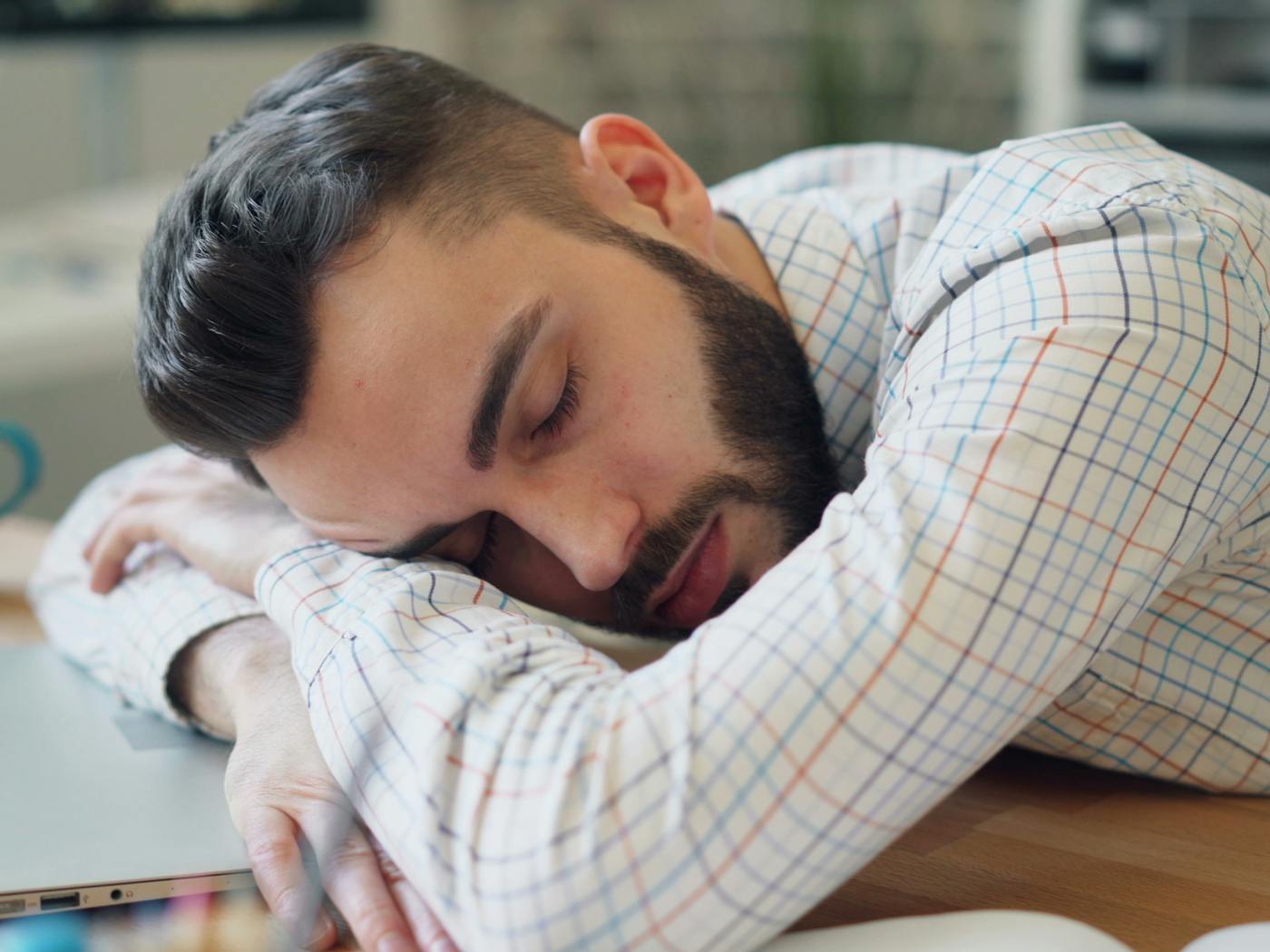
Ben Sanderson spent $15 on a movie ticket. He never watched the film. Instead, he walked into a Midtown AMC, sank into a recliner seat, pulled a beanie over his eyes, plugged in his earbuds, and fell asleep. When he woke up, he felt restored. He went back to work. And when he posted about it on TikTok, over a million people watched.
Contents
show
Sanderson’s nap was not a one-off stunt. It was something far more telling about the way a generation of young professionals is surviving office life in New York City. Across Manhattan and the outer boroughs, Gen Z workers are quietly building an underground network of unconventional rest stops, turning their lunch hours into recovery sessions in places most people would never think to use. Some of those places are peaceful. Others are bizarre. And a few involve tears, cannolis, and a very large whale.
“I Had One of the Best Naps of My Life”
Sanderson described his AMC nap as a revelation. He called movie theaters the perfect place to nap in NYC, especially for commuters who travel from Brooklyn, Staten Island or New Jersey and can’t just dash home for a midday rest. A dark room, a reclining seat and ambient sound made it better than any break room he’d ever sat in.
His logic is hard to argue with. For workers stuck in Midtown with no apartment nearby, a $15 movie ticket buys 90 minutes of near-total darkness, climate control, and zero interruptions. No one checks on you. No one asks where you went. You just sit down, close your eyes, and disappear for a while. And Sanderson is far from alone.
Nap Pods, Capsules, and a New York Premium
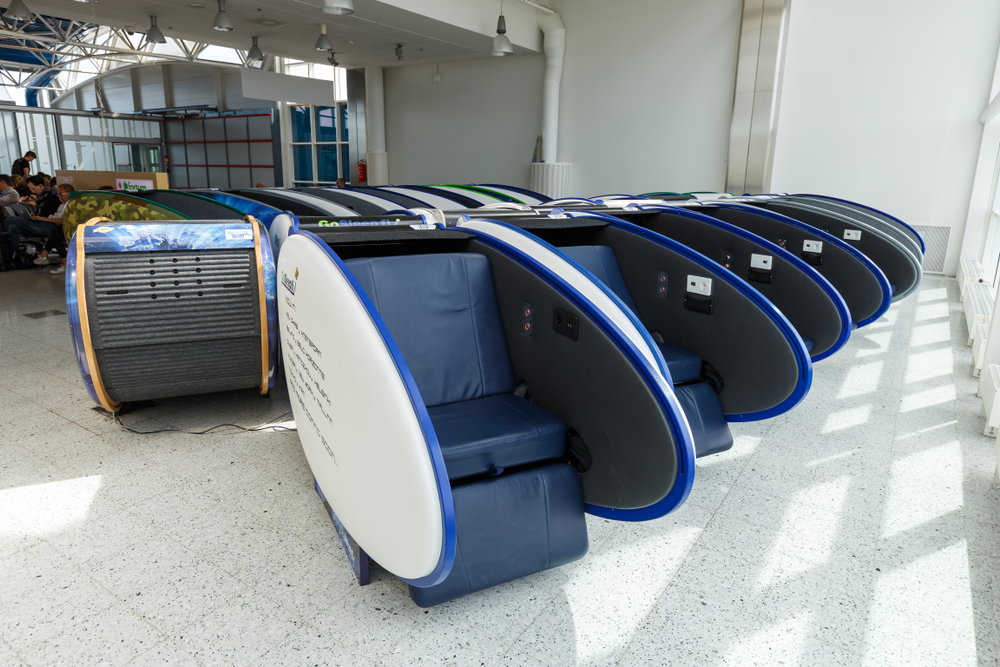
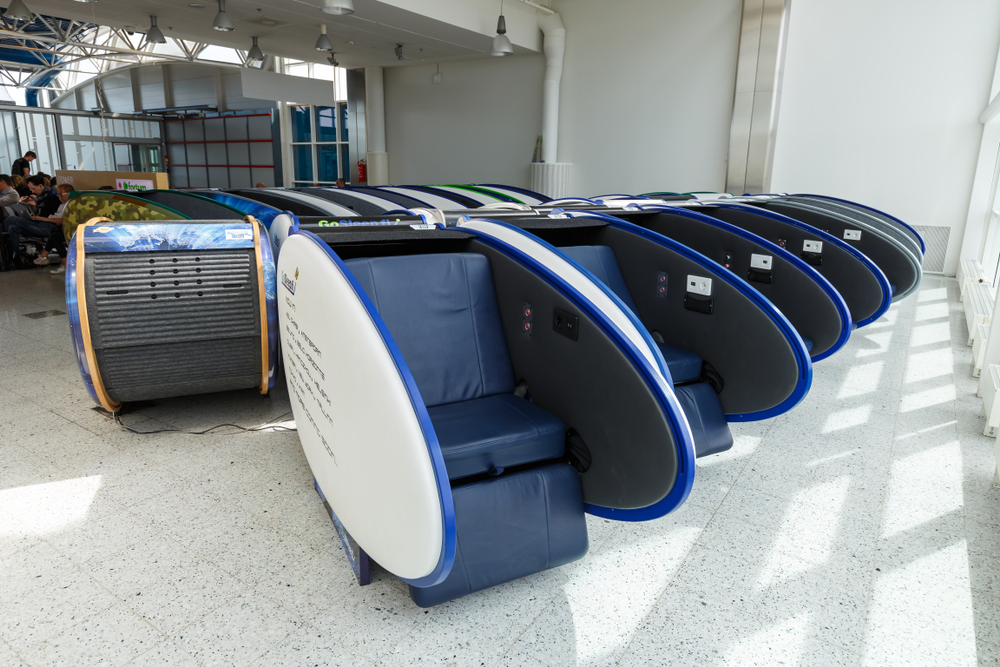
Other Gen Zers have turned to Nap York, a chain of private, rentable capsules scattered across Manhattan. Each soundproofed pod comes fitted with a mattress, a fan, and adjustable lighting, designed for power naps, overnight stays, or a brief escape from sensory overload.
Flagship locations sit near Central Park and the Empire State Building. Rates run from about $83 to more than $280 a night, or roughly $27 an hour for a quick recharge, plus taxes, fees, and a refundable $50 deposit. Even a midday meltdown in New York, it turns out, comes at a premium.
Still, the demand is there. For young professionals who feel crushed by long commutes and open-plan offices, a 30-minute nap in a dark capsule can feel like a small act of rebellion and survival rolled into one. But sleep is only half the story.
A Cry Map of Manhattan and Beyond
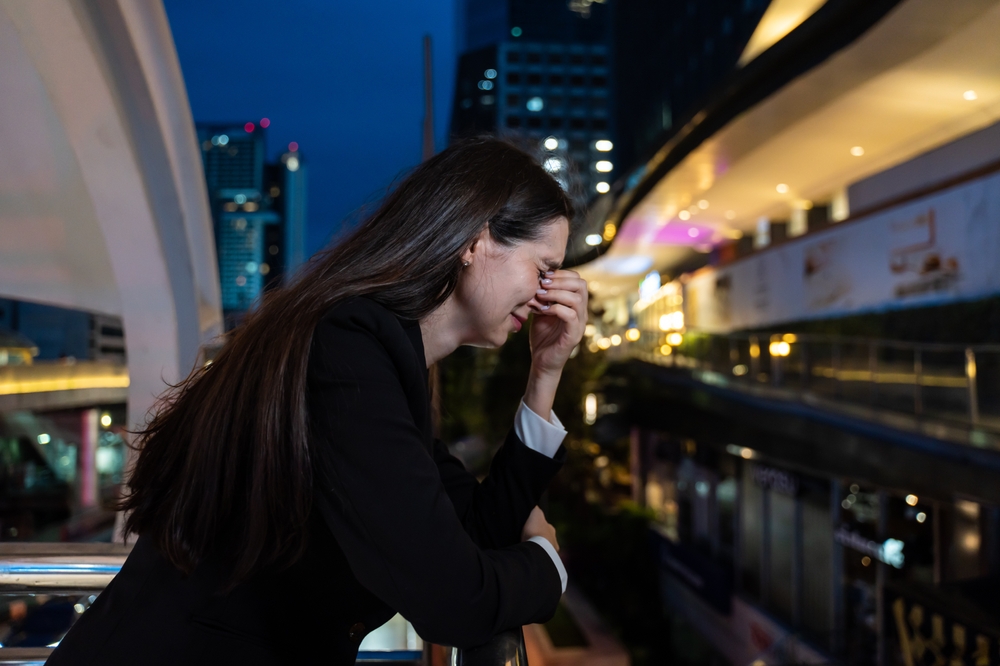
Napping may be the more palatable headline, but Gen Z workers have also begun mapping out what might best be described as emotional release zones across the city. In Zoomer slang, these are spots where you go to crash out, meaning to have a full-on mental breakdown.
One content creator shared her personal list of cry-safe locations, and it read like an alternative travel guide. At the top sat the Zara fitting room in Soho, where secluded stalls offer just enough privacy for a quiet unraveling. She also recommended Citi Biking across the Williamsburg Bridge mid-cry, claiming it made her feel like the main character in a film.
Her list continued with the Bowery J/Z subway station, where it’s “so hot in there no one will know if you’re crying or sweating.” And for a sweeter kind of breakdown, she swore by Veniero’s Pasticceria & Caffe in the East Village, calling it therapeutic to cry over cannolis.
Other New Yorkers added their own entries. Governors Island, facing the Statue of Liberty, earned a spot for what many described as a cinematic sob session. Uptown’s Museum of Natural History made the cut, with the space beneath the blue whale becoming a go-to for those craving a dose of childhood nostalgia. St. Paul’s Chapel churchyard in FiDi offered privacy when the mood strikes, while the Oculus earned a reputation as the ideal location for those who like to feel insignificant.
What might sound absurd to an older worker is, for many in Gen Z, a matter of emotional logistics. When your apartment is an hour away, and your next meeting is in 45 minutes, you work with what you’ve got.
Why Their Nervous Systems Are Calling the Shots
Before dismissing all of it as generational softness, it helps to hear from someone who studies the brain for a living. Dr. Sanam Hafeez, a neuropsychologist based in Forest Hills, told the New York Post that what looks like laziness or fragility is often the nervous system doing exactly what it was built to do. After months or years of working in environments fueled by deadlines, ambiguity and zero recovery time, the body stops asking for rest and starts demanding it. “Skipping out is self-care. For many of these kids, that’s the best tool they know,” she said.
Hafeez pointed out that no previous generation had a culture of built-in recovery time during work hours. Workers in decades past pushed through exhaustion because they saw no alternative. Gen Z, she argued, simply identified the gap and started filling it, even if the methods look strange from the outside.
On a biological level, even a 10- to 20-minute power nap during a lunch break can reset cognitive function, improve decision-making and restore patience. It’s not indulgence. It’s maintenance.
Mental Health as a Generational Norm
Part of what separates Gen Z from millennials and Gen Xers is the cultural backdrop in which they were raised. Conversations about mental health, therapy, and emotional boundaries are ordinary for most Zoomers. They grew up hearing those discussions at school, online, and sometimes at the dinner table. So when they enter a workforce that expects them to suppress stress and power through discomfort, the disconnect is immediate.
Rather than waiting until they burn out, many younger workers set boundaries early, even if those boundaries take the form of a 20-minute cry in a clothing store or a nap in a movie theater. Hafeez framed it bluntly. Gen Z did not create the problem of employee suffering. They simply refused to pretend it wasn’t there. And whether older generations agree with their methods or not, she believes their openness will shift how every generation talks about wellbeing at work.
Not Everyone’s Cheering
Of course, not all observers see the trend as progress. Jessen James, an international entrepreneur and business mentor, previously told the Post that some Gen Z employees are crumbling under minimal workplace pressure.
He described a working environment in which managers feel they must walk on eggshells around younger staff, wary of offending or pushing them too far. Beyond emotional sensitivity, James raised concerns about basic professional skills. He noted that many young employees avoid eye contact, fail to project their voices in meetings and struggle to articulate themselves clearly. “They lack charisma and personality skills. I don’t feel they are in tune with what it takes to impress others,” he said.
His criticism reflects a sentiment shared by many employers and senior professionals who see Gen Z’s emotional openness as a double-edged quality. Vulnerability may be healthy in a therapist’s office, but in a boardroom, some argue it can read as a lack of resilience.
Rest Won’t Fix a Bad Job
Hafeez herself, while sympathetic, offered a measured word of caution. She encouraged young workers to stop treating rest as a reward and start seeing it as a necessary tool. But she also stressed that nap pods and bathroom breakdowns are coping mechanisms, not solutions. Rest alone “will not change a poor manager, an unmanageable workload, or a company culture that doesn’t have your back,” she said.
Her advice for Gen Z workers went beyond scheduling midday naps. She urged them to use their downtime to honestly evaluate whether their jobs and lifestyles are sustainable, not just build rituals around surviving a nine-to-five. If you find yourself needing to cry in a fitting room every Tuesday, the fitting room is not the issue.
For those who can’t leave the office, she recommended breathwork and walking as accessible ways to self-regulate during the day. Small adjustments, practiced consistently, can offer relief without requiring a $15 movie ticket or a ferry ride to Governors Island.
Gen Z may not have invented workplace stress. But they are, for better or worse, rewriting the rules on how to deal with it. And if you happen to see someone asleep in a Midtown AMC on a Wednesday afternoon, maybe just let them rest.
burnout, crying at work, employee wellbeing, Gen Z, Gen Z employees, lunch break, mental health at work, millennial vs Gen Z, nap pods, Nap York, napping at work, New York City, nine to five, office life, power nap, remote work debate, TikTok viral, work-life balance, workplace culture, workplace stress