
Your cart is currently empty!
A Cruel Parking Note Became a Lesson in How Little Strangers Can See

A parking space outside a children’s hospital became the setting for a painful public lesson in judgment.
Contents
show
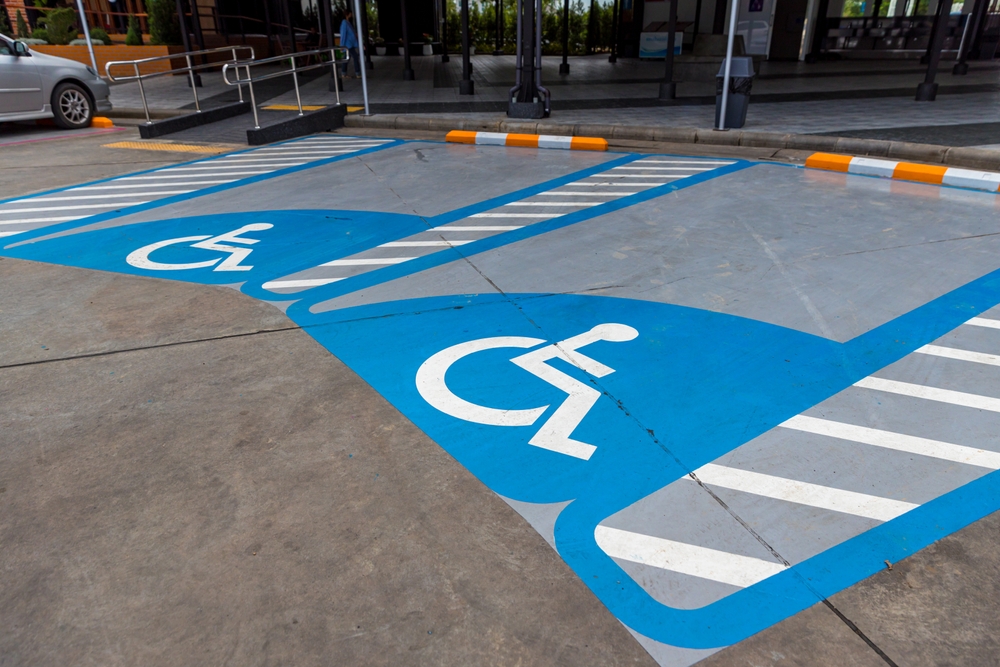
Emma Doherty had taken her young son Bobby to Alder Hey Children’s Hospital in Liverpool when she returned to her car and found an abusive note on the windshield. The writer thought they had seen enough to accuse her. They had not.
The Note Left on Emma Doherty’s Car
According to Upworthy, Doherty had parked in a disabled bay with a Blue Badge displayed. The badge was connected to her son Bobby, who was being treated at the hospital.
The person who left the note appeared to believe Doherty had misused the space. The message read: “You lazy conning b-tch. You did not have a disabled person with you! These spaces are reserved for people who need them!!!”

The accusation was not made in person. It was left anonymously, turning a brief glimpse of a mother and child into a harsh public judgment.
That detail is what made the story travel far beyond one hospital car park. Doherty was not defending a convenience. She was defending her son’s right to be believed.
Bobby’s Medical Reality Was Far More Serious
Doherty used Facebook to explain why the assumption was wrong. As reported by The Independent, Bobby was three years old at the time and had already undergone more than 15 operations.
Doherty wrote: “He’s had 2 strokes and was paralyzed, brain damaged and has a spine and hip condition as well as a massive heart condition.”

She also described the scale of his hospital care, writing: “I hope this gets shared and back to you and you will see my son is terminally ill, he’s had over 15 operations, three open hearts, two stomach, lung and diaphragm and countless artery stenting operations and spent half his life on intensive care.”
The details made the anonymous note look even more misplaced. Bobby’s condition was not visible in the way the writer expected, but it was serious enough to shape every part of his family’s routine.
Why She Carried Him That Day
Part of the criticism appeared to rest on the fact that Doherty did not take a wheelchair out of the car.

She addressed that detail directly in her Facebook post, writing: “The reason I didn’t get his wheelchair out was because I was running late because my son, who had a MRI scan, CTSCAN and a dye for heart function yesterday, only got discharged late and was back in this morning so I carried him in.”
That explanation changes the scene. What may have looked like convenience from the outside was a mother moving quickly through another demanding hospital day.
The Blue Badge Scheme Covers More Than Wheelchair Use
Doherty’s response pointed to a common misunderstanding about accessible parking. Many people still associate disabled bays only with wheelchair users or people using visible mobility aids.
In England, the purpose of the Blue Badge scheme is broader. Official GOV.UK guidance states that the scheme helps people with severe mobility problems caused by visible and non-visible disabilities access goods and services by parking closer to their destination.
Doherty made the same point in personal terms. “But for your information not everyone who holds a blue badge needs to have a wheelchair!” she wrote.
Some people can walk short distances but cannot manage longer distances safely. Others may have heart conditions, neurological conditions, chronic pain, respiratory issues, or fatigue that makes distance physically risky.
Bobby’s case involved a child whose medical needs were complex and serious. The space was part of how his mother got him into care.
The Cost of Judging Illness by Appearance
The note reflected a wider social habit: people often treat a quick visual impression as evidence. That can become especially harmful around disability, illness, and caregiving.
The World Health Organization estimates that 1.3 billion people experience significant disability worldwide, equal to about 16% of the global population. That broad figure includes many people whose conditions may not be immediately obvious in a parking lot, a shop, or a hospital corridor.

Doherty’s words captured the human cost of being doubted. She wrote: “I’m a single mom trying my best to hold it together for my son who’s in and out if hospital. NOT ALL DISABILITIES ARE VISIBLE and I hope you regret doing this and learn your lesson!”
The line became the center of the story because it named the issue directly. The pain came from the belief that a stranger had the right to decide whether her son looked sick enough.
Why the Hospital Setting Mattered
Alder Hey Children’s Hospital was central to the story because the setting made the note feel even more severe. Doherty was not leaving a restaurant, theatre, or shopping center. She was taking her son to medical care.
She later clarified that her criticism was not directed at the hospital. She wrote: “I’d like to point out this has nothing to do with the hospital itself. They were lovely with me when I was upset and they treat us with every respect, always have [in our] 3 long years with them. They’ve saved my son’s life many times.”
The distinction mattered. Her frustration was not with the institution caring for Bobby. It was with a stranger who turned suspicion into humiliation.
Concern Does Not Require Public Shaming
Accessible parking misuse is a real concern. Disabled bays exist for people who need safer, closer access, and protecting those spaces matters.
The problem begins when concern turns into personal abuse without facts. A note can feel righteous to the person writing it, while becoming devastating to the person receiving it.
There were better choices available:
- Check for the displayed badge: A valid badge is the clearest sign that the vehicle may be entitled to use the space.
- Avoid personal abuse: Insults do not protect accessibility. They only escalate harm.
- Report suspected misuse properly: Parking staff or local authorities can handle badge concerns in many places.
- Leave room for unseen circumstances: A person’s medical reality may be completely invisible from the outside.
- Remember passengers: Accessible permits may apply when the disabled person is a passenger, not only the driver.
Those choices do not excuse genuine misuse. They protect people who already face enough scrutiny in daily life.
Why Doherty’s Response Resonated
Doherty’s Facebook post spread widely because many readers recognized the pattern. The details were specific to Bobby, but the experience of being misread was familiar to many people with invisible conditions and their families.
Coverage from Scary Mommy and Goalcast also centered on the same message: visible appearance does not determine whether someone needs support.

The story had the elements that often make personal posts resonate online: a sharp injustice, a vulnerable family, and a message that applies beyond the original moment.
Yet the reason it lasted was quieter. Doherty did not ask readers to treat her as exceptional. She asked them to stop assuming that disability must announce itself visually before it deserves respect.
A More Careful Way to See Strangers
Doherty’s response matters because it pushes against a reflex many people share. In public, people make rapid judgments based on appearance, movement, age, and visible aids. Those judgments can be wrong.
The CDC’s disability overview defines disability as a condition of the body or mind that can make activities and participation more difficult. That definition does not require the condition to be visually obvious.
The practical lesson is plain. A badge, a parking space, or a slow walk through a hospital entrance may be part of a story no passerby can fully see.
Doherty turned a cruel note into a public appeal for restraint. The next time someone thinks they have spotted dishonesty from across a car park, Bobby’s story offers a better first response: look less for proof, and leave more room for what cannot be seen.