
Your cart is currently empty!
Everyone Thinks Oil Comes From Dinosaurs. One Oil Company’s Ad Campaign Is Largely to Blame.

At some point in childhood, most people pick up a piece of information that feels intuitively right and never quite let go of it. Oil comes from dinosaurs. A stegosaurus dies in a swamp, sinks into the earth, and after a few million years of geological pressure, becomes the fuel that runs your car. It has a satisfying logic to it, the kind that makes it easy to pass along and hard to question. Ask almost anyone where gasoline comes from, and some version of this story is likely to surface.
Contents
show
There is only one problem with it. Scientists never said it was true. Not once. Not even in the early days of petroleum science, when humans barely understood what oil was. Somewhere between the laboratory and the public imagination, a fiction got planted, and it has proved remarkably difficult to uproot. Figuring out how that happened requires a short trip back through the actual chemistry of crude oil, the early history of petroleum science, and one oil company’s surprisingly effective advertising strategy.
What Oil Actually Comes From
Forget the dinosaur. Instead, think of the ocean surface, hundreds of millions of years ago, covered in vast populations of algae and plankton so dense and so numerous that their scale is genuinely difficult to imagine. Trillions of these organisms lived short lives, drew energy from the sun or fed on smaller creatures, and died. As they sank to the ocean floor, their bodies accumulated in layers that built up over enormous stretches of time, eventually reaching depths of several miles.
As more sediment piled on top, those layers got compressed into what geologists call source rocks. Under the right combination of heat, pressure, and oxygen-poor conditions, something remarkable happened. All that accumulated organic material slowly transformed, over millions of years, into crude oil. It then seeped upward through porous rock until it hit a dense layer it could not pass through. That layer became a natural ceiling, and the oil pooled beneath it, waiting for a drill bit.
Geologist Reidar Müller of the University of Oslo has spent years trying to correct the public record on this point. According to Müller, “For some strange reason, the idea that oil comes from dinosaurs has stuck with many people. But oil comes from trillions of tiny algae and plankton.”
Müller’s frustration is understandable. Oil is a product of marine environments. It forms in oceans, not on land. Dinosaurs, for all their cultural weight, were overwhelmingly terrestrial creatures. They roamed on solid ground. They did not, as a general rule, end up on the ocean floor in sufficient numbers or under the right conditions to contribute meaningfully to petroleum deposits.
Why Dinosaurs Could Never Have Made the Cut
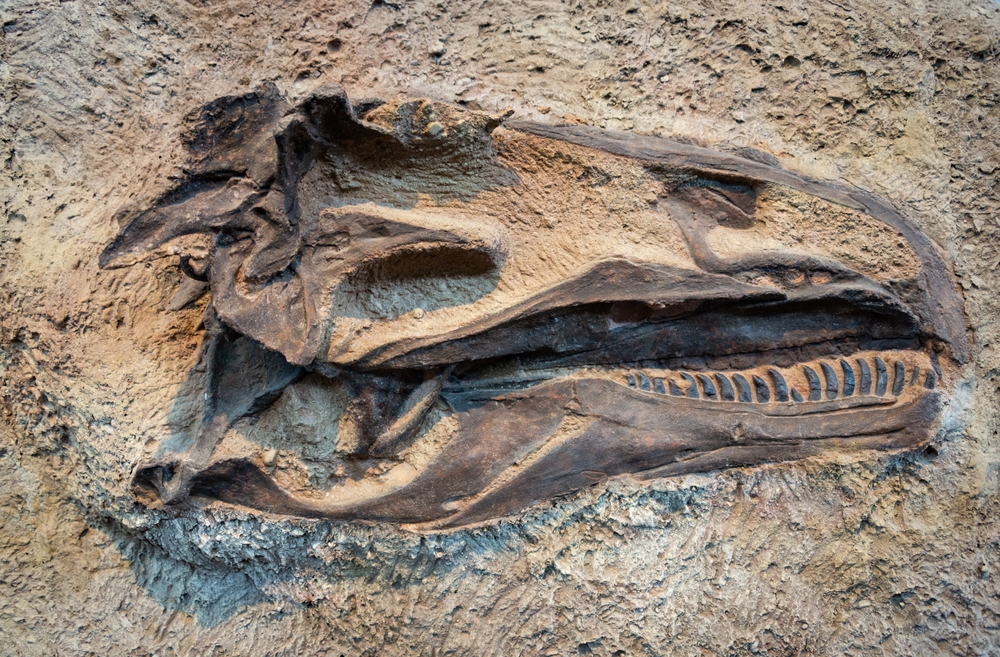
Even setting aside the question of habitat, there is a more fundamental reason why dinosaurs could not have become oil. Large animals that find their way to the ocean floor after death do not sit there undisturbed for millions of years while geology slowly works on them. They get eaten. Quickly. Deep-sea scavengers are remarkably efficient at stripping organic material from a carcass, and what they leave behind tends to scatter and disperse long before any burial or chemical transformation could begin.
For organic material to become oil, it needs to be buried fast, sealed in an oxygen-poor environment, and subjected to sustained heat and pressure over geological time. Plankton and algae, dying in enormous numbers across vast ocean surfaces, met those conditions. Individual large animals, including the occasional marine reptile such as a plesiosaur or ichthyosaur, generally did not.
There is a small concession to be made here. Müller acknowledges that skeletons of large prehistoric reptiles have been found in the same rock layers as oil deposits on Svalbard, and it is possible that a trace amount of oil came from them. But trace is the operative word. Saying oil comes from dinosaurs because a marine reptile occasionally ended up in a source rock layer is roughly equivalent to saying orange juice is made of mites because strawberries occasionally contain them. Technically possible at the margins, meaningless as a description of what the thing actually is.
What Scientists Actually Thought

When humans first started extracting and examining oil in any systematic way, the leading theory was not that it came from ancient animals at all. Early thinkers suspected it was a mineral deposit, which is why the Latin root of the word petroleum translates as rock oil. It was understood to come from the ground, to be associated with rock formations, and to behave like a geological substance. No one was proposing dinosaur juice.
Russian scientist Mikhail Lomonosov made the first serious scientific argument about oil’s true origins in 1763, proposing that it formed from compressed and heated organic material over long periods of time. His framing was broadly correct and pointed science in a productive direction. What it did not include, in 1763 or at any point in the subsequent history of petroleum geology, was any suggestion that large prehistoric reptiles were responsible for the world’s oil reserves.
Serious scientists have never held that view. Amateur misunderstanding, it turns out, needed a different source.
Sinclair Oil and the World’s Fair

In 1933, Chicago hosted the Century of Progress World’s Fair, an exposition drawing millions of visitors across its run. Sinclair Oil Corporation, looking for a way to make its brand memorable to an enormous public audience, sponsored an exhibit featuring nine full-sized dinosaur models. The display was seen by roughly 16 million people, a staggering reach for a single promotional event.
Sinclair’s reasoning, as the company later explained, was that crude oil had formed during the Mesozoic era, the geological period when dinosaurs lived. The marketing logic was one of temporal association: the oil came from the same era as the dinosaurs, so put a dinosaur on the material and let the connection do its work. Among the nine models on display, it was the Apatosaurus that captured public attention most firmly. Sinclair adopted it as an official mascot, and from 1963 onward, the company sent an Apatosaurus float down Fifth Avenue as part of the Macy’s Thanksgiving Day Parade each year.
What Sinclair’s marketing team understood intuitively was something that advertising professionals have known for a long time. Images are more powerful than disclaimers. Put a dinosaur on your product, and consumers will associate the dinosaur with the product. They will not necessarily read the fine print explaining that the dinosaur is a symbol of geological age rather than an ingredient list.
American palaeontologist and geologist Kenneth Lacovara has traced the logical chain that Sinclair’s campaign set in motion. “Their crafty marketing campaign, I think, sealed the link between dinosaurs and oil in the public imagination, drilling the faulty connection into the minds of nearly everyone. The bad wiring goes something like this: Oil is a fossil fuel, and most of it comes from the age of the dinosaurs. Fossils equal dinosaurs, therefore dinosaurs equal oil.”
Lacovara’s breakdown of that chain is worth sitting with. Each step has some surface plausibility. Oil is indeed a fossil fuel. Much of it did form during the Mesozoic. Fossils do come from that era. But the leap from fossil fuel to dinosaur ingredient involves a category error at every joint. Fossil, in the phrase fossil fuel, refers broadly to ancient organic material, not specifically to dinosaur remains. Most of what became oil never had a skeleton to begin with.
How Advertising Became Accepted Science
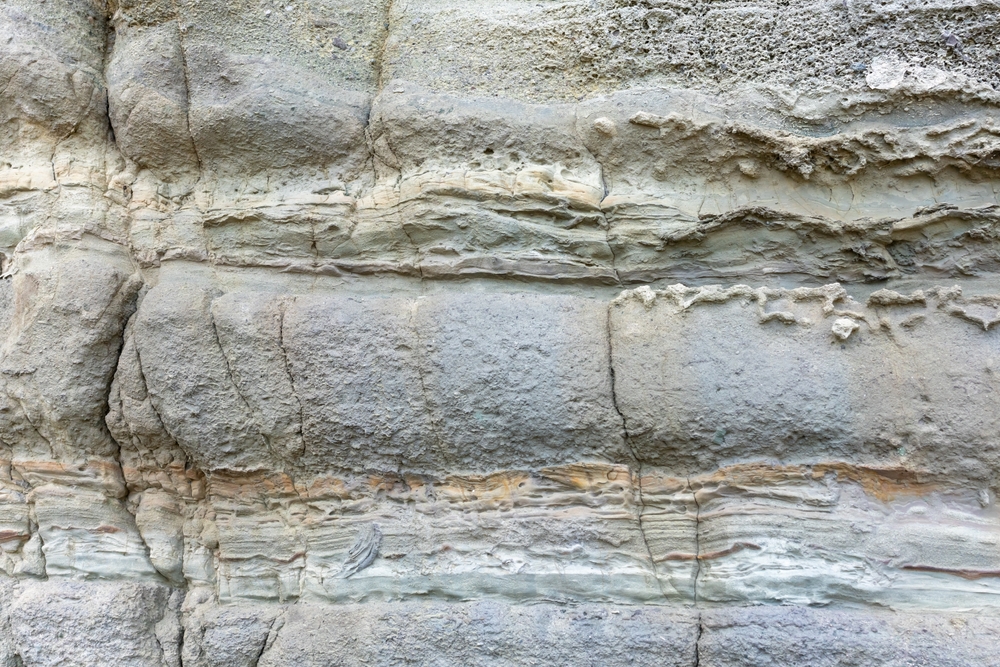
What makes the Sinclair story interesting is not just that a marketing campaign produced a widespread misconception, but that the misconception has proved so durable across nearly a century of scientific education aimed at correcting it. Roughly 54% of the world’s oil formed during the same broad geological era as the dinosaurs, which gives the myth just enough factual scaffolding to feel plausible. Temporal coincidence is not the same as a causal relationship, but it is close enough to feel convincing if no one explains the difference.
Compare it to a different example. The iPhone and a certain animated film about an ogre were released within a few years of each other, but no one would describe the iPhone as being associated with Shrek. No marketing team made that connection. Sinclair’s team made the dinosaur connection deliberately and effectively, and the cultural imprint held.
The word fossil in fossil fuels deserves some of the blame, too. For most people, fossils are synonymous with dinosaur bones in a museum. That association, entirely reasonable given how the word is used in popular culture, makes the logical leap to dinosaur-derived oil feel natural even without any advertising reinforcement. Put both factors together, and you have a misconception with multiple points of entry and very few natural correctives.
Why Getting It Right Actually Matters

Müller is not merely interested in correcting a trivia error. His view is that understanding where oil comes from is part of understanding what oil is, how it formed, and what its extraction means for the world that produced it. Norway’s economy has been built in large part on North Sea oil, and Müller believes that people who benefit from a resource should understand it at a basic level.
He is also clear about what the dinosaur myth costs us in terms of clear thinking about energy. If you believe oil is made of dinosaurs, you likely have a fundamentally inaccurate picture of geological time, marine biology, and the conditions under which fossil fuels form. You may also find it harder to understand why oil is a finite resource in any practical human timeframe. “It sounds cool to say that oil is a kind of dinosaur soup, but this is pure fantasy.” Reidar said.
New oil does form, in the sense that plankton and algae continue to die and sink and slowly undergo the same process that produced existing reserves. But the rate at which new oil forms is so far below the rate at which we extract existing oil that the distinction has no practical bearing on energy supply for thousands of years. We are not running low on oil because dinosaurs stopped dying. We are running low because we consume an ancient, slowly accumulated resource far faster than geological processes can replace it.
A century of Sinclair advertising gave the world a memorable mascot and a persistent scientific myth in the same stroke. Correcting it does not require much, just a willingness to swap the image of a lumbering Apatosaurus for something considerably smaller, considerably older, and considerably less photogenic: a trillion dead microorganisms settling silently toward the bottom of a prehistoric sea.