
Your cart is currently empty!
Scientists Discover Hidden “Heat Law” That Controls Nearly All Life on Earth
A team of international scientists believes they may have uncovered one of the closest things biology has to a universal law after analyzing more than 30,000 measurements across roughly 2,700 species and discovering that nearly every living thing on Earth appears to follow the same mathematical pattern when temperatures rise. The researchers found that organisms ranging from bacteria and plankton to reptiles, mammals, and trees all respond to temperature changes in surprisingly similar ways, despite being separated by millions of years of evolution and living in completely different environments.
Contents
show
The discovery could help explain why climate change becomes dangerous so quickly once ecosystems cross certain temperature thresholds. Scientists say warming tends to increase biological performance only up to a certain point, but once organisms move beyond their ideal temperature range, even small increases in heat can trigger sharp declines in survival, growth, movement, and reproduction. The findings also suggest evolution itself may face hard biological limits that species cannot easily escape.
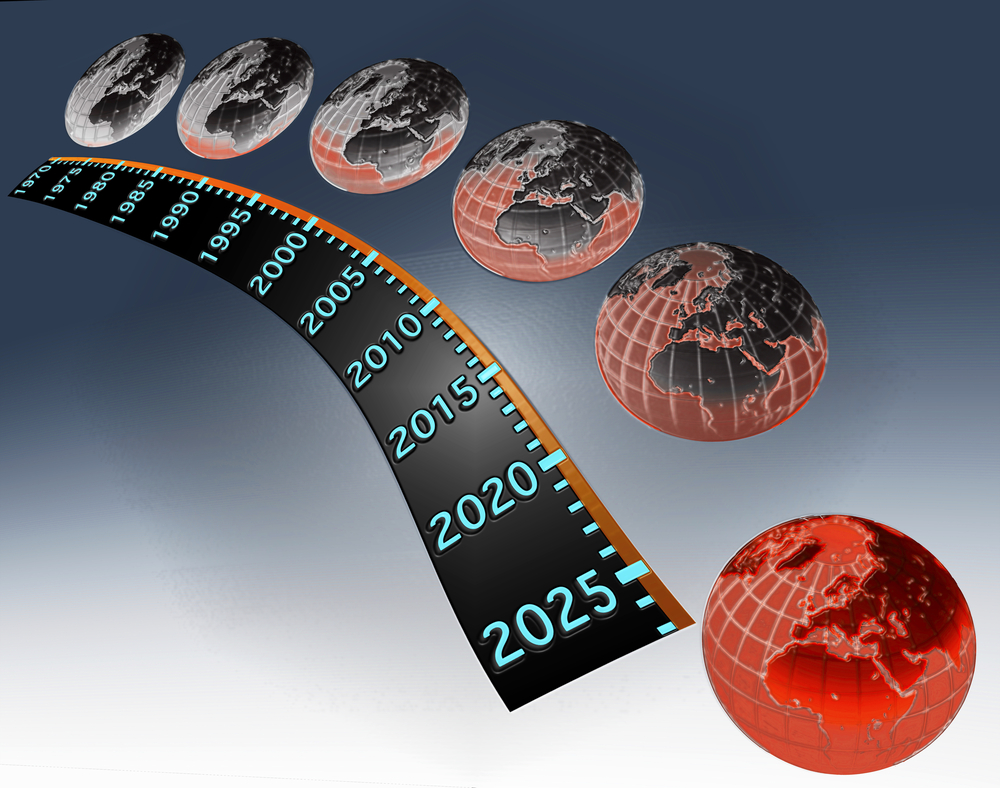
Researchers from Spain, France, and Ireland created a new model showing how temperature affects biological performance across almost every major form of life. The study examined organisms ranging from bacteria and plankton to reptiles, birds, mammals, fish, trees, and insects, and despite enormous biological differences between those species, the scientists found that their responses to heat could all be mapped onto the same underlying curve.
The researchers call it the Universal Thermal Performance Curve, or UTPC. According to the team, the curve acts like a biological template showing how living systems respond as temperatures increase, helping explain why so many biological processes accelerate during warming before suddenly collapsing after passing critical heat thresholds.
Ignacio Peralta Maraver, an ecology researcher at the University of Granada in Spain, said the model could reshape how scientists study global warming. He said, “This model could become a new standard in the ecology and physiology of global warming.”
Life Gets Faster Until It Suddenly Doesn’t
The curve reveals a dramatic pattern that appears across nearly every form of life scientists studied. As temperatures rise, biological activity usually increases too, causing cells to divide faster, animals to move more quickly, and plants to grow more rapidly. Researchers say this pattern reflects exponential scaling, where biological performance improves as heat increases until organisms approach their optimal temperature range.
That improvement only lasts up to a specific point. Once organisms hit their thermal peak, even small increases in heat can trigger steep declines in performance that may rapidly lead to failure or death. Scientists describe the curve as asymmetric because the rise toward peak performance happens gradually, while the collapse after crossing the temperature threshold tends to happen much faster.
A lizard, for example, may become increasingly active as temperatures warm throughout the morning, but after crossing a critical threshold, its running speed, energy regulation, and survival chances can suddenly collapse. Researchers observed similar patterns in microbes, insects, plants, mammals, and aquatic organisms, which is why they believe the discovery may represent one of the most universal biological patterns ever identified.

Why Climate Scientists Are Paying Attention
The study arrives as global temperatures continue climbing.
Scientists already warn that many ecosystems are under pressure after roughly 2 degrees Fahrenheit of warming compared to nineteenth-century averages.
The new model suggests that nature may tolerate warming for a while, then suddenly hit hard biological limits.
That possibility worries researchers because many species already live dangerously close to their maximum heat tolerance.

Tropical Species May Face the Highest Risk
Animals in tropical regions appear especially vulnerable.
Species that evolved in stable climates often have narrow temperature tolerance ranges. Unlike animals in regions with harsh winters and hot summers, tropical species may have less flexibility when temperatures spike.
The researchers say many already operate near the peak of the heat curve.
That leaves very little room for additional warming.
A few extra degrees could push some organisms beyond the temperatures where they can function normally.

The Study Included Thousands of Species
The scale of the project is one reason scientists are taking it seriously.
Researchers compiled more than 30,000 performance measurements from experiments conducted across thousands of species.
The organisms studied included:
- Bacteria and microbes
- Plankton and aquatic organisms
- Trees and plants
- Insects and reptiles
- Fish, birds, and mammals
- Freshwater ecosystem species
The team then used mathematical scaling models to compare how those organisms reacted to temperature changes.
Instead of seeing random patterns, they found remarkable consistency.
Many biological processes follow exponential scaling, where performance accelerates as temperatures rise until the system reaches its limit.
Scientists Have Suspected Something Like This Before
The idea that biology follows shared temperature rules is not entirely new.
Previous studies on metabolism hinted that living organisms might obey similar energy laws regardless of species.
Scientists have long known that body size and temperature influence how quickly organisms burn energy.
This new research pushes that concept much further.
One Curve From Cells to Ecosystems
The Universal Thermal Performance Curve connects tiny biological processes to entire ecosystems.
That means the same mathematical framework may help explain:
- How quickly bacteria reproduce
- Why coral reefs collapse during marine heat waves
- How insects respond to extreme summers
- Why forests struggle during prolonged droughts
- When ecosystems begin breaking down under climate stress
Researchers believe that shared structure could simplify climate forecasting models.
Instead of treating every species as completely unique, scientists may now have a common biological reference point.
Some Species May Be Able To Break The Rule
The discovery also raises a major evolutionary question.
Are there organisms capable of escaping the curve?
Researchers now want to identify species that continue performing well beyond the predicted temperature peak.
Those outliers could reveal important survival strategies for a warming planet.
How Certain Animals Might Resist Extreme Heat
Scientists believe some organisms may possess unusual traits that help buffer them against dangerous temperatures.
Possible adaptations include:
- Specialized cell chemistry
- Heat-resistant proteins
- Behavioral cooling strategies
- Protective body structures
- Flexible metabolic systems
Studying those species could become critical as climate change intensifies.
If scientists understand how some organisms tolerate extreme heat, it may improve conservation efforts for vulnerable ecosystems.
The Discovery Could Change Climate Predictions
One of the biggest implications of the discovery involves forecasting future ecological collapse and identifying which species may be approaching dangerous thermal limits. Conservation groups and climate researchers could eventually use the universal curve to compare how different organisms respond to rising temperatures, allowing scientists to spot populations that may face sudden declines if warming continues.
Researchers say the model could improve projections involving migration patterns, extinction risk, food web disruption, and ecosystem instability. Instead of studying every species through completely separate models, scientists may now have a shared biological framework that connects processes happening at the cellular level to changes unfolding across entire ecosystems.
The findings may become especially important as oceans continue warming and extreme heat waves grow more common around the world. A species living close to its thermal threshold might appear stable for years, only to experience rapid collapse after temperatures move slightly beyond what its biology can tolerate. Scientists believe the model may help explain why some ecosystems seem resilient for long periods before suddenly deteriorating.
Researchers stress that the curve does not remove uncertainty because nature remains enormously complex, but they say the model offers a simpler way to understand how warming affects life across nearly every level of biology. The study also gives climate scientists a new tool for estimating how much additional warming ecosystems may be able to withstand before crossing irreversible biological limits.
Evolution May Have Hard Limits After All
For decades, many scientists viewed evolution as an almost limitless force capable of helping species adapt to changing environments over time. This research presents a far more fragile picture by suggesting that living systems may still be trapped within strict thermal boundaries that cannot easily be escaped, regardless of how long adaptation occurs.
The Universal Thermal Performance Curve suggests that biology itself may operate according to shared physical rules that place hard limits on survival under extreme heat. Species can adjust to changing conditions to a certain degree, but the study indicates that once temperatures move beyond critical thresholds, biological performance begins collapsing in ways evolution may struggle to overcome.
That idea carries major implications in a rapidly warming world where temperatures continue rising across land and sea ecosystems. Scientists increasingly warn that the planet may not need massive temperature increases before ecosystems begin crossing invisible biological lines that trigger widespread instability, migration failures, reproductive decline, and species loss.
The discovery also changes how researchers think about climate resilience. Instead of assuming nature will always adapt fast enough to survive environmental change, the findings suggest there may be hard biological ceilings built into life itself, placing limits on how much warming ecosystems can endure before recovery becomes impossible.
Sources:
- Arnoldi, J., Jackson, A. L., Peralta-Maraver, I., & Payne, N. L. (2025). A universal thermal performance curve arises in biology and ecology. Proceedings of the National Academy of Sciences, 122(43), e2513099122. https://doi.org/10.1073/pnas.2513099122
- A universal formula is developed to predict the impact of temperature on living beings. (n.d.). A Universal Formula Is Developed to Predict the Impact of Temperature on Living Beings | Universidad De Granada. https://www.ugr.es/en/about/news/formula-developed-predict-impact-temperature-living-beings?
- Arnoldi, J., Jackson, A. L., Peralta-Maraver, I., & Payne, N. L. (2025b). A universal thermal performance curve arises in biology and ecology. Proceedings of the National Academy of Sciences, 122(43), e2513099122. https://doi.org/10.1073/pnas.2513099122