
Your cart is currently empty!
LEGO Makes Special Rule Change For David Attenborough After He Turns 100
Sir David Attenborough has spent decades teaching the world about life on Earth, from the deepest oceans to the most remote rainforests. This week, the internet discovered something unexpectedly funny about his 100th birthday.
Contents
show
Technically, he had become too old to play with LEGO.
For generations, LEGO boxes carried the same familiar label: “4-99+.” But when Attenborough turned 100 on May 8, the toy company decided the rules needed a rare exception. What followed became one of the internet’s most wholesome viral moments.
LEGO’s Tiny Change Quickly Went Viral
The tribute started with a simple Instagram post.
LEGO shared an image of one of its classic brick boxes with the usual age range changed from “4-99+” to “4-100+.” Another line on the image read: “Updated for you, Sir David.”
The caption was equally simple.
“Happy 100th birthday, Sir David Attenborough,” LEGO wrote. “There’s no age limit for those who never stop playing.”
That small change instantly connected with people online.
Fans flooded the comments with praise for the tribute, with many calling it one of the best brand posts they had seen in years. Others joked that Attenborough had officially unlocked a hidden achievement by surviving beyond LEGO’s printed limit.
One comment read, “Marketing team deserves a raise.”
Another user wrote, “This might be the most wholesome thing on the internet today.”
Part of the reason the post spread so quickly is that almost everyone recognizes the iconic age label.
For decades, LEGO boxes have carried that strangely specific “4-99+” range. Most people never seriously questioned it because very few public figures ever reached the point where the joke became real.
Then Attenborough turned 100.
Suddenly, the internet realized that one of the world’s most beloved broadcasters had technically aged out of LEGO.
LEGO responded in exactly the way people hoped it would.
Why David Attenborough Means So Much To So Many People
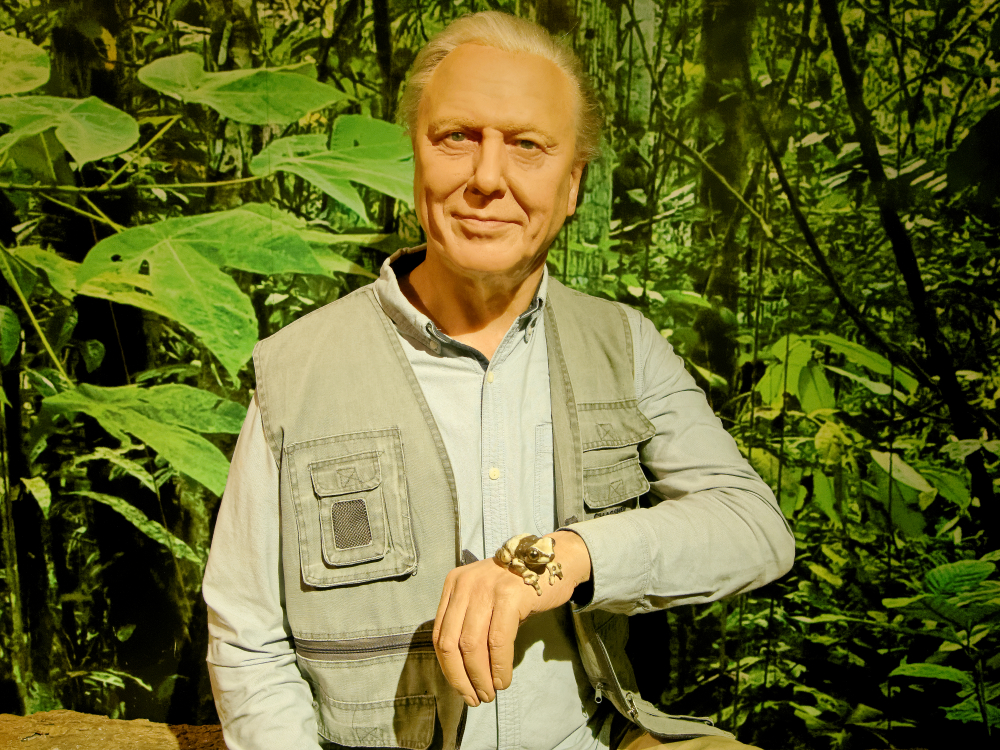
The emotional response to the post had less to do with toys and more to do with who Attenborough represents.
For millions of people across multiple generations, his voice is tied to childhood memories, family movie nights, classrooms, documentaries, and first encounters with the natural world.
Attenborough was born in 1926 and began working with the BBC in the early 1950s.
Over the next seven decades, he became one of the most recognizable voices on television through documentaries like “Life on Earth,” “Planet Earth,” “Blue Planet,” “Frozen Planet,” and “Dynasties.”
His documentaries transformed nature filmmaking.
Before Attenborough, wildlife television was often limited by technology and budget. Animals were difficult to film closely, underwater footage was rare, and remote locations remained inaccessible.
As technology improved, Attenborough pushed documentaries into something cinematic.
Viewers suddenly watched snow leopards hunting across icy cliffs, deep-sea creatures glowing in darkness, and birds performing elaborate mating rituals in jungles most people would never visit.
The scale changed people’s relationship with nature.
A Voice That Became Instantly Recognizable

Attenborough’s narration style also became part of his appeal.
He never sounded overly dramatic or theatrical. Instead, he spoke with calm curiosity, as though he was inviting viewers to discover something extraordinary alongside him.
That approach made him different from many television personalities.
Even people who never actively followed wildlife documentaries usually recognized his voice within seconds.
For younger viewers, clips from his documentaries are constantly spread across TikTok, YouTube, and Instagram. Entire generations who were not even born when “Life on Earth” aired still grew up hearing Attenborough narrate clips about penguins, whales, monkeys, and insects.
At a time when internet culture moves quickly from trend to trend, Attenborough remained oddly timeless.
The Environmental Message Became More Urgent

As his career progressed, Attenborough’s documentaries shifted from simply showcasing wildlife to warning about environmental collapse.
Climate change, ocean pollution, habitat destruction, deforestation, and biodiversity loss became central themes in his later work.
What made those warnings powerful was the fact that they came from someone who had spent almost a century observing the planet firsthand.
Attenborough often spoke about witnessing dramatic changes during his lifetime.
Species disappeared.
Forests shrank.
Coral reefs died.
Ocean ecosystems changed.
At the same time, he continued emphasizing hope.
In one of the birthday tribute videos released this week, Attenborough said, “After living for nearly 100 years on this planet, I cannot remember a more exciting opportunity for our species.”
That line resonated online because it captured something unusual about him.
Even while discussing environmental crises, he rarely sounded cynical.
National Geographic’s Tribute Turned Emotional

LEGO was not the only major organization celebrating Attenborough’s birthday.
National Geographic also released an emotional tribute video featuring scientists, explorers, photographers, conservationists, and celebrities reflecting on his impact.
The video mixed clips from Attenborough’s career with personal messages from people inspired by his work.
National Geographic Explorer Bertie Gregory thanked Attenborough “for the natural world and for humanity.”
“You helped us fall in love with the forest, with the ocean,” Gregory said.
Oceanographer Dr. Sylvia Earle also appeared in the tribute.
She praised Attenborough for changing “the way people think about the blue part of the planet.”
Earle then delivered one of the most memorable lines from the video.
“Wishing you your first 100 years,” she said. “Can’t wait to see what you’re gonna do next.”
That phrase spread rapidly online because it reflected a strange truth about Attenborough.
Despite reaching an age that few people ever experience, he still has not fully stepped away from work.
Celebrities Also Joined The Celebrations

Several well-known public figures contributed messages to the tribute.
“Queer Eye” star Antoni Porowski described Attenborough as “a gift to all of us.”
“Sir David Attenborough’s voice is just synonymous with everything I’ve learned about nature,” Porowski said.
Others focused on the optimism in Attenborough’s documentaries.
“Thank you so much for reminding all of us that no matter what, we should always have hope,” Porowski added.
The emotional tone of the tributes highlighted how unusual Attenborough’s career really is.
Most television personalities become associated with a single era.
Attenborough somehow remained relevant across black-and-white television, cable TV, streaming platforms, YouTube clips, TikTok edits, and social media memes.
Very few broadcasters have survived that many technological shifts while remaining universally respected.
The Internet Couldn’t Stop Talking About The LEGO Joke
One reason the LEGO post exploded online is that the joke worked on multiple levels.
It was funny.
It was nostalgic.
And it carried genuine affection.
People immediately understood the reference because so many grew up staring at those age labels on toy boxes.
The idea that someone could finally exceed the limit felt absurd enough to become instantly shareable.
At the same time, the tribute avoided feeling cynical or corporate.
That matters online.
Modern audiences are often skeptical of brand marketing because many companies try too hard to sound relatable. Social media users quickly notice when posts feel manufactured.
LEGO’s tribute worked because it stayed simple.
There was no forced joke.
No exaggerated campaign.
No attempt to turn the moment into a major product launch.
The company simply adjusted one familiar detail and let people enjoy it.

Why Nostalgia Played A Huge Role
The post also tapped into nostalgia in a powerful way.
For many adults, LEGO represents creativity, childhood, and imagination.
Attenborough represents curiosity, learning, and wonder about the natural world.
Putting those two things together created a combination that felt surprisingly emotional.
It reminded people of growing up.
Many social media users shared stories about watching Attenborough documentaries while building LEGO sets as children.
Others joked that the updated age range finally gave them permission to continue buying bricks well into old age.
The internet especially loved the implication behind LEGO’s “100+” update.
Attenborough was not simply allowed to keep playing for one more year.
The “plus” suggested there was no upper limit anymore.
That tiny detail became part of the joke.
Attenborough Never Wanted To Be The Star
One of the more revealing details to emerge during the birthday coverage came from Attenborough’s longtime collaborator Alastair Fothergill.
Speaking to the Associated Press, Fothergill explained that Attenborough has never been comfortable treating himself like a celebrity.
“He’s always been very clear to all of us that work with him: ‘Remember, the animals are the stars, I’m not,’” Fothergill said.
That attitude probably explains why Attenborough remained so widely respected for so long.
Despite becoming one of the most famous voices in television history, he rarely behaved like a traditional celebrity.
He avoided scandals.
He rarely inserted himself into unnecessary controversy.
He consistently redirected attention toward wildlife and conservation.
Even during major birthday celebrations, Attenborough reportedly expected things to remain quiet.
Instead, messages poured in from around the world.

Messages Arrived From Every Generation
According to reports shared around his birthday celebrations, Attenborough said he had been “completely overwhelmed” by the response.
He specifically mentioned receiving greetings from preschool groups, care home residents, families, and people of all ages.
That detail stood out because it perfectly captured the reach of his audience.
Children still discover Attenborough through modern documentaries.
Older viewers remember his earliest BBC appearances.
Very few public figures maintain that kind of cross-generational connection.
Most celebrities eventually become tied to a specific demographic or era.
Attenborough somehow became almost universal.
Part of that comes from the subject matter itself.
Nature documentaries appeal to nearly everyone.
Animals cross cultural and political boundaries in ways few other forms of media can.
A dramatic scene involving whales, elephants, penguins, or birds does not require translation.
People simply connect to it.
The Career Milestones Behind His Legacy
Attenborough’s body of work is enormous.
Across decades, he helped create documentaries that shaped modern wildlife television.
Some of his most influential projects include:
- “Life on Earth” in 1979, which became a landmark moment for natural history broadcasting.
- “The Blue Planet,” which revealed underwater ecosystems with groundbreaking footage.
- “Planet Earth,” which raised the cinematic standard for television documentaries.
- “Frozen Planet,” which brought viewers into some of the harshest environments on Earth.
- “Dynasties,” which focused on the survival struggles of animal families.
Those documentaries did more than entertain audiences.
They changed public awareness around conservation.
Many viewers first learned about climate change, plastic pollution, endangered species, and habitat destruction through Attenborough’s narration.
His documentaries also influenced filmmakers, scientists, photographers, and conservationists.
Several modern wildlife presenters openly credit Attenborough with inspiring their careers.

Technology Changed The Scale Of His Documentaries
One fascinating part of Attenborough’s career is how dramatically filming technology evolved during his lifetime.
When he started at the BBC, television itself was still relatively young.
Wildlife crews worked with heavy equipment, limited mobility, and far fewer filming options.
By the time “Planet Earth” arrived, teams used helicopters, drones, underwater rigs, thermal cameras, ultra slow-motion systems, and remote tracking technology.
That transformation allowed documentaries to capture behavior audiences had never seen before.
Suddenly, viewers could watch:
- Snow leopards hunting in the Himalayas.
- Great white sharks breaching from below.
- Tiny insects moving in extreme close-up detail.
- Birds performing intricate mating dances.
- Deep-sea creatures living in total darkness.
Attenborough remained at the center of that evolution.
Instead of becoming outdated, he adapted to the technology.
That adaptability helped him stay relevant long after many broadcasters from his era disappeared from public attention.
Why People Found The Moment So Emotional
The internet reacts to celebrity birthdays all the time.
Most disappear within hours.
Attenborough’s milestone felt different.
Part of it came from the sheer scale of his life.
Reaching 100 years old already feels remarkable. Reaching that age while remaining active, respected, and globally recognized feels even rarer.
But there was another reason the response became emotional.
For many people, Attenborough represents continuity.
He has been present through multiple generations, political eras, technological revolutions, and cultural shifts.
People who watched him as children are now introducing his documentaries to their own kids.
That creates a strange sense of permanence.
Online, many users described Attenborough as someone who always seemed to exist in the background of modern life.
A calm voice.
A familiar face.
Someone associated with curiosity rather than conflict.
In an internet environment dominated by outrage, scandals, arguments, and short attention spans, that kind of figure feels increasingly rare.

The Tribute Worked Because It Felt Genuine
The LEGO post also succeeded because it never felt overly sentimental.
It acknowledged Attenborough’s age without turning him into a joke.
It celebrated playfulness without sounding childish.
And it recognized the emotional connection people feel toward him without becoming overly dramatic.
That balance is difficult for brands to achieve.
Many companies try to create “viral wholesome moments” and fail because audiences sense the marketing strategy behind them.
LEGO’s tribute worked because it matched the company’s identity naturally.
The message about creativity, curiosity, and lifelong play connected perfectly with Attenborough’s public image.
It felt less like advertising and more like a genuine birthday card from one beloved institution to another.
Attenborough Still Has No Plans To Slow Down
Despite turning 100, people close to Attenborough say he still wants to keep working.
That detail surprised many fans online.
Alastair Fothergill told the Associated Press that Attenborough recently said he feels “unbelievably privileged” to still be asked to work in his late 90s.
Fothergill then delivered a line that quickly spread across social media.
“He will go on forever,” he said. “He will die in his safari shorts.”
The quote perfectly matched the public image people have built around Attenborough.
Even at 100, many fans still imagine him walking through forests, standing beside ocean cliffs, or crouching near wildlife with quiet fascination.
That image has become deeply embedded in popular culture.
For decades, Attenborough helped audiences slow down and pay attention to the natural world.
He taught viewers to notice migration patterns, animal intelligence, coral ecosystems, bird calls, and tiny behaviors most people would otherwise miss.
His documentaries made nature feel dramatic without making it feel fake.
That balance became his signature.
And now, thanks to one small LEGO edit, the internet found a surprisingly perfect way to celebrate it.
The broadcaster who spent nearly a century encouraging curiosity about the world officially received an updated age limit.
Not bad for someone who technically aged out of the toy box.