
Your cart is currently empty!
TV Producers Left 10 Boys And 10 Girls Alone For Days, And The Difference Shocked Everyone
Reality television in the early 2000s pushed boundaries in ways that would probably cause outrage today, but one British documentary managed to stand out even during an era filled with bizarre social experiments. A Channel 4 series called Boys and Girls Alone placed 20 children between the ages of 11 and 12 into two separate houses with almost no adult supervision and simply watched what happened. The boys were sent to one house, the girls to another, and both groups were given food, money, toys, and cleaning supplies before cameras began rolling around the clock. Producers only agreed to step in if someone’s safety was at risk, meaning the children were largely left to create their own rules, routines, and social structures from scratch.
Contents
show
What unfolded became one of the most talked-about reality experiments in British television because the contrast between the two houses appeared almost immediate. While the girls focused on organizing the home, cooking meals together, and finding ways to entertain themselves peacefully, the boys quickly turned their house into chaos. Walls were scribbled on, bedrooms became battlegrounds, and rival groups started forming within days. Viewers watched the two households drift into completely different environments despite the children being the same age and given the exact same resources. Even years later, clips from the show still circulate online because people remain fascinated by how dramatically the experiment unfolded.
The Boys’ House Descended Into Chaos Almost Immediately
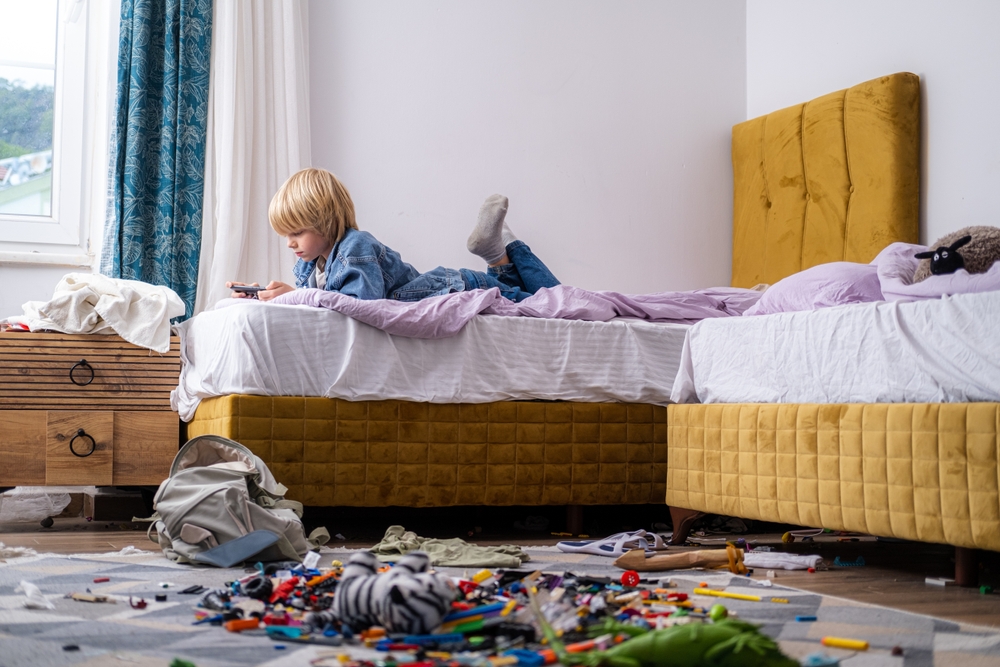
The boys wasted little time turning the house upside down once the adults disappeared. Rooms became messy within hours, furniture was damaged, and graffiti began appearing on walls throughout the property. Several boys seemed more interested in testing limits and causing disruption than creating any sort of stable environment, and the atmosphere quickly became tense as personalities started clashing. The excitement of freedom slowly transformed into constant arguments and childish power struggles that dominated life inside the house.
As the days passed, the boys naturally split into separate groups and began treating each other almost like rivals competing for territory. Two bedrooms effectively became headquarters for opposing factions, and the tension between them escalated every day. One group deliberately tried to stop the others from sleeping by making loud noises, barging into rooms, and refusing to let anyone settle down for the night. Minor disagreements often exploded into shouting matches because there were no adults around to calm situations before they escalated further.
One of the biggest arguments broke out after a boy discovered that his T-shirt had been painted and covered in shaving cream by others in the house. What may have started as a prank quickly became a serious argument that exposed how frustrated many of the boys had become with each other. Even though the house looked increasingly destroyed and tempers regularly flared, nobody was seriously harmed during the experiment. Most of the conflict stayed verbal, though the constant tension made the environment feel unstable throughout much of the documentary.
The Girls Focused On Cooperation And Routine
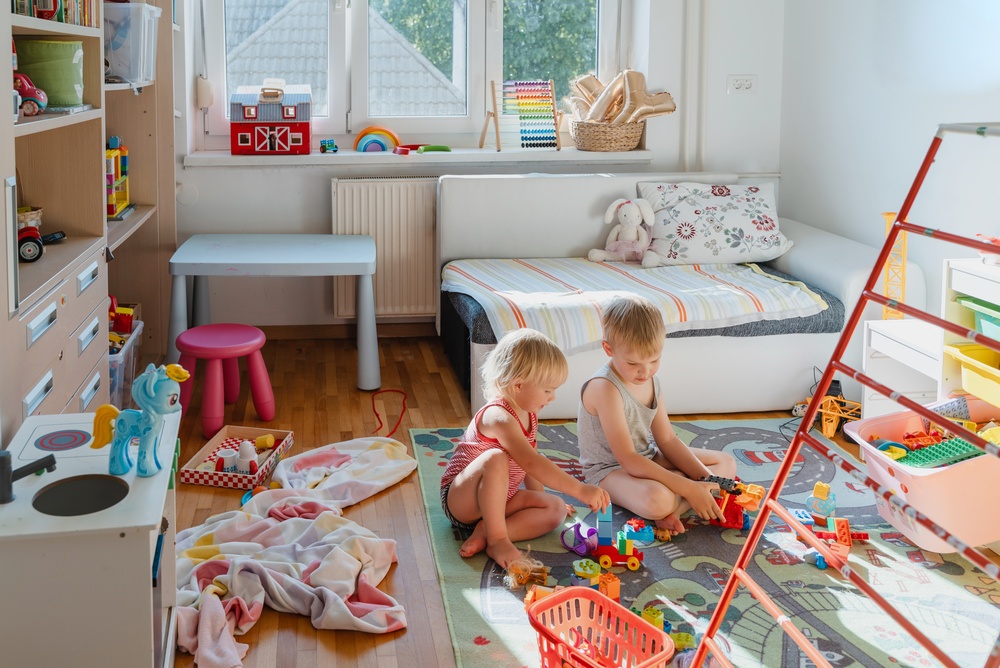
The girls’ house developed in a completely different direction almost from the start. Instead of splitting into hostile groups, many of the girls decided to move their beds into one room so they could all sleep together at night. Shared meals quickly became part of their routine, and several girls naturally took responsibility for cleaning and organizing the house without being instructed to do so. While arguments still happened, the overall atmosphere remained calmer and more cooperative than what viewers saw inside the boys’ house.
The girls also spent more time creating activities that allowed everyone to participate together. One of the most memorable moments came when they organized a fashion show using clothes and accessories found around the house. The activity gave them a way to entertain themselves without turning against each other, and it highlighted how differently the two groups approached boredom and freedom. Rather than using the absence of adults as an opportunity for destruction, many of the girls treated it as a chance to build their own small community.
That does not mean everything inside the girls’ house was peaceful. Emotional tension slowly built as different personalities clashed, and some girls began excluding others socially. Mild bullying became an issue later in the experiment, creating hurt feelings and uncomfortable confrontations that eventually pushed two participants to leave before filming ended. Even with those problems, the overall condition of the house and the relationships inside it remained far more stable than what viewers witnessed among the boys.

A Stray Cat Created One Of The First Major Moments Of Tension
One early moment inside the girls’ house revealed how quickly even small situations could become emotional when children were left without adult guidance. A neighbor’s cat wandered into the house, and the girls immediately became attached to it and wanted to care for it themselves. What started as excitement soon turned into disagreements over what the group should actually do with the animal and who should take responsibility for looking after it properly.
Some of the girls treated the cat almost like a shared pet, while others worried about whether they were capable of taking care of it responsibly. The situation exposed the pressure the children were under while trying to manage responsibilities that normally belonged to adults. Even though the argument never became explosive, it highlighted how emotional and stressful the experiment could become for children who were still learning how to manage conflict and responsibility.
The moment also gave viewers a clearer picture of how differently the two houses functioned emotionally. In the boys’ house, disagreements usually revolved around dominance, pranks, or personal conflict. In the girls’ house, arguments more often centered around feelings, fairness, and responsibility. Those differences became one of the main reasons the documentary sparked so much debate after it aired.

Viewers Still Debate What The Experiment Actually Proved
The documentary created endless discussion because many viewers believed the experiment exposed natural behavioral differences between boys and girls at that age. Others argued that the show proved almost nothing because reality television is never truly natural. The children knew cameras were recording every moment, and producers ultimately controlled which scenes audiences saw after hours of footage were edited into a dramatic television series.
Psychologists and commentators also pointed out that children placed into artificial environments often behave differently than they would in everyday life. The excitement of being on television, the absence of parents, and the pressure of living with strangers likely influenced the children’s actions just as much as gender did. Some viewers felt the experiment encouraged stereotypes, while others believed it revealed genuine social patterns that appear when authority figures disappear.
Despite the criticism, the series remained compelling because it captured something raw and unpredictable about childhood behavior. Watching children attempt to create their own social order without adults nearby produced moments that felt surprisingly honest, even inside a heavily produced television environment. The documentary became memorable not because it offered scientific answers, but because it showed how quickly human behavior can change once structure disappears.
A Real Survival Story Produced A Completely Different Outcome
Years after the documentary aired, many people compared it to a real-life survival story involving six boys who became stranded on a remote island in 1965 after attempting to sail to Fiji. Unlike the television experiment, there were no cameras, producers, or planned social dynamics. The boys had stolen a fishing boat before accidentally drifting off course and ending up trapped on an isolated island for 15 months with almost no resources.
What happened on the island surprised many people because the boys responded with cooperation rather than chaos. They created schedules for chores, shared responsibilities equally, maintained a permanent fire, and worked together to survive difficult conditions. Instead of breaking into rival groups, they relied heavily on teamwork because their survival depended on it. The boys even built homemade musical instruments to entertain themselves during long periods of isolation.
At one point, one of the boys fell from a cliff and broke his leg badly. The others managed to set the injury using sticks and cared for him until he recovered. Their ability to organize themselves without adults became one of the most famous real-life examples of children creating a functioning society under pressure. The story stood in sharp contrast to the chaos seen in Boys and Girls Alone, and it challenged many assumptions people had formed after watching the documentary.
The Show Would Probably Never Be Made Today
Modern television networks would almost certainly face serious backlash if they attempted a similar experiment today. Public attitudes around child welfare, exploitation, and reality television ethics have changed dramatically since the early 2000s, and many viewers now look back at the documentary with disbelief that it was ever approved in the first place. Social media reaction alone would likely be intense if producers announced plans to leave children unsupervised for entertainment purposes.
At the same time, the documentary continues attracting attention because people remain fascinated by social experiments involving human behavior. The idea of removing authority figures and watching how groups organize themselves still raises questions about cooperation, conflict, leadership, and emotional maturity. Even though the show cannot be treated as serious science, viewers continue debating whether the children’s behavior reflects personality, gender, social conditioning, or simply the pressure of being filmed constantly.
What keeps the documentary alive years later is not the destroyed house or the arguments. It is the uncomfortable realization that two groups of children, given the exact same circumstances, created completely different worlds within only a few days.
2000s reality tv, boys and girls alone, boys vs girls, british reality show, british television, channel 4 documentary, child psychology, children left alone, controversial tv shows, Human Behavior, psychology documentary, reality show experiment, reality tv, reality tv controversy, shocking documentaries, social experiment, strange experiments, unsupervised kids, viral documentary, viral stories