
Your cart is currently empty!
Michigan GOP Rep Wants to Deport Naturalized Citizens Convicted of Terror

When a naturalized American citizen walked into Temple Israel in West Bloomfield, Michigan, in March 2026 and attacked a children’s daycare, a question that had been circulating in policy circles for years landed with new force in Congress. If someone acquires American citizenship and then commits an act of terrorism on American soil, what should happen to that citizenship?
Contents
show
Representative Bill Huizenga of Michigan has an answer, and he has put it into legislative form. What his bill proposes, and the legal questions it raises, will shape a significant debate in Washington as the political calendar moves toward midterm elections.
What the Deport the Terrorists Act Would Do
Huizenga’s bill targets a specific gap in how the United States handles naturalized citizens convicted of terrorism offenses. Under current law, revoking citizenship requires the Department of Justice to build and pursue an individual denaturalization case through the federal courts, a process that unfolds on its own separate timeline from any criminal conviction already obtained. A person can be convicted of supporting a terrorist organization, serve time, and still retain American citizenship while the DOJ works through a civil case to strip it.
Huizenga’s legislation would eliminate that two-track system for terrorism cases. As Fox News correspondent Bill Melugin described it, “This bill would automatically revoke the citizenship of any American convicted of terror related crimes and would make them immediately subject to deportation, and also creates new grounds for deportation.”
In practical terms, the conviction itself becomes the triggering event. No separate civil proceeding. No additional years of litigation. Citizenship revocation would follow automatically, and the individual would move into deportation proceedings without the lengthy legal gap that currently exists between conviction and denaturalization.
Which Offenses Are Covered

Huizenga’s bill does not apply broadly to all serious crimes. It targets a defined list of terrorism-related offenses. Covered conduct includes the use of weapons of mass destruction, bombings targeting public places, government facilities, transportation systems, and critical infrastructure. Financing terrorism, harboring or concealing terrorists, providing material support to designated Foreign Terrorist Organizations, and receiving military training from such organizations all fall within the bill’s scope. So do acts of terrorism that cross national boundaries.
That specificity matters both legally and politically. By drawing a tight circle around terrorism-related activity rather than applying to all serious felonies, Huizenga’s team appears to have designed the bill to withstand the argument that it sweeps too broadly. Whether that design holds up against constitutional scrutiny is a question that courts, not Congress, would ultimately answer.
Four Cases That Prompted the Legislation

Huizenga cited four cases of naturalized citizens convicted of terrorism-related activity in his proposal, each illustrating a different facet of the problem he says the bill addresses.
Ayman Muhammad Ghazali came to the United States from Lebanon and became a naturalized citizen. In March 2026, he carried out the attack on Temple Israel in West Bloomfield, Michigan, targeting a children’s daycare attached to the synagogue. Huizenga’s home state connection to that attack gave the legislation a personal dimension as well as a policy one.
Mohamed Bilor Jalloh, a naturalized citizen originally from Sierra Leone, pleaded guilty in 2016 to attempting to provide material support to ISIS and received an eleven-year sentence. He was released early and subsequently shot and killed Lt. Col. Brandon Shah, an ROTC professor at Old Dominion University in Virginia, wounding two others in the same attack.
Khalid Ouazzani, a naturalized citizen from Morocco, swore allegiance to al-Qaeda and transferred tens of thousands of dollars to the organization beginning in 2008. He pleaded guilty in May 2010 to providing material support to a designated terrorist group. Salah Osman Ahmed, a naturalized citizen from Somalia, traveled in 2009 to join al-Shabaab, the Somali-based terrorist organization.
Taken together, Huizenga presents these four cases as evidence of a pattern: individuals who obtained citizenship, used that status to operate on American soil or direct resources toward terrorism, and remained inside the legal protections of citizenship even after conviction.
The Process This Bill Would Replace
Huizenga has described the existing denaturalization mechanism as “slow and complex,” and that characterization is broadly accurate as a matter of civil procedure. When the DOJ pursues denaturalization, it files a civil action in federal district court, separate from any criminal case already concluded. Defendants in denaturalization proceedings have the right to contest the action, to appeal, and to seek review at multiple levels of the federal judiciary.
For supporters of the bill, that system was designed for a different era and a different set of circumstances. Citizenship fraud cases, for instance, often turn on disputed facts about what someone disclosed on their application years or decades earlier. Those cases benefit from careful case-by-case adjudication. But when someone has already been criminally convicted of terrorism, the argument goes, the factual predicate for denaturalization has already been established beyond a reasonable doubt. A separate civil proceeding becomes redundant rather than protective.
Critics of automatic revocation will likely argue that the distinction matters legally. American citizenship, including citizenship acquired through naturalization, has been treated by the Supreme Court as carrying substantial constitutional protection. Stripping it automatically without any judicial process in the denaturalization itself raises due process questions that courts would need to resolve. Huizenga’s team would counter that a criminal conviction, by definition, already involves judicial process, and that attaching citizenship consequences to that conviction does not require a separate proceeding.
Where It Fits in a Broader Enforcement Push

Huizenga’s bill arrives amid a broader period of aggressive immigration enforcement under the Trump administration. ICE arrested Salah Sarsour, the president of the Islamic Society of Milwaukee, in April 2026. Sarsour had been convicted of a Molotov attack in Israel and was alleged to have lied on his application to enter the United States. His arrest drew public objections from Democratic officials in Wisconsin, who opposed both the arrest and the planned deportation.
That episode, combined with the cases Huizenga cited in his bill, has created the political backdrop against which the legislation is being debated. For the bill’s supporters, both situations illustrate what they see as an inadequate legal infrastructure for removing people with documented connections to terrorism or political violence. For critics, they represent situations in which the administration is moving aggressively against individuals before full judicial review has run its course.
The Road Through Congress
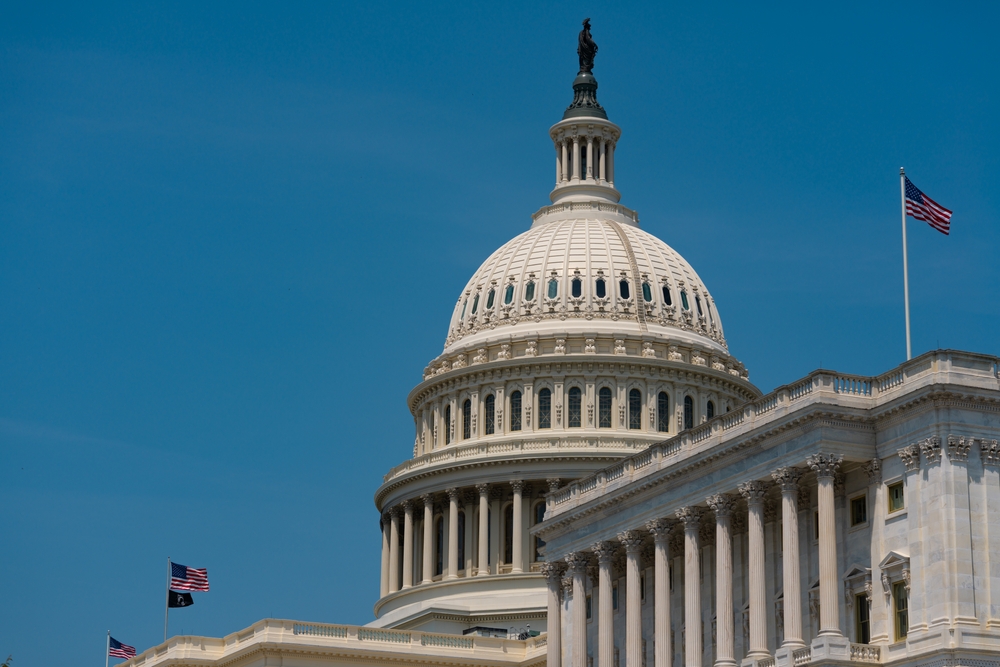
For the Deport the Terrorists Act to become law, it would need to pass through the House Judiciary Committee, clear the full House, and then navigate the Senate. In the Senate, sixty votes are required to overcome a filibuster under standard procedure, which means reaching that threshold without any Democratic support would require invoking procedural mechanisms that carry their own political costs and limits.
Whether any Democratic senators would cross the aisle to support automatic denaturalization for terrorism convictions remains to be seen. The vote calculus heading into midterm elections is complicated by the fact that some Democrats represent swing districts and states where national security positioning matters electorally, while others represent constituencies where the civil liberties concerns would dominate. A bill of this type tends to force exactly those kinds of uncomfortable choices, which partly explains why sponsors of legislation like this often see its political value as running alongside or independent of its legislative prospects.
An Old Question With New Urgency

At its core, the debate Huizenga’s bill has reopened is not new. It is a version of a question Americans have wrestled with repeatedly: what obligations does citizenship carry, and what conduct should be able to void it? Congress addressed part of that question with the Foreign Agents Registration Act, with statutes that penalize taking up arms against the United States, and with the existing framework for denaturalization through the courts.
What Huizenga is proposing is a structural change to that last mechanism, making the consequence automatic rather than discretionary for a specific and serious category of offense. Whether Congress is willing to make that change, whether courts would allow it, and whether it would survive the inevitable legal challenges that would follow its passage are all questions without certain answers.
What is certain is that four convictions, a daycare attacked inside a synagogue, and a professor shot dead on a university campus have given the debate a specificity and an urgency that abstract legal arguments alone rarely generate. Huizenga’s bill is, among other things, a response to those specific facts, and that grounding in real cases will make it harder to dismiss, whatever its ultimate legislative fate turns out to be.
automatic denaturalization, Ayman Muhammad Ghazali, Bill Huizenga Michigan, citizenship and terrorism law, citizenship revocation terrorism, denaturalization bill, Deport the Terrorists Act, DOJ denaturalization process, Foreign Terrorist Organization, GOP immigration bill, ICE deportation 2026, immigration enforcement 2026, midterm election immigration, national security legislation, naturalized citizen deportation, Republican immigration legislation, Senate filibuster immigration, terrorism material support, Trump immigration policy