
Your cart is currently empty!
Retired Firefighter Battles PTSD by Turning an Ice Cream Truck Into a Lifeline
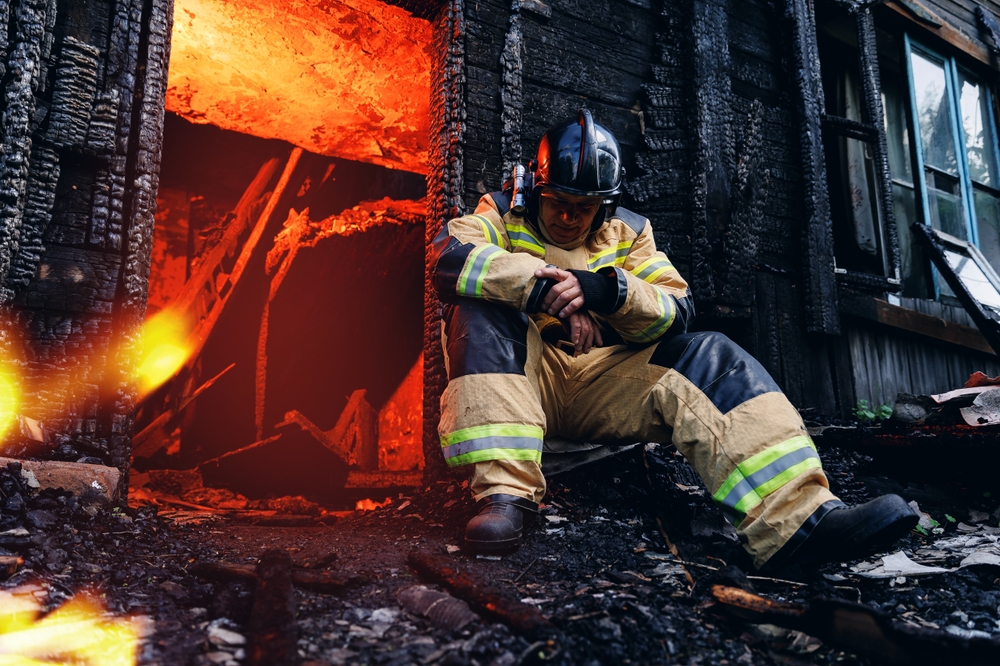
For most of his adult life, Douglas Satterfield ran toward the worst moments other people would ever face. He spent his career as a first responder in Stockton, California, working as an engineer, a firefighter, and a paramedic, answering dozens of calls a week and carrying home far more than he realized. These days, the vehicle he climbs into looks nothing like the rigs that defined that career. It plays music. It draws kids out of their houses. And it carries a mission that grew out of a moment in 2021 when Satterfield nearly lost everything he had spent decades building.
Contents
show
The truck is the visible part of the story. What sits underneath it took years to surface, and it nearly didn’t surface in time.
A Paramedic And A Problem He Couldn’t Name
Satterfield is a husband and a father of three who built his life around a profession that asks people to absorb tragedy on a schedule. In Stockton, he ran the kind of shifts that blur together, long hours stacked on long hours, with the next emergency always waiting. He was good at the work, and by his own account, he enjoyed it. That was part of what made the trouble so hard to spot.
When he describes the years leading up to his breakdown, he does not describe a man who knew he was in danger. He describes a man who thought things were fine.
“I had no idea. I was living life. I was still enjoying the job, enjoying the calls, and our family was doing what I thought was great,” he told CBS Sacramento. “I mean, we were surviving and no arguments or anything, but there’s just an underlying tension, and you just live at such a high level in life in this career. You’re always in a fight. You’re never in flight and that’s 24-7. So, it’s exhausting, but I just didn’t know what was going on with me.”
That sense of a fight that never ends is central to how he now understands what happened. The job kept him in a state of constant alertness, and there was no off switch when he came home. The pressure did not announce itself. It accumulated quietly, call after call, until it changed how he behaved.
The 2021 Breakdown That Changed Everything
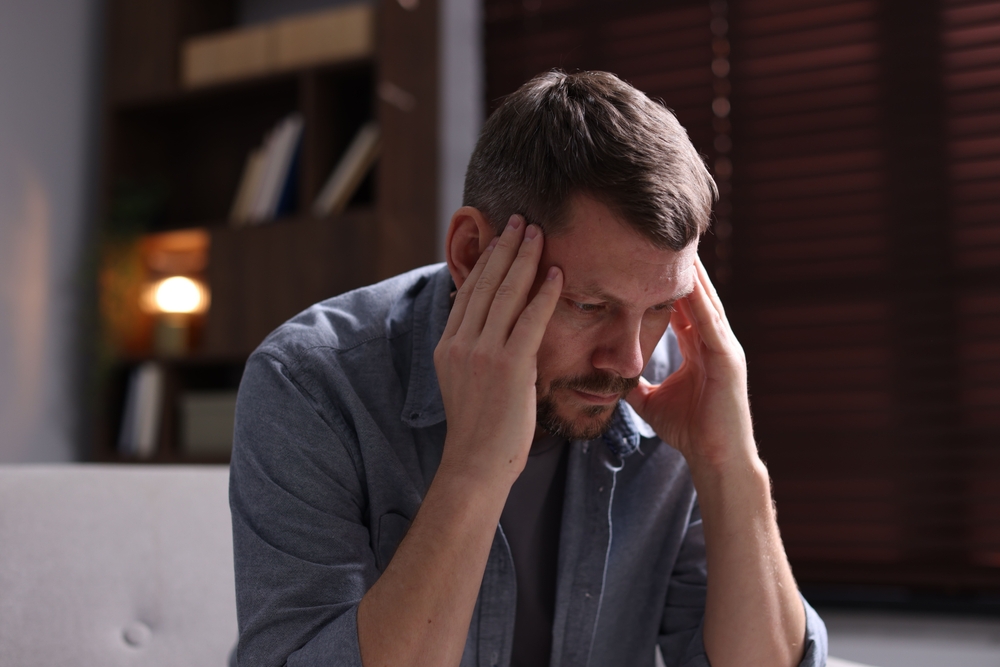
In 2021, the accumulation broke through. Satterfield suffered a mental breakdown and was later diagnosed with Post-Traumatic Stress Disorder, a condition he had never connected to himself.
His behavior in that period turned in directions that alarmed the people who knew him, and that alarmed him too once he could see it clearly. He found himself in a confrontation with law enforcement, facing the real possibility of arrest, in circumstances he describes as completely out of character. He has been candid that the ways he was coping had become, in his words, “very destructive.” At the time, he could not name any of it as a crisis. He recognized only later that he had been in the middle of a mental break and had lost control of himself.
What made the situation dangerous was how high the stakes had climbed. Satterfield understood, with a clarity that frightened him, what losing everything would mean and what might come after it. That fear pushed him to do the thing his profession often treats as a last resort. He asked for help.
How The Retreat Helped Him Unpack The Backpack

The help came through the West Coast Post-Trauma Retreat, known as WCPR, a program run by volunteers, clinicians among them, and operated as part of the First Responder Support Network. The retreat runs six days, and Satterfield credits it with changing the direction of his life.
Much of what he took from the program centers on a single image. Counselors there talk about the “backpack” that a person carries through daily life, loaded with the ordinary weight everyone accumulates, bills, family tension, and the friction of getting through a week. For a first responder, the calls go into that same backpack and never quite come out. Over a long career, the load becomes crushing, and most people drag it around without recognizing how heavy it has become. WCPR gave him a way to set rocks down rather than keep adding them.
His description of where he stood before he went is stark. He knew he was about to lose his family, and he knew what the next step would be if he did, and that knowledge was what finally moved him to seek treatment. He has said plainly that he is grateful he did.
For first responders who want the same kind of help, Satterfield points people toward WCPR directly. The program can be reached at 415-721-9789, and according to the organization, it currently operates in five states: California, Washington, Oregon, Kansas, and Indiana.
From A Marketplace Mail Truck To “Fire And Ice Cream”
Recovery gave Satterfield something to do with what he had learned, and the idea he landed on surprised his family. He found an old mail truck for sale on Facebook Marketplace and bought it, then set about converting it into an ice cream truck. The plan was simple at its center. Tips and a portion of the proceeds would go toward sending other first responders, and their spouses, to the retreat that had pulled his own family back from the edge.
His wife, Lori, watched the concept grow well past what he first pitched her. What started as a single notion kept expanding, gaining detail and ambition with each pass, until she could no longer stay on the sidelines of it. She has been clear that the vision belongs to her husband and that her role is to support it, but she did not stay a bystander for long. The project pulled her in.
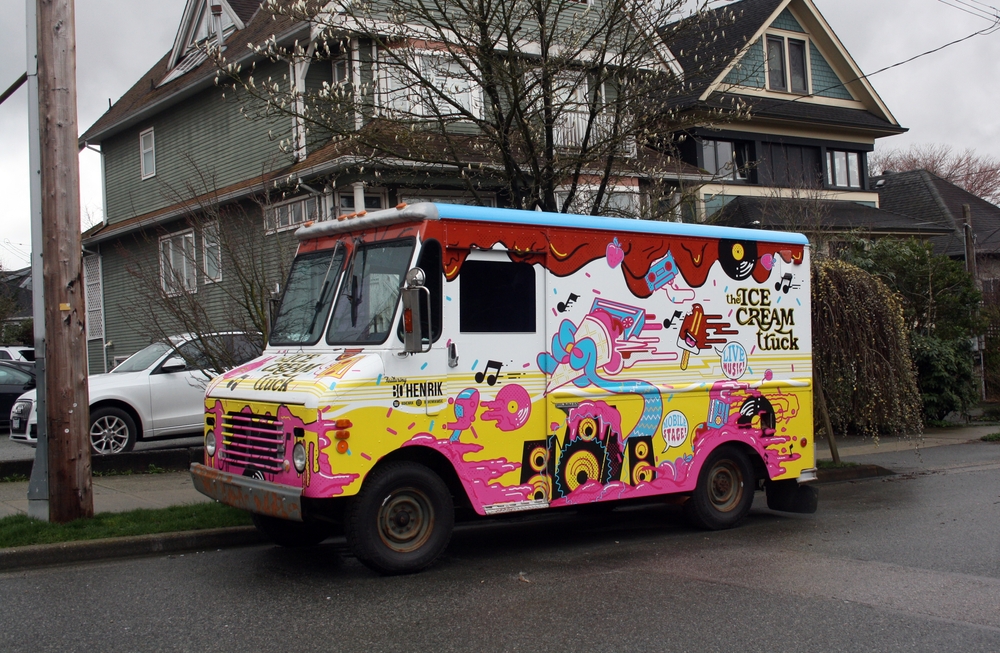
The truck carries a name that folds his old life into his new one. He calls it the “Fire and Ice cream” truck, a nod to the engines he used to ride and the cones he now hands out. The man who spent years putting out other people’s emergencies built himself a second vehicle aimed at preventing them.
A Family That Watched The Transformation Happen

The people closest to Satterfield are the ones who saw both versions of him, and they are the clearest witnesses to how far he has come. Lori and the couple’s three children, Kaitlyn, Ryan, and Reid, lived through the years when he was pouring himself into the job and leaving the internal damage unaddressed. From where they stand now, the difference is impossible to miss.
Lori has reflected on how hard those earlier years actually were, something she says she can see more honestly in hindsight than she could while living through them. What replaced that difficulty is a nightly ritual the couple keeps and calls their “porch therapy.” In the evenings, they sit outside, listen to the crickets and the frogs, and talk through their day, and often their past, and the things their family has weathered. She describes the change in their communication as complete, and the marriage as stronger for everything it survived.
Their 18-year-old son, Reid, frames it in similar terms. He has been open about the struggle of growing up in that house, and equally open about what it has meant to watch his father do the work and come out the other side.
Why This Crisis Reaches Far Beyond One Family
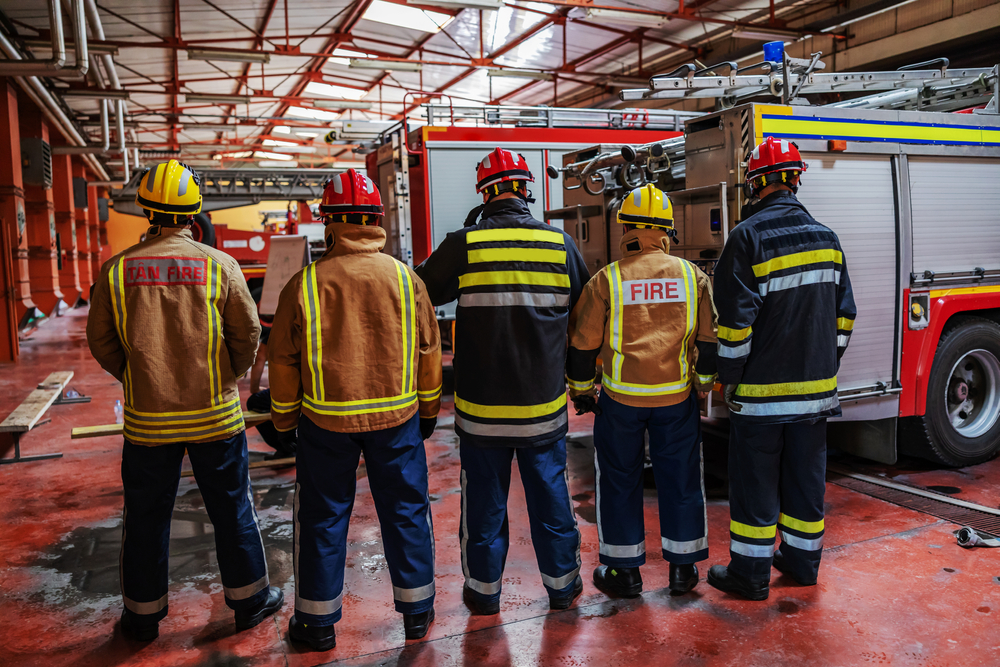
Satterfield’s story is personal, but the condition at the center of it is widespread in his profession. As many as one in 10 first responders report experiences of PTSD, close to three times the rate in the general US population, according to Texas A&M’s Dr. Anka Vujanovic, who studies trauma among first responders, along with data from the National Institutes of Health and the National Institute of Mental Health. Those figures cover PTSD alone. Rates of depression, anxiety, and general psychological distress can run higher still.
The gravest part of the research concerns mortality. Vujanovic’s work finds that suicide rates among first responders are comparable to those documented among military service members and veterans, a comparison that reframes the issue from a workplace stress problem into something far more serious.
The Stigma He Wants To See Disappear
Satterfield is direct about why so many of his colleagues never get help, and he locates much of the problem in the culture of the job itself. As he sees it, ego and pride keep people from admitting they are struggling, and the unwillingness to be vulnerable closes off the path to healing before anyone sets foot on it. He talks about how the cost of all that gets paid at home, where the family absorbs what the public never sees, and where the failure goes unrecognized until it is severe.
His larger frustration is with how slow the road to treatment can be. Coming out of the retreat, he felt an urgency that bordered on panic, a need to reach every colleague he could and tell them what had worked for him before more time passed. He wants the process of getting help to be faster and more direct, so that people in crisis are not left waiting months for approval while the backpack grows heavier. The ice cream truck is partly a vehicle for that message. Every stop is a chance to talk to another first responder and to offer their own experience as proof that recovery is possible.
What Comes Next For The Truck
For now, the operation is waiting on paperwork. The Satterfields need a county permit before they can roll, and once they have it, they plan to work private events alongside their public routes. Requests for reservations are already coming in. When the truck is running, customers will be able to track its routes through the family’s website, and the fundraising effort to send first responders and their spouses to the retreat will run alongside the day-to-day business of selling ice cream.
The shift in Satterfield’s life shows up in the smallest details of how he spends his time now. The fires he tends these days are the ones at home, handled on the porch with his wife in the evenings, and the work he does in tandem with his family in a converted mail truck. He set out to do something with the second chance he was given, and what he built points his career’s hard-won lessons toward a gentler purpose. He wants to uplift first responders, and he wants to help them fight their fires with ice cream.
CBS Sacramento, Douglas Satterfield, Dr. Anka Vujanovic, Fire and Ice Cream truck, firefighter mental health, firefighter PTSD, first responder mental health, first responder suicide, First Responder Support Network, ice cream truck, mental health stigma, paramedic PTSD, porch therapy, PTSD awareness, Sonora California, Stockton California, trauma recovery, WCPR, West Coast Post-Trauma Retreat