
Your cart is currently empty!
Jerry Seinfeld Draws Attention With Three Word Reply To Pro Palestine Activist
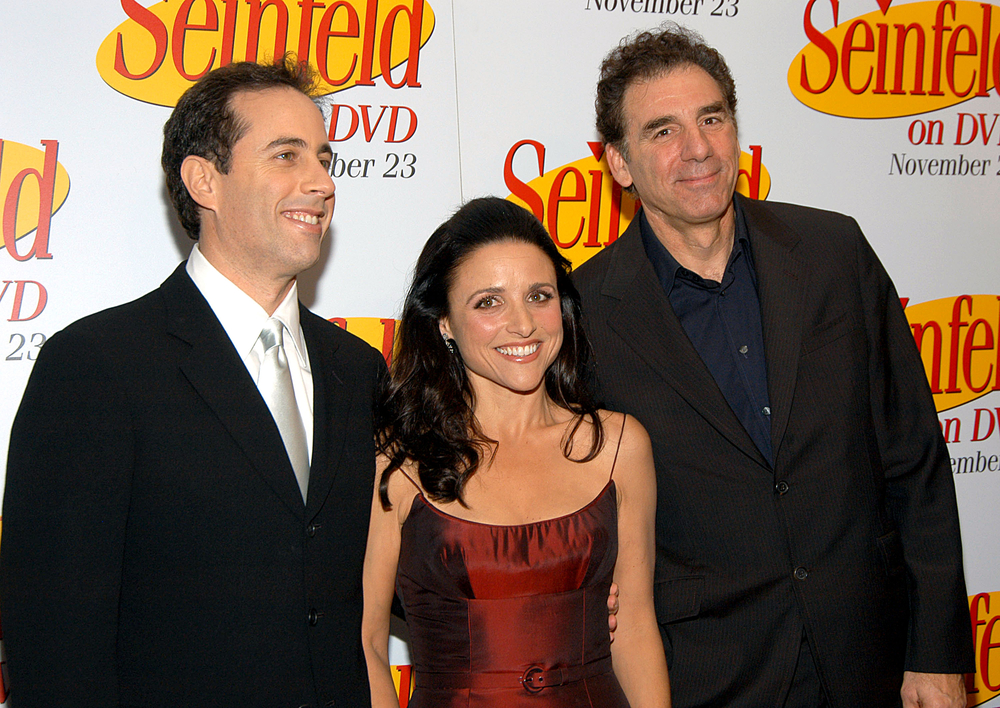
Jerry Seinfeld was walking out of Madison Square Garden after witnessing one of the most dramatic games New York basketball fans have seen in decades when a political confrontation suddenly unfolded in front of cameras.
Contents
show
The comedian, actor, and longtime Knicks supporter had spent the evening watching New York complete a remarkable comeback victory against the San Antonio Spurs in Game 4 of the NBA Finals. The win pushed the Knicks to a 3-1 series lead and left the franchise one victory away from its first NBA championship since 1973.
Fans poured into the streets around the arena celebrating what many were already calling a historic night.
Then a social media influencer stepped directly into Seinfeld’s path.
Within seconds, the brief exchange would become one of the most talked-about celebrity clips online.
The encounter has since reignited debate surrounding celebrity activism, public confrontations, the Israel-Hamas conflict, and the growing trend of influencers seeking viral moments by approaching famous figures in public.
The Exchange Outside Madison Square Garden
Video posted to social media shows streamer and influencer FinesseFave approaching Seinfeld as the comedian moved through a crowd outside Madison Square Garden following the game.
Holding a microphone, the influencer called out to him.
“What up, Seinfeld? What up? Can we get a ‘Free Palestine’?”
Seinfeld laughed as he continued walking.
The influencer repeated the request.
“Come on, give us one ‘Free Palestine.’”
Seinfeld then responded with three words that immediately became the focus of headlines across multiple media outlets.
“It doesn’t exist.”
The comedian did not stop to explain his comment.
He did not engage in a debate.
He simply continued walking through the crowd.
The interaction lasted only a few seconds, but clips quickly began circulating across TikTok, Instagram, X, and other platforms.
FinesseFave later shared the video with his followers and added a caption criticizing the comedian.
The response online was immediate.
Supporters praised Seinfeld for refusing to engage in what they viewed as a staged attempt to provoke him.
Critics accused him of dismissing Palestinian identity and aspirations.
The exchange quickly became another example of how a moment lasting only seconds can dominate online conversations for days.
Why Seinfeld Has Become a Lightning Rod
The Madison Square Garden incident did not occur in a vacuum.
For nearly two years, Seinfeld has been one of the most visible entertainment figures expressing support for Israel following the October 7, 2023 Hamas attacks and the subsequent war in Gaza.
Unlike many celebrities who have attempted to avoid taking clear public positions, Seinfeld has repeatedly made his views known.
That visibility has made him a frequent target for activists who oppose Israel’s military actions and support the Palestinian cause.
What might once have been a routine walk from a sporting event has increasingly become an opportunity for political confrontation.
The comedian has found himself approached by protesters, interrupted by activists, challenged by influencers, and criticized on social media because of his position on the conflict.
At the same time, many supporters have applauded his willingness to publicly defend his views despite intense criticism.
The result is that Seinfeld has become an unlikely participant in one of the most divisive political debates of the modern era.
For a comedian best known for making jokes about everyday life, airline food, and awkward social encounters, the transformation has been striking.
From Sitcom Icon to Political Flashpoint

For much of his career, Seinfeld remained largely removed from political controversy.
His self-titled sitcom became one of the most successful television shows in history by focusing on ordinary experiences rather than political issues.
The series built an enormous audience by turning mundane frustrations into comedy.
Viewers watched characters argue about parking spaces, restaurant reservations, dating mishaps, and social etiquette.
Political messaging was rarely part of the formula.
That image has changed significantly in recent years.
As the Israel-Hamas conflict became one of the most polarizing global issues, Seinfeld emerged as one of the few major entertainment figures willing to repeatedly speak on the subject.
His support for Israel became particularly visible after he traveled to the country in late 2023.
During that visit, Seinfeld toured Kibbutz Be’eri, one of the communities devastated during the October 7 attacks.
He also met with survivors and families affected by the violence.
The visit drew extensive media coverage and further solidified his position in the public debate.
Supporters viewed the trip as an expression of solidarity with victims of terrorism.
Critics argued that it ignored the suffering experienced by Palestinians during the conflict.
Either way, the visit marked a turning point.
From that point forward, Seinfeld’s public appearances increasingly attracted political attention.
The Rise of Influencer Confrontation Culture

The incident outside Madison Square Garden also reflects a broader trend that has transformed celebrity culture over the past decade.
In previous generations, celebrities typically interacted with the public through interviews, television appearances, press conferences, or carefully managed public events.
Today, anyone carrying a smartphone can create content capable of reaching millions of people.
This shift has created a new category of online content centered entirely around confrontation.
Influencers frequently approach celebrities, politicians, athletes, and public figures hoping to capture an unexpected reaction.
Sometimes the interactions are playful.
Sometimes they are hostile.
Almost all of them are designed to generate engagement.
The formula is straightforward.
Find a recognizable public figure.
Ask a provocative question.
Record the response.
Upload the clip.
Allow the internet to do the rest.
The strategy has proven remarkably effective.
Short clips often generate more attention than lengthy interviews because they compress complicated issues into highly shareable moments.
The audience instantly chooses sides.
Supporters celebrate.
Critics condemn.
The algorithm rewards both reactions.
For influencers, even a negative response can become valuable content.
The goal is not necessarily conversation.
The goal is attention.
That reality has increasingly shaped interactions between celebrities and members of the public.
Seinfeld’s History of Handling Hecklers
One reason Seinfeld appeared unfazed during the Madison Square Garden encounter may be his decades of experience dealing with difficult audiences.
Long before becoming one of television’s most recognizable faces, he spent years performing stand-up comedy in clubs across New York.
Those early years required comedians to handle interruptions, criticism, hecklers, and unpredictable audience members on a nightly basis.
The ability to think quickly became essential.
That skill remains evident today.
Over the past two years, Seinfeld has repeatedly demonstrated an ability to respond to political interruptions without appearing rattled.
Several incidents have gone viral precisely because of his quick reactions.
Rather than becoming visibly angry, he often responds with sarcasm, humor, or brief dismissive remarks.
Those responses have become a defining feature of many confrontations involving the comedian.
Supporters view them as evidence of composure.
Critics often see them as dismissive.
Either way, they tend to spread rapidly online.
The Madison Square Garden exchange followed a pattern that has become familiar.
A politically charged question was asked.
Seinfeld responded briefly.
The internet spent days debating what he meant.
Previous Encounters With Activists
The confrontation following the Knicks game was not the first time Seinfeld had been approached by activists in public.
Earlier this year, another influencer attempted to create a viral moment outside Radio City Music Hall.
According to reports, the individual initially approached Seinfeld under the pretense of requesting a selfie.
Instead, the encounter quickly shifted into a political statement.
The influencer began repeatedly shouting “Free Palestine” while filming the comedian.
Seinfeld responded with another blunt remark.
“I don’t care about Palestine.”
He then walked away.
The clip circulated widely online and generated intense debate.
Supporters argued that Seinfeld had every right to ignore an activist attempting to create content at his expense.
Critics viewed the comment as insensitive to Palestinian suffering.
The incident became another example of how quickly celebrity interactions can become political flashpoints.
The pattern would repeat several months later after another Knicks game.
In that encounter, a protester accused Seinfeld of supporting what she described as the genocide of Palestinian children in Gaza.
As cameras rolled, the comedian responded with a short quip before entering his vehicle.
Once again, the exchange spread rapidly across social media.
Once again, supporters and critics interpreted the moment in completely different ways.
For Seinfeld, these incidents have become increasingly common.
For the internet, they have become reliable fuel for endless debate.

The Duke University Controversy
Some of the most visible backlash against Seinfeld came not on a street corner or outside a sports arena, but at one of America’s most prestigious universities.
In May 2024, Seinfeld delivered the commencement address at Duke University. The invitation itself generated criticism before graduation day arrived.
As Seinfeld took the stage, dozens of students walked out. Others booed as the comedian began speaking.
The protest was tied directly to his support for Israel.
Videos of the demonstration quickly spread online, turning what would normally have been a routine commencement speech into national news.
The incident occurred during a period when university campuses across the United States were experiencing major demonstrations related to the war in Gaza.
Student encampments had appeared at schools across the country. Administrators faced growing pressure from activists demanding institutional action. Debates over free speech, antisemitism, protest rights, and foreign policy dominated campus conversations.
Against that backdrop, Seinfeld’s appearance became a symbol of a much larger conflict.
Supporters argued that inviting a successful comedian and alumnus to speak at graduation should not become a political controversy.
Critics argued that honoring someone who openly supported Israel was inappropriate given events unfolding in Gaza.
The walkout reflected how deeply polarized discussions surrounding the conflict had become.
For Seinfeld, however, the protests did little to alter his public position.
If anything, subsequent comments suggested he had become even more willing to speak directly about the issue.
When Protesters Brought Politics Into His Shows
The tension surrounding Seinfeld’s views has not remained confined to social media or public appearances.
His comedy performances have repeatedly become targets for political activists.
One of the most widely reported incidents occurred during a stand-up show in Norfolk, Virginia.
According to reports, a protester interrupted the performance by shouting “Free Gaza” from the audience.
The disruption immediately changed the atmosphere inside the venue.
Audience members began booing the heckler.
Others started chanting Seinfeld’s name.
Security eventually moved to remove the protester from the theater.
Seinfeld, drawing on decades of stand-up experience, responded with humor.
“This is exciting. I like this. I like a little Jew hate to spice up the show,” he joked as the interruption unfolded.
The crowd responded positively, but the disruptions did not end there.
Reports indicated that protesters interrupted the show multiple times throughout the evening.
Rather than allowing the interruptions to derail the performance, Seinfeld continued with his set.
Similar incidents occurred elsewhere.
During a performance in Australia, pro-Palestinian activists interrupted the comedian with chants and political slogans.
Seinfeld responded by joking that the protesters had paid for tickets and therefore contributed financially to his success.
The audience laughed and applauded.
For supporters, moments like these demonstrated Seinfeld’s ability to maintain control of a room.
For critics, they reinforced concerns about comments they viewed as dismissive toward activists and their cause.
The incidents also highlighted a broader trend.
Entertainment venues increasingly find themselves serving as battlegrounds for political disputes that extend far beyond the stage.
The Comment That Sparked Another Debate

The Madison Square Garden encounter generated headlines because of Seinfeld’s response, but it also reignited discussion surrounding comments he had previously made about the “Free Palestine” movement.
During an appearance introducing former Israeli hostage Omer Shem Tov at a campus event, Seinfeld offered one of his most direct criticisms of the slogan.
“Free Palestine is, to me, just you’re free to say you don’t like Jews. Just say you don’t like Jews,” he said.
The statement immediately generated controversy.
Supporters argued that Seinfeld was highlighting antisemitism that sometimes emerges within anti-Israel activism.
Critics countered that he was unfairly characterizing a movement supported by millions of people around the world who advocate for Palestinian rights.
The debate reflected a broader disagreement that has existed for years.
For many activists, “Free Palestine” is a call for Palestinian self-determination, statehood, and freedom from occupation.
Others interpret the phrase differently depending on the context in which it is used and the political goals of those using it.
The disagreement has become one of the defining arguments surrounding the conflict.
As a result, when Seinfeld responded “It doesn’t exist” outside Madison Square Garden, people immediately connected the remark to his previous statements.
The three-word response became far more than a simple exchange between a comedian and an influencer.
For many observers, it represented another chapter in an ongoing political conversation.
Why These Encounters Keep Going Viral
Part of what makes moments like this so powerful online is their simplicity.
A complicated geopolitical conflict involving decades of history becomes condensed into a few seconds of video.
One person asks a question.
Another person answers.
Millions of people project their own beliefs onto the exchange.
Social media platforms are uniquely suited to this kind of content.
Algorithms reward emotional reactions.
People are more likely to share clips that provoke anger, agreement, outrage, or amusement.
A short confrontation between a celebrity and an activist can therefore spread much faster than a lengthy discussion involving nuance and context.
The result is a cycle that repeats itself again and again.
Influencers seek high-profile targets.
Celebrities respond.
Clips go viral.
Comment sections become battlefields.
New confrontations follow.
The Madison Square Garden exchange fit perfectly into that pattern.
It involved a famous comedian, a politically charged topic, a brief response, and a viral video.
Those ingredients almost guaranteed widespread attention.

A Divided Public Response
Reactions to the video largely reflected existing political divisions.
Supporters of Seinfeld praised him for refusing to engage with what they viewed as an attempt to create a staged viral moment.
Many argued that public figures should not be expected to answer political questions every time they leave a restaurant, sporting event, or performance venue.
Others applauded the comedian for standing by his views despite repeated criticism.
Critics saw the situation very differently.
Many argued that Seinfeld’s response dismissed Palestinian identity and ignored the suffering experienced by civilians during the conflict.
Others viewed the exchange as further evidence of the deep polarization surrounding discussions of Israel and Palestine.
What became clear was that almost nobody viewed the clip as politically neutral.
People interpreted it through the lens of their existing beliefs.
That reality helps explain why similar encounters continue attracting so much attention.
They are rarely just about the words spoken in a specific moment.
They become symbols of larger arguments already taking place across society.
Lost Amid the Headlines Was a Historic Basketball Night
While political debate dominated coverage of the exchange, the original reason Seinfeld was at Madison Square Garden was easy to forget.
The Knicks had just completed one of the most memorable victories in franchise history.
Facing a significant deficit against the San Antonio Spurs in Game 4 of the NBA Finals, New York mounted a dramatic comeback that energized both the arena and the city.
The victory pushed the Knicks to a 3-1 lead in the series.
For a franchise that has spent decades searching for championship success, the moment carried enormous significance.
Fans flooded the streets around Madison Square Garden after the final buzzer.
Car horns echoed throughout Manhattan.
Crowds celebrated deep into the night.
The atmosphere reflected years of anticipation from a fan base desperate to see the Knicks return to the top of the NBA.
Seinfeld has long been associated with the team.
For decades, he has been a regular presence courtside and one of the franchise’s most recognizable celebrity supporters.
On most nights, his appearance at a game would have generated little attention.
This time was different.
A few seconds of political confrontation ended up competing with one of the biggest sports stories of the year.
Seinfeld Shows No Signs of Backing Away
One consistent theme has emerged from the various confrontations involving Seinfeld over the past two years.
Despite criticism, protests, interruptions, and viral controversies, he has shown little indication that he intends to soften or retreat from his position.
Whether speaking at universities, performing stand-up comedy, attending public events, or simply walking through New York City, he has continued responding to challenges in much the same way.
Sometimes with humor.
Sometimes with sarcasm.
Sometimes with only a few words.
The Madison Square Garden encounter followed that pattern.
An influencer attempted to draw him into a public political statement.
Seinfeld responded briefly and moved on.
The video spread around the world anyway.
For supporters, the moment reinforced an image of someone unwilling to be intimidated by public pressure.
For critics, it provided another example of comments they strongly oppose.
Either way, the exchange ensured that Seinfeld would remain part of a debate that extends far beyond comedy, sports, or celebrity culture.
As long as the conflict in the Middle East continues to dominate international headlines, figures who publicly align themselves with either side are likely to face increasing scrutiny.
Seinfeld’s experience suggests that scrutiny can appear almost anywhere, even outside a basketball arena moments after one of the greatest nights in Knicks history.
What should have been a straightforward walk through a celebrating crowd became another viral political moment. Judging by the pattern of the last two years, it is unlikely to be the last.