
Your cart is currently empty!
Nearly Everyone Turns The Same Way When Walking, According To Scientists
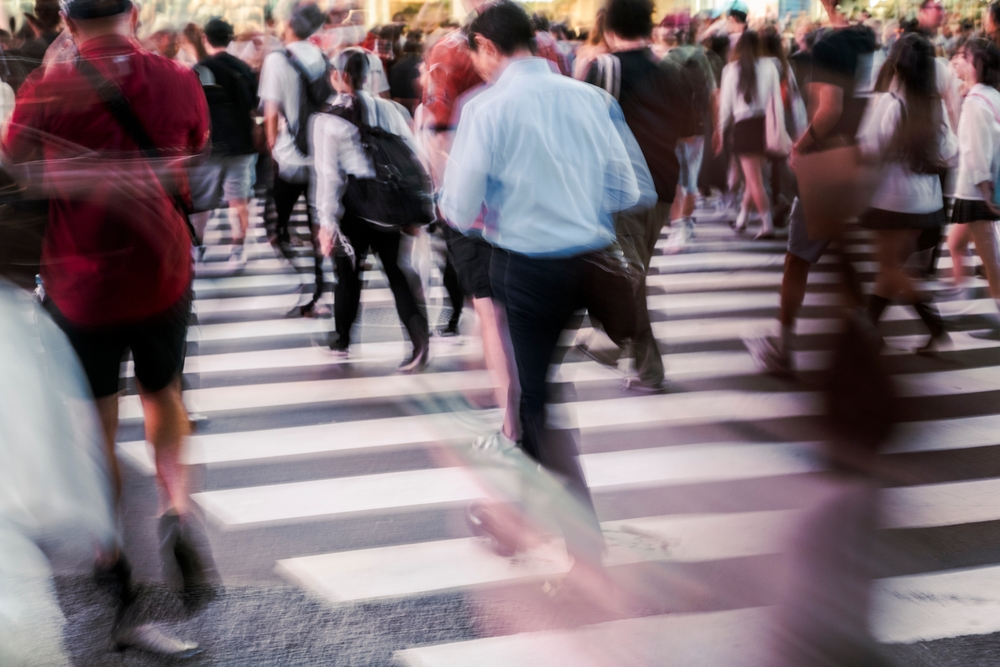
Most people assume they make hundreds of tiny decisions while walking without giving them much thought. Which way to move through a crowd, how to avoid another pedestrian, or when to change direction all feel like spontaneous choices made in the moment. But scientists have uncovered evidence suggesting one of those decisions may not be as random as people think.
Contents
show
A team of researchers studying pedestrian movement noticed something so unexpected that it ended up becoming the focus of an entirely new investigation. Across dozens of experiments involving people moving through open spaces, participants repeatedly showed the same tendency. When turning while walking, they overwhelmingly favored one direction over the other. The pattern appeared so consistently that it caught researchers completely off guard, and even after extensive testing, nobody has been able to explain exactly why it happens.

Researchers Stumbled Across The Pattern By Accident
The discovery emerged during research that was originally focused on something completely different. During the COVID-19 pandemic, scientists were examining how people move through shared spaces and maintain distance from one another. Public health officials around the world had introduced social distancing measures, and researchers wanted a better understanding of how pedestrian behavior changes when people attempt to keep safe distances in crowded environments.
As part of that work, groups of volunteers were filmed moving through controlled environments while researchers collected data on their movement patterns. The footage was then analyzed to understand how people adjusted their paths around others. While reviewing those recordings, the team noticed a detail that had nothing to do with social distancing.
Again and again, people appeared to rotate and change direction in the same way. What initially looked like a coincidence soon became impossible to ignore. Out of 33 separate experimental trials, participants demonstrated a preference for turning counterclockwise in 32 of them.
Project Associate Professor Claudio Feliciani from the University of Tokyo explained how surprising the finding was. He said, “When analyzing the experiments, my colleagues realized by chance that in 32 out of 33 experimental trials, as people moved and turned, they noticeably preferred to turn counterclockwise.”

Scientists Began Looking For An Explanation
The consistency of the pattern immediately raised questions. Human movement is influenced by countless factors, from personal habits and cultural norms to physical characteristics and environmental conditions. Researchers needed to determine whether one of those factors was responsible for the unexpected turning preference.
Feliciani said, “This was completely unexpected as, at least instinctively, when people walk around randomly, you imagine people turn as their needs suit them, with little sign of an overall preference. But there was a definite, measurable tendency for people to turn counterclockwise over clockwise, all things being equal.”
Because the original experiments took place in Spain, one possibility was that cultural influences might be shaping behavior. To test that theory, researchers expanded the project and collaborated with scientists in Japan. If culture played a significant role, participants in different countries might display different turning habits.
Feliciani explained how the investigation expanded, saying, “The team had to understand the reason for this, and all good research practice dictates that you test observations against multiple possible causes to narrow down what’s really going on. And it’s this that led them to contact me in Japan, as initially, it was thought that cultural factors might affect turning preference. So, among other things, we tested that.”

Most Factors Made Almost No Difference
The expanded experiments examined a wide range of possible explanations. Researchers compared participants from different cultural backgrounds and tested people in both open and constrained environments. They also looked at gender, handedness, group size, and other characteristics that could potentially influence movement.
What made the findings even stranger was how little these factors appeared to matter. People from Spain and Japan showed remarkably similar behavior despite their different cultural backgrounds. Men and women behaved similarly, and handedness failed to provide a convincing explanation.
The researchers kept searching for a variable that might explain why humans appeared so strongly biased toward one direction. Yet one potential explanation after another failed to fit the evidence.
The result was a growing mystery. A clear behavioral pattern existed, but none of the obvious explanations appeared capable of accounting for it.
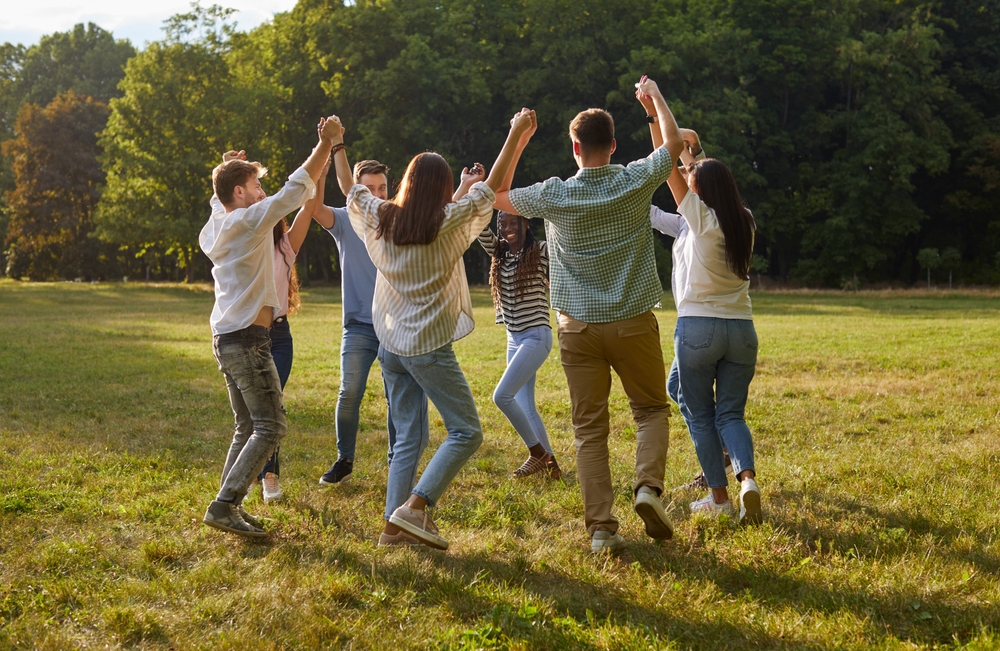
Children Showed The Strongest Bias
One factor did stand out from the rest, although its influence was relatively small. Age appeared to affect the strength of the counterclockwise preference.
When researchers compared participants of different ages, younger people demonstrated the tendency more strongly than older individuals. The pattern remained present across age groups, but children showed the clearest bias.
Feliciani said, “Of all these things, the only thing that stood out was that kids tend to have a stronger bias for the counterclockwise direction, so probably age plays a role in making the effect weaker or stronger.”
The finding raises new questions about whether the behavior develops naturally during childhood and gradually weakens with age, or whether some aspect of physical development influences how people move through space. For now, researchers do not have enough evidence to provide a definitive answer.
The Discovery Could Reveal Something About The Human Body
At first glance, a preference for turning left instead of right might sound like a trivial curiosity. Researchers believe it could point toward something much deeper.
According to the team, many animals move without displaying any strong directional preference. Humans appear to be different, and that difference may reveal previously unnoticed asymmetries in how the body functions.
Feliciani said, “Our results may appear to be a minor, insignificant discovery, but in nature, most phenomena related to locomotion show that animals mostly walk without directional preference. The strong bias found in people hints at some asymmetry at the biomechanical level.”
That asymmetry could involve the nervous system, muscular structure, balance mechanisms, or another biological factor that scientists have not yet identified. Understanding it could eventually contribute to research in neuroscience, biomechanics, architecture, crowd management, and engineering.
The finding may also help explain how people naturally move through public spaces, information that can be valuable when designing transportation hubs, stadiums, airports, and other crowded environments.
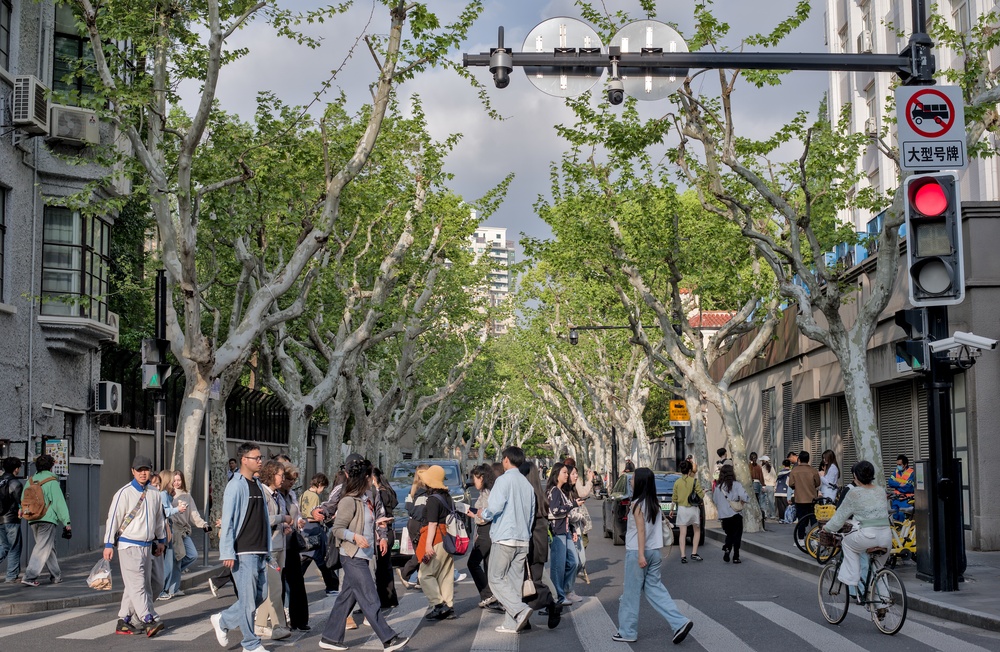
Scientists Have Already Ruled Out Several Popular Theories
Whenever unusual scientific findings attract public attention, alternative explanations quickly emerge. This discovery has been no exception.
Some people suggested that eye dominance might be responsible for the preference. Others speculated about larger environmental influences, including the Earth’s magnetic field or even the Coriolis effect created by the planet’s rotation.
Researchers tested some of these possibilities directly. Covering a participant’s left or right eye had no meaningful impact on the turning bias, suggesting vision is unlikely to be the source of the phenomenon.
Feliciani said, “It likely does not come from the eyes, because we tried to patch people’s left or right eyes and the bias was still there. And some people asked us if it might be large-scale phenomena like the Coriolis force or Earth’s magnetic field, but this seems unlikely given what we have managed to point to so far.”
An Unanswered Mystery That Scientists Are Eager To Solve
The research team is now planning more detailed experiments focused on individual movement rather than group behavior. By studying people one at a time, scientists hope they can isolate the underlying mechanism responsible for the counterclockwise preference.
One intriguing clue comes from the world of sports. Many running events and racing competitions traditionally move counterclockwise, despite there being no universally accepted explanation for why those directions became standard.
Feliciani pointed to that curious connection when he said, “There are some interesting parallels to certain sports. Some running and driving competitions are always, but inexplicably, held on courses that run counterclockwise. But that’s an investigation for another time.”
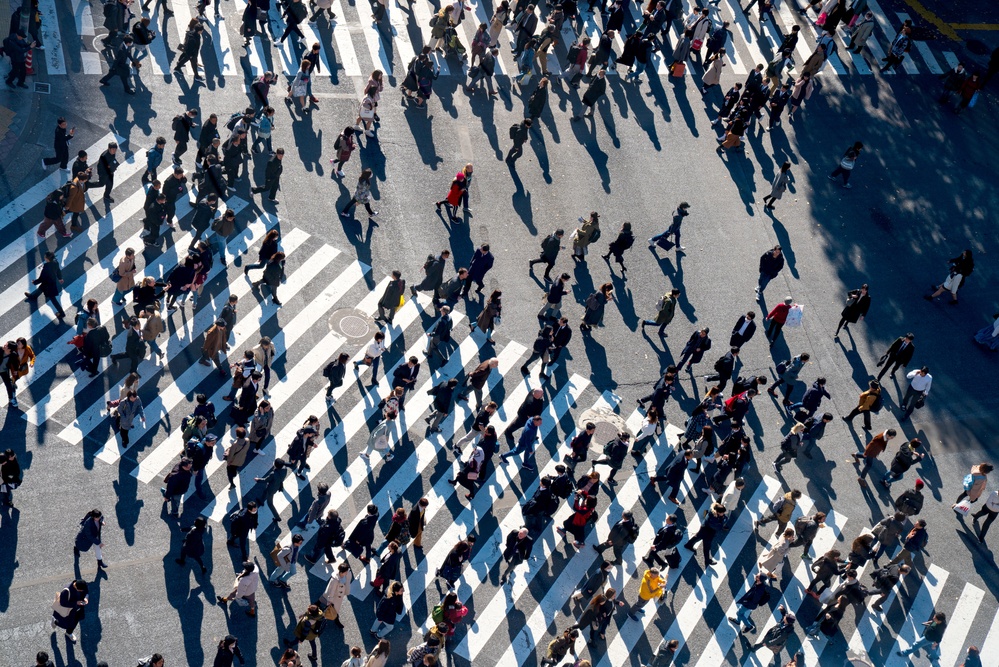
For now, the answer remains elusive. Yet the next time you find yourself instinctively turning left while navigating a crowd, you may be participating in a behavior shared by countless other people around the world, for reasons that science is still trying to understand.
Sources:
- Echeverría-Huarte, I., Feliciani, C., Shi, Z., Nishinari, K., Sánchez, A., Garcimartín, A., & Zuriguel, I. (2026). Individual locomotor bias drives counterclockwise motion in pedestrian crowds. Nature Communications, 17(1). https://doi.org/10.1038/s41467-026-73713-w
- Counterclockwise bias | The University of Tokyo. (n.d.). The University of Tokyo. https://www.u-tokyo.ac.jp/focus/en/press/z0508_00441.html
biomechanics, Brain Science, counterclockwise walking, covid research, crowd behavior, Human Behavior, human movement, nature communications, neuroscience, pedestrian behavior, psychology, research study, science, scientific discovery, spain research, strange discoveries, University of Tokyo, viral science, walking habits