
Your cart is currently empty!
A Massive Data Center is Baking Nearby Residents Amidst a Historic Heatwave
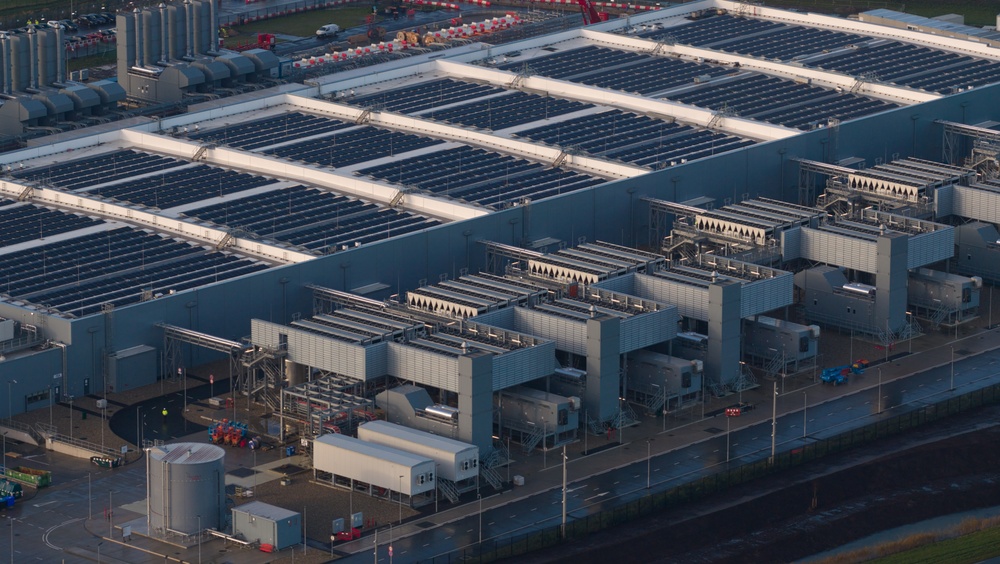
As a relentless summer sun scorches Europe, one English town is experiencing a completely different kind of heat. Residents of Slough are sweating through record temperatures, but the weather alone is not to blame. Just a few steps from their homes sits a massive, windowless concrete fortress that hums day and night.
Contents
show
Life Next to Europe’s Data Hub
Imagine stepping outside and feeling the air physically burn. For residents of Slough, a town ten miles west of London’s Heathrow Airport, this is a daily reality during summer heatwaves. While all of Europe battles rising temperatures, this community is dealing with a unique, man-made accelerator: the largest data center hub on the continent. Between 30 and 40 massive, energy-hungry facilities are woven into the town, keeping the internet running while leaving locals to sweat it out.
The physical toll on the community is immediate and severe.
“The heat is like something pinching your body and burning your skin.” — Nabeel Nawaz, local store manager
This intense heat is not an illusion or a slight discomfort. The data centers—multi-story concrete buildings surrounded by security fences that emit a constant, low roar like a generator—are tangibly altering the local environment. Regional weather data backs up the community’s lived experience. During a recent peak in the heatwave, the weather station closest to the tech park recorded a high of 36.7°C (approximately 98°F). Just a few blocks away in the town center, the temperature peaked at a noticeably cooler 34.7°C.
Locals feel this sudden shift simply by moving around their own town. One resident noted that during the 2022 heatwave, a parking lot near the data centers hit a blistering 45°C. Driving just a few miles away toward neighboring Windsor dropped the temperature down to 39°C. For the people of Slough, these facilities are an inescapable reminder that global digital convenience comes with a highly localized, physical cost.
The Science Behind the “Data Heat Island Effect”

While residents feel the temperature difference on the ground, scientists are beginning to map out exactly why these tech hubs act like localized industrial ovens. A recent study led by researchers at the University of Cambridge highlights a growing environmental phenomenon known as the “data heat island effect.”
Most people are familiar with traditional urban heat islands, where cities run hotter because concrete roads and asphalt roofs trap sunlight. Data centers introduce an active, mechanical version of this problem. Inside these facilities, thousands of high-performance computer chips and artificial intelligence (AI) processors generate immense amounts of thermal energy. To prevent these sensitive components from melting down, massive cooling systems must run constantly. These systems do not destroy the heat; they simply collect it and blast it out of the exhaust vents directly into the local neighborhood air.
The Cambridge paper, which analyzed decades of satellite data worldwide, found that data centers elevate temperatures in their immediate vicinity by an average of 2°C (3.6°F), with localized spikes soaring by as much as 9°C (16°F).
“What we measured were what we can call the first generation of data centers that were the ones that were implemented in the last 20 years. Slough is a different context for the scaling up of data centers, and is something that is quite unprecedented.” — Andrea Marinoni, Associate Professor at Cambridge and study co-author
Marinoni points out that while older facilities typically consumed around 100 megawatts of power, the tech campus in Slough operates on an unprecedented scale of roughly one gigawatt (1,000 megawatts). Because these ultra-powerful facilities are expanding rapidly across the globe, researchers estimate that this new data heat island effect could eventually impact the daily lives and welfare of more than 340 million people worldwide.
A Community Divided: The Complex Reality of Living with Big Tech

These massive, windowless buildings are not just empty concrete blocks; they are the physical engines of modern life. The Slough facilities host the digital infrastructure for tech giants like Amazon, Google, and Microsoft. When we stream a movie, save a photo to the cloud, or use an AI tool, it is places like this that do the heavy lifting.
For some locals, the resulting heat makes simple, undeniable sense.
However, the community does not universally paint the data centers as the sole villains of the story. These tech hubs bring jobs and investment to the area, creating a complicated relationship between the town and its industrial neighbors. Nabeel Nawaz, who works near the campus, regularly hears debates among his customers. He estimates that the facilities might only be responsible for 10% to 15% of the unbearable local temperatures, attributing the broader crisis to global climate change. Another local, Didier Kindembe, points out that the architectural design of the industrial park itself—miles of heat-absorbing concrete—is also to blame.
Despite these nuanced local perspectives, the rapid expansion of data centers is increasingly testing public patience worldwide. The “data heat island effect” is just one symptom of a much larger footprint. Communities pushing back against new tech developments cite a growing list of daily burdens: surging electricity prices, strained local water pressure from massive cooling demands, and the constant, droning noise of the facilities themselves.
During a record-breaking summer, asking local residents to quietly endure these side effects so the rest of the world can enjoy seamless digital convenience is proving to be a bitter pill to swallow.
A Winter Solution to a Summer Crisis
Right now, the intense heat pumped out by these data centers is treated as garbage—vented directly into the summer air to bake nearby neighborhoods. But this immense thermal energy doesn’t necessarily have to be a hazard.
Recognizing the sheer scale of energy being wasted, the UK government has proposed capturing the exhaust from data centers to warm thousands of local homes. On paper, it is a brilliant, sustainable idea. Funneling tech-generated heat into residential radiators could lower winter heating bills and reduce reliance on fossil fuels. However, this is strictly a winter solution to a summer crisis. A promise of a warmer house in December offers zero comfort to a family trying to survive a 36°C (98°F) heatwave in July.
This mismatch between tech innovation and community infrastructure highlights a looming, urgent threat: the artificial intelligence boom.
The tech industry is currently pouring hundreds of billions of dollars into constructing new, ultra-powerful data centers to support the rise of AI. Artificial intelligence requires drastically more computing power—and consequently, far more intense cooling—than traditional cloud storage or internet searches.
We are currently watching the consequences unfold in real-time. Slough is largely dealing with older, first-generation data centers, yet the heat impact is already unprecedented. As the next generation of massive, AI-driven facilities breaks ground, communities will be forced to absorb an even greater environmental burden unless developers prioritize radical new cooling and heat-recycling technologies before the concrete is poured.
The Boiling Point of the AI Era

Every time a smartphone pings, an AI generates a response, or a video streams flawlessly, a physical machine somewhere works overtime to make it happen. Society has been sold the illusion that the “cloud” is an invisible, weightless entity. But for the residents of Slough, the cloud is made of concrete, spinning fans, and suffocating heat. The convenience of the modern digital era relies on a very physical, very hot reality on the ground.
As the artificial intelligence arms race accelerates, this localized warming will not stay contained to a few industrial parks outside of London. With tech giants planning massive infrastructure expansions globally, the data heat island effect could soon arrive in neighborhoods everywhere. If the industry continues to treat the surrounding environment as a free dumping ground for its thermal exhaust, millions more will be forced to pay the physical price for global connectivity.
The technology sector must be held accountable for its physical footprint before the next wave of gigawatt-scale data centers breaks ground. This requires mandating sustainable cooling innovations, building heat-recycling infrastructure from day one, and giving local residents the power to veto developments that threaten their well-being. The internet should not have to cook communities alive just to keep the world online.