
Your cart is currently empty!
Virginia Man Pleads Not Guilty in AI Surveillance Camera Case
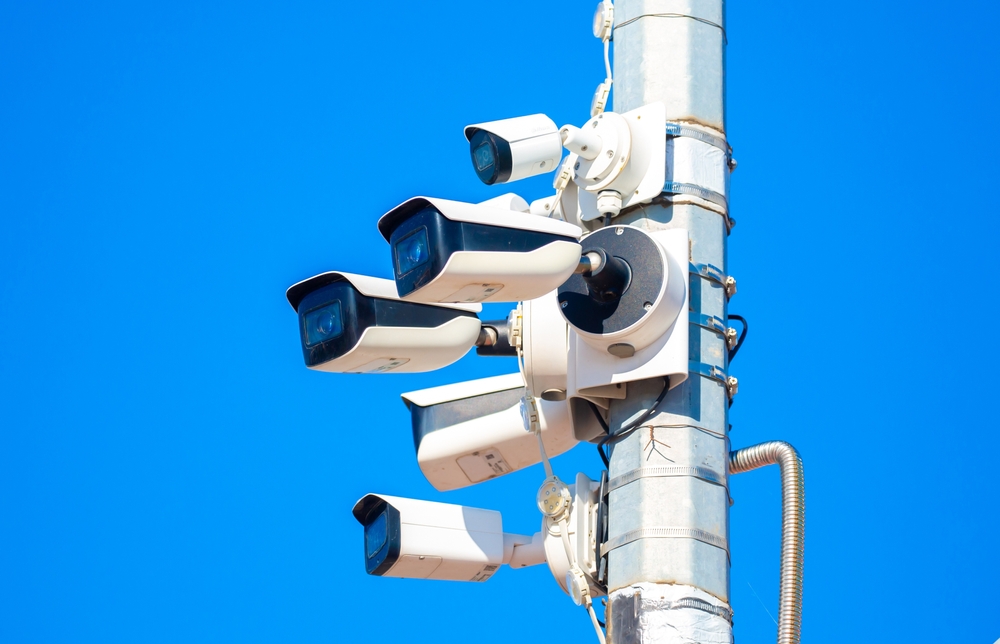
The criminal case against a Virginia man accused of dismantling AI-powered surveillance cameras has become far more than a local vandalism investigation. It has turned into the latest flashpoint in a growing national debate over how much surveillance Americans are willing to accept in exchange for public safety.
Contents
show
Jeffrey Sovern, a U.S. Air Force engineer from Suffolk, Virginia, has pleaded not guilty to charges stemming from the alleged destruction of multiple Flock Safety license plate cameras. While prosecutors describe the case as repeated property destruction, supporters see something very different. Many believe it represents a challenge to what they consider one of the fastest expanding surveillance systems in the United States.
A Local Criminal Case Quickly Drew National Attention
Authorities say Sovern is responsible for destroying 13 Flock Safety automatic license plate reader cameras between April and October. Court documents allege he used tools, including vice grips, to dismantle the camera poles before removing components such as batteries, wiring and solar panels. Police later recovered some of those items during a search of his property.
He now faces 13 felony counts of destruction of property, six felony counts of possession of burglary tools, and six misdemeanor counts of petit larceny. Additional misdemeanor destruction of property charges have also been filed in neighboring Chesapeake.
Each damaged camera reportedly cost approximately $1,300 to replace, according to Suffolk police. Officials have confirmed that all of the damaged cameras have since been replaced.
Investigators believe Sovern acted alone. Court records indicate he admitted dismantling the cameras during questioning, although his legal position has since shifted as he entered a plea of not guilty and prepares to fight the charges in court.
For many criminal cases, that might have been the end of the story.
Instead, this one became the center of a nationwide conversation about privacy, constitutional rights and artificial intelligence.
Why Flock Cameras Have Become So Controversial

Flock Safety has expanded rapidly across the United States over the past several years.
Its automatic license plate reader cameras photograph every passing vehicle, recording license plate numbers along with details including vehicle make, model, color and time of travel. That information is uploaded into a searchable cloud database that participating law enforcement agencies can access for a limited retention period.
Police departments argue that the technology has transformed investigations.
Instead of relying entirely on eyewitness accounts or scattered surveillance footage, detectives can search for vehicles matching specific descriptions and reconstruct where a suspect’s vehicle traveled before or after a crime.
Supporters say this has helped recover stolen vehicles, locate missing persons and identify suspects far more quickly than traditional investigative methods. According to Flock Safety, thousands of agencies across the country now use its technology to solve crimes that might otherwise have remained unsolved.
The company has repeatedly defended its products as valuable public safety tools.
A spokesperson told local media, “Flock Safety takes damage to our devices seriously, and we appreciate our local law enforcement partners investigating these incidents and holding individuals accountable.”
The spokesperson added, “We’re proud to support agencies across the country with technology that helps protect communities and solve crime.”
Yet those assurances have done little to quiet critics.
Instead, opposition appears to be growing.
Critics Say the Cameras Collect Information on Everyone
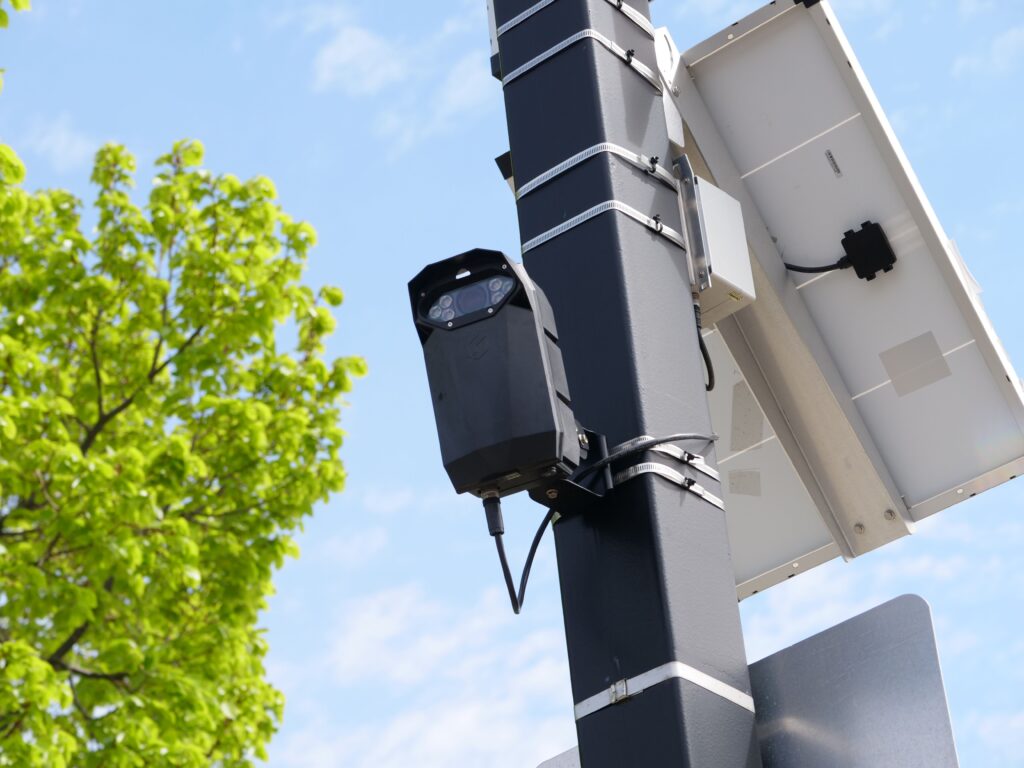
Unlike traditional surveillance used during specific criminal investigations, automatic license plate readers continuously collect information on virtually every vehicle that passes their lenses.
Privacy advocates argue this creates a database containing the movements of millions of people who have never been accused of committing any crime.
Civil liberties organizations have expressed concern that such systems can gradually expand beyond their original purpose.
The concern is not simply that police can investigate crimes more efficiently. Critics worry about how the technology could eventually be used to monitor political demonstrations, immigration enforcement, medical visits or ordinary daily routines.
According to reporting included in the reference material, opponents argue that law enforcement has already used similar technology in situations involving abortion-related investigations, immigration enforcement and protest monitoring. Those examples have intensified concerns among organizations focused on constitutional protections.
The American Civil Liberties Union has been among the strongest critics.
The organization has warned that large-scale automatic license plate reader networks risk enabling broad warrantless tracking of people who are not suspected of criminal activity.
Supporters of these systems dispute that characterization, pointing to audit logs and internal safeguards designed to detect misuse. Flock has also maintained that documented abuses represent only a tiny fraction of the millions of legitimate searches conducted each year.
Still, the disagreement highlights a broader question that courts, lawmakers and communities across the country continue to wrestle with.
How much surveillance is too much?
The Lawsuits Challenging Flock’s Expansion

The criminal case against Sovern has unfolded alongside legal battles questioning the legality of the surveillance network itself.
In Virginia, litigation has challenged the widespread deployment of Flock cameras, arguing that collecting and storing information on every passing vehicle raises serious constitutional concerns.
The lawsuits focus less on individual criminal investigations and more on the mass collection of data from ordinary drivers who have done nothing wrong.
The issue has become especially significant in Hampton Roads, where more than 600 Flock cameras have reportedly been installed across multiple jurisdictions, including around 70 in Suffolk alone.
Those numbers illustrate how quickly the technology has spread.
For supporters, they represent a stronger crime fighting network.
For opponents, they represent a surveillance infrastructure unlike anything most communities have previously experienced.
As legal challenges continue, courts may ultimately determine how existing constitutional protections apply to increasingly sophisticated AI-powered monitoring systems.
From Local Defendant to Symbol of a Larger Movement

What transformed Sovern’s case from a regional criminal prosecution into national news was not only the allegations themselves.
It was the reaction.
Almost immediately after news of his arrest spread online, supporters began portraying him as someone standing against mass surveillance rather than simply a defendant accused of property crimes.
Social media posts praised his actions, while some users suggested helping fund his legal defense. Within days, a crowdfunding campaign appeared online seeking donations to support his court battle.
On the fundraising page attributed to Sovern, he explained his motivation in simple terms.
“My name is Jeff and I appreciate my privacy,” the page states.
It continues, “I appreciate everyone’s right to privacy, enshrined in the fourth amendment.”
He also encouraged supporters to contact local governments and push for surveillance systems to be removed rather than expanded.
According to the latest reference material, donations eventually climbed well beyond the campaign’s original goal, reflecting how strongly the issue resonates with a segment of the public.
For supporters, the fundraiser is evidence that concerns about surveillance extend far beyond one Virginia community.
For critics, it raises uncomfortable questions about public support for someone accused of deliberately damaging public safety infrastructure.
Either way, the response made one thing clear.
The debate surrounding Flock cameras had already expanded well beyond Suffolk.
Organized Resistance Has Spread Across the Country

The controversy surrounding Flock Safety extends far beyond Virginia. Across the United States, organized grassroots groups have emerged with one shared objective: slowing or stopping the expansion of automated license plate reader networks.
One of the most visible movements is DeFlock, a collection of independent local organizations that argue mass vehicle surveillance poses long-term risks to civil liberties. Volunteers map camera locations, educate residents about how the technology works and encourage local officials to reconsider surveillance contracts.
The movement has grown steadily over the past year, fueled in part by reports that Immigration and Customs Enforcement has accessed data from license plate reader networks during immigration enforcement operations. For many activists, that marked a turning point.
Rather than seeing the cameras solely as crime-fighting tools, they began viewing them as infrastructure capable of monitoring the movements of ordinary citizens on a massive scale.
In Atlanta, organizer Len Phillips has become one of the movement’s most recognizable voices.
Instead of advocating vandalism, Phillips has focused on public awareness campaigns. Volunteers place warning signs beneath camera poles informing residents that passing vehicles are being photographed and entered into searchable databases.
Phillips recalled one encounter that illustrates just how emotional the issue has become.
An elderly man reportedly arrived with a chainsaw after reading one of the warning signs and appeared ready to cut down a camera himself.
“I was like, ‘No, no, no!’” Phillips recalled.
According to Phillips, he convinced the man to stop because destroying the cameras would likely encourage authorities to install even more of them.
That interaction highlights an important distinction within the movement.
Many critics strongly oppose surveillance while also rejecting property destruction as an effective strategy.
Some Communities Have Already Changed Course

Public opposition has produced tangible political results in several cities.
According to the reference material, Austin, Texas paused its Flock camera program after sustained community criticism. Evanston, Illinois later ended its contract altogether.
Other municipalities have narrowed how they share surveillance data or reduced the number of agencies allowed to access local databases.
In Ithaca, New York, organizers persuaded officials to limit data sharing with outside law enforcement agencies following months of petitions, demonstrations and public meetings. Protesters argued that residents deserved greater transparency before surveillance technology became a permanent feature of daily life.
Those victories remain relatively limited compared with Flock’s nationwide growth, but they demonstrate that local governments continue to face significant public pressure.
For elected officials, the challenge is balancing demands for stronger crime prevention with increasing concern over privacy.
Neither side appears willing to compromise easily.
Flock Says the Technology Saves Lives
While privacy organizations continue raising constitutional concerns, law enforcement agencies across the country remain among Flock’s strongest supporters.
Police departments regularly credit automated license plate readers with helping investigators identify suspects, recover stolen vehicles and locate missing people.
Because the cameras automatically record passing traffic around the clock, investigators can reconstruct a vehicle’s movements in cases where traditional surveillance footage may not exist.
Company representatives argue these capabilities have made communities safer while allowing officers to solve crimes more quickly than before.
Flock also disputes claims that its system enables unchecked surveillance.
Company officials have stated that searches are logged, misuse can be audited and participating agencies are expected to follow applicable laws governing investigations.
The company has also emphasized that intentional destruction of its equipment remains uncommon despite the attention surrounding several high-profile incidents.
Supporters often point to individual cases in which license plate readers helped police identify dangerous suspects within hours.
Critics respond that isolated successes should not justify collecting information on millions of innocent drivers.
The disagreement illustrates one of the defining public policy debates surrounding artificial intelligence.
Technology that increases investigative efficiency can also dramatically increase government visibility into everyday life.

The Constitutional Questions Are Far From Settled
The Fourth Amendment protects Americans against unreasonable searches and seizures, but courts continue to grapple with how that protection applies to rapidly evolving surveillance technology.
Historically, police officers observed public streets directly.
Today’s AI-powered systems can monitor thousands of vehicles every hour without interruption, creating searchable historical records that were impossible only a decade ago.
Legal scholars have debated whether continuous automated monitoring fundamentally changes the relationship between citizens and government.
Opponents argue that technology capable of tracking years of vehicle movements creates a level of surveillance never envisioned when constitutional protections were written.
Supporters counter that license plates are visible to anyone on public roads and that cameras merely automate observations officers could lawfully make themselves.
Courts have not reached universal agreement on where the constitutional boundary should be drawn.
That uncertainty helps explain why lawsuits involving Flock cameras continue to emerge in multiple states.
Whatever the eventual legal outcome, the decisions are likely to shape how AI surveillance develops for years to come.
A Criminal Trial With National Implications
For Jeffrey Sovern, the immediate issue remains the criminal charges he faces in Virginia.
His plea of not guilty means prosecutors must now prove their allegations in court, while his defense has the opportunity to challenge both the evidence and the broader context surrounding the case.
The outcome will determine whether he is held criminally responsible for the alleged destruction of the cameras.
At the same time, many observers are paying attention for reasons that extend well beyond one defendant.
Supporters have portrayed Sovern as someone resisting what they view as an expanding surveillance state.
Others argue that regardless of personal beliefs about privacy, destroying public property cannot become an acceptable form of political protest.
Those competing perspectives have ensured that the case continues attracting attention far outside the courtroom.
As artificial intelligence becomes increasingly integrated into policing, transportation and everyday infrastructure, similar disputes are likely to become more common.
Communities across the country are already debating facial recognition systems, predictive policing software, drone surveillance and increasingly sophisticated public monitoring technologies.
The arguments surrounding Flock cameras represent one chapter in a much larger conversation.
How society answers those questions could influence the balance between privacy and security for decades to come.
For now, Jeffrey Sovern’s case remains unresolved. His not guilty plea means the legal process will continue, while the broader debate over AI-powered surveillance shows no signs of slowing down. Regardless of how the court ultimately rules, the controversy has already exposed deep divisions over how much monitoring Americans are willing to accept in an age where technology can record, store and analyze nearly every movement on the road.