
Your cart is currently empty!
Air Conditioners Could Make Future Heat Waves Even Worse
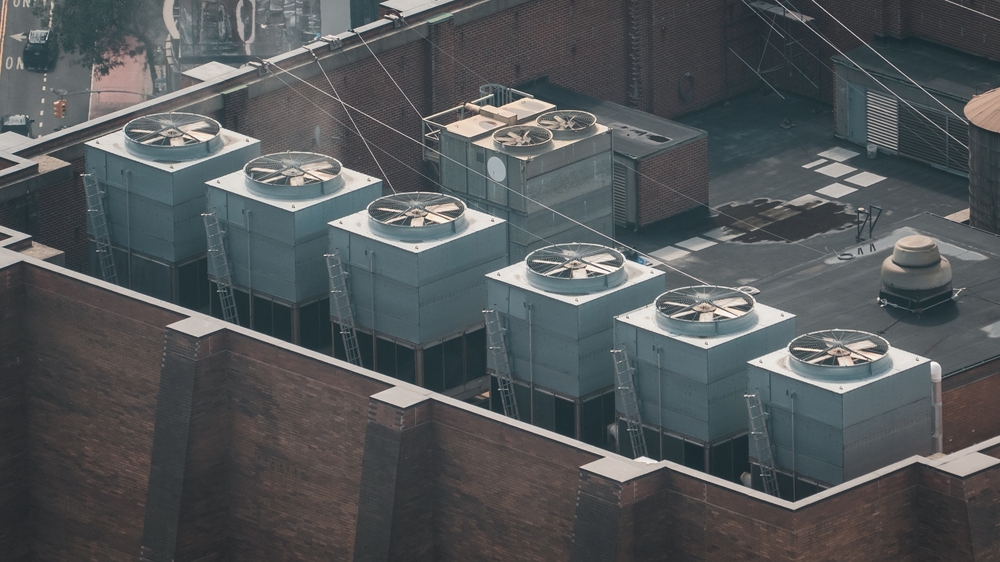
Europe’s recent heat waves have sparked an unusually heated debate over air conditioning. As temperatures climbed above 40 degrees Celsius in parts of France, Spain, Italy, and the United Kingdom, many people argued that wider access to air conditioning is no longer a luxury but a necessity. Others pointed to an uncomfortable reality. The very machines that keep millions of people alive during extreme heat are also adding to the problem over the long term.
Contents
show
New research suggests that this contradiction is becoming increasingly difficult to ignore. Scientists warn that global demand for air conditioning is expected to surge over the coming decades as rising temperatures push more households toward mechanical cooling. If that demand is met using today’s technologies and electricity systems, the resulting emissions could make future heat waves even worse.
It is a paradox that sits at the center of modern climate adaptation. Air conditioning saves lives, yet relying on it alone risks creating a cycle in which every hotter summer drives even greater energy use, more greenhouse gas emissions, and even hotter summers to come.
The Research Behind the Warning
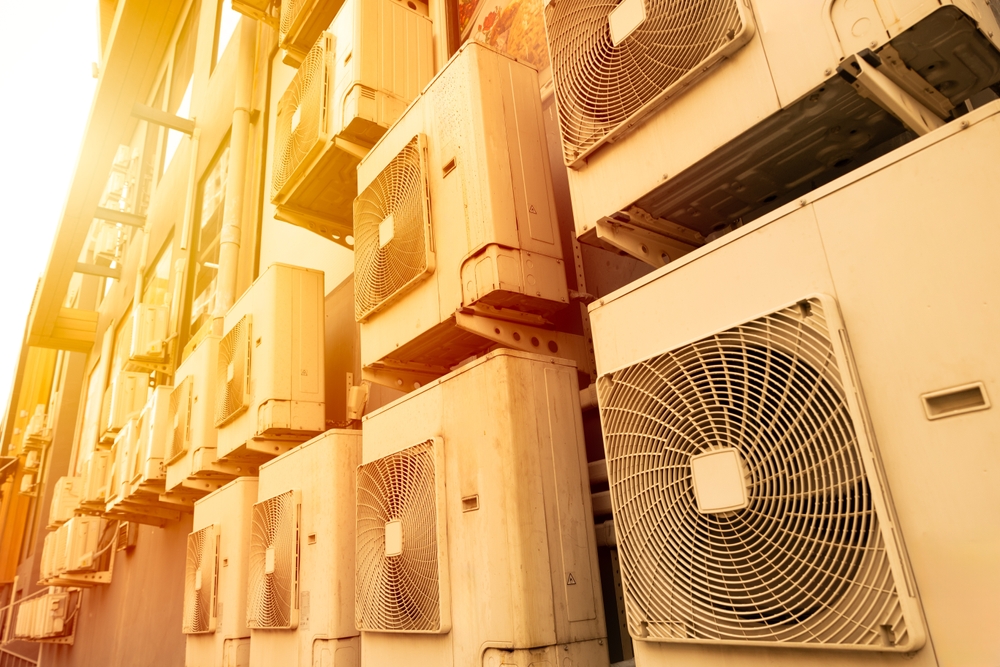
A new study published in Nature Communications examined how rising temperatures, growing incomes, and expanding access to air conditioning could influence future climate change.
Researchers combined climate projections, population growth, economic development, and energy modeling to estimate how many air conditioners people are likely to purchase between now and 2050. They then calculated the electricity those units would consume and the emissions they would produce under several future climate scenarios.
Their findings reveal an uncomfortable tradeoff.
As more families gain access to cooling, particularly across low and middle income countries, global greenhouse gas emissions could rise enough to add between 0.015 degrees Celsius and 0.05 degrees Celsius of additional warming by 2050.
While those numbers may appear small, climate scientists have repeatedly shown that even fractions of a degree significantly increase the frequency and intensity of extreme weather events, heat waves, droughts, and flooding.
The study also highlights a growing inequality problem. Wealthier countries already enjoy widespread access to cooling, while many of the regions expected to experience the most dangerous heat remain unable to afford it.
According to lead author Hongzhi Zhang of the Beijing Institute of Technology, giving low income regions the same access to air conditioning as wealthier nations would dramatically increase emissions unless cooling technologies and electricity generation become much cleaner.
Cooling Is Becoming One of the World’s Fastest Growing Energy Demands
Air conditioning has quietly become one of the largest consumers of electricity on Earth.
According to the International Energy Agency, residential air conditioners have tripled worldwide since 2000, reaching more than 1.5 billion units by 2022. By the end of this decade, nearly half of the global population is expected to own an air conditioner.
That growth shows no sign of slowing.
Another recent scientific review estimates that nearly 10 new air conditioners are sold every second around the world. By 2050, the number of residential units could reach almost 5.6 billion as hotter climates and growing incomes continue driving demand.
Electricity demand is growing just as rapidly.
Cooling buildings already accounts for nearly 10 percent of global electricity consumption, placing enormous strain on power grids during summer heat waves. In many cities, electricity demand peaks during the hottest afternoons when millions of air conditioners begin operating simultaneously.
This growing dependence creates new risks beyond climate change itself.
Heat waves often coincide with power shortages, equipment failures, and blackouts. During these moments, communities that rely almost entirely on mechanical cooling become especially vulnerable, particularly older adults, hospital patients, and people with chronic illnesses.
Scientists say future cities cannot depend exclusively on air conditioning if they hope to remain resilient during increasingly severe heat events.
How Air Conditioners Contribute to Global Warming

The relationship between air conditioning and climate change extends well beyond electricity use.
Most existing cooling systems consume large amounts of power, much of which is still generated from coal, oil, or natural gas. Every additional kilowatt-hour consumed by an air conditioner can translate into more carbon dioxide entering the atmosphere when fossil fuels supply the electricity.
Researchers estimate that air conditioning currently accounts for roughly 3.2 percent of total global climate emissions when electricity consumption and refrigerant leaks are combined.
Refrigerants themselves create another challenge.
Many cooling systems still rely on hydrofluorocarbons, commonly known as HFCs. These chemicals are powerful greenhouse gases that can trap thousands of times more heat than carbon dioxide if they leak into the atmosphere during operation or disposal.
International agreements such as the Kigali Amendment are gradually reducing their use, but millions of older systems remain in service worldwide.
The impact becomes even greater as temperatures continue rising.
Every hotter summer encourages more households to purchase air conditioners. Those new units require additional electricity, increasing emissions unless power grids become significantly cleaner. Scientists describe this as a climate feedback loop, where rising temperatures encourage behavior that contributes to even more warming.
Air Conditioning Also Reveals a Global Inequality Gap
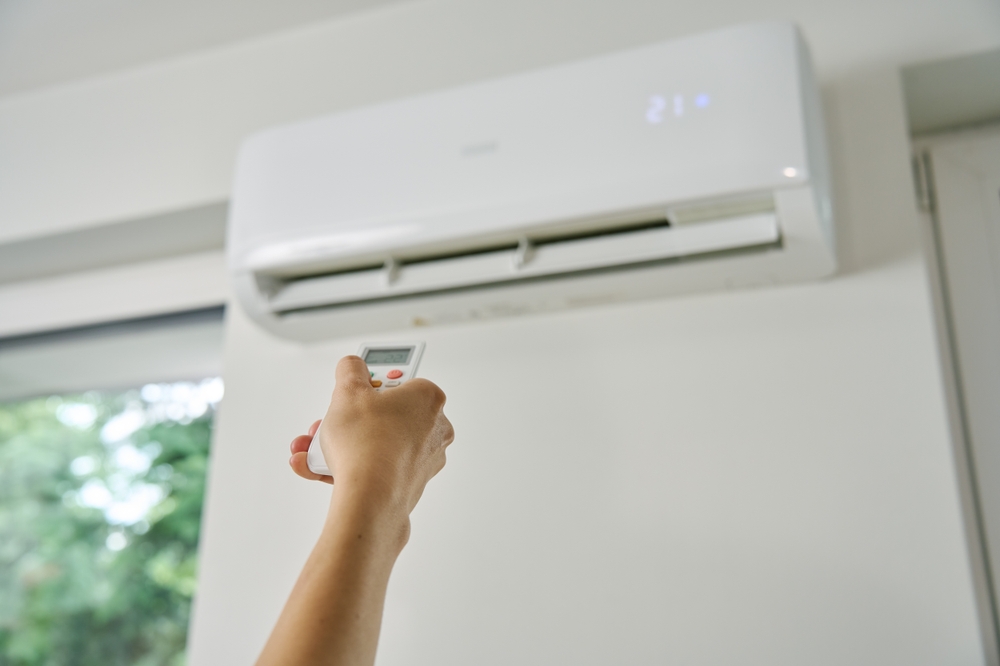
The debate over cooling is not simply about emissions. It is also about fairness.
Many wealthy nations already enjoy widespread access to air conditioning. In the United States, more than 90 percent of households have some form of cooling system. By comparison, access remains far lower across many developing countries, even though those regions often experience much higher temperatures.
South Asia and large parts of Africa face some of the greatest heat risks on Earth, yet millions of families cannot afford either air conditioning or the electricity needed to operate it.
Researchers argue that denying these populations access to cooling is neither realistic nor ethical.
Extreme heat already claims thousands of lives every year, and those numbers are expected to rise as climate change intensifies. Air conditioning can dramatically reduce heat related illness and mortality, especially among older adults, young children, and people with existing medical conditions.
The challenge is finding ways to expand access without locking the world into decades of higher emissions.
That balancing act has become one of the defining climate policy questions of the coming decades. Scientists increasingly argue that future cooling strategies must focus not only on making air conditioners cleaner, but also on reducing the need for them altogether.
Cooling Cities Before Cooling Buildings

Reducing indoor temperatures should begin long before an air conditioner is switched on. When streets, roofs, and paved surfaces absorb heat throughout the day, they continue releasing it after sunset. This keeps entire neighborhoods warmer and forces air conditioners to work harder, increasing electricity demand during heat waves.
Urban planning can help address the problem at a broader level. Planting more trees, expanding green spaces, installing reflective roofs, and designing streets with natural shade can lower temperatures across entire communities. These measures can also improve air quality and reduce pressure on electricity networks, especially during periods of extreme heat.
Buildings can then be designed to keep more of that heat outside. Reflective materials, improved insulation, external shading, and natural ventilation can reduce indoor temperatures before mechanical cooling becomes necessary. Research suggests that combining passive cooling with climate-responsive design could reduce cooling demand by as much as 80 percent in some hot regions. These features can also keep homes more livable during power outages.
As UNSW Sydney professor Mat Santamouris explained, “We cannot air-condition our way out of climate change.” Air conditioning will remain essential during dangerous heat, but cooling cities first can reduce how heavily communities depend on it.
Protecting People While Reducing Emissions
One of the clearest conclusions emerging from recent research is that cooling should be viewed as both a public health issue and a climate challenge.
Extreme heat has become one of Europe’s deadliest natural hazards, causing more fatalities than floods, storms, or wildfires in many years. During recent heat waves, thousands of deaths were linked to prolonged exposure to dangerously high temperatures.
Studies suggest that air conditioning already prevents approximately 190,000 heat-related deaths globally each year. Expanding access will almost certainly save additional lives as temperatures continue rising.
However, researchers also emphasize that successful heat adaptation depends on much more than installing cooling systems.
Public cooling centers, emergency heat action plans, improved building standards, workplace protections, urban greening projects, and community outreach programs all reduce heat-related illness.
France offers one example.
Following the catastrophic 2003 European heat wave, the country introduced national heat response plans that include cooling shelters, monitoring vulnerable residents, public information campaigns, and mandatory air-conditioned rooms in nursing homes. Researchers estimate these measures have reduced projected heat-related deaths by more than 75 percent during comparable heat events.
These findings reinforce a consistent message from climate experts.
Air conditioning is most effective when it forms part of a broader strategy rather than serving as the only defense against extreme heat.
Living With a Hotter Future

The world is entering an era in which extreme heat will affect more people, more often, and across regions that once considered severe summer temperatures unusual.
That reality means demand for cooling will almost certainly continue growing. Billions of people who currently lack access to air conditioning will understandably seek the same protection already available across wealthier nations.
The challenge is ensuring that this expansion does not deepen the climate crisis.
Cleaner electricity, more efficient cooling technologies, better refrigerants, climate-responsive architecture, and greener cities offer a path that protects both people and the planet. None of these approaches can solve the problem on their own, but together they can reduce the need for energy-intensive cooling while preserving access during dangerous heat.
The latest research does not argue that people should abandon air conditioning. It suggests something more practical. Cooling will remain essential as the climate changes, but the future depends on making buildings, cities, and energy systems work smarter before every rising temperature demands another air conditioner.
Source:
- Zhang, H., Shan, Y., Li, R., Xue, R., Ma, J., Kikstra, J., Shi, Z., Wang, Z., Zhang, B., Wang, B., Fang, S., Yang, F., & Hubacek, K. (2026). Rising Air-Conditioning Use Intensifies Global Warming. Nature Communications, 17(1). https://doi.org/10.1038/s41467-026-69393-1