
Your cart is currently empty!
What’s Actually True About In-N-Out, Lynsi Snyder, and Those Bible Verses
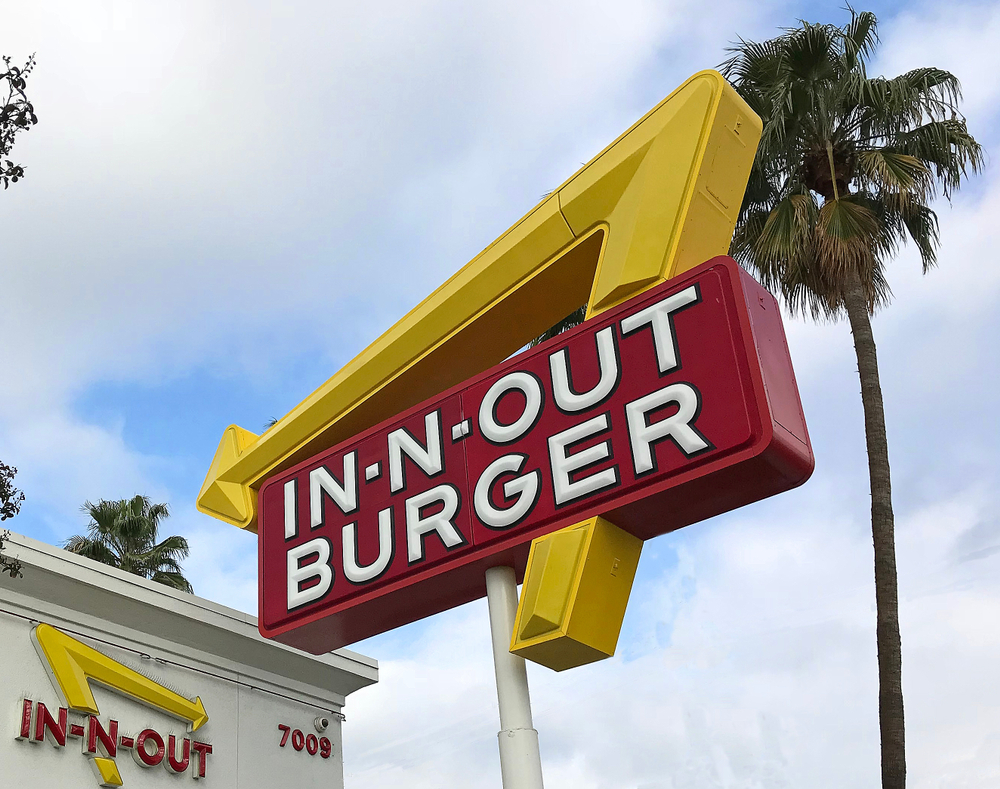
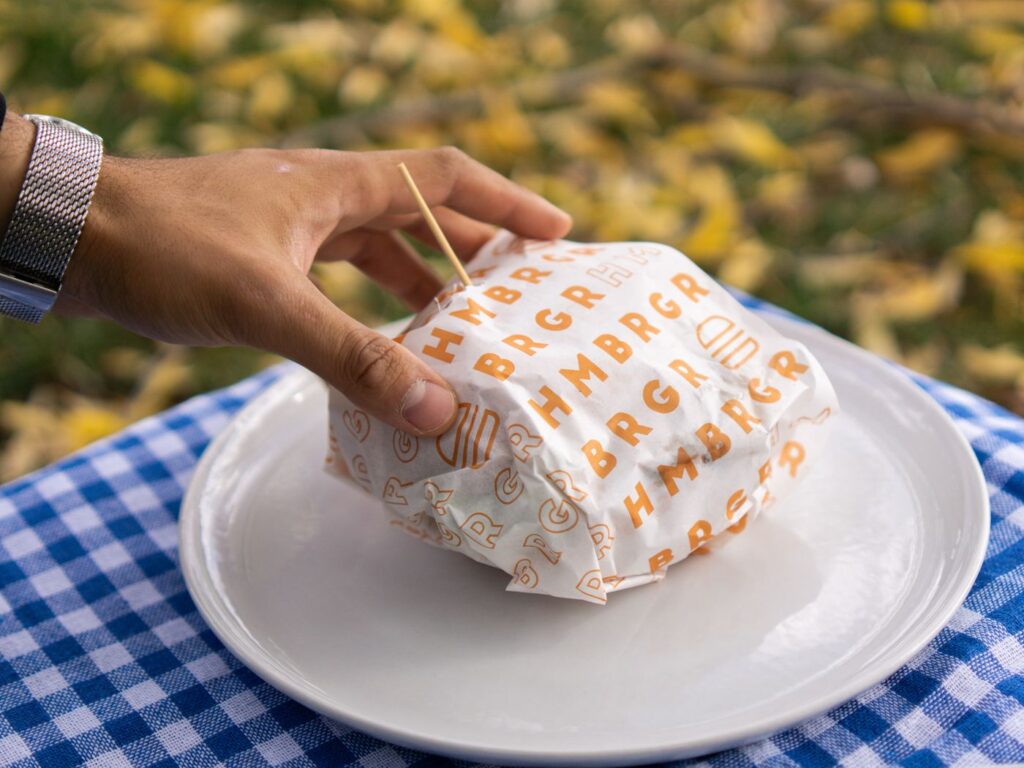
For decades, the smallest detail on an In-N-Out order was also the easiest to miss. Tucked beneath a soda cup, printed in tiny type at the edge of a burger wrapper, sat a string of numbers: a book, a chapter, a verse. Most customers, occupied with a Double-Double and a paper boat of fries, never noticed it was there at all.
Contents
show
Lately, that quiet detail has become anything but quiet.
Across social media, the burger chain’s Bible references have been recast as the center of a loud national argument, with the company’s billionaire owner cast as a woman drawing a line she will not cross. The framing has spread through millions of shares, turning a decades-old family tradition into what supporters describe as a stand against pressure to strip faith from public life. But the closer you look at where these claims come from, and what can actually be confirmed, the more complicated the story becomes. Some of it is solidly documented. A good deal of it is not.
The Claim Racing Across the Internet
The viral version of the story is easy to summarize because it has been repeated, nearly word for word, thousands of times. In it, In-N-Out president Lynsi Snyder has faced mounting criticism from customers and activists demanding the verses be removed, and she has flatly refused, declaring that the Scripture on her packaging is not going anywhere.
Posts amplifying that message have circulated on X, Threads, Facebook, and Instagram, many framing Snyder as a hero for religious freedom and her critics as an intolerant left. Partisan sites picked up the same framing, presenting her as standing firm “whether the leftists like it or not.” The narrative has real momentum, and for a certain audience it has become a rallying point.
What is harder to find, underneath all that sharing, is a single, dated, on-the-record statement from Snyder responding to an organized removal campaign. The loudest versions of the story cite one another and “widely shared messages” rather than original reporting. That does not mean nothing happened, but it does mean readers should separate what is verified from what is merely viral.
What Can Actually Be Confirmed
Strip away the culture-war packaging, and a firmly established core remains. The Bible verses are real, long-standing, and personal to the family that owns the chain. Snyder has spoken openly, in interviews that predate the current uproar, about her Christian faith and about why the verses matter to her. And she has given every indication over many years that she intends to preserve the traditions she inherited, of which the verses are one.
What is far less established is the specific sequence the viral posts assert: a fresh wave of organized backlash, a formal demand for removal, and a defiant public refusal delivered in response. That storyline appears to have grown out of an evangelism-themed event where Snyder discussed her faith, before being reshaped online into a tidy confrontation. Treating the confrontation as documented fact would mean trusting sources that, on inspection, mostly point back to social media.
Who Lynsi Snyder Is

The woman at the center of it is genuinely unusual, both as an heir and as a public figure. Snyder is the private owner and president of In-N-Out Burger, a company Forbes has valued at roughly $3 billion, virtually all of which she now owns after receiving it in stages on her 25th, 30th, and 35th birthdays. She took over leadership in 2010 and has given interviews only a handful of times.
She is also, by her own account, an unlikely person to be running the family business at all. She never graduated from college, lost her father to drug addiction as a young woman, and has spoken candidly about her own past struggles and multiple divorces. A devout Christian who wears tattoos of Bible verses, she has framed her leadership as inseparable from her faith rather than a sanitized corporate persona kept carefully apart from it.
Where the Verses Actually Came From

The origin of the tradition is one of the well-documented parts of this story, and Snyder has told it consistently across interviews going back years. The verses were not her idea. They were her uncle’s.
“It was my uncle Rich who put the Bible verses on the cups and wrappers in the early ’90s, just before he passed away,” Snyder told the Christian Post. “He had just accepted the Lord and wanted to put that little touch of his faith on our brand. It’s a family business and will always be, and that’s a family touch.”
Richard Snyder died in a 1993 plane crash, and the verses he added outlived him. Since taking over, Lynsi has extended the practice rather than merely maintaining it, adding references to items her uncle never marked. In her telling, keeping the verses is partly an act of faith and partly a tribute to a man whose small design choice became part of the company’s identity. One point worth noting for accuracy: while Snyder dates her uncle’s additions to the early 1990s, at least one account has placed verse numbers on packaging as early as the mid-1980s, a minor inconsistency in the historical record.
The Verses, Item by Item
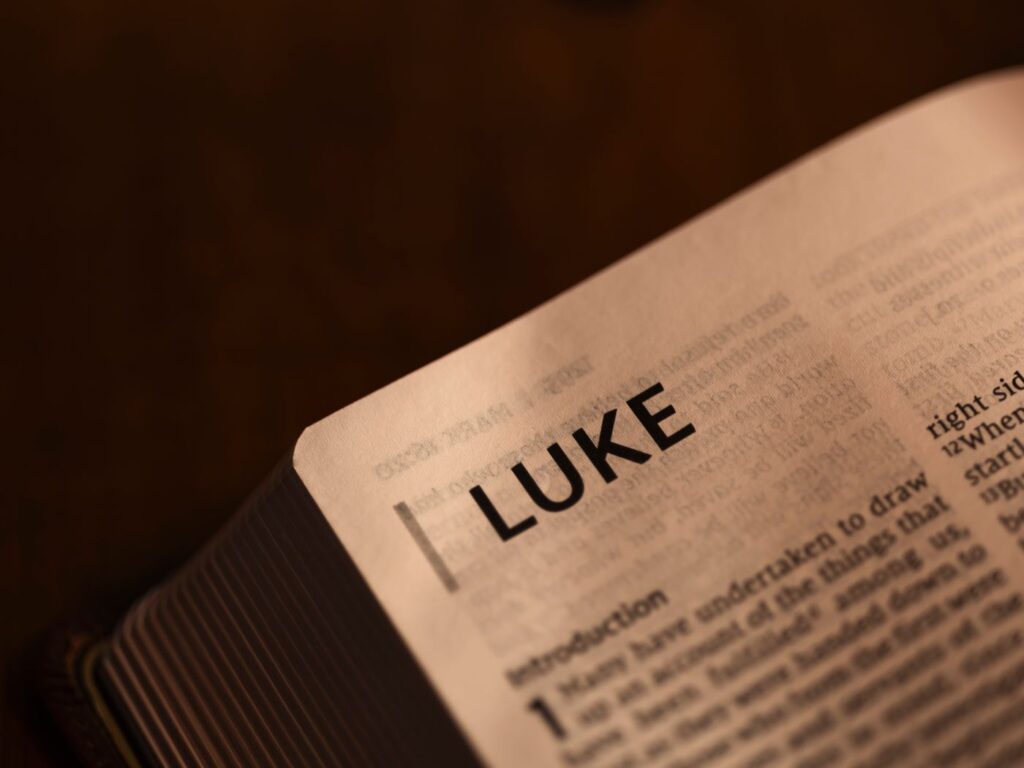
For readers who now want to check their own order, the lineup is well catalogued. The soda cups carry John 3:16, perhaps the most widely recognized verse in Christianity. Milkshake cups bear Proverbs 3:5. A hamburger or cheeseburger wrapper carries Revelation 3:20, while the Double-Double wrapper carries Nahum 1:7. Snyder added Proverbs 24:16 to the fry tray and verses to the coffee and hot cocoa cups, including Luke 6:35 and John 13:34. Fans have noted that holiday cups sometimes feature Isaiah 9:6. The napkins, as one writer wryly observed, remain unclaimed.
A Faith Shaped by Hard Years
Whatever one makes of the viral framing, Snyder’s willingness to keep the verses is clearly rooted in a personal story she has never hidden. After her father’s death when she was a teenager, she fell into what she has described as a black-sheep era of alcohol and marijuana use, followed by a series of marriages that ended in divorce, one of them, she has said, because of abuse. She has described reaching a turning point in which she came to believe the deep need in her heart could only be filled by her faith.
That perseverance is the throughline she returns to when she talks about her life and her leadership. “The things that I’ve been through forced me to be stronger,” she said. “When you persevere, you end up developing more strength.”
She has carried that conviction beyond the burger business, founding a discipleship ministry called Army of Love that she says was born during a painful period as one of her marriages was failing. The verses on the packaging, in that light, are of a piece with how she describes her whole life, faith worn openly rather than tucked away.
A Company Built to Resist Change

There is a simpler, less combustible explanation for why the verses are not going anywhere, and it has little to do with any culture war. In-N-Out is a company almost pathologically devoted to not changing.
The menu has stayed under fifteen items for decades. The chain does not franchise, bans freezers, microwaves, and heat lamps from its kitchens, and has kept its burger and fry recipes essentially the same for 70 years. Snyder has repeatedly turned down enormous offers to sell or take the company public, describing herself as a protector and guardian of what her grandparents built. The verses fit squarely inside that philosophy. They are one more inherited thing she has chosen not to alter, in a business defined by refusing to alter almost anything.
Seen this way, the notion that Snyder would remove the verses under public pressure runs against everything her tenure has demonstrated. She has resisted far larger temptations than a social media campaign, including the kind of Wall Street money that would have made her vastly richer. That consistency, more than any single dramatic statement, is the strongest reason to believe the verses will stay.
Faith, Brand, and a Genuine Debate

None of this makes the underlying question meaningless. There is a real and reasonable debate about how much overt religious messaging belongs on a mass-market brand, and thoughtful people land in different places on it. For customers who share Snyder’s beliefs, the verses read as quiet encouragement, a rare instance of a major company declining to hide its convictions. For others, encountering Scripture on a fast-food cup can feel like an unwelcome intrusion of one faith into a shared public space.
That is a conversation worth having honestly. What muddies it is the viral machinery that has repackaged a long-standing tradition into a scripted showdown, complete with villains, heroes, and a defiant quote that is easier to share than to source. The debate is legitimate. The particular story now driving it deserves more skepticism than it is getting.
What We Actually Know
Here, then, is the honest ledger. The Bible verses are real and decades old. Snyder’s Christian faith is real, deeply personal, and something she has discussed openly for years. Her record strongly suggests she has no intention of removing the verses, consistent with her refusal to change nearly anything about In-N-Out.
What remains unverified is the precise viral claim: that a specific, organized backlash prompted a specific, defiant refusal. That framing lives largely on social media and partisan aggregators, not in confirmed reporting. Both things can be true at once. A woman can be genuinely committed to keeping faith on her packaging, and the internet can still spin that commitment into a confrontation neater and louder than the facts support. For anyone trying to understand what is actually happening on the bottom of that soda cup, the difference is worth holding onto.
Army of Love, Bible verses, Christian Faith, corporate faith, Culture War, fact check, faith in business, family business, Fast Food, In-N-Out Burger, In-N-Out history, In-N-Out packaging, John 3:16, Lynsi Snyder, misinformation, religion and branding, Richard Snyder, servant leadership, viral claims