
Your cart is currently empty!
Steven Spielberg Says ‘Disclosure Day’ Could Prompt Christians to Reexamine Their Faith
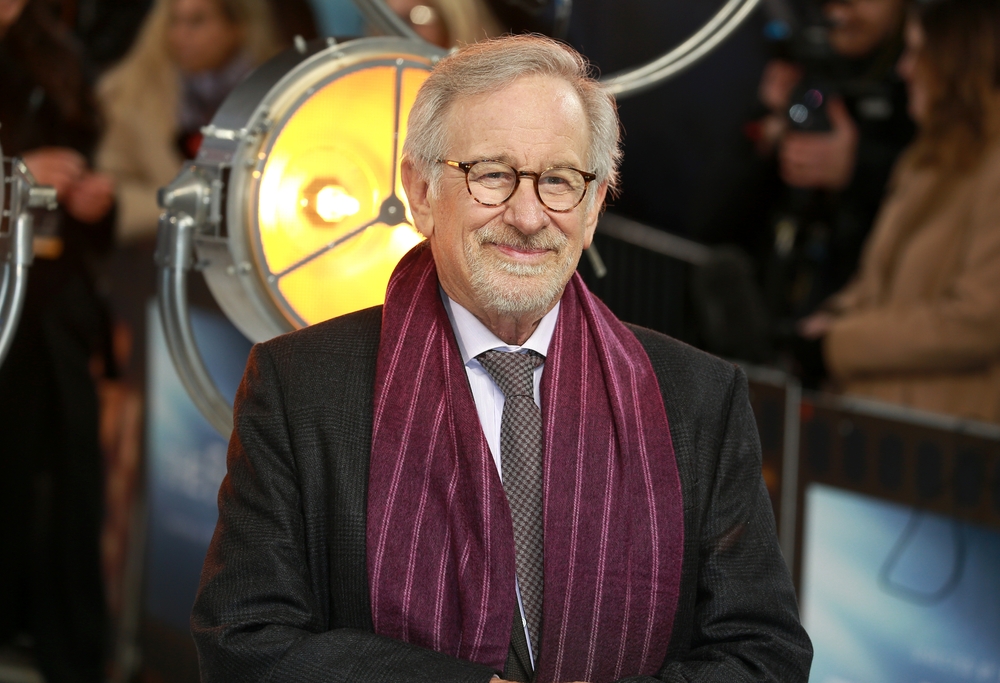
Steven Spielberg’s upcoming film Disclosure Day is generating discussion well before its release, not because of its extraterrestrial storyline alone, but because of the questions it raises about faith and belief.
Contents
show
The legendary director has suggested that confirmed evidence of alien life could lead some Christians to reevaluate aspects of their religious worldview, a comment that has sparked debate among faith leaders, commentators, and movie fans alike. As anticipation for the film grows, so does the conversation about how humanity might respond if one of history’s biggest mysteries were finally answered.
Science Fiction Meets Faith
Steven Spielberg’s upcoming science fiction film Disclosure Day has sparked discussion beyond the entertainment world after the acclaimed filmmaker suggested that confirmed extraterrestrial life could prompt some people to reexamine long-held religious beliefs. According to reports surrounding the film’s promotion, Spielberg believes that definitive proof of alien existence would represent one of the most significant moments in human history, raising profound questions about humanity’s understanding of itself and its place in the universe.
The director’s comments are closely tied to the premise of Disclosure Day, which imagines a world transformed by the public release of evidence confirming extraterrestrial visitation. Rather than presenting aliens simply as a science fiction spectacle, the film reportedly explores how governments, institutions, and ordinary people might react when confronted with information that challenges established assumptions.
Spielberg has long been fascinated by questions surrounding extraterrestrial life, a theme that has appeared throughout his career in films such as Close Encounters of the Third Kind and E.T. the Extra-Terrestrial. In recent interviews, he reiterated his personal belief that alien life exists and suggested that humanity may eventually face evidence that forces a broader cultural reckoning.
While discussion surrounding the film has focused heavily on Christianity, Spielberg’s broader argument appears to center on how any deeply held worldview, religious or secular, might respond when confronted with extraordinary new knowledge. The film positions that question at the heart of its narrative, making belief itself a central theme rather than merely a backdrop for an alien encounter story.
Why Christianity Has Become Part of the Conversation
Much of the attention surrounding Disclosure Day stems from Spielberg’s suggestion that confirmed extraterrestrial life could challenge certain religious assumptions, particularly within Christianity. The filmmaker has reportedly argued that a global disclosure event would force many people to revisit foundational questions about creation, humanity’s role in the universe, and the possibility of intelligent life beyond Earth.
The film itself appears to engage with those questions through its characters and dialogue. Promotional materials and commentary from those involved with the project indicate that religion is woven into the narrative rather than treated as an afterthought. Screenwriter David Koepp has said that questions of faith naturally belong in a story about extraterrestrial life because both subjects ultimately deal with humanity’s search for meaning and answers that remain beyond complete certainty.
Notably, the discussion has generated strong reactions from religious commentators, some of whom have questioned why Christianity has become a focal point in conversations about alien disclosure. Others argue that faith traditions have long grappled with questions about life beyond Earth and that the existence of extraterrestrial beings would not necessarily undermine core religious beliefs.
Religious Leaders and Commentators Push Back on the Premise

Spielberg’s remarks have not gone unchallenged. Following interviews promoting Disclosure Day, several Christian commentators argued that the discovery of extraterrestrial life would not necessarily create a crisis of faith. Instead, they contend that religious belief has historically adapted to major scientific developments, from heliocentrism to modern astronomy, without abandoning its core teachings.
A recurring response from faith leaders is that Christianity’s central claims focus on the relationship between God and humanity, rather than on whether intelligent life exists elsewhere in the cosmos. From that perspective, the existence of extraterrestrial beings would present new theological questions but would not automatically invalidate established doctrines. Some writers have noted that discussions about life beyond Earth have existed within Christian scholarship for decades, long before the arrival of Spielberg’s latest film.
The debate has also highlighted the different ways people approach uncertainty. While Disclosure Day appears to ask whether humanity is prepared for a revelation of alien life, many religious commentators argue that faith traditions are already equipped to engage with unanswered questions. Rather than viewing science and religion as opposing forces, they see them as addressing different aspects of human experience.
A Career-Long Exploration of Humanity and the Unknown
For Spielberg, Disclosure Day represents the latest chapter in a decades-long fascination with first contact stories and humanity’s reaction to the unexplained. Throughout his career, the filmmaker has used science fiction not simply as entertainment, but as a lens through which to examine fear, wonder, and the search for meaning.
That approach can be traced back to Close Encounters of the Third Kind (1977), which portrayed extraterrestrial contact as a transformative experience rather than a hostile invasion. E.T. the Extra-Terrestrial (1982) similarly focused on empathy, connection, and the emotional consequences of encountering something beyond ordinary human experience. In both films, the extraterrestrial element served as a catalyst for deeper questions about human nature.
Early discussion surrounding Disclosure Day suggests Spielberg is once again using science fiction to explore issues that extend beyond aliens themselves. The film reportedly examines how individuals, governments, religious institutions, and communities respond when confronted with information that fundamentally alters their understanding of reality.
That focus helps explain why the film has generated conversation well beyond traditional movie audiences. At its core, Disclosure Day appears to be a story about belief, uncertainty, and humanity’s capacity to adapt when long-standing assumptions are challenged.
Disclosure and Doubt

With Disclosure Day, Spielberg is placing one of humanity’s most enduring questions at the center of a major studio film: how would society react if evidence of extraterrestrial intelligence became undeniable?
The discussion surrounding the movie has focused largely on Spielberg’s suggestion that such a revelation could challenge some Christians to reconsider aspects of their faith. That claim has drawn criticism from religious commentators who argue that Christianity is capable of accommodating the possibility of alien life and that faith need not be undermined by scientific discoveries.
Those differing viewpoints reflect the central tension explored throughout the film. Rather than presenting alien disclosure as a purely scientific event, Disclosure Day examines its potential impact on religious belief, public institutions, and personal worldviews. The debate that has emerged ahead of the film’s release suggests that audiences are already engaging with the questions Spielberg hopes to raise.
Whether viewers see the film as a thought experiment, a commentary on faith, or simply a science fiction drama, Disclosure Day has succeeded in generating discussion about how people interpret extraordinary claims and where they look for answers when long-held assumptions are put to the test.