
Your cart is currently empty!
New Alzheimer’s Drug Is Being Tested to See If It Can Prevent Dementia Early

You feel fine. Your memory is sharp. You can recall names, appointments, the thread of a conversation without effort. And yet a simple blood test has flagged something moving quietly in your brain, years before it would ever announce itself, and doctors want to intervene now, while nothing appears to be wrong at all.
Contents
show
That is the premise of one of the most closely watched trials in Alzheimer’s research today. A drug called trontinemab is about to be given to roughly 1,600 people who have no memory problems whatsoever, to test an idea that would have sounded like science fiction not long ago: that dementia might be stopped before it ever begins.
Scientists have already shown the drug can do something remarkable to the brain in a matter of months. What they do not yet know is whether that translates into the outcome that actually matters, and the honest answer to the biggest question of all is that the trial exists precisely because nobody knows it yet.
What Trontinemab Is

Trontinemab is an investigational medicine made by the Swiss pharmaceutical company Roche, given as a monthly infusion through a drip in a hospital. Its job is to strip away the sticky amyloid plaques that build up in the brain and are believed to drive Alzheimer’s disease.
It is not the first drug to attempt this. It is a next-generation version of two earlier treatments, lecanemab and donanemab, the first medicines shown to slow the progression of Alzheimer’s. What sets trontinemab apart is how it gets to where it needs to go. Roche engineered it with a technology the company calls Brainshuttle, attaching a module that helps the antibody cross the blood-brain barrier far more efficiently than its predecessors. The result is that the drug can work at lower doses and clear plaque more quickly, which in turn may mean fewer side effects and less of the intensive monitoring that made the earlier drugs so expensive to administer.
The Trial: Who, How Many, and What It Asks

The study, known as PrevenTRON, will recruit cognitively healthy volunteers from countries around the world, including the UK, broadly between the ages of 55 and 80. To take part, they must first test positive for elevated levels of a blood biomarker called p-tau217, which is linked to the development of Alzheimer’s. Younger participants will need additional genetic or family risk factors to qualify.
This is a phase III trial, the final testing stage before a treatment can be approved, which signals how far trontinemab has already come. But the question this particular trial asks is different, and more ambitious, than anything the earlier drugs set out to answer. It is not testing whether the drug can help people who are already declining. It is testing whether treating people who are silently at risk, but entirely symptom-free, can delay or even prevent symptoms from ever appearing.
The Blood Test That Makes It Possible
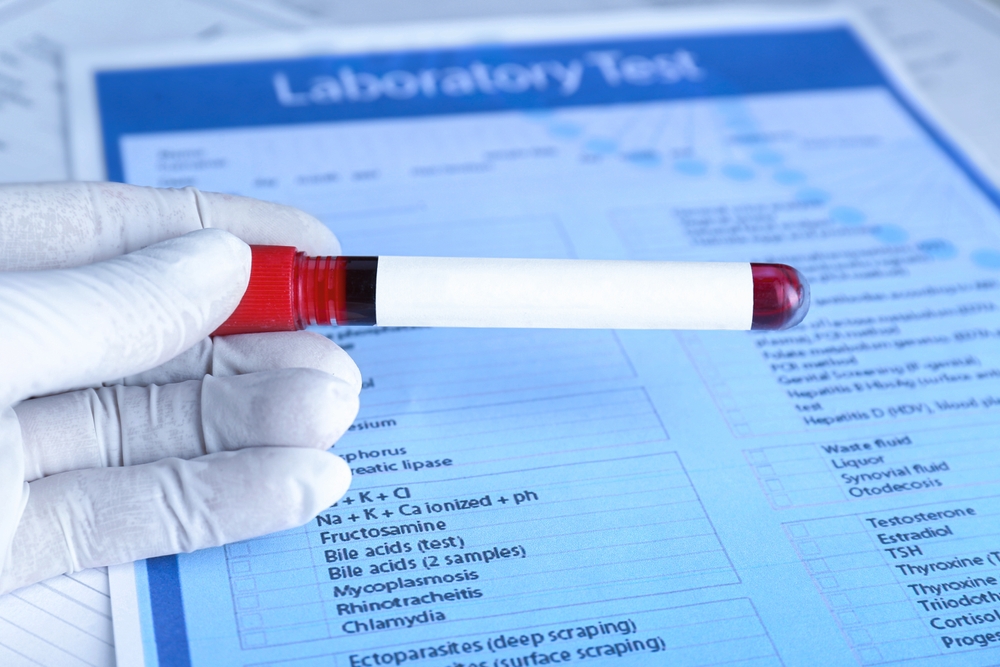
None of this would be feasible without a diagnostic advance that has quietly transformed what is possible in Alzheimer’s research. The whole approach hinges on being able to find the right people, healthy adults harbouring the earliest biological signs of a disease that has not yet surfaced, and a blood test for p-tau217 now makes that achievable.
Evidence presented at the Alzheimer’s Association International Conference showed that these blood tests can predict Alzheimer’s with up to 95 per cent accuracy. Roche’s own data suggest its test performs comparably to a PET brain scan, but can be done with a simple blood draw and analysed in a routine laboratory. That is a profound shift, because it means the silent, pre-symptomatic stage of the disease can now be identified years in advance and at a fraction of the cost. In the UK, more than 50 GP practices are beginning to offer such blood tests, part of the country’s largest study putting the diagnostics directly into surgeries.
What the Plaque Data Actually Show
Here is where trontinemab has genuinely impressed researchers, and where the evidence is strongest. In Roche’s Brainshuttle study, the drug cleared amyloid from the brain with striking speed. In the higher-dose group, 91 per cent of participants became free of detectable amyloid on a PET scan after 28 weeks of treatment.
Modelling based on the data suggests the effect can come even faster at the highest dose. Analysis indicates that the brains of patients receiving it would be free of dementia-causing amyloid after just three monthly infusions, with top-up doses every three months enough to keep plaque levels low for a year and a half. By the standards of this field, that is rapid and robust clearance, and it is the reason trontinemab has generated so much anticipation.
The Crucial Gap Between Clearing Plaque and Preventing Dementia

And yet this is the point at which honesty requires slowing down, because there is a gap at the centre of this story that is easy to miss amid the excitement.
Clearing amyloid plaque from the brain is not the same thing as preventing dementia. The two are related, and researchers have good reason to believe the first leads to the second, but it has not been proven for this drug. In the plain words of the research, it has yet to be seen whether trontinemab’s ability to remove plaque also prevents cognitive decline.
The basis for hope is real. The earlier drugs, lecanemab and donanemab, did more than clear plaque, they slowed cognitive decline in patients who already had symptoms, by 27 per cent and 35 per cent respectively. That establishes a genuine link between removing amyloid and protecting the mind. But slowing decline in people who are already ill is a smaller, more modest claim than preventing dementia in people who are perfectly healthy. The latter is what PrevenTRON is designed to find out, and until the trial reports, it remains an open question rather than a settled fact.
Why Experts Are Cautiously Excited
Within that careful framing, the enthusiasm among specialists is real, and it is worth hearing in their own words. The prospect of catching Alzheimer’s in its silent stage has been described as a fundamental shift in the entire approach to the disease.
Hilary Evans-Newton, chief executive of Alzheimer’s Research UK, captured the sense of momentum building across the field.
“The science is advancing rapidly, and every new discovery brings us closer to a future where diseases can be identified and treated much earlier,” she said. “Over the next five to 10 years, we will see a transformation in what’s possible, including the prospect of treatments that help protect brain health before symptoms progress – the concept of a ‘statin for the brain’.”
That phrase, a statin for the brain, has become shorthand for the ambition here: a medicine taken in mid-life to lower the risk of a devastating disease, much as millions take statins to reduce the risk of heart attacks and strokes. Dr Rachel Buckley, an associate professor of neurology at Harvard Medical School, was similarly candid about the stakes, telling an event that the new generation of treatments was wonderful and that if the trials succeed, the game changes.
Crucially, that optimism comes paired with restraint from the same experts. Dr Jacqui Hanley, head of research funding at Alzheimer’s Research UK, welcomed the findings but called for larger trials to show whether the drugs make a meaningful difference to people’s lives, a reminder that promise and proof are not the same thing.
Safety and the Cost Question
One of the most encouraging aspects of trontinemab lies in its apparent safety profile, an area where its predecessors struggled. The earlier antibody drugs caused a complication known as brain bleeds, or ARIA, in as many as one in four patients, a rate that demanded heavy monitoring and drove up costs. Early data suggest trontinemab causes this problem far less often, in under 5 per cent of participants, because it enters the brain so much more efficiently.
If that holds, it could mean significantly less monitoring and, in turn, lower costs, which matters enormously for whether the drug ever reaches ordinary patients. That question is not hypothetical. Both lecanemab and donanemab are licensed for use in the UK but were rejected for routine NHS use after the National Institute for Health and Care Excellence concluded they did not represent good value for money. A drug can work and still fail to reach the people who need it, and cost remains a real hurdle regardless of what the trials show.
The Evidence on Early Detection
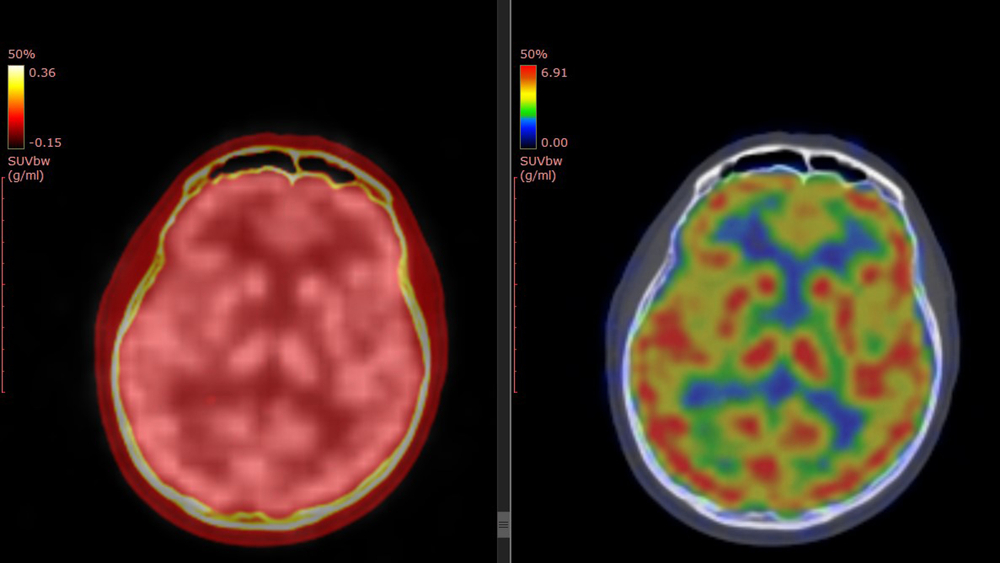
Supporting all of this is a growing body of research on how early the disease can be spotted. A separate study published in the Journal of the American Medical Association analysed almost 2,700 cognitively healthy adults with an average age of 70. Those with the highest levels of p-tau217 had an estimated 78 per cent chance of developing cognitive impairment within a decade, compared with 45 per cent of those with only moderately raised levels.
Dr Buckley, the lead author, described the findings as some of the clearest evidence yet that elevated p-tau217 could flag dementia risk years earlier, even in people with no noticeable problems with memory or thinking. It is worth being precise about what this shows. It is powerful evidence about predicting risk, not proof that any treatment changes the outcome. But it strengthens the logic behind targeting the disease early, which is the entire foundation of the prevention approach.
A Participant’s Perspective
For a sense of what taking part actually feels like, consider Carole Greig, a 71-year-old retired bank worker from south-west London. She was diagnosed with Alzheimer’s after her daughter noticed she was becoming increasingly anxious and getting lost, and an early diagnosis made her eligible for a trontinemab trial at King’s College London.
“The diagnosis was a terrible shock and left me feeling helpless,” she said. “Thanks to an early diagnosis, I was eligible to take part in the new trontinemab trial.”
She joined in February and describes the experience as overwhelmingly positive, a way of taking back some control after her diagnosis. She has monthly infusions and has had no side effects, and she values the close monitoring, the regular MRI and PET scans and cognitive tests, noting that without the trial there is no system for routinely tracking people after a dementia diagnosis. She is honest that she does not yet know whether she is receiving the drug or a placebo, though she will receive the treatment either way after a year. That, she says, gives her hope, not only for her own future but for generations to come. It should be noted that Carole is part of a trial in people who already have symptoms, which is distinct from the new prevention study.
What Happens Next, and What It Doesn’t Mean Yet

Roche’s programme for trontinemab now spans both ends of the disease. Alongside the prevention trial, the company is running phase III studies in people with early symptomatic Alzheimer’s. Taken together, they represent a serious, well-funded effort to move Alzheimer’s treatment from managing decline toward heading it off entirely.
But expectations need to be kept firmly in place. Trontinemab is not approved, not available, and results from these trials are years away. What has been shown is that the drug can clear amyloid from the brain quickly and, so far, safely. What has not been shown, and what everything ultimately depends on, is whether that clearance actually stops people developing dementia. That is the question the trial was built to answer, and it has not been answered yet.
The honest summary is that this is a genuinely exciting moment, a shift toward the possibility of preventing Alzheimer’s rather than merely treating it, carried forward by better drugs and blood tests that can see the disease coming. It is also a moment that demands patience. As advocates point out, these breakthroughs only happen if people volunteer for the trials that test them, and only the trials themselves can turn a promising idea into a proven one.