
Your cart is currently empty!
Scientists Say Bison Have Returned to Their Natural Movements After 100 Years With Incredible Results
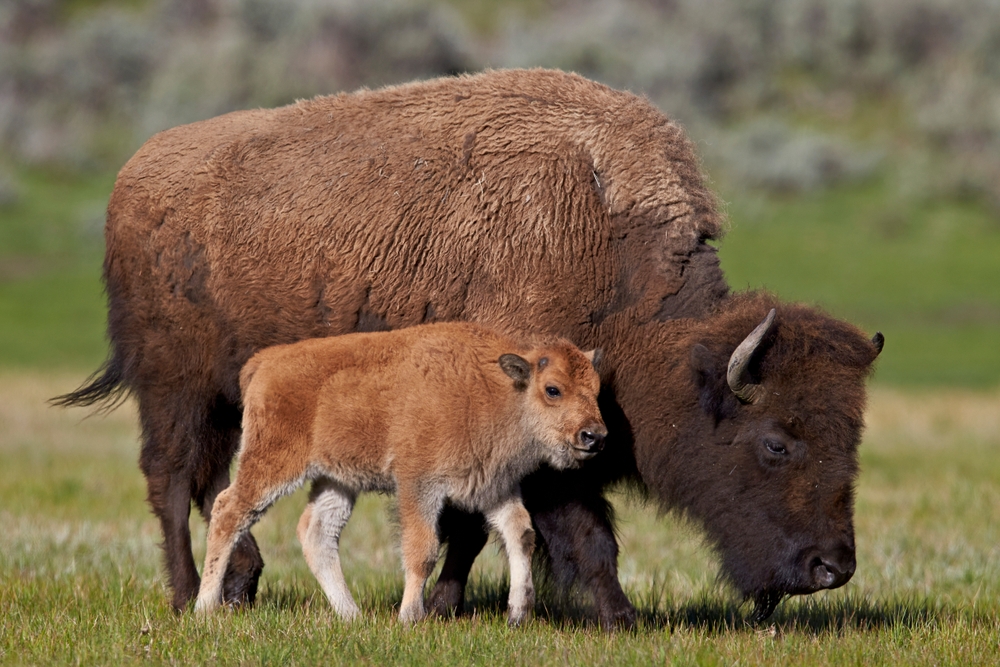
Picture mowing your lawn every single week, all summer, and never once feeding it. Now imagine that lawn coming back thicker and healthier than your neighbor’s, who mows way less often. That doesn’t make sense… unless something else is feeding it behind the scenes.
Contents
show
That’s basically what’s happening in Yellowstone. And the “something else” is 5,000 bison.
The Setup: A Scientist With Clippers and a Lot of Patience
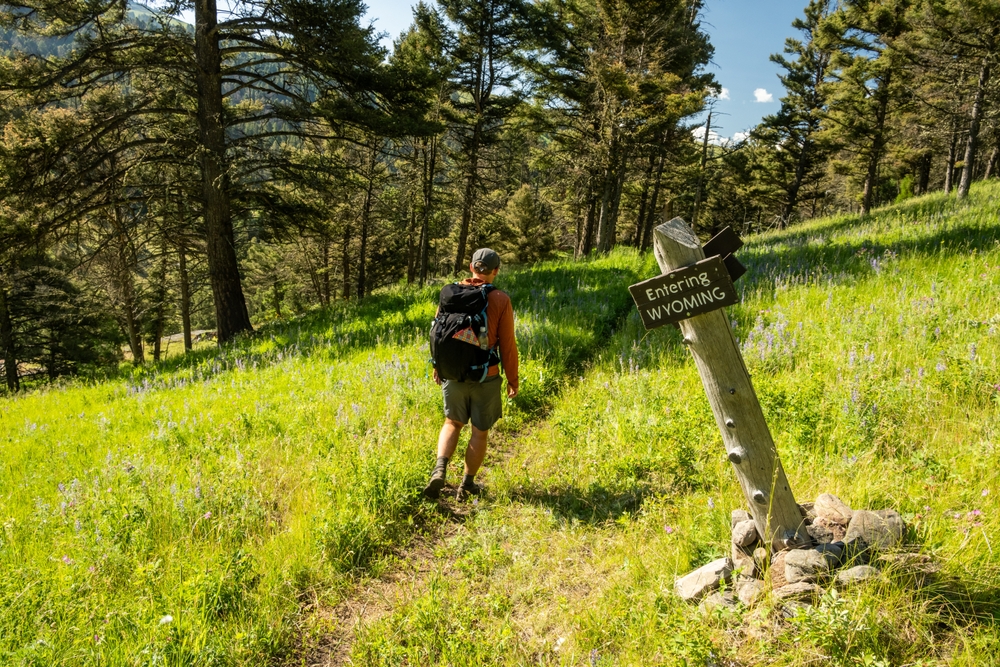
For six summers, biologist Bill Hamilton knelt down in Yellowstone’s grasslands with a pair of clippers, cutting grass and weighing it over and over, all season long, surrounded by thousands of grazing bison.
He expected to find damage. That’s the obvious guess, right? If you eat a lawn down to nothing, again and again, year after year, it should struggle. That’s what almost every textbook predicts about heavy grazing.
So Hamilton, along with Yellowstone biologist Chris Geremia and University of Wyoming ecologist Jerod Merkle, set up a simple test. They dropped wire cages over some patches of grass so bison couldn’t reach them, and left other patches wide open. Some cages stayed in one spot all season. Others got moved to a new patch every month, so the team could see exactly what was happening in real time, wherever the herd happened to be grazing.
Hamilton described it simply: it’s like mowing your lawn, bagging the clippings, and weighing the bag at the end of summer to see how much your grass actually grew.
They ran this experiment at 16 different sites over six years. The results were published in the journal Science in August 2025.
The Twist Nobody Expected
The grazed grass grew back to roughly the same amount as the protected grass. So far, not shocking the lawn survived.
But here’s the part that surprised everyone: the grazed grass wasn’t just surviving. It was becoming better food. Grass in the heavily grazed areas had way more protein and nitrogen than the untouched grass in some spots, over two and a half times as much.
So it’s not that the grass grew back bigger. It grew back richer. Same size lawn, way better nutrition.
Wait How Does That Even Work?
Here’s the unglamorous answer: pee and poop.
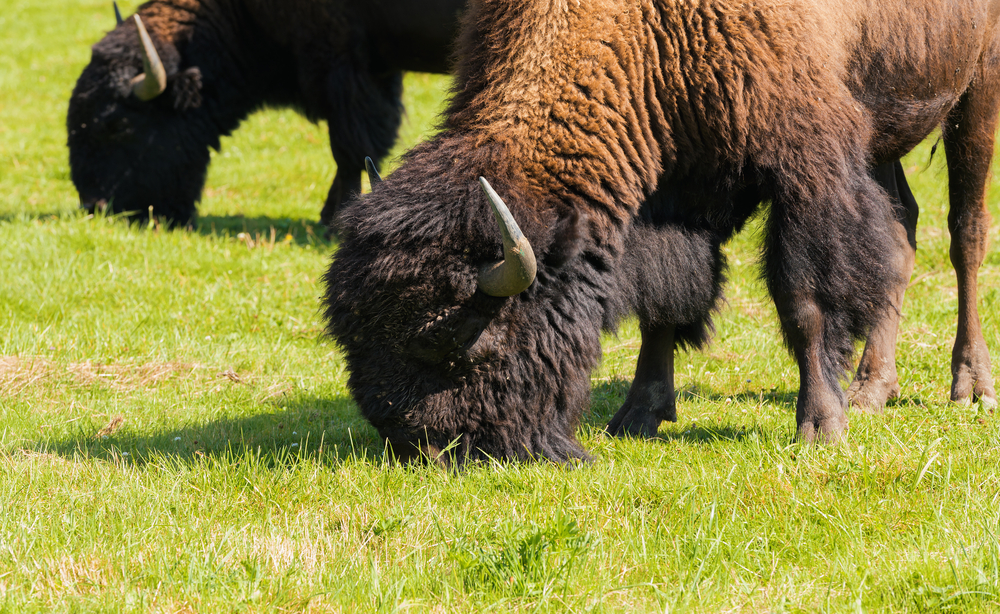
Bison eat grass, then walk around leaving urine and manure behind. That waste soaks into the soil, where microbes tiny organisms living in the dirt break it down and turn it into nutrients the grass can actually use. More nutrients means the next round of grass grows in stronger.
Merkle put it simply: bison graze, pee, and poop. That feeds the insects and microbes in the soil, which in turn makes the soil better. Then the grass grows back better, the bison eat it again, and the cycle repeats.
Think of it like a garden that fertilizes itself, on a loop, forever as long as the bison keep moving.
How Much Extra Food Are We Talking About?
Researchers scaled their measurements up across the bison’s whole migration route using satellite images and GPS collar data.
The number they landed on: bison grazing adds roughly 3.5 million extra kilograms of protein-rich plant food across the landscape each year protein that simply wouldn’t exist without them. Nobody planted it. Nobody watered it or paid for it. It just happens because the bison are there, moving and eating and fertilizing as they go.
And it’s not just the bison who benefit. Elk, deer, pronghorn, and bighorn sheep all end up grazing on that same enriched grass.
The Messy Part Is Actually the Good Part
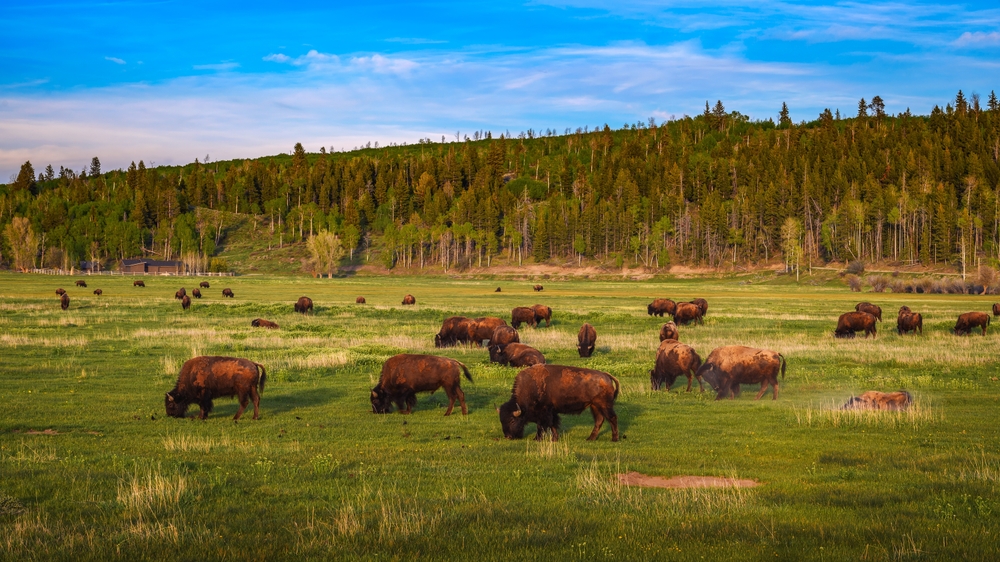
Here’s something that seems backwards at first: the Bison Ecology evenly. Some spots get hammered. Other spots barely get touched. And which spots are which changes from year to year.
You’d think that unevenness would be a flaw. Instead, researchers think it’s the whole point. That patchiness grazed hard here, left alone there creates variety across the landscape, which seems to be part of what keeps the whole system healthy. Merkle compares it to the Serengeti, where herds of wildebeest and zebra roam freely and shape the land the same way.
Basically: a herd that’s allowed to wander wherever it wants, unpredictably, does more good than a Bison herds ‘reawaken’ Yellowstone’s prairies that grazes neatly and evenly.
This System Almost Didn’t Survive
It’s worth pausing on how close this came to never existing at all.
By 1902, hunting and poaching had wiped Yellowstone’s bison down to about two dozen animals. Twenty-four bison stood between this entire system and extinction. The population slowly recovered over the next century, eventually settling around 5,000 animals by the mid-2010s the same herd size Hamilton was studying decades later.
Today’s bison travel roughly 1,000 miles a year along a route about 50 miles wide, following and actually shaping where the best grass grows.
A Few Big Caveats
This is one park, with one unusually large, unusually free-roaming herd. Most bison alive today don’t live like this about 95% of the roughly 400,000 bison in the U.S. are privately owned and raised commercially, and most conservation herds average only around 300 animals, penned into much smaller spaces.
That matters, because the size of the herd and how freely it can roam both seem to be key ingredients here not just the fact that bison are bison. A small herd in a small pasture might not create the same effect at all.
There’s also a political fight layered on top of the science. Montana has pushed in court to cap Yellowstone’s bison population at 3,000 or fewer a number conservationists say would require killing more than 2,000 animals currently living there.
The Land Waking Back Up
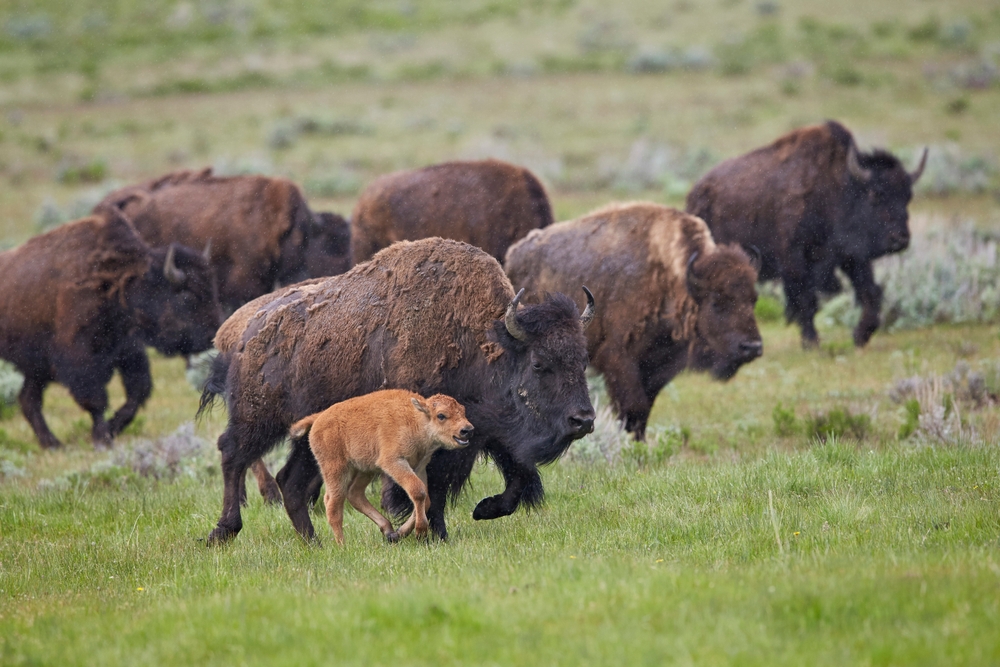
Six years, sixteen sites, thousands of clipped samples and the result upends what textbooks assumed about heavy grazing. Bison don’t wear the land down; they run it through a loop of eating, fertilizing, and regrowth that leaves grass carrying up to two and a half times the protein it would have alone. Scaled across the Northern Range, that’s 3.5 million extra kilograms of protein-rich food a year generated by animals just walking around, no fertilizer trucks required.
It’s worth remembering how close this system came to never existing. In 1902, poaching had cut Yellowstone’s bison down to about two dozen animals. It took a century to rebuild a herd large and free enough to reproduce the effect Hamilton’s cages picked up decades later a history that’s directly relevant now, as Montana pushes to cap the population well below where this effect actually kicks in.
The real lesson: it was never just “bison are good for grass.” It’s scale, freedom of movement, and time, together a small penned herd almost certainly won’t reproduce this. As Hamilton put it, this isn’t animals surviving despite the land. It’s the land waking back up because the animals never stopped moving through it.