
Your cart is currently empty!
AI Data Centers Are Turning To Robot Dogs For Around The Clock Security
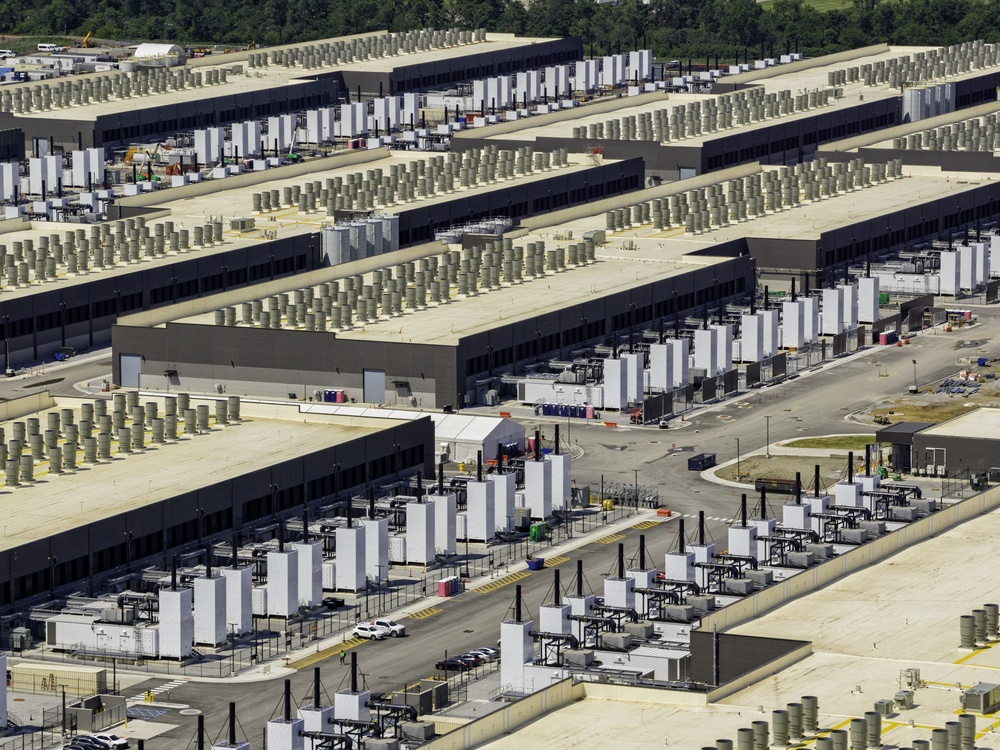
The artificial intelligence boom has transformed data centers into some of the most valuable pieces of infrastructure on the planet. Companies are investing hundreds of billions of dollars to build enormous facilities that will power everything from AI chatbots to autonomous systems, creating a new race to protect these sprawling digital fortresses.
Contents
show
Their latest security solution looks like something pulled from a science fiction movie. Four-legged robot dogs costing as much as $300,000 each are now patrolling the perimeters of AI data centers, scanning for intruders, inspecting equipment, and watching over facilities that never sleep. For robotics companies, it represents a rapidly growing market. For the tech industry, it is another sign that automation is becoming deeply embedded in the infrastructure behind artificial intelligence.
AI’s Infrastructure Boom Is Creating A New Security Challenge
Artificial intelligence has sparked one of the largest infrastructure expansions the technology industry has ever seen. Every new AI model requires enormous computing power, and that demand has triggered a construction wave unlike anything the data center industry has experienced before.
According to commercial real estate firm JLL, North America alone has roughly 35 gigawatts of data center capacity currently under construction. These facilities are not ordinary office buildings. Many stretch across dozens of acres and operate every hour of every day, housing servers worth billions of dollars while consuming huge amounts of electricity.
The scale of these campuses creates an obvious challenge. Traditional security methods that rely solely on fixed cameras and human patrols become increasingly difficult as sites expand. Operators need systems capable of monitoring large areas continuously while also inspecting equipment that could fail without warning.
That need has created an opening for robotics companies whose machines were originally designed for industrial inspections, disaster response, and military applications.
Boston Dynamics, best known for its robot dog named Spot, says interest from data center operators has accelerated dramatically over the past year.
“We’ve seen a huge, huge uptick in interest from data centers in the last year,” Merry Frayne, Senior Director of Product Management at Boston Dynamics, told Business Insider. She added that the surge is hardly surprising given the enormous investment currently flowing into AI infrastructure.
Rather than viewing robots as experimental technology, many operators are beginning to see them as another tool for protecting assets that cannot afford unexpected downtime.
Meet The Robot Dogs Protecting Billion-Dollar Facilities
Although they resemble dogs in appearance, these machines are sophisticated autonomous robots equipped with cameras, thermal sensors, microphones, and navigation systems that allow them to move across challenging terrain without constant human control.
Boston Dynamics’ Spot has become one of the industry’s best-known quadruped robots. Depending on the configuration and sensors attached, the machine costs between $175,000 and $300,000.
Ghost Robotics offers a competing machine called Vision 60, which starts at approximately $165,000 before additional equipment is added.
Despite their high price tags, both companies argue that the robots quickly become financially worthwhile because they perform tasks that would otherwise require multiple personnel while operating throughout the day without fatigue.
Unlike fixed surveillance cameras, quadruped robots can actively patrol changing environments. They can walk around buildings, inspect equipment, investigate alarms, and stream live video back to a control center where human operators monitor the situation.
Their mobility gives them an advantage in facilities that may cover the equivalent of several football fields.
Instead of waiting for someone to notice a problem through security footage, the robot can physically travel to the location, gather additional information, and alert operators if intervention is required.
Their Job Goes Far Beyond Watching The Fence
Security may be their most visible role, but data center operators increasingly expect these robots to perform multiple tasks during every patrol.
Frayne explained that customers often want Spot to function as both a security guard and an inspection platform.
Rather than simply checking fence lines, the robots can monitor conditions inside buildings where expensive computing hardware operates around the clock.
Their sensors can detect:
- Thermal anomalies that may indicate overheating equipment.
- Water leaks or puddles that threaten electrical systems.
- Unusual sounds that suggest machinery is failing.
- Doors that have been left open unexpectedly.
- Construction progress during ongoing facility expansion.
- Changes in site conditions that require maintenance.
Many of these issues can become extremely expensive if they are not detected quickly.
Data centers contain thousands of servers operating continuously. Even relatively minor problems such as cooling failures or unnoticed water leaks can create equipment damage or service interruptions affecting customers around the world.
The robots also generate digital maps of facilities during patrols, allowing operators to compare changes over time and identify potential maintenance concerns before they become emergencies.
For companies spending billions to build AI infrastructure, preventing even a single major outage can justify investments in advanced monitoring systems.
Why Companies Believe The Numbers Make Sense
A robot costing hundreds of thousands of dollars might initially appear difficult to justify.
The companies selling these machines argue that the economics tell a different story.
According to Frayne, most Boston Dynamics customers recover their investment surprisingly quickly.
“Typically, our customers have a payoff within two years,” she told Business Insider. “It’s usually more like 18 months of hard savings. That does not include the value of the data.”
Ghost Robotics presents a similar argument.
Michael Subhan, the company’s Chief Growth Officer, estimates that employing a full-time security guard can cost around $150,000 annually once wages and related expenses are considered.
“We know that the cost for a human guard is around $150,000,” Subhan said. “So we look at that ROI. Instead of having two guards at $300,000, you can have one guard and a robot.”
Unlike human workers, robots do not require shifts, vacation time, or sick leave. They can continue operating through difficult weather conditions while maintaining the same patrol schedule every day.
That does not mean companies are eliminating human security entirely.
Instead, robotics firms present their machines as force multipliers that allow fewer personnel to oversee much larger facilities.
Humans Are Still Making The Decisions
One of the biggest misconceptions surrounding security robots is that they operate completely independently.
The companies behind these systems emphasize that humans remain central to every operation.
Subhan rejected the idea that Vision 60 is intended to replace security guards.
“We’re not there to replace the human guard,” he said. “We sort of augment the guard.”
The robot acts as a mobile sensor platform that continuously gathers information while transmitting video and data back to trained personnel.
Similarly, Boston Dynamics says Spot is monitored through centralized control rooms where operators observe live feeds and respond whenever the robot detects something unusual.
This approach combines human judgment with robotic endurance.
Security personnel no longer need to spend every hour physically walking miles of fencing or repeatedly inspecting equipment spread across enormous campuses.
Instead, robots handle repetitive patrols while people focus on evaluating alerts, making decisions, and responding when action is required.
The model reflects a broader trend throughout industrial automation, where machines increasingly perform routine inspection work while humans supervise operations and intervene when necessary.
A Small Market Today That Could Become Much Larger
Robot dogs are still relatively uncommon inside data centers, but industry leaders believe that could change rapidly as AI infrastructure continues expanding.
Boston Dynamics describes the sector as an emerging market within its industrial business, although the company has not disclosed how many units have already been deployed.
Ghost Robotics says its Vision 60 robots are currently operating at a handful of data centers, primarily focusing on external perimeter security.
One public example comes from Novva Data Centers in Utah.
The company has openly showcased multiple Boston Dynamics Spot robots operating throughout its flagship campus in West Jordan. According to Novva, the robots follow predetermined inspection routes, collect operational data, monitor equipment, and alert staff when thermal sensors detect abnormalities.
As AI companies continue building larger campuses, robotics manufacturers believe demand could accelerate significantly.
Subhan points to the sheer scale of the opportunity.
“There are 5,000 data centers in the US alone, 800 to a thousand new data centers being built currently,” he said. “So we see that as a large market for us.”
For robotics companies, AI’s infrastructure race has become far more than another sales opportunity. It could become one of the defining commercial markets for autonomous machines over the coming decade.
The Debate Around Robot Guards Is Only Beginning
While robotics companies emphasize efficiency and safety, the arrival of robot dogs at AI data centers has also fueled a broader conversation about automation, surveillance, and the future of work.
The machines themselves are not new. Boston Dynamics has spent years demonstrating Spot in industries ranging from mining and construction to oil and gas. Ghost Robotics has also promoted its quadruped robots for military reconnaissance, law enforcement, and critical infrastructure protection.
What has changed is the environment where these machines are now being deployed.
AI data centers have become some of the most valuable facilities in the technology sector. They house thousands of specialized processors capable of training advanced AI models, making them attractive targets for theft, vandalism, or disruption.
For operators, adding robotic patrols is a practical business decision.
For critics, it represents another step toward a future where machines increasingly monitor and secure other machines with fewer humans involved.
That contrast has become a defining feature of the AI era. The same companies building systems that automate digital work are also investing in robots that can automate parts of physical security.
Data Centers Have Become A Flashpoint In Many Communities
The discussion extends beyond robotics.
Across the United States, proposed AI data centers have faced growing opposition from local residents concerned about energy consumption, water usage, noise, and environmental impacts.
Modern AI facilities consume enormous amounts of electricity to power servers while requiring extensive cooling systems to prevent overheating.
Some of the newest projects illustrate just how massive these campuses have become.
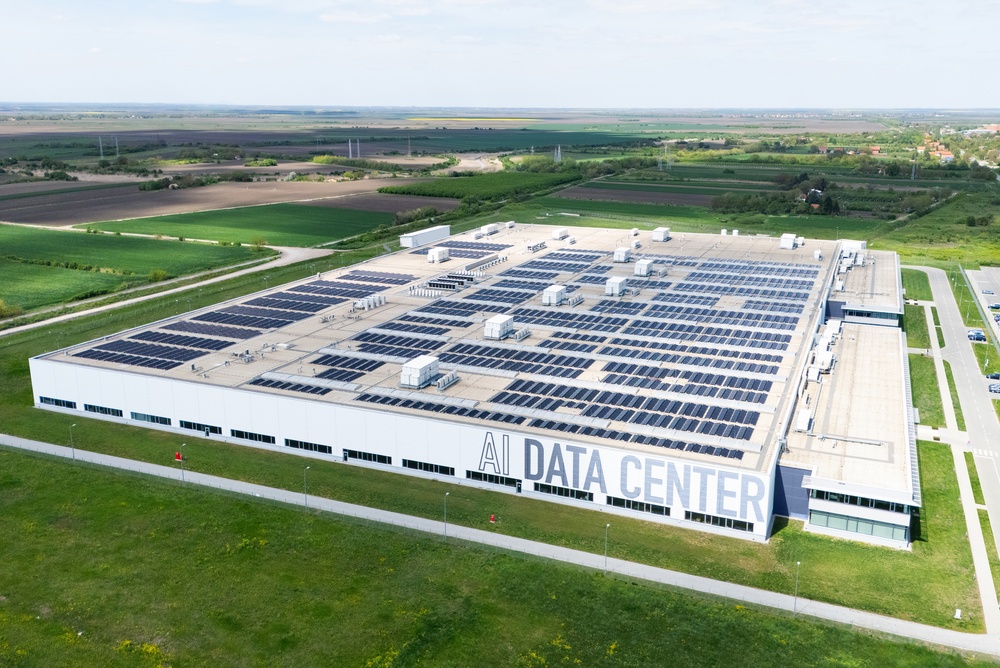
Meta’s planned Hyperion data center, for example, is expected to occupy an area roughly four times the size of New York City’s Central Park. Other facilities stretch across dozens of acres, resembling industrial complexes more than traditional office buildings.
As investment in AI infrastructure accelerates, estimates suggest technology companies are committing nearly $700 billion toward expanding computing capacity.
That unprecedented spending has transformed data centers into strategic assets that companies are eager to protect.
The deployment of robotic security arrives against that backdrop.
Some communities have organized protests against proposed facilities, arguing that the projects place additional pressure on local electrical grids and water supplies while offering relatively limited direct benefits for nearby residents.
As these developments become larger and more numerous, operators are preparing for increased security needs around sites that may become focal points for demonstrations or unauthorized access.
The Robotics Industry Sees A Massive Opportunity
For Boston Dynamics and Ghost Robotics, AI data centers represent more than another customer segment.
They may become one of the industry’s largest commercial opportunities.
Michael Subhan believes the numbers speak for themselves.
“There are 5,000 data centers in the US alone, 800 to a thousand new data centers being built currently,” he told Business Insider. “So we see that as a large market for us.”
Even if only a fraction of those facilities deploy robotic patrol systems, the potential demand could reach thousands of machines over the coming years.
Unlike traditional industrial projects, AI data centers continue expanding after construction finishes.
Many campuses add new buildings, cooling systems, substations, and security infrastructure as computing demand grows.
That ongoing development creates additional roles for quadruped robots beyond perimeter patrol.
Robots can monitor construction progress, inspect temporary infrastructure, create updated digital maps, and help identify maintenance issues before equipment enters full operation.
As facilities become increasingly automated, robotic inspection systems may become as common as surveillance cameras or access control gates.
The technology is also improving rapidly.
Each new generation brings longer battery life, improved navigation, more capable sensors, and better integration with AI software that can automatically recognize unusual conditions.
The result is a platform that continues becoming more useful after deployment through software updates and expanded capabilities.
The Future Could Extend Far Beyond Security
Security is only the beginning of what robotics companies envision for autonomous quadrupeds.
Because these machines already navigate difficult environments independently, additional software can expand their responsibilities without changing the hardware itself.
Future deployments could include infrastructure inspections that currently require specialized personnel.
Robots may routinely inspect electrical substations, cooling towers, generators, and server rooms while collecting thousands of data points during every patrol.
Artificial intelligence could then analyze those inspections, compare them against previous scans, and predict equipment failures before they happen.
Instead of simply reporting a puddle, future systems might determine whether it indicates a leaking pipe, estimate how quickly conditions are changing, and recommend maintenance priorities.
Construction monitoring could also become increasingly automated.
As new AI campuses continue rising across the country, autonomous robots may document progress every day, compare completed work against engineering plans, and provide project managers with continuously updated records.
That combination of robotics and AI reflects a larger shift happening throughout industry.
Machines are no longer limited to performing repetitive physical tasks. They are increasingly becoming mobile platforms that gather information, analyze conditions, and support human decision making.
For data centers that must operate continuously, every minute of avoided downtime carries enormous financial value.
Robotics Is Growing Alongside Artificial Intelligence
The robot dog story also reflects another technology trend that receives less attention than generative AI.
Industrial robotics is expected to expand significantly over the coming decades.
Although annual industrial robot sales have remained relatively stable since 2021, analysts expect substantial growth as artificial intelligence improves robotic capabilities.
Deloitte has projected annual industrial robot shipments could reach one million units by 2030, roughly double current levels.
Longer-term forecasts suggest an even larger market as robots become more capable, less expensive, and easier to deploy across industries.
Some technology leaders believe AI will accelerate that transition.
Zak Kidd, founder of AI company AskHumans, recently argued that AI and robotics may reshape different parts of the workforce.
“I see AI as an augmentation of knowledge work,” Kidd told Fortune. “But I see robotics, humanoid robotics, as a replacement for manual work.”
Not everyone agrees with that prediction.
Current robot dogs still rely heavily on human supervision, perform relatively specialized tasks, and remain too expensive for widespread deployment across most industries.
Even so, their growing presence inside critical infrastructure suggests robotics is steadily moving beyond research labs and demonstration videos into everyday commercial operations.
A Glimpse Into The Next Generation Of Infrastructure
For years, robot dogs captured public attention because they looked futuristic.
Today, they are beginning to perform practical jobs inside facilities that form the backbone of the modern internet.
They patrol fence lines, inspect expensive equipment, detect hazards, and provide human operators with information that would otherwise require hours of manual work.
The technology is still in its early stages. Only a small number of data centers currently use quadruped robots, and companies continue to stress that human personnel remain responsible for security decisions.
Yet the direction is becoming increasingly clear.
As artificial intelligence drives unprecedented investment in digital infrastructure, robotics companies are finding opportunities to automate many of the routine tasks required to protect that infrastructure.
Whether robot dogs become a standard feature at every major data center remains to be seen.
What is already evident is that the AI revolution is extending well beyond software. It is reshaping the physical world too, changing not only how information is created and processed but also how the buildings behind that technology are monitored, maintained, and secured.