
Your cart is currently empty!
Scientists Found A Striking Pattern Hidden Inside More Than 1,200 Autism Risk Genes

For years, autism genetics has looked like a puzzle with thousands of pieces and no obvious picture on the box. Researchers have identified more than 1,200 genes linked to autism, but the sheer number has made one question incredibly difficult to answer: do all those different genetic changes eventually lead the brain toward a smaller number of shared biological states?
Contents
show
A new study suggests they might. Researchers studying 17 genetically engineered mouse lines found that hundreds of different autism-related mutations appeared to converge into just two broad molecular patterns in the brain. The finding does not create two types of autism or offer a new diagnosis, but it could give scientists a much simpler way to study a condition with extraordinary genetic complexity.

More Than 1,200 Genes Have Been Linked To Autism
Autism genetics has expanded rapidly over the past several years, with more than 1,200 risk genes now linked to the condition. Those genes can influence very different parts of how the brain develops and operates, including the machinery involved in communication between neurons and systems that regulate which genes are switched on or off.
That diversity has created a major challenge. Researchers can identify individual mutations, but understanding what those mutations have in common is far harder. Mihyun Bae, a co-corresponding author of the study, described the problem directly: “Genetic discoveries have revealed extraordinary diversity in autism, but diversity alone does not explain the biology.”
The researchers therefore approached the problem from another direction. Instead of sorting the animals according to the particular gene that had been altered, they examined what those mutations were actually doing inside the brain. Eunjoon Kim, who leads the Center for Synaptic Brain Dysfunctions at South Korea’s Institute for Basic Science, said, “Instead of asking which gene is mutated, we asked whether different mutations produce common molecular patterns in the brain.” The answer pointed toward a surprising degree of convergence.

Two Molecular States Emerged From Different Mutations
The researchers examined more than 1,000 brain transcriptomes from 17 genetically engineered mouse lines. Each line carried a different autism risk mutation, while the researchers focused on the prefrontal cortex, a brain region involved in complex functions such as decision-making and social behavior.
They also used single nucleus sequencing on roughly one million individual brain cell nuclei from 205 mice. That gave the team a much closer look at individual cell types instead of relying only on an average signal from an entire piece of brain tissue.
The mice ultimately separated into two broad molecular groups. In the first group, genes involved in synaptic communication showed reduced activity, while genes involved in chromatin regulation and RNA processing showed increased activity. The second group showed the opposite pattern, suggesting that very different genetic mutations could push brain cells toward two contrasting molecular states.

The Patterns Changed With Sex, Age And Brain Region
The researchers found that the two groups were not permanent labels attached to particular mutations. The molecular pattern observed in a mouse could depend on several factors, including sex, developmental age and the region of the brain being examined.
That became particularly clear in seven of the 17 mouse lines. Male and female mice carrying the same mutation sometimes ended up in different molecular groups, suggesting that the same genetic alteration can produce different biological effects depending on the animal’s sex.
Development also appeared to influence the result. When researchers compared brains at 25 days old with brains at 40 days old across four representative mouse lines, some animals remained in the same molecular group while others switched. That finding makes the two patterns look more like flexible states than fixed categories.

Fluoxetine And Lithium Produced Different Responses
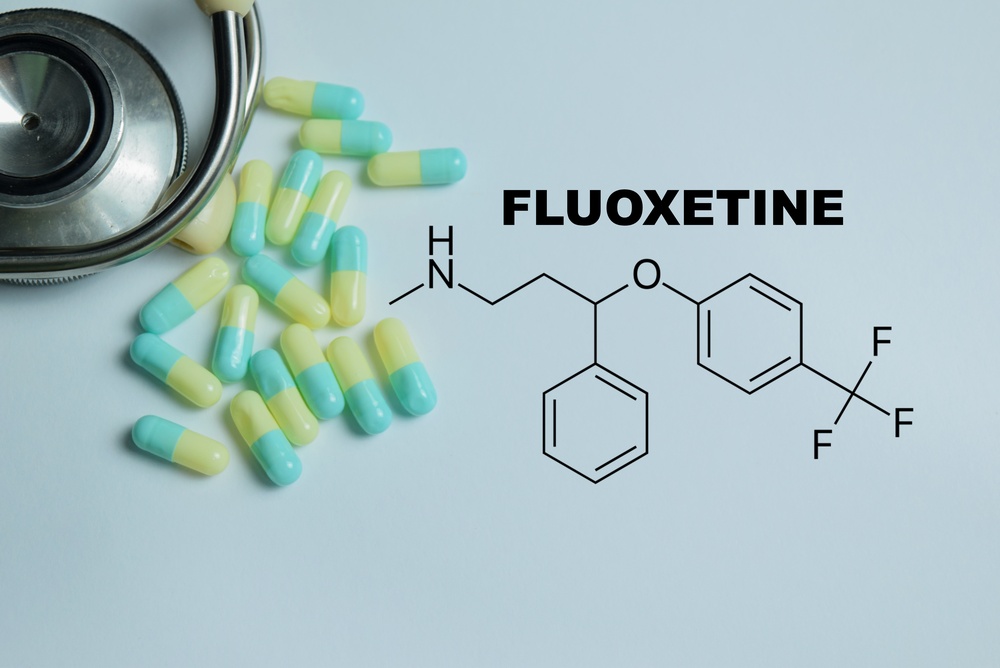
The researchers then tested two established compounds during early postnatal development: fluoxetine, an antidepressant commonly known by the brand name Prozac, and lithium. The drugs were used as experimental probes to see whether the molecular patterns could be shifted.
The response depended on which molecular group the mice belonged to. Group 1 showed a more consistent shift in certain gene expression patterns toward those seen in control mice, while Group 2 responded more variably.
The distinction is important because the experiment does not show that either drug treats autism. The researchers measured molecular changes rather than improvements in behavior or core autism characteristics. The compounds also did not change the relative proportions of different brain cell populations.
Human Brain Data Showed A Similar Pattern
After finding the two molecular patterns in mice, the researchers looked for evidence that something similar could appear in human brain tissue. They examined transcriptomic data from the prefrontal cortex of 40 autistic individuals and 17 neurotypical controls.
Two subgroups also appeared in the human data, with opposing patterns involving synaptic gene activity. That provided a potentially important connection between the animal experiments and human biology, although the researchers did not find an exact copy of the mouse patterns.
There were also clear differences. Immune-related pathway changes were more prominent in the human tissue, while some other molecular differences were less pronounced. The human dataset also did not contain genetic sequencing that could connect each person’s molecular subgroup to the particular autism-related mutation they carried.
What The Study Does Not Prove
The researchers’ findings are intriguing, but the limits of the work are just as important as the two molecular groups. The study does not establish two clinical forms of autism, and it cannot predict an individual’s traits, support needs or likely response to medication.
The experiment also relied heavily on mice. Standardized behavioral testing was not performed across every mouse line, and the drug experiments involved only two compounds. A change in gene expression cannot automatically be translated into a change in behavior, communication or other characteristics associated with autism.
The study therefore points toward a possible biological framework rather than a finished treatment strategy. The researchers say future work needs to combine transcriptomic patterns with behavioral measurements, brain circuit studies and experiments involving additional treatments.
Why The Two-Pattern Finding Could Change The Research Question
The sheer number of autism-associated genes has made the condition difficult to study as a collection of individual genetic problems. If many different mutations repeatedly produce a smaller number of molecular states, researchers may eventually be able to investigate those shared states rather than treating every mutation as an entirely separate biological story.
The current study does not establish that this pattern will hold across all autistic people. Its strongest evidence comes from genetically engineered mice, and the human brain data were based on a relatively small sample without genetic information connecting individuals to specific mutations.
Still, the researchers found something worth investigating further: more than 1,200 potential genetic starting points may lead toward a much smaller set of molecular outcomes. That could give future researchers a more manageable way to search for mechanisms, treatments and biological differences.
The Biggest Finding Is How Much Smaller The Problem Became
The study’s most striking result is not a new autism diagnosis or a new drug. It is the possibility that a huge collection of apparently unrelated genetic changes may converge on a limited number of molecular states in the developing brain.
The researchers described that idea clearly. Bae said, “Our study suggests that many different genetic mutations converge into a limited number of molecular brain states, providing a framework for understanding autism at the level of shared biology rather than individual genes.”
For families, the research does not change clinical care today. For scientists, however, it may change the question they ask next. Instead of trying to understand more than 1,200 genetic stories one by one, researchers now have evidence that some of those stories may eventually lead to the same biological destination.