
Your cart is currently empty!
AI and Nuclear War Among 17 Major Threats Facing Humanity This Century

Humanity could face a series of interconnected crises over the coming decades, and researchers warn that two of them carry the potential to wipe out the human species. A new commission published in The Lancet has identified 17 catastrophic threats to global health and survival, warning that the decisions made by world leaders today could determine the scale of suffering experienced by future generations.
Contents
show
The findings cover everything from the malicious use of artificial intelligence and nuclear conflict to climate change, obesity, poverty and infectious diseases. Although the report outlines a worrying future if current trends continue, its authors stress that governments still have opportunities to prevent the worst outcomes through coordinated action, scientific investment and stronger public health systems.
Researchers Identify Two Threats With Potential to Cause Human Extinction
The commission examined hundreds of potential dangers before identifying 17 threats that could cause enormous losses of healthy life between 2025 and 2100. Its assessment draws on historical evidence and data covering 204 countries and territories, bringing together expertise across health, economics, technology, security and governance.
Two threats received particular attention because of their potential consequences: nuclear conflict and the malicious use of artificial intelligence. The commission acknowledges that the likelihood of either scenario remains uncertain, but their potential impact makes them serious concerns for governments and international institutions.
A large-scale nuclear conflict could kill millions of people, destroy essential infrastructure and disrupt food production far beyond the countries directly involved. Depending on its scale, the resulting devastation could threaten the survival of human populations across the planet.
Artificial intelligence presents a different set of challenges. Researchers examined the possibility that powerful AI systems could be deliberately misused in ways that produce catastrophic consequences, including scenarios that threaten humanity’s continued existence. These projections remain theoretical because no malicious AI event of truly global magnitude has occurred.
Professor Christopher J. L. Murray, director of the University of Washington’s Institute for Health Metrics and Evaluation and co-chair of the commission, said: “The striking finding is not only the scale of these threats, but that humanity still has the agency to act.” His statement reflects the report’s central argument that catastrophic outcomes are not inevitable, even when the potential consequences are severe.
The 17 Threats Extend Far Beyond Artificial Intelligence

While AI and nuclear conflict attract attention because of their potential to threaten human survival, the commission’s assessment covers a much broader range of problems. Several already cause widespread illness and premature death, while others could become more damaging if governments fail to address their underlying causes.
The 17 threats identified by the commission are nuclear conflict, the malicious use of AI, air pollution, antimicrobial resistance, childhood malnutrition, climate change, conventional conflict, declining development assistance for health, high alcohol use, high blood pressure, income inequality, low educational attainment, naturally occurring pandemics, obesity, poor mental health, smoking and unhealthy ageing.
These threats affect people in different ways, but their combined consequences could be enormous. Air pollution contributes to respiratory and cardiovascular diseases, while high blood pressure increases the risk of heart attacks and strokes. Smoking and excessive alcohol consumption also contribute to preventable illness and premature death.
Antimicrobial resistance presents another major concern because bacteria and fungi can develop resistance to medicines used to treat infections. When existing drugs become less effective, conditions that were once treatable can become more dangerous, placing additional pressure on healthcare systems.
Childhood malnutrition and limited educational opportunities can also influence health throughout a person’s life. Meanwhile, declining international assistance for health could leave vulnerable populations without essential medical services, particularly in countries with fewer resources.
The commission’s assessment shows why catastrophic risks cannot be understood solely through the possibility of a dramatic global disaster. Some threats develop gradually, affecting millions of lives before their full consequences become visible. Others may remain relatively unlikely but carry consequences so severe that prevention deserves serious attention.
The Report Warns of Billions of Years of Lost Healthy Life

One of the commission’s most striking findings concerns the potential amount of healthy life humanity could lose by the end of the century. If current trends continue, the 17 threats could collectively account for tens of billions of years of lost health through premature mortality, illness and disability.
To measure these consequences, researchers use disability-adjusted life years, commonly known as DALYs. One DALY represents one year of healthy life lost because of illness, disability or premature death. This measure allows researchers to compare threats that otherwise have very different causes and effects.
The commission estimates that action to reduce the risks associated with malicious AI could avert approximately 10.4 billion DALYs by 2100. Preventing nuclear conflict could avert an estimated 133 million deaths and 9.35 billion DALYs over the same period.
These figures represent modelled estimates of potentially avoidable harm rather than predictions that the losses will definitely occur. They illustrate the possible difference between future scenarios with stronger prevention and those in which existing risks remain insufficiently addressed.
The distinction is particularly important when assessing artificial intelligence. The commission notes that forecasters disagree widely about the probability of an AI-related catastrophe, and its estimates remain theoretical. Researchers have considerably more empirical evidence for some other threats, including obesity and high blood pressure, which already contribute substantially to the global disease burden.
The commission therefore does not present its findings as a simple ranking of which danger is most likely to cause harm. Instead, it seeks to identify areas where targeted interventions could prevent large amounts of suffering and premature death.
Climate Change Could Intensify Several Other Global Threats
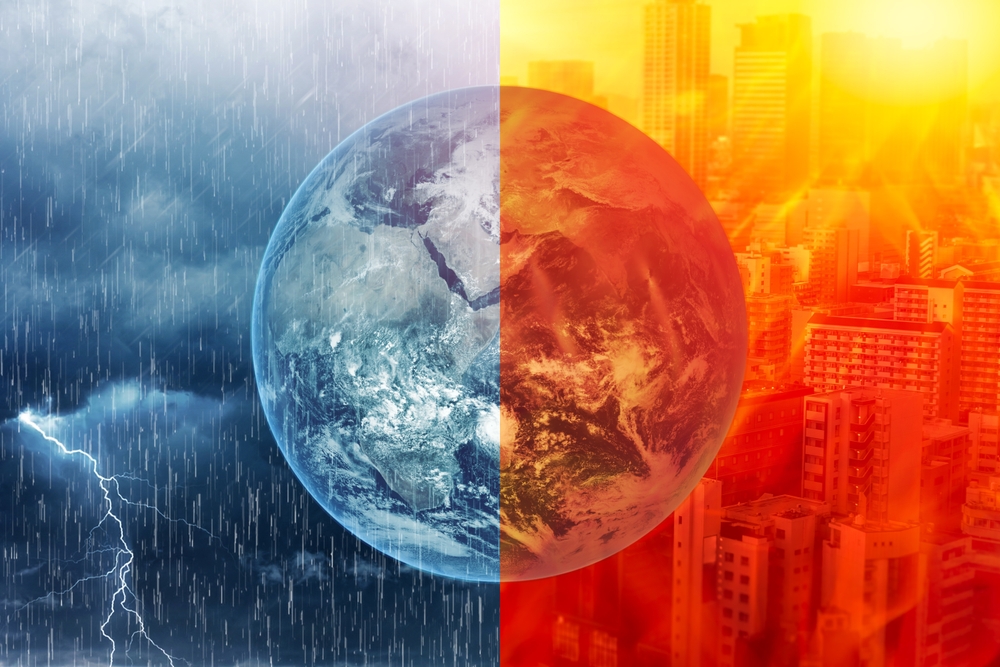
Climate change is another major concern identified in the report, with consequences that extend beyond rising temperatures. Extreme heat can directly threaten human health, while environmental disruption can affect air quality, food security and access to essential services.
The commission estimates that limiting global warming to around 1.8°C, rather than allowing temperatures to reach 4.4°C, could prevent 1.89 billion years of healthy life from being lost through causes such as extreme heat and air pollution.
This estimate captures only the harms that researchers could measure within the assessment. Other consequences, including displacement, drought and mental health impacts, could add to the burden, while the effects of climate change could continue beyond 2100.
Climate instability can also increase the pressure on healthcare systems. Severe weather events may interrupt medical supplies and essential services, while changing environmental conditions can influence where disease-carrying insects survive. Flooding can create additional health hazards, particularly where sanitation infrastructure is damaged.
The connections between climate change and other threats make the situation more complicated. Environmental damage can affect food production, contributing to malnutrition and economic hardship. Those pressures can make it harder for communities to maintain health services or recover from other emergencies.
Researchers warn that these risks may compound one another rather than develop independently. As a result, policies that reduce emissions, improve resilience and protect public health could deliver benefits across several areas at once.
Poverty and Inequality Could Leave Vulnerable Communities Exposed

The commission identifies income inequality and low educational attainment among the major threats to future health and survival. Both can influence access to medical care, economic opportunities and the information people need to protect their wellbeing.
Education can shape employment prospects, health knowledge and access to resources. Limited educational opportunities may also contribute to poorer health outcomes across generations, particularly when children grow up without adequate healthcare or nutrition.
Income inequality creates related challenges because people with fewer financial resources often have less access to preventive care, stable housing and nutritious food. When a crisis occurs, these disadvantages can make recovery more difficult and increase the likelihood of long-term harm.
The report estimates that income inequality could account for an avoidable health burden equivalent to 13.8 billion DALYs by 2100. It also identifies substantial potential health losses associated with educational attainment, particularly for women and children in sub-Saharan Africa.
Declining development assistance for health presents another serious risk. According to the commission’s projections, sub-Saharan Africa could bear around 70% of the avoidable health burden associated with a collapse in such assistance.
These findings highlight an important difference between identifying global threats and understanding who will suffer most from them. The consequences of a crisis can vary dramatically depending on access to healthcare, education, funding and infrastructure. Communities with fewer resources may face the greatest health harms despite having the least capacity to prepare.
Why Researchers Say the Threats Must Be Addressed Together

The commission argues that the 17 threats are interconnected and should not be tackled as isolated problems. A crisis in one area can intensify existing difficulties elsewhere, creating conditions in which several risks become harder to control.
For example, conventional conflict can damage hospitals and disrupt education, while economic instability can make essential healthcare less accessible. Climate change can worsen food insecurity and increase pressure on vulnerable communities, while infectious disease outbreaks can overwhelm health systems already struggling with limited resources.
Artificial intelligence also raises questions about how societies manage emerging technologies and prepare for risks that may be difficult to predict. Effective safeguards require cooperation among governments, researchers and industries, particularly when technological developments have consequences across national borders.
Trust is another important factor in the commission’s analysis. Public institutions need credibility and accountability to coordinate responses, share information and encourage cooperation during emergencies. When trust breaks down, even effective interventions can become more difficult to implement.
The researchers argue that technical solutions alone will not be sufficient. Scientific discoveries, new medicines and better technologies need supportive institutions, reliable funding and systems that allow their benefits to reach the people who need them.
This approach also creates opportunities to address several threats through the same investment. Stronger healthcare systems can improve preparedness for pandemics while also helping people manage chronic conditions. Better education and more equitable access to resources can strengthen communities against a wide range of health and economic pressures.
The Commission Proposes Three Priorities for Preventing Catastrophe
To help governments and other decision-makers respond, the commission proposes a framework built around readiness, innovation and monitoring. The aim is to reduce avoidable harm before threats escalate into crises that become much harder to manage.
Building Readiness Before Emergencies Begin
The first priority involves creating health systems that can prepare for several types of threats at once. The commission recommends dedicated planning, sustained funding and stronger capabilities for prevention, preparedness and protection.
Governments need systems that can identify emerging dangers and respond quickly when conditions change. Preparation should extend to lower-resource communities rather than concentrating only on wealthier countries with more established infrastructure.
The researchers also emphasize the importance of durable financing. Emergency plans are less effective when funding arrives only after a crisis has already begun, particularly when communities need years of investment to strengthen their healthcare services.
Supporting Scientific and Technological Breakthroughs
The second priority is to increase investment in innovation where existing solutions remain insufficient. The commission identifies areas including vaccines, antibiotics, obesity treatments and climate technologies as potential targets for further development and implementation.
However, developing an effective solution is only part of the challenge. Governments and institutions must also consider how to make these advances accessible across different countries and income groups.
This principle applies to both established health problems and emerging technological risks. Scientific progress can reduce suffering, but its benefits depend on effective implementation, responsible governance and access to the tools that prevention requires.

Tracking Emerging Threats as Evidence Changes
The third priority involves regularly monitoring threats and updating assessments as new evidence becomes available. The commission recommends independent reassessment so that policymakers can respond to changing risks rather than relying on outdated assumptions.
The proposed Lancet Monitor of 21st Century Global Threats to Health would provide a mechanism for tracking emerging dangers and communicating relevant evidence to decision-makers across health, finance and security.
Regular monitoring could also help governments recognize when a threat is becoming more serious or when a new intervention is proving effective. Such information can guide funding decisions and help direct limited resources towards measures with the greatest potential to prevent harm.
Experts Say the Future Is Not Predetermined
The commission does not describe its 17 threats as a permanent ranking. New research, changing conditions and scientific advances could alter how risks are assessed over time, making regular evaluation essential.
Some of the threats already cause substantial harm, while others involve uncertain scenarios with potentially devastating consequences. Their solutions will differ, but the researchers argue that preparation, investment and international cooperation can reduce the overall burden.
Dr. Natalia Kanem, a co-chair of the commission and former executive director of the United Nations Population Fund, said: “Yet the future is not inevitable.” Her statement reflects the report’s emphasis on the ability of governments and communities to influence what happens next.
The findings offer no guarantee that humanity will avoid every catastrophe. They do, however, identify areas where preventive action could reduce suffering and protect future generations from avoidable health losses.
World leaders now face decisions about public health funding, climate policy, technological safeguards and international cooperation. The consequences of those choices will extend well beyond the political and economic cycles in which they are made.
The most urgent challenge is to act while prevention remains possible. Waiting until a threat reaches catastrophic proportions could leave governments with fewer options, higher costs and far less time to protect the people who depend on them.