
Your cart is currently empty!
Scientists Discover Hundreds of Humpback Whales Gathering Off South Africa
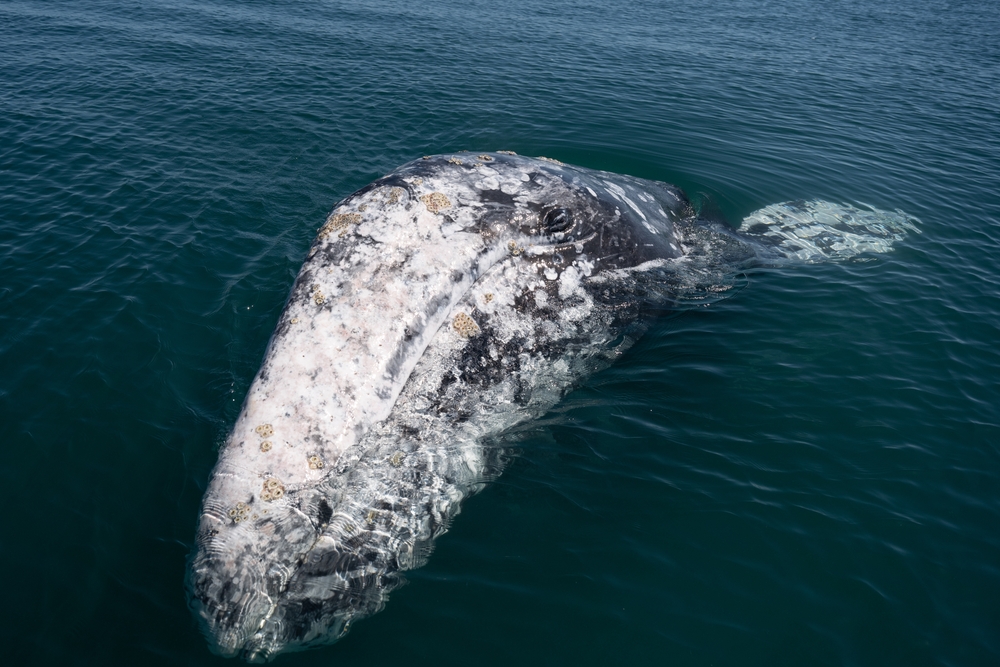
More than 300 humpback whales gathered off South Africa’s west coast in a single day, creating a spectacle that left experienced wildlife photographers struggling to capture everything happening around them. The extraordinary sighting has also raised questions about why these enormous marine mammals are suddenly appearing in such large groups.
Contents
show
The gathering represents a remarkable chapter in the recovery of a species once pushed close to extinction by commercial whaling. Yet scientists believe there could be more behind the phenomenon than simply an increase in whale numbers, with changing ocean conditions and the search for food potentially playing a significant role.
A Record-Breaking Encounter Left Wildlife Photographers Stunned
On December 30, 2025, wildlife photographers Chris and Monique Fallows found themselves surrounded by hundreds of humpback whales off the west coast of South Africa. After more than three decades documenting marine wildlife, the couple had witnessed plenty of extraordinary moments, but the sheer scale of this gathering was difficult to comprehend.
The pair identified 304 individual humpback whales that day, following an encounter with another large gathering the previous day. Their photographs captured whales surfacing for air, diving beneath the waves and launching their enormous bodies out of the water, sending spray high into the air.
Monique Fallows compared the columns of water expelled by the whales to a Manhattan skyline. With so many animals surfacing in close proximity, the couple struggled to decide where to point their cameras next.
Chris Fallows described the experience as an extraordinary opportunity to witness animals measuring up to 18 metres in length gathering in such numbers. The photographers had spent decades exploring the ocean, yet they had rarely encountered anything comparable.
The couple had heard reports from local whale-watching operators that large groups were forming nearby. They set out before sunrise, hoping to photograph as many individuals as possible and contribute their images to Happywhale, a citizen science project that helps researchers identify marine mammals.
They had no specific intention of breaking a record. The number of whales around their boat simply kept growing, turning a planned photography trip into an opportunity to document one of the most remarkable whale gatherings yet recorded.
Humpback Whales Have Made An Extraordinary Recovery
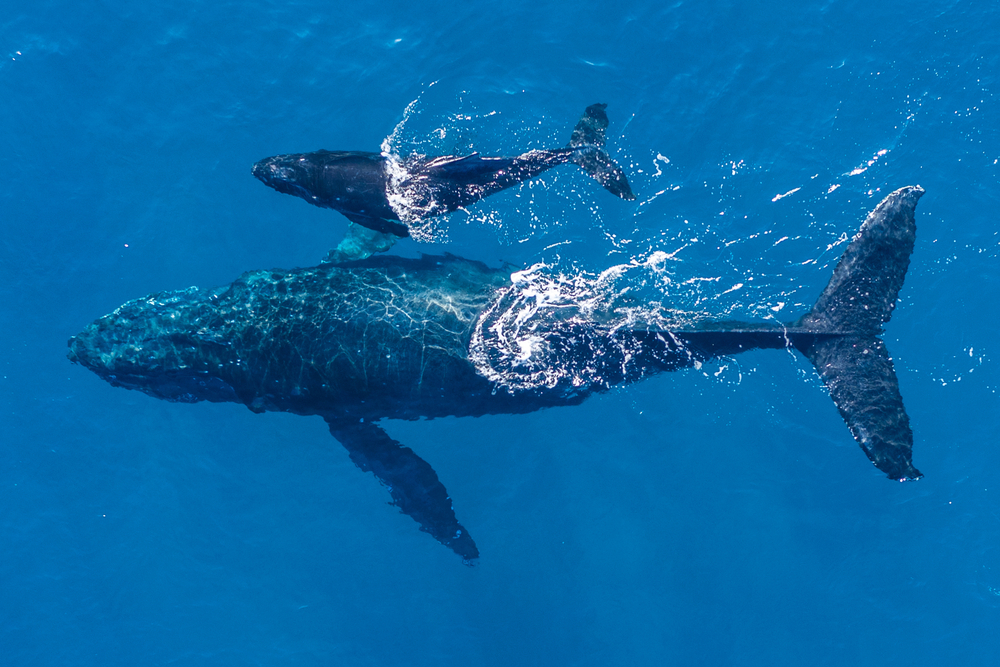
The sighting is particularly striking because humpback whales were once hunted so extensively that their populations collapsed across much of the world’s oceans. Commercial whaling during the nineteenth and twentieth centuries reduced their numbers to a small fraction of their former levels.
In some regions, fewer than 5% of pre-whaling populations remained. The decline was so severe that sightings of these giants became increasingly rare, particularly in areas where industrial hunting had been most intense.
International restrictions on commercial whaling eventually gave many populations an opportunity to recover. A global moratorium introduced in the 1980s helped reduce the pressure, allowing surviving whales to reproduce and gradually rebuild their numbers.
Today, global humpback whale numbers are estimated at around 80,000, although recovery varies between populations and some groups remain threatened. In parts of the Southern Hemisphere, populations have rebounded strongly, with some estimates suggesting annual growth of up to 12%.
Marine biologist Simon Elwen, from South Africa’s Stellenbosch University, has described the recovery as phenomenal. His observations reflect a dramatic change in the waters around South Africa, where researchers once considered seeing one or two humpbacks an exciting event.
Now, large gatherings are increasingly familiar during the summer months. The appearance of hundreds of whales in a single day demonstrates how dramatically conditions have changed since the height of commercial whaling.
However, the recovery does not fully explain why the animals are gathering in such unusual numbers. Scientists are investigating whether the phenomenon represents newly emerging behaviour, a response to changing food supplies or something that earlier generations of whales also did but researchers rarely witnessed.
Scientists Are Investigating The Mystery Of Whale Super-Groups
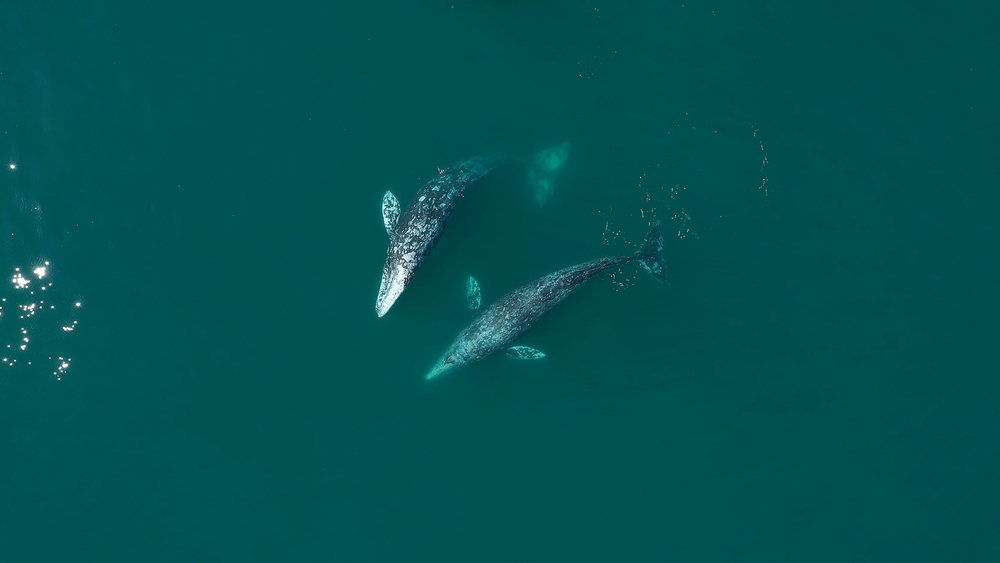
Marine researchers use the term “super-group” to describe gatherings of at least 20 humpback whales positioned unusually close together. Unlike the smaller groups commonly observed during feeding or mating, these gatherings can contain dozens or even hundreds of animals in the same area.
A study led by Elisa Seyboth at the University of Pretoria recorded 239 unique humpback super-group events between 2015 and 2022. Researchers also observed that the sightings became increasingly frequent during the study period, with gatherings occurring across several months of the year.
The timing has attracted particular attention because these enormous groups appear to have become more common long after humpback populations began recovering from commercial whaling.
The Behaviour May Be More Recent Than Scientists Realised
One possibility is that super-groups have become more frequent simply because there are more whales alive today. A larger population means more individuals searching for food, exploring different areas and encountering one another.
However, Seyboth believes population recovery alone may not account for the phenomenon. Historical accounts from the whaling era generally describe much smaller groups, often containing around 10 to 15 individuals.
If super-groups had been widespread in the past, researchers might expect to find more descriptions of them in older records. Their apparent absence has led scientists to investigate whether the gatherings represent a genuine change in behaviour.
It remains possible that earlier observers simply missed some of these events. Nevertheless, the increasing number of documented sightings suggests that something significant is happening in the waters off South Africa.
Young Whales Appear To Dominate The Gatherings
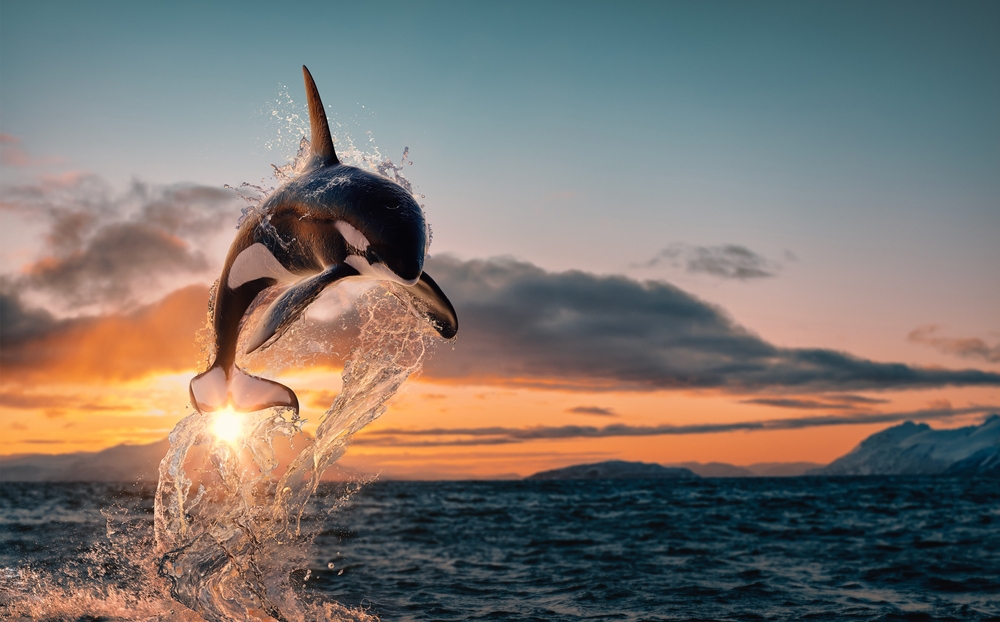
Researchers have also discovered that the super-groups appear to consist primarily of juvenile whales rather than fully grown adults. Calves were recorded within the gatherings on only four occasions during one seven-year study period.
Ted Cheeseman, a marine conservationist who founded Happywhale, believes most of the whales identified during the Fallows expedition were probably under 10 years old. Many may have been younger than five, based on their sighting histories.
The age profile could help explain why the gatherings sometimes appear so chaotic. Younger whales may have different physical capabilities and feeding skills from mature adults, potentially influencing how they compete for food.
The groups are also highly fluid, with whales joining and leaving over several hours. Large gatherings can split into smaller groups before forming again, making it difficult for scientists to determine exactly how individual animals interact.
A Productive Stretch Of Ocean Could Be Drawing Whales Together
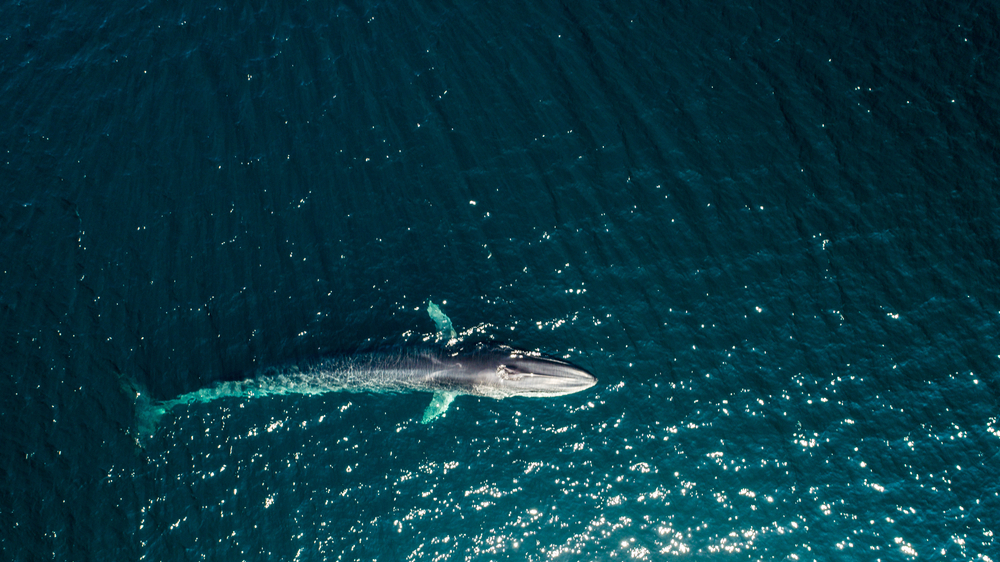
One of the strongest explanations for the gatherings lies in the ocean conditions off South Africa’s west coast. The region is influenced by the Benguela upwelling system, where cold, nutrient-rich water rises from deeper parts of the ocean towards the surface.
These nutrients encourage blooms of phytoplankton, microscopic organisms that form the foundation of marine food webs. Small animals, including krill and other prey, gather in productive waters, creating feeding opportunities for larger marine predators.
For humpback whales, this seasonal abundance can provide a powerful reason to congregate. Each animal needs substantial quantities of food to sustain its enormous body, and a concentrated supply of prey may allow hundreds of whales to feed within the same broad area.
Researchers have found associations between elevated chlorophyll concentrations and the formation of super-groups. Chlorophyll helps scientists estimate phytoplankton abundance, providing clues about where the ocean may support large quantities of prey.
The relationship suggests that whales could be responding to a seasonal feeding opportunity created by the Benguela system. As prey becomes concentrated, individuals from different populations may arrive in the same location.
Humpbacks are also capable of travelling thousands of miles between breeding grounds and feeding areas. Their migrations follow seasonal changes in ocean conditions, allowing them to exploit different food supplies throughout the year.
However, scientists have not yet established precisely how the whales locate these feeding grounds or what triggers them to gather so closely together. The availability of food appears to be a major factor, but it may not be the only explanation.
Climate Change Could Be Changing Where Humpbacks Find Food

Another possible explanation involves changing conditions in Antarctica, where Southern Hemisphere humpbacks traditionally feed during the summer months. Warming oceans and declining sea ice can affect krill populations, which play a central role in the Antarctic marine ecosystem.
Young krill depend on sea ice for shelter and access to food, making them vulnerable to changes in the extent and condition of the ice. If krill becomes less abundant, whales may face greater competition for the food they need.
Research published in Global Change Biology found a striking relationship between krill availability and humpback reproduction. In years when krill was scarce, the proportion of pregnant females in the studied population fell from 86% to 29%.
The finding illustrates how closely the whales’ reproductive success can depend on food availability. A shortage of prey can affect their ability to build the energy reserves needed to reproduce successfully.
Some researchers suspect that declining krill availability in traditional Antarctic feeding areas could encourage whales to explore alternative locations. The productive waters off South Africa may offer an attractive option when conditions elsewhere become less favourable.
Seyboth has suggested that a combination of abundant food along the African coast and lower krill availability in Antarctica could help explain the gatherings. However, this remains a hypothesis that requires further investigation.
Scientists still need to determine whether the whales are changing their migration routes, adding new feeding grounds to their existing journeys or temporarily gathering off South Africa before travelling farther south.
The Whales May Be Working Together To Catch Their Prey
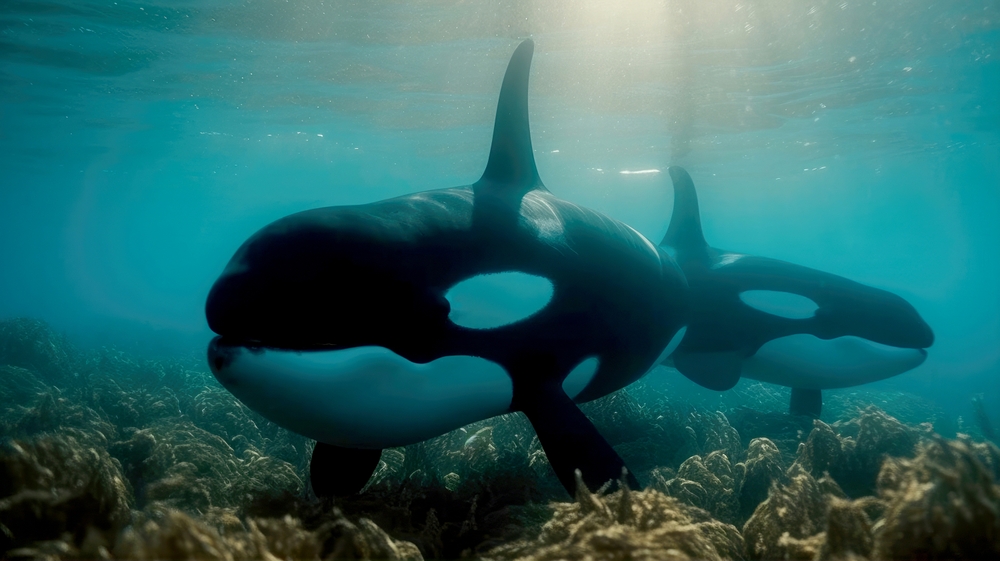
Humpback whales are known for their sophisticated feeding techniques, including a behaviour called bubble-net feeding. During this process, whales blow bubbles around schools of fish, creating a barrier that helps concentrate prey into a smaller area.
The whales can then rise towards the surface with their mouths open, capturing large quantities of food. Some humpback populations have demonstrated that feeding techniques can spread through social learning, suggesting that whales may learn useful strategies from one another.
Scientists are investigating whether similar cooperation could help explain the super-groups off South Africa. Gathering near a plentiful food source may offer advantages if whales can exploit the prey more effectively by feeding together.
However, the behaviour observed during super-groups does not always resemble coordinated teamwork. Cheeseman has described the gatherings as chaotic, with whales moving in different directions as they pursue prey.
Marine ecologists suggest that what appears disorganised from the surface may involve feeding strategies adapted to the local prey and ocean conditions. Younger whales may also be learning how to feed efficiently while competing with other animals in the same area.
Jennifer Jackson, a marine ecologist at the British Antarctic Survey, has highlighted the adaptability of humpbacks. Their feeding techniques can vary according to the prey available, the depth of the water and other environmental conditions.
More detailed observations will be needed to establish whether the enormous gatherings provide a direct feeding advantage or simply reflect the concentration of prey in a productive patch of ocean.
Scientists Are Tracking The Whales To Discover Where They Go Next

Understanding what happens after the whales leave the feeding grounds is another major challenge. Researchers tagged several individuals during 2025 to begin tracking their movements and learning more about their behaviour after joining a super-group.
Initial observations found that most tagged animals remained in the area after tagging. However, their longer-term destinations remain uncertain, leaving scientists with important questions about the role South Africa plays in their annual migrations.
Some whales may continue south towards Antarctica, while others could remain along the African coast for longer periods if food supplies are sufficient. Researchers need more tracking data to determine whether the gatherings are temporary feeding events or part of a broader change in migration behaviour.
Citizen science projects are helping researchers build a clearer picture of individual whale movements. Happywhale uses photographs of whale tail flukes and dorsal fins to identify individual animals, creating records that can be compared across different locations and years.
Each whale’s markings provide clues that allow researchers to recognise animals without capturing or physically handling them. Photographers and whale-watchers can therefore contribute valuable scientific information by submitting clear images of their encounters.
The Fallows photographs provided a particularly useful snapshot of the gathering, revealing that many of the identified whales had only been recorded in recent years. Continued observations could help scientists establish whether the same animals return to South Africa and how their movements change over time.
The Remarkable Recovery Still Faces Serious Threats
The return of humpback whales in such numbers demonstrates what sustained conservation efforts can achieve. Yet the species continues to face threats that could undermine its recovery, even as populations increase in many regions.
Vessel strikes remain a concern, particularly around busy shipping routes near major ports such as Cape Town and Saldanha Bay. Fishing gear can also entangle whales, while underwater noise pollution may interfere with their communication and behaviour.
Climate change adds further uncertainty because changes in ocean temperatures and prey availability could affect the feeding grounds on which whales depend. A growing population does not guarantee that sufficient food will remain available as environmental conditions change.
For Chris Fallows, the growing number of humpbacks reflects the impact of conservation measures and government policies that allowed the animals to recover. The sight of hundreds gathering where whales were once scarce offers a powerful example of what protection can achieve.
The challenge now is to ensure that these animals can continue feeding, migrating and reproducing without facing unnecessary pressure from human activity.
The next time researchers encounter a super-group off South Africa, their observations may reveal more than another record-breaking gathering. They could help explain why the whales are coming together, how changing ocean conditions influence their movements and what the future holds for one of the world’s most remarkable marine mammals.