

Earth has a natural defense system surrounding it, protecting the planet from some of the most dangerous particles traveling through space. For years, scientists believed a particular region within this protective environment created an almost impenetrable boundary against extremely energetic electrons. However, a powerful solar storm in May 2024 exposed a weakness that researchers had not expected to witness so dramatically.
A Japanese satellite detected a massive increase in dangerous electrons inside a region where scientists believed they could barely survive, let alone gain energy. Their numbers surged by more than 5,000 times at certain energy levels, raising fresh concerns about the radiation environment surrounding Earth. The discovery could also change how scientists assess the risks facing satellites and astronauts during extreme solar storms.
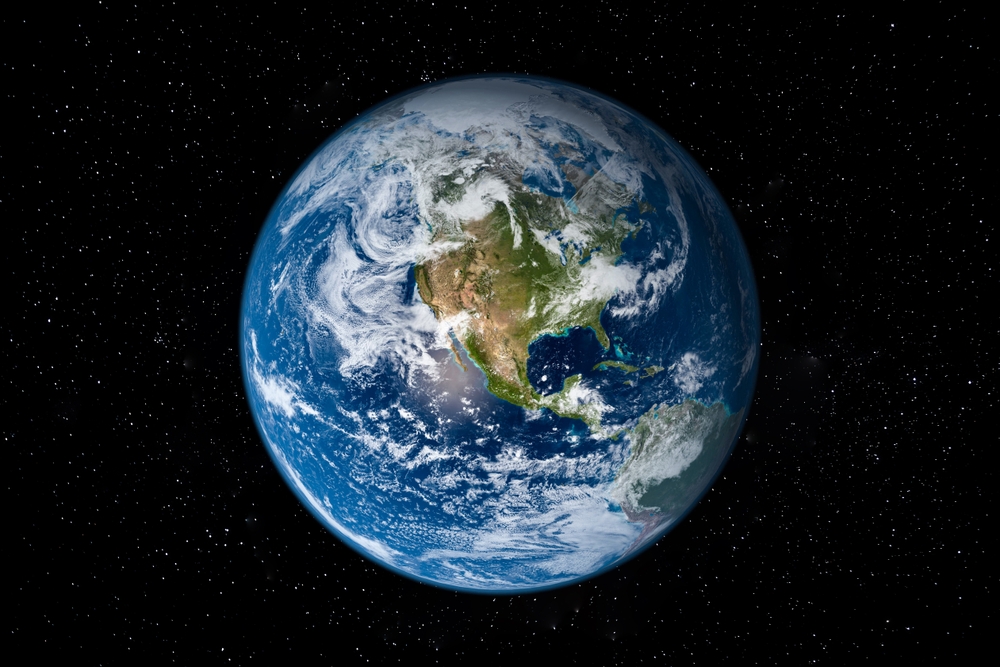
Earth’s Magnetic Field Hides Two Powerful Radiation Belts
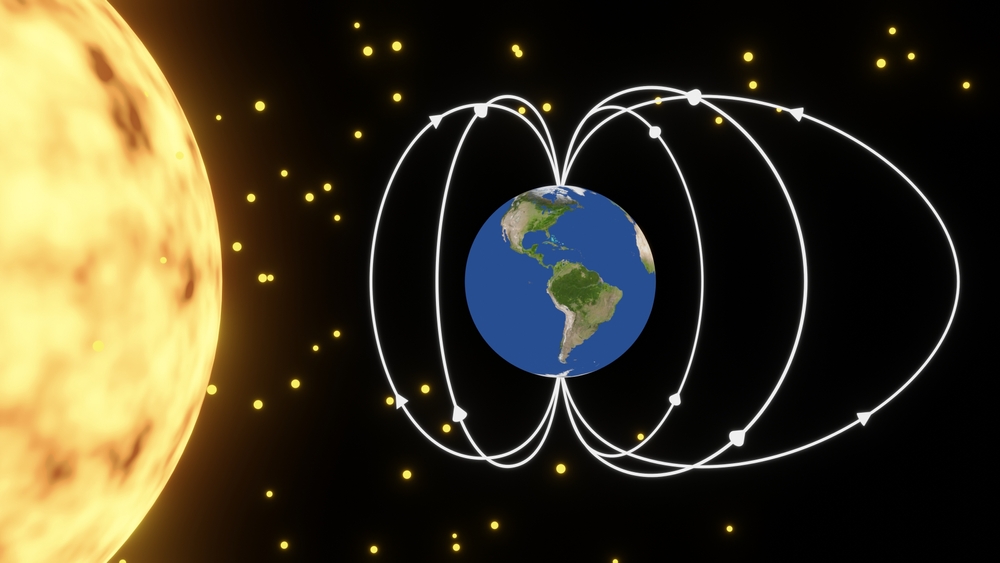
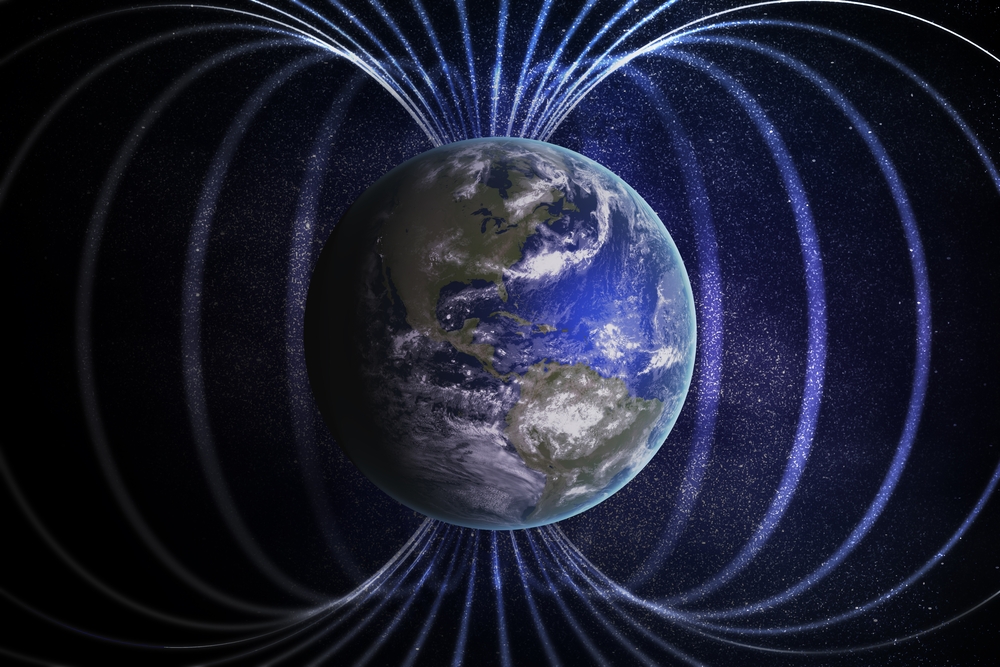
Earth may look peaceful from a distance, but the space immediately surrounding our planet is filled with energetic particles. Much of this activity takes place within two enormous donut-shaped regions known as the Van Allen radiation belts. These structures are held in place by Earth’s magnetic field and contain high-energy electrons and protons that constantly interact with their surroundings.
The two belts have different particle populations and origins. The outer belt contains large numbers of energetic electrons, many of which gain energy through processes associated with solar activity. Meanwhile, many of the inner belt’s protons originate from secondary particles produced when cosmic rays collide with atoms in Earth’s atmosphere.
Together, these radiation belts create a complicated environment that responds to activity from the Sun and changes in Earth’s magnetic field. They also present serious challenges for technology operating around our planet. Satellites passing through these regions can encounter particles energetic enough to penetrate shielding and damage sensitive electronic systems, while astronauts can face additional radiation exposure risks.
For years, scientists believed a particular boundary within this environment helped prevent the most dangerous electrons from moving closer to Earth. That assumption became a central part of how researchers understood the structure and behavior of the inner radiation belt. However, observations from the May 2024 solar storm have challenged that long-standing explanation.
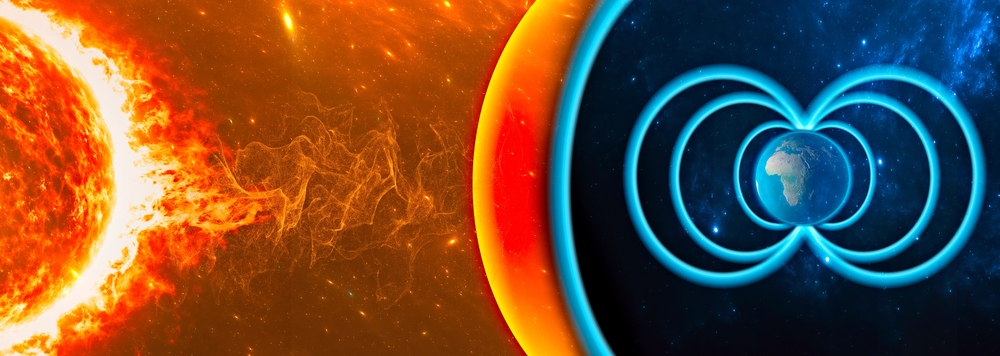
Scientists Once Believed an Invisible Barrier Was Impenetrable
The story of Earth’s supposed radiation barrier goes back to observations made by NASA’s Van Allen Probes in 2014. Researchers noticed something unusual about the distribution of extremely energetic electrons. These particles rarely appeared beyond a sharply defined boundary approximately three Earth radii from the planet’s center, suggesting that something was preventing them from moving farther inward.
Scientists proposed that a region of relatively cold plasma surrounding Earth played a major role. Electromagnetic waves interacting with energetic electrons could scatter the particles out of their trapped orbits. Some would then plunge into Earth’s atmosphere rather than continue moving toward the planet, helping maintain the apparent boundary.
The explanation became known as the impenetrable barrier because the observations suggested that ultra-relativistic electrons struggled to cross it. These particles, sometimes called killer electrons, carry enormous amounts of energy and can travel at speeds approaching that of light. Their ability to penetrate spacecraft shielding makes them a particular concern for satellite operators.
However, researchers later questioned whether the boundary was genuinely permanent. One possibility was that scientists had mistaken a temporary pattern for an absolute physical barrier. That question became increasingly important as additional observations revealed that energetic electrons could sometimes appear much closer to Earth than the original explanation predicted.
Earlier Research Had Already Challenged the Barrier Theory
By 2018, researchers were beginning to question whether Earth’s radiation barrier deserved its formidable reputation. One proposed explanation suggested that energetic electrons could move inward when fluctuations in Earth’s magnetic field disturbed their normal paths. However, the geomagnetic storms responsible for these movements typically weakened before the particles could travel much farther.
This offered a possible explanation for the apparent boundary. The particles might have been capable of moving inward, but the storms driving their movement usually ended before they could cross the entire region. What appeared to be an impenetrable wall could therefore have been the result of limited storm activity.
Additional evidence emerged from research published in 2024. Scientists analyzing observations collected between 1996 and 2006 found that electromagnetic waves generated by lightning could influence electrons already trapped within the inner radiation belt. These waves could send energetic electrons tumbling toward Earth’s atmosphere, suggesting that the inner region was more complicated than previously understood.
The observations provided further evidence that megaelectronvolt electrons could exist well inside the supposedly protected boundary. Still, the May 2024 solar storm presented an opportunity to observe something particularly unusual. This time, researchers detected conditions suggesting that dangerous electrons could gain substantial energy directly inside the region.
The May 2024 Solar Superstorm Changed Everything
In May 2024, the Sun unleashed a series of powerful solar flares and coronal mass ejections. These eruptions sent enormous quantities of magnetized plasma traveling through the Solar System toward Earth. When the material interacted with our planet’s magnetic environment, it triggered a G5 geomagnetic storm, the highest category on the five-level scale.
The event produced extraordinary effects across the planet. Its influence extended beyond the colorful auroras visible in different parts of the world, with disturbances recorded even at the bottom of the ocean. However, some of the most important changes were happening much farther above Earth’s surface, inside the radiation environment surrounding the planet.
The storm dramatically depleted the cold plasma within Earth’s plasmasphere, a region of relatively dense plasma surrounding our planet. This created an unusual environment where electromagnetic waves called chorus waves could become particularly active. Their name comes from the distinctive sound they produce when converted into audio recordings.
Space physicist Yoshizumi Miyoshi of Nagoya University described their sound by saying, “When converted into audio, it sounds like a bird song.” These waves would become central to understanding the unexpected behavior recorded during the storm because they appeared capable of accelerating electrons rather than simply scattering them away.
A Japanese Satellite Recorded a Huge Electron Surge
The crucial observations came from Japan’s Arase satellite, which has monitored Earth’s radiation belts since 2017. During the recovery phase of the May 2024 storm, the spacecraft detected a dramatic increase in ultra-relativistic electrons inside the supposedly protected region. These particles were reaching energies of several megaelectronvolts, revealing an unusual change in the local radiation environment.
One measurement stood out in particular. At approximately 3 megaelectronvolts, the electron flux increased by more than 5,000 times compared with levels recorded before the storm. The scale of the increase suggested that something extraordinary had happened inside the radiation belt, where scientists had previously expected these particles to remain relatively scarce.
The timing of the increase also provided researchers with an important clue. Rather than appearing all at once, electrons with different energy levels increased in a staggered sequence. Lower-energy electrons appeared in greater numbers first, followed approximately half a day later by higher-energy particles. Around a day after the initial increase, electrons exceeding 3 megaelectronvolts had surged as well.
This progression suggested that the particles were gaining energy within the region itself. If they had simply been transported inward from another part of Earth’s radiation environment, researchers would have expected a different pattern. Instead, the observations indicated that the supposedly protected boundary could become a location where energetic electrons were actively accelerated.
Chorus Waves May Have Supercharged the Particles
The unusual behavior appears connected to the electromagnetic conditions created by the solar storm. Under ordinary circumstances, certain waves interacting with energetic electrons can scatter them away from their trapped orbits. However, chorus waves can also transfer energy to electrons, creating conditions that allow their energy levels to increase.
During the May 2024 event, the depletion of cold plasma appears to have created an environment in which these waves could accelerate electrons inside the radiation barrier. This was particularly significant because scientists had previously associated the most intense acceleration processes with regions farther away from Earth.
The distribution of the electrons offered another important clue. Miyoshi and his colleagues identified a distinct peak in the electron population near the barrier’s boundary. That pattern was difficult to explain through inward transport alone, but was consistent with electrons gaining energy locally before spreading farther inward and outward.
The research team’s findings were published in Geophysical Research Letters. Describing the discovery, the researchers wrote, “Here we show that this barrier can be breached under extreme space weather conditions.” Their observations provide evidence that Earth’s radiation environment can behave very differently when exposed to sufficiently powerful solar activity.
Why These Electrons Are Dangerous to Satellites
The term killer electrons might sound dramatic, but it describes a genuine engineering concern. These ultra-relativistic particles can travel at speeds approaching that of light, carrying enough energy to penetrate spacecraft shielding. Once inside a satellite, they can interact with sensitive electronic components and create problems that are difficult to detect or prevent.
High-energy electrons can contribute to electrical charging inside spacecraft, potentially causing sudden discharges that damage electronic systems. Such damage can interfere with onboard equipment responsible for communication, navigation, and other essential functions. Satellites operating for extended periods can also experience gradual deterioration caused by repeated radiation exposure.
Astronauts face additional concerns when operating in environments with elevated radiation levels. Although spacecraft shielding provides some protection, extremely energetic particles remain a challenge for mission planners. Understanding when and where these particles become more abundant helps researchers assess potential exposure risks during future missions.
The findings could also influence how engineers design satellites expected to operate through extreme space weather events. Better radiation protection, improved monitoring systems, and more accurate warnings could help reduce the likelihood of unexpected damage. With so much modern technology depending on spacecraft, even changes occurring thousands of miles above Earth can have practical consequences.
The Radiation Belts Took Months to Recover
The May 2024 storm did not produce a disturbance that disappeared immediately. Arase continued recording declining levels of ultra-relativistic electrons for several months after the initial event. According to the research, these levels continued falling until October 2024, when another solar storm disturbed near-Earth space.
This extended recovery period adds another dimension to the discovery. It suggests that extreme solar activity can influence the radiation environment long after the most intense phase of a geomagnetic storm has passed. Researchers therefore need to understand both the immediate effects of solar storms and the longer-lasting changes they produce.
The observations also raise questions about how frequently similar conditions might develop. The May event provided an opportunity to examine an unusual combination of plasma depletion and electromagnetic activity. Scientists will need further observations to determine how often these conditions occur and how strongly they influence energetic particle populations.
Understanding these processes could help improve predictions of dangerous radiation conditions around Earth. The more accurately researchers can identify the circumstances that accelerate killer electrons, the better prepared satellite operators and space agencies will be when another major solar storm arrives.
Scientists Need Better Ways to Predict Extreme Space Weather
The discovery has implications for satellite operators, astronauts, and researchers monitoring activity on the Sun. Modern life depends heavily on technology operating beyond Earth’s atmosphere, including communications systems, navigation networks, weather forecasting satellites, and scientific spacecraft. All of these systems must function in an environment that can change dramatically during extreme solar activity.
A better understanding of energetic electrons could help engineers develop more effective protection systems. It could also improve predictions about when spacecraft might encounter unusually dangerous radiation levels. Knowing that the inner radiation belt can experience local electron acceleration during extreme storms gives researchers another process to include in their space weather models.
Miyoshi emphasized the need to understand how these particles behave under extreme conditions. “This discovery highlights the need to understand and predict how energetic electrons behave under extreme space weather conditions,” he said. He also explained that such knowledge is important for assessing radiation risks to spacecraft and improving future space weather predictions.
Researchers now face the challenge of understanding precisely how different electromagnetic waves interact with energetic particles during powerful solar storms. The May 2024 observations provide an important starting point, but additional research will be needed to establish how frequently these unusual conditions develop and how far their effects can spread.
Earth’s magnetic field remains an important protective feature, but the space surrounding our planet is far more unpredictable than scientists once believed. The next major solar storm could provide another test of just how much that invisible defense system can withstand.
Sources:
- Miyoshi, Y., Kurita, S., Shinbori, A., Yamamoto, K., Jun, C., Matsuda, S., Saito, S., Kataoka, R., Wang, D., Shinohara, I., Takashima, T., Mitani, T., Higashio, N., Matsuoka, A., Kasahara, Y., Tsuchiya, F., Kumamoto, A., Hori, T., Kitamura, N., & Teramoto, M. (2026b). Local acceleration of Multi‐MEV electrons inside Earth’s impenetrable barrier during the May 2024 superstorm. Geophysical Research Letters, 53(20). https://doi.org/10.1029/2026gl125879
- Allison, H. J., & Shprits, Y. Y. (2020). Local heating of radiation belt electrons to ultra-relativistic energies. Nature Communications, 11(1), 4533. https://doi.org/10.1038/s41467-020-18053-z