
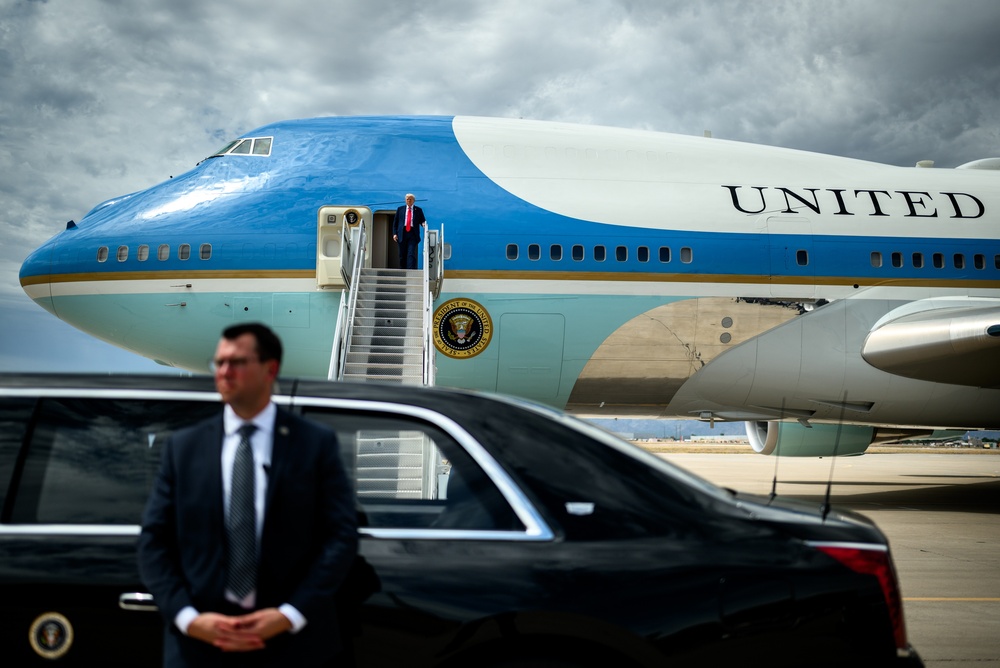
Journalists aboard Air Force One faced an unusual restriction as President Donald Trump prepared to leave China following his high-profile meetings with Vladimir Putin and Xi Jinping. Reporters were ordered to hand over phones they had used during the visit, with devices placed in signal-blocking bags until the presidential aircraft returned to the United States. White House personnel also reportedly collected temporary phones used by staff members, with some devices scheduled to be wiped or discarded after the trip.
The extraordinary precautions came at the end of a diplomatic visit involving three of the world’s most powerful leaders. Trump described his discussions with Putin and Xi as a 12 out of 10, while claiming progress on Ukraine peace negotiations, nuclear security and artificial intelligence regulations. However, the sudden restrictions on electronic devices added another layer of intrigue to the trip, raising questions about the cybersecurity risks facing American officials and journalists during sensitive international visits.
Reporters Ordered To Hand Over Phones Before Leaving China
The unusual restrictions were introduced Thursday evening, November 19, as Trump prepared to depart Shenzhen for Washington. Journalists traveling with the president were informed that their phones would be collected for security reasons, preventing some reporters from accessing their usual devices during the journey home. Those who had brought their personal phones into China faced particular restrictions, while devices left aboard Air Force One before the visit remained available for use.
White House staff members also reportedly collected temporary phones used during the trip. CBS News correspondent Jennifer Jacobs reported that an aide had gathered the devices and that they would either be discarded or have their data erased. Journalists were also informed that their phones would be returned after the aircraft landed in the United States, meaning the restrictions would remain in place throughout the long journey.
Trump addressed the situation during a conversation with NBC News correspondent Gabe Gutierrez aboard Air Force One. “We want to be careful, and we didn’t want to have people have phones when they shouldn’t have phones, so we were very careful,” the president explained. He did not identify a specific espionage attempt or confirm that any device had been compromised during the visit.
The measures attracted attention because journalists had already been following additional electronic security precautions before entering China. Many had left their regular phones, laptops and smartwatches aboard the presidential aircraft, storing them inside protective Faraday bags. The decision to restrict access to devices used during the visit extended those precautions until the presidential delegation was safely back on American soil.

Why The White House Used Special Signal-Blocking Bags
The devices were reportedly stored in Faraday bags, specially designed pouches that prevent wireless signals from reaching or leaving electronic equipment. These protective containers create an electromagnetic shield around phones and other electronics, limiting their ability to communicate through cellular networks, Wi-Fi and Bluetooth connections. Security teams use them to isolate devices when there are concerns about unauthorized access, tracking or electronic surveillance.
China’s position as a major technological and geopolitical competitor of the United States makes electronic security a significant consideration during high-level diplomatic visits. Smartphones contain extensive personal and professional information, including messages, contact details, photographs, location histories and saved account credentials. If unauthorized parties gained access to that information, it could potentially expose sensitive communications or reveal details about the movements and relationships of people traveling with the president.
Several types of information can create security concerns when devices are exposed to potentially hostile digital environments:
- Location information: Smartphones can store location histories and reveal where their owners have traveled.
- Private communications: Messages and contact records can expose professional relationships and confidential discussions.
- Account credentials: Saved passwords and login information can create opportunities for unauthorized access.
- Photographs and documents: Stored images and files may contain sensitive details about individuals, workplaces or government activities.
- Wireless connections: Cellular, Wi-Fi and Bluetooth connections can create additional opportunities for tracking or digital interference.
Using temporary devices and signal-blocking storage can help reduce some of these risks, particularly when government personnel travel through countries where electronic surveillance is a concern. However, the presence of Faraday bags does not establish that an actual spying operation occurred. The publicly available details surrounding Trump’s departure describe preventative security precautions rather than a confirmed breach of journalists’ devices.
Trump’s Meeting With Putin And Xi Raises Diplomatic Stakes
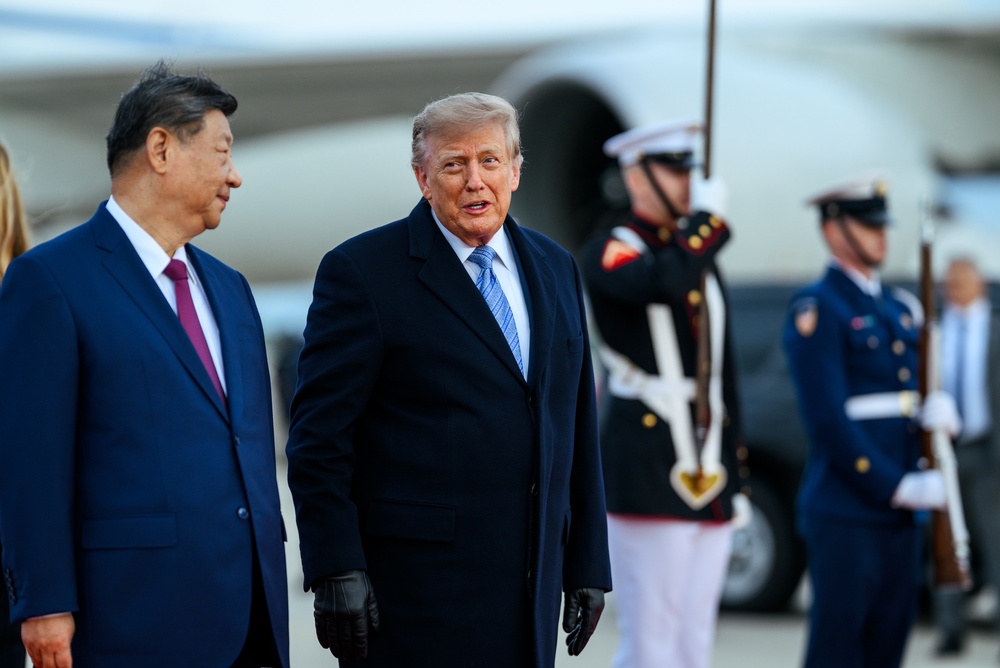
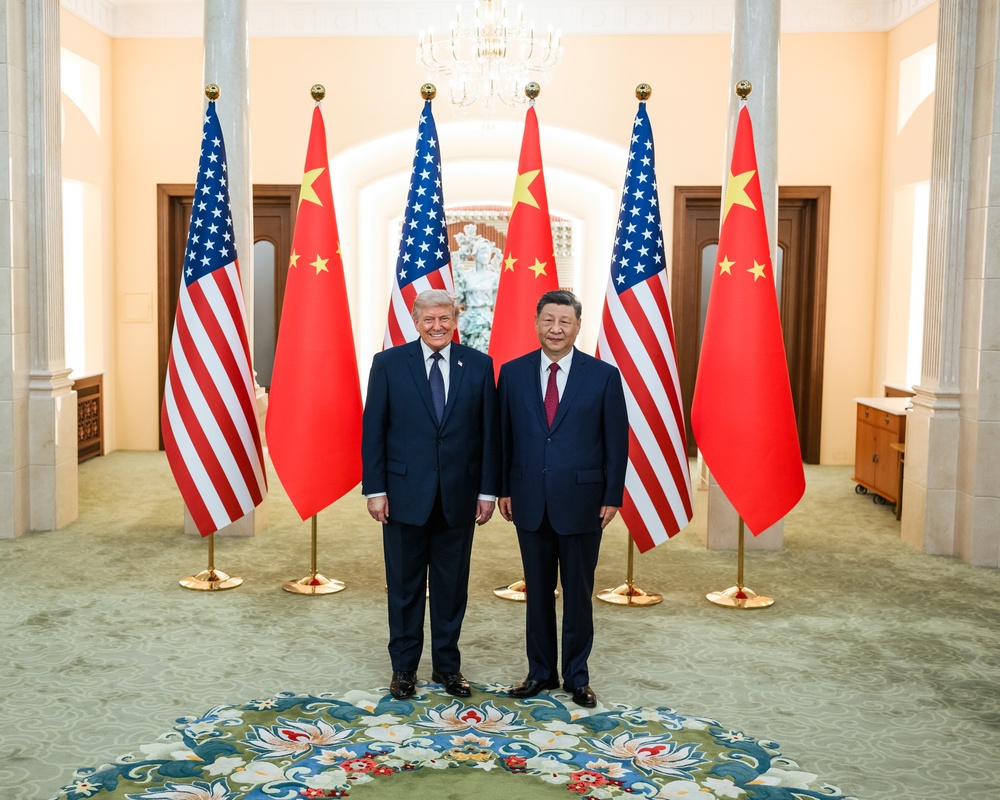
The phone restrictions came after Trump completed an unusually high-profile series of meetings with Chinese President Xi Jinping and Russian President Vladimir Putin in Shenzhen. Bringing the three leaders together attracted international attention because their countries hold enormous economic, military and political influence. Their discussions covered several issues affecting global stability, including the war in Ukraine, nuclear weapons and artificial intelligence.
Trump appeared particularly pleased with the outcome of his discussions, giving the meeting an extraordinary rating when asked to assess its success. “I think it was a 12. On a scale of zero to 10, I think it was a 12,” he said. His assessment reflected the administration’s positive presentation of the gathering, although the precise details of several discussions remained limited and no comprehensive agreements were announced.
The meeting also placed renewed attention on the relationship between Washington and Moscow. Russia’s ongoing war against Ukraine has created deep divisions between Moscow and Western governments, while Trump’s approach has emphasized direct communication with Putin as a possible route toward ending the conflict. His willingness to maintain a friendly relationship with the Russian president has attracted criticism from some European leaders, particularly those concerned about Ukraine’s future security.
China’s involvement added another important dimension to the discussions. Beijing maintains extensive economic and diplomatic ties with Moscow, while its relationship with Washington remains complicated by disagreements involving trade, technology and military competition. Having Xi participate in discussions alongside Putin gave the gathering significance beyond the immediate question of Ukraine, particularly as all three governments face difficult decisions involving nuclear security and emerging technologies.
Ukraine Peace Negotiations Remain A Major Challenge
Trump has repeatedly expressed confidence that Putin wants to reach an agreement to end the war in Ukraine. However, securing a lasting settlement involves several complicated issues, including territorial disputes, military arrangements and guarantees against future Russian attacks. Ukraine and its European allies have stressed that any peace agreement must provide sufficient protection against another invasion, particularly after the devastating consequences of Russia’s full-scale assault.
U.S. special envoy Jared Kushner discussed the possibility of American security guarantees during meetings with European representatives in Berlin. He explained that he and fellow envoy Steve Witkoff had approached Trump after European leaders emphasized the importance of protecting Ukraine following a potential peace agreement. According to Kushner, the president responded positively when asked whether he would consider such commitments.
“Steve and I went to President Trump and said, ‘Is that something you’d be open to?’ He said, ‘Absolutely, write them up,’” Kushner explained. He also suggested that Putin was comfortable with the concept of NATO-like security guarantees, although the exact arrangements and conditions would still need to be negotiated.
Kushner emphasized that the administration wanted European countries involved rather than imposing an agreement without their participation. “President Trump wants to make a deal with Europe by his side. He’s not looking to impose anything unilaterally,” he said. Any American security commitments would also require congressional approval, leaving significant questions about how such guarantees could eventually work in practice.
Trump’s Friendly Relationship With Putin Draws European Criticism
Trump’s personal approach toward Putin has become another source of controversy surrounding the diplomatic discussions. During the China visit, the president referred to the Russian leader as his friend, a description that attracted criticism because of Russia’s continued military campaign in Ukraine. For European governments that view Moscow as a direct security threat, friendly language toward Putin can create concerns about how Washington intends to approach future negotiations.
Polish Prime Minister Donald Tusk responded sharply to Trump’s description of the Russian president. “God, protect us from such friends,” Tusk wrote. His comment reflected the frustration among some European leaders who fear that negotiations could result in concessions to Moscow without sufficient protection for Ukraine.
Trump was subsequently asked about Tusk’s criticism and appeared dismissive of the Polish leader’s reaction. “Well, I can’t do anything about it,” he reportedly responded. The exchange illustrated the tension between Trump’s preference for personal diplomacy and the concerns of European governments that have spent years supporting Ukraine against Russian aggression.
The disagreement also highlights the difficult position facing America’s European allies. They want Washington involved in negotiations because American military and diplomatic influence could be essential to reaching an agreement. At the same time, they remain concerned that a settlement focused primarily on ending the fighting could leave Ukraine vulnerable to another Russian attack.
Nuclear Weapons And Artificial Intelligence Feature In Summit Discussions
The leaders also discussed nuclear weapons, an issue that carries enormous consequences for international security. Trump expressed interest in reducing nuclear arsenals held by major powers, but acknowledged that persuading countries to surrender substantial portions of their weapons would be extremely difficult. He pointed out that governments possessing thousands of nuclear weapons would have little incentive to give up half their arsenals without substantial assurances in return.
“But at the same time it’s very hard for somebody to say ‘We have 4,000 nuclear weapons, we’ll give up half.’ It’s hard to do,” Trump said. He described the negotiations as difficult while maintaining that nuclear arms reductions remained an objective worth pursuing. The three leaders subsequently reaffirmed that nuclear war cannot be won and must never be fought, pledging to continue discussions about reducing nuclear risks and preventing proliferation.
Artificial intelligence also featured in Trump’s conversations with Xi. The president said the two leaders had discussed introducing moderate regulations for the technology, which has become an increasingly important area of competition between the United States and China. Both countries are investing heavily in advanced AI systems, while governments worldwide are debating how to address safety, national security and the potential consequences of increasingly capable technology.
However, discussions about cooperation do not automatically resolve the underlying disagreements between Washington and Beijing. Competition involving advanced computer chips, technology exports and military applications remains a significant obstacle. Any meaningful agreement on AI regulation would require both governments to establish clear expectations about safety and oversight while protecting their respective strategic interests.
Air Force One Completes Historic Journey Back To Washington
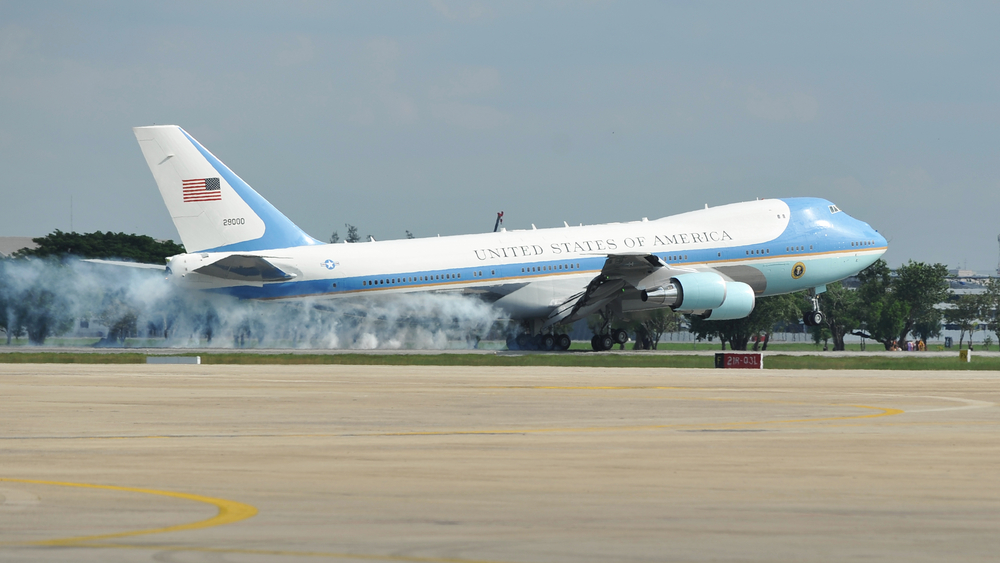
Trump’s departure from China also produced another unusual moment aboard Air Force One. The aircraft completed a nearly 15-hour nonstop journey from Shenzhen to Washington, with the president arriving at Joint Base Andrews in Maryland on Thursday evening. The flight was reported to have set records involving its takeoff weight and nonstop distance, making the journey another headline-grabbing part of the diplomatic visit.
Trump also surprised passengers by handing out signed trip cards commemorating the historic flight. Thirteen journalists were among those aboard the aircraft, and each reportedly received a signed keepsake marking the journey. White House communications director Steven Cheung also shared an image of the commemorative note, describing the trip as historic.
The return flight followed several days of diplomatic activity involving meetings with Chinese and Russian leaders and appearances at the Asia-Pacific Economic Cooperation summit. Trump briefly spoke with reporters after returning to the United States and announced plans for a historic press conference the following day.
Meanwhile, the phone restrictions remained in effect until the aircraft reached American soil. Devices stored aboard the plane before the China visit could be retrieved, while phones that had been used during the trip were returned after landing. The arrangements brought an unusual end to a journey that had already attracted attention for its diplomatic significance.
Security Precautions Leave Important Questions Unanswered
The decision to collect journalists’ phones demonstrates the level of caution surrounding electronic devices during sensitive international visits. Smartphones can expose substantial amounts of personal and professional information, making them potential security concerns when government officials and journalists travel through countries considered strategic competitors. Temporary devices and signal-blocking containers offer one way to reduce those risks, although they cannot eliminate every possible cybersecurity threat.
The White House has not publicly established that journalists’ phones were compromised or that a specific espionage operation was uncovered during Trump’s visit. Trump’s explanation focused on caution, while the reported security arrangements reflected an effort to protect devices and information during the return journey. Without further details, claims of an actual spying incident would go beyond what has been established.
The summit itself also left several major diplomatic questions unresolved. Trump expressed confidence about his discussions with Putin and Xi, but the future of Ukraine, nuclear disarmament and international AI cooperation will depend on negotiations that extend far beyond a single meeting.
For the journalists aboard Air Force One, the immediate wait ended when their devices were returned after landing. For the Trump administration, the real test will come when its diplomatic promises are translated into agreements that can withstand the pressures of international politics.