
Your cart is currently empty!
A 1,600-Year-Old Egyptian Mummy Was Carrying Homer’s Iliad in Its Abdomen, and Archaeologists Have No Idea Why
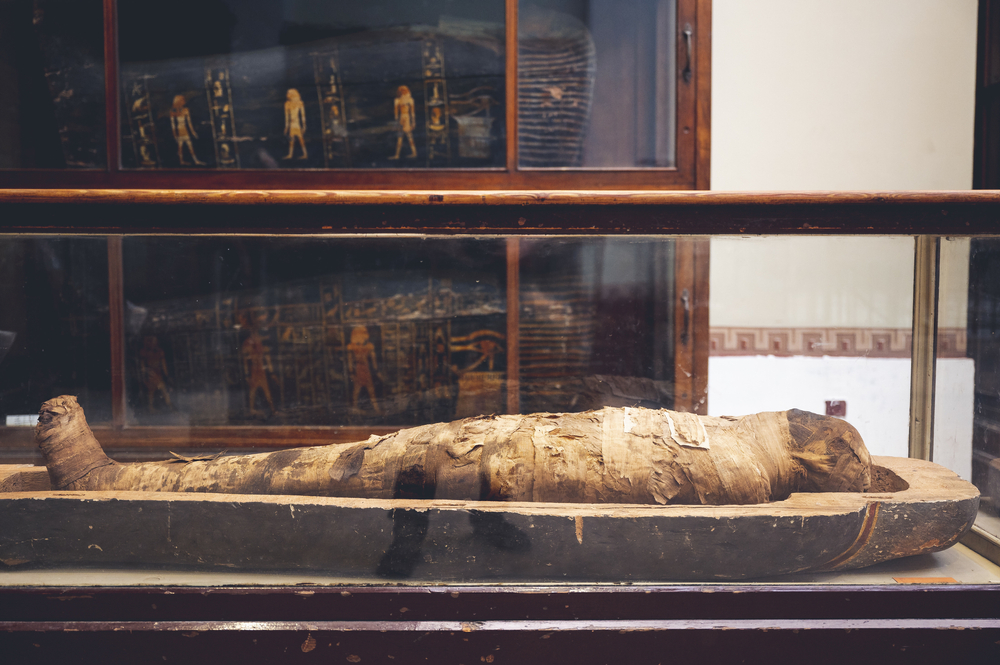
Somewhere beneath the sands of central Egypt, in a tomb that had survived centuries of looting, a team of archaeologists was working through a necropolis they had studied for decades. It was late 2025, and excavations at the ancient city of Oxyrhynchus had already produced gilded mummies, geometric burial patterns, and gold tongues placed inside the mouths of the dead. What none of them expected was what lay tucked beneath the wrappings of one particular adult male mummy, resting on his abdomen, waiting there for roughly 1,600 years.
Contents
show
A joint mission from the University of Barcelona and the Institute of the Ancient Near East has now confirmed one of the most striking archaeological finds in recent memory. Inside Tomb 65 of Sector 22, co-directors Maite Mascort and Esther Pons, who have led the Oxyrhynchus Archaeological Mission since 1992, identified something their team had never encountered in more than three decades of excavation at this site. Word of the find reached the wider public in April 2026, and the scholarly community has been talking about it since.
To say what was found without explaining what surrounds it would be to miss the full weight of the discovery. At Oxyrhynchus, what a find means depends heavily on what sits around it and what has come before.
A City That Has Long Defied Expectations
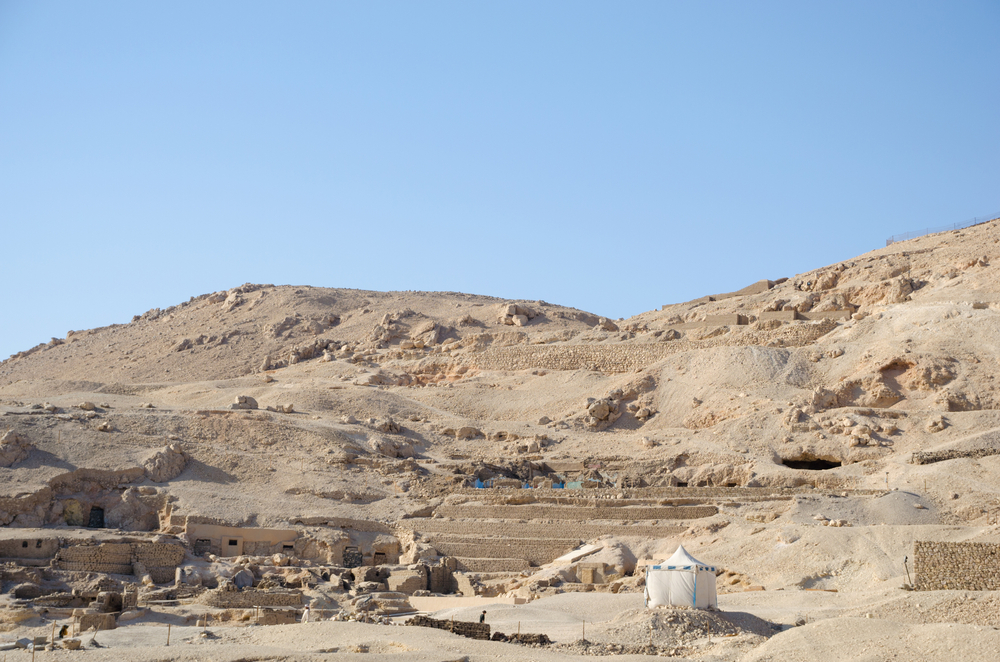
Located roughly 190 kilometers south of Cairo on the left bank of the Bahr Yussef, an arm of the Nile, Oxyrhynchus was once a major administrative center during Egypt’s Greco-Roman period. French scholar Vivant Denon first documented its ruins during Napoleon Bonaparte’s Egyptian campaign at the turn of the 19th century. When British archaeologists Bernard Grenfell and Arthur Hunt began formal excavations there in 1897, they were drawn by reports of a concentration of written material unlike anything found elsewhere in Egypt.
What surfaced from the city’s ancient garbage dumps astonished the scholarly world. Hundreds of thousands of papyrus fragments emerged from the sand, written in Greek and covering an extraordinary range of material, from government tax records and private letters to religious documents, horoscopes, and literary texts. Among them was a papyrus copy of Trackers, a play by the Greek dramatist Sophocles that scholars had long assumed was mostly gone forever. Oxyrhynchus, already heralded as one of the most papyrus-rich sites ever excavated, had earned its reputation many times over.
Since 1992, the University of Barcelona’s Oxyrhynchus Archaeological Mission has studied more than a thousand tombs at the site across 34 years of fieldwork. Work at the necropolis covers burials from 700 BC to 700 AD, including the Saite, Greco-Roman, Christian, and Arab periods. Over three decades, Mascort and Pons had grown deeply familiar with what the site offered and what it withheld. Tomb 65 of Sector 22 offered something new.
What Was Found Inside the Mummy
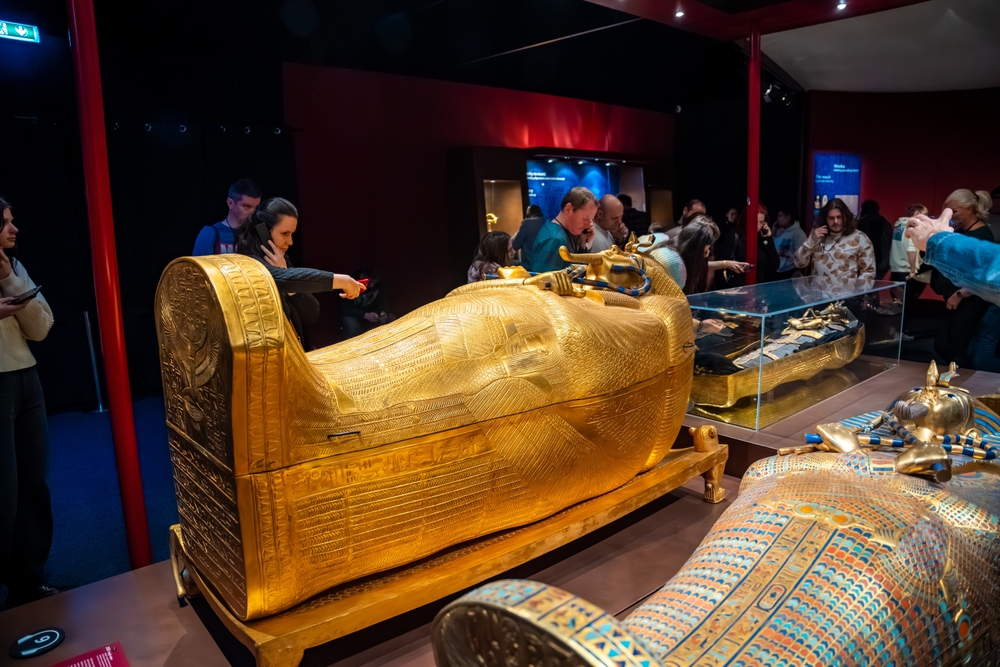
Resting on the abdomen of a 1,600-year-old adult male mummy, incorporated into the embalming process and tucked beneath the funeral wrappings, was a papyrus fragment written in Greek. After careful laboratory restoration using noninvasive techniques, philologist Ignasi-Xavier Adiego, a professor in the Department of Classical, Romance and Semitic Philology at the University of Barcelona, and papyrologist Leah Mascia identified the text with considerable accuracy. It belongs to Book II of Homer’s Iliad, one of the oldest works of Western literature, and more precisely to a passage known as the “Catalogue of Ships.”
In that passage, the narrator calls on the Muses to name the Greek commanders who sailed to the city of Troy. “For you are goddesses and are in all places so that you see all things,” the text reads, before moving into a lengthy inventory of fleet leaders and their ships. A man named Guneus arrived with twenty-two ships from Cyphus. Tlepolemus, son of Hercules, brought nine from Rhodes. And so the list continued.
Finding any papyrus inside a Roman-era mummy was not, in itself, cause for surprise. Mascort and Pons had documented Greek papyri in similar positions in earlier digs at the same necropolis. In every prior case, however, those papyri contained magical or ritualistic content, folded, tied, and sealed in clay, meant to guide or protect the soul of the deceased. A passage from one of ancient Greece’s most celebrated literary works was something the field had never encountered before.
“It is the first time in the history of archaeology that a Greek literary text has been found deliberately incorporated into the mummification process,” the University of Barcelona confirmed in an official statement.
Adiego, who also directs the Oxyrhynchus project, put the discovery into precise scholarly relief. “Since the late 19th century, a huge number of papyri have been discovered at Oxyrhynchus, including Greek literary texts of great importance, but the real novelty is finding a literary papyrus in a funerary context.”
Why the Iliad? A Question Without a Clear Answer
Archaeologists now face a question that may take years to answer with any confidence. Why was a passage from Homer placed inside this mummy?
Two broad theories have emerged from the research team. One holds that the papyrus carried deliberate protective meaning, placed on the abdomen to guard the deceased in the afterlife, much as magical papyri had been placed in earlier burials. Esther Pons told Live Science that the papyrus was placed on the abdomen “to protect the deceased in the afterlife,” suggesting the team sees real purpose in where and how it was positioned.
A second theory is more pragmatic. Papyrus was expensive in antiquity, and scribes reused old sheets rather than spend money on fresh material. Mascort has proposed that the Iliad manuscript may have been repurposed, with magical texts written across it before being placed with the body. Under that reading, the epic poem was incidental, a writing surface rather than a literary offering.
Neither explanation has been ruled out. Research into the mummy and its burial continues, and the individual’s full identity and social standing are still being pieced together. What is confirmed is that he was an adult male buried within a necropolis where most Roman-period interments appear to belong to people of elevated status, among them merchants and priests.
A World Where Cultures Mixed Freely
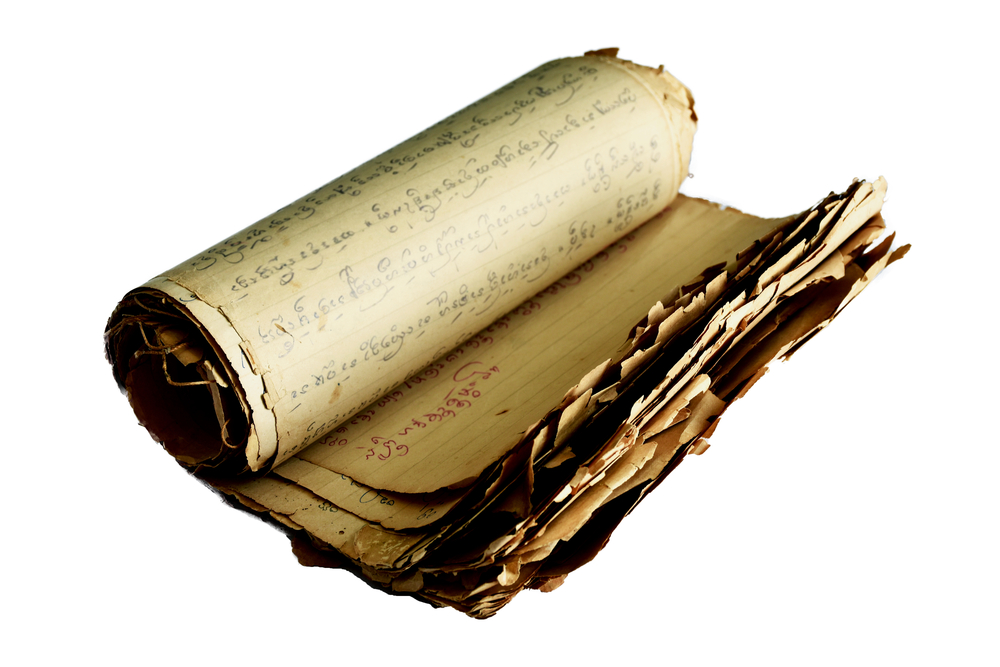
Understanding how a Greek literary epic ended up inside an Egyptian mummy requires a brief detour into the world that produced it.
By the time of this individual’s death, Egypt had been under Roman control for several centuries. Rome had taken Egypt as a province in 30 BCE following Octavian’s defeat of Mark Antony and Cleopatra. Before that, Alexander the Great’s conquest of Egypt in 332 BCE had made Greek the primary language of government and educated life across the country. Over successive generations, traditional Egyptian burial practices absorbed and adapted elements from both Greek and Roman culture. Organ storage in canopic jars gave way to body cavities packed with preserved material. Gold leaf and geometric patterns adorned funerary wrappings.
Greek literature, including Homer’s works, had circulated across Egypt for generations. Copies of the Iliad were used in educational settings, and private citizens owned them. Papyrologist Leah Mascia told Smithsonian magazine that finding a copy of the Iliad at a city like Oxyrhynchus was “certainly not unusual.” Finding one inside a mummy was another matter altogether.
Gold Tongues and What Else the Tomb Held
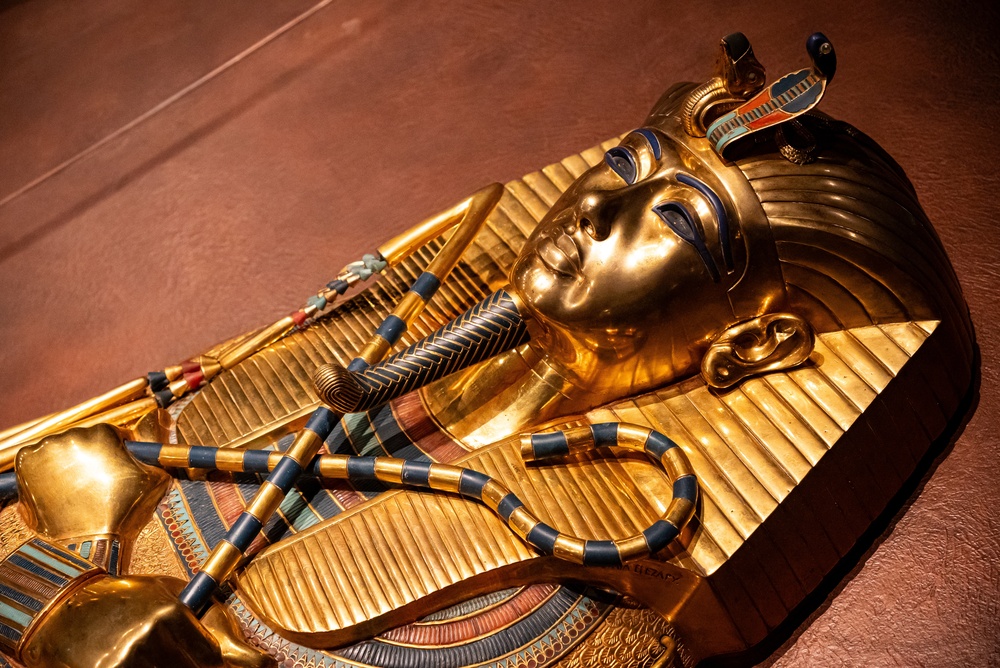
Tomb 65 produced more than just the Iliad fragment. Among the other mummies found in the same burial, several carried gold and copper tongues, a practice the mission had documented in prior excavations at the same necropolis. For ancient Egyptians, gold carried divine associations; it represented the flesh of the gods, and a tongue fashioned from it was believed to allow the deceased to speak before Osiris during the judgment of the dead. A copper tongue found among the group was less common in this context, and its significance remains under study.
Previous digs at the cemetery had turned up more than a dozen gold-tongued mummies. During the 2025 excavation, three additional gold tongues and one copper tongue were added to that count. Whether the mummy carrying the Iliad papyrus also had a tongue of either material has not been confirmed, as the study of that individual is still underway.
What May Still Be Waiting
For all that Tomb 65 has already produced, the team believes it may not be finished offering surprises. Many of the papyri recovered from the site are still going through restoration, and the fragile condition of ancient material demands patient, careful analysis before any conclusions can be drawn.
Mascort offered a considered note of anticipation when she told Smithsonian, “We cannot rule out that some other literary text may also appear.”
Given the site’s long record of upending what scholars thought they knew, that possibility carries real weight. Across 34 years of excavation and more than a thousand tombs, Oxyrhynchus has rewarded patience before, and the work that began in 1897 with fragments pulled from garbage dumps has grown into one of archaeology’s most sustained and productive long-term projects.
Whether another literary text surfaces from the restoration process or not, the Iliad fragment has already changed what researchers understand about how the ancient world treated its dead, and about how one of history’s most beloved poems traveled far beyond its Greek origins, into the burial rites of a civilization that had made it fully its own.
Al-Bahnasa, ancient Egypt, ancient manuscripts, ancient papyrus, Archaeological Discovery, Catalogue of Ships, classical antiquity, Egyptian archaeology, Egyptian mummy, funerary practices, gold tongue ritual, Greco-Roman Egypt, Greek literature, Homer, Iliad, mummification, Oxyrhynchus, Roman Egypt, Trojan War, University of Barcelona