
Your cart is currently empty!
A Diver Coaxes A Tiny Octopus To Swap A Plastic Cup For A Shell In Pixar-Worthy Video
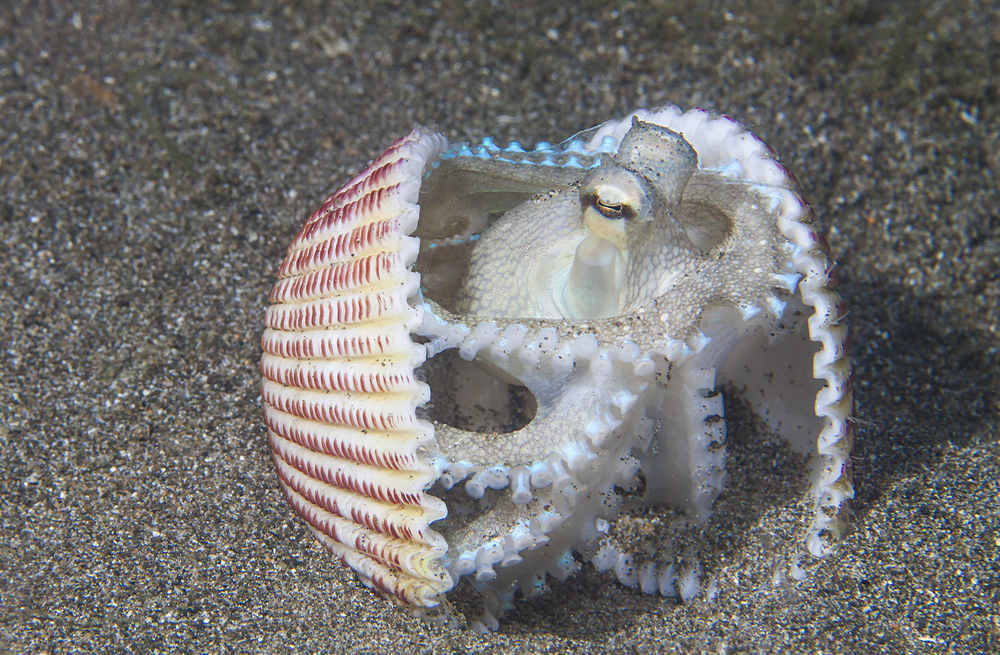
Twenty meters beneath the surface off the coast of Lembeh, Indonesia, a tiny octopus clung to a clear plastic cup, treating it as the one thing standing between itself and the dangers of the open seabed. A group of divers had gathered around the little creature, and they were not in a hurry to leave. What followed would consume nearly their entire remaining air supply and unfold with the kind of quiet drama that has since drawn tens of millions of viewers, many of whom have compared the footage to a Pixar short film.
Contents
show
The cup, as the divers understood and the octopus did not, was not a home at all. It was a problem the animal had no way of recognizing, and solving it would take more patience than anyone in the water that day had planned on spending.
The Encounter On The Ocean Floor
The man behind the camera was Pall Sigurdsson, an engineer and diving enthusiast from Iceland who has built a following filming the animals he meets on his underwater expeditions. The day he found the octopus, he was not exactly fresh. This was the group’s third dive of the day in 2018, and the fatigue was beginning to set in for everyone involved.
The discovery came by way of a hand signal. One of his dive buddies had spotted something on the ocean floor and waved him over for help.
“This was our third dive that day, and we were all starting to get a little bit tired. My dive buddy sent me a hand signal indicating that he had found an octopus and asked me to come over for help,” Sigurdsson recalled.
What his buddy had found was a coconut octopus, also known as a veined octopus, sheltering inside a discarded plastic cup at roughly 20 meters down. To anyone passing by, it might have looked almost charming, a tiny animal peering out from a makeshift hideaway. To Sigurdsson, who had seen plenty of sea creatures make use of human garbage, it looked like trouble.
Plastics Are a Death Sentence For Marine Life
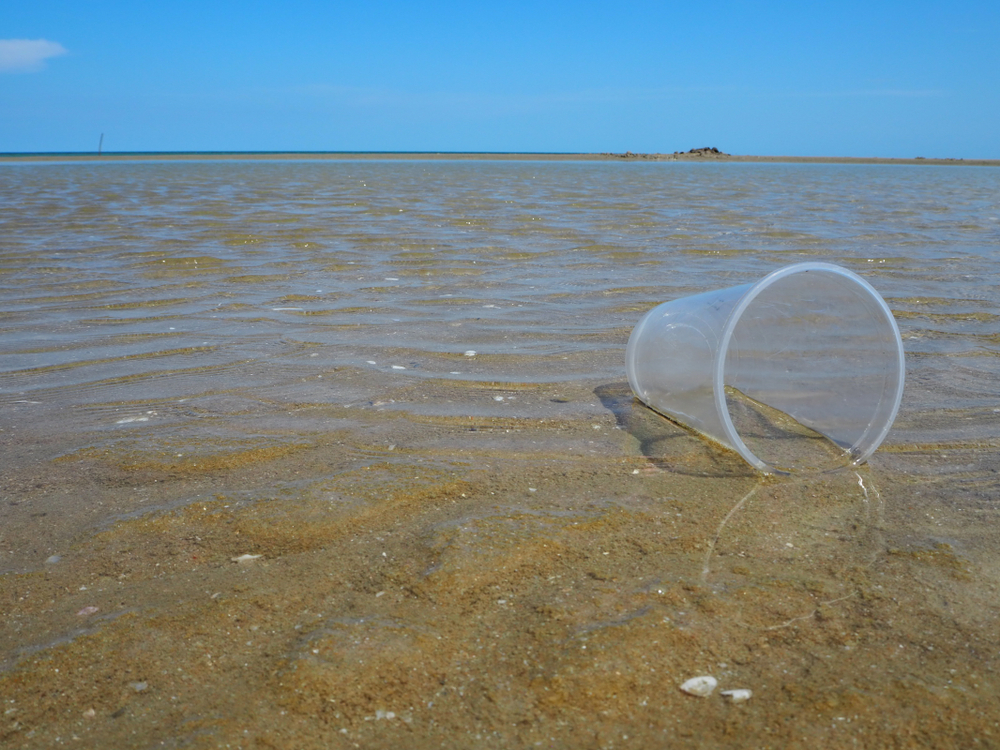
The danger was not obvious at first glance, which is part of what makes the story worth telling. A coconut octopus relies on its shelter for genuine physical protection, and a flimsy plastic cup provides almost none. The transparency of the cup compounded the problem, leaving the octopus fully visible to anything hunting nearby rather than concealed the way a solid shell would keep it.
The greater threat lay in what would happen if a predator came calling. An eel or a flounder hunting along the seabed would likely swallow the cup whole, octopus and all. That single act would not end with one death. The predator itself would probably be killed or weakened badly enough that a larger fish could pick it off easily, and the plastic would continue its journey through the food chain, claiming more lives along the way.
Sigurdsson had watched octopuses adapt to trash before, and he understood the cleverness behind it even as he recognized the risk. The animal was using what its environment offered, but its environment had changed in ways its instincts could not account for. As he put it, the octopus with its soft tentacles did not know that the cup offered virtually no protection, and in a competitive environment like the ocean, that cup was a guaranteed death sentence.
A Rescue That Nearly Drained Their Air Supply
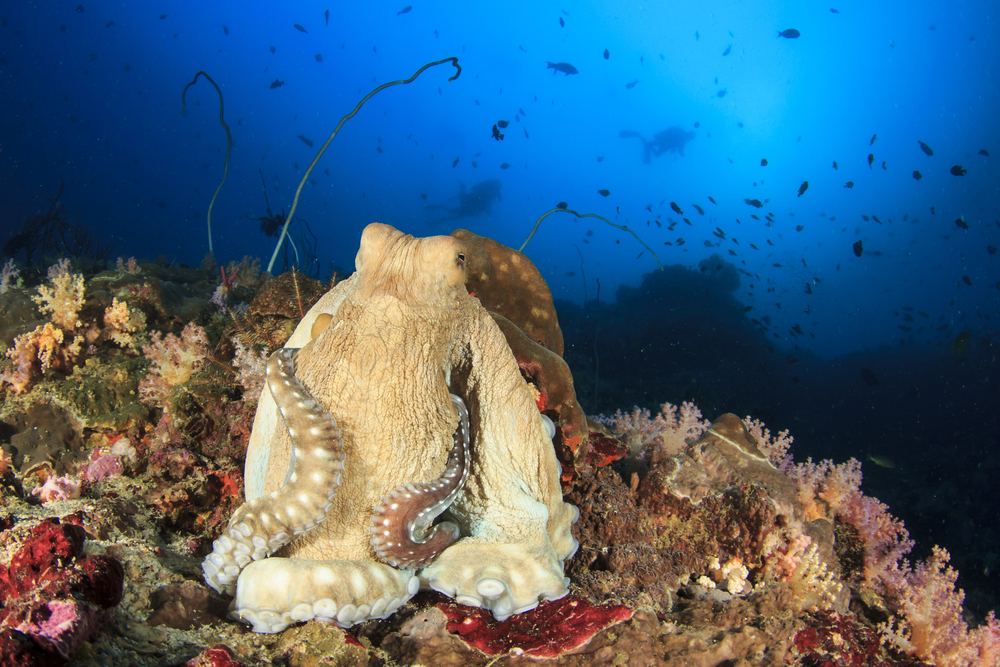
Convincing the octopus to move out was not a matter of simply removing the cup and handing over a replacement. The divers had to persuade it, and that meant working on the animal’s terms rather than their own. They spent the remainder of their dive combing the seabed for suitable shells, gathering options and presenting them one at a time in the hope that one would appeal.
This turned out to be the hard part. Coconut octopuses are notoriously particular about the shells they adopt, and this one was no exception. The team had to offer a long succession of candidates before the octopus found anything it deemed acceptable, and all the while, their oxygen was steadily running down.
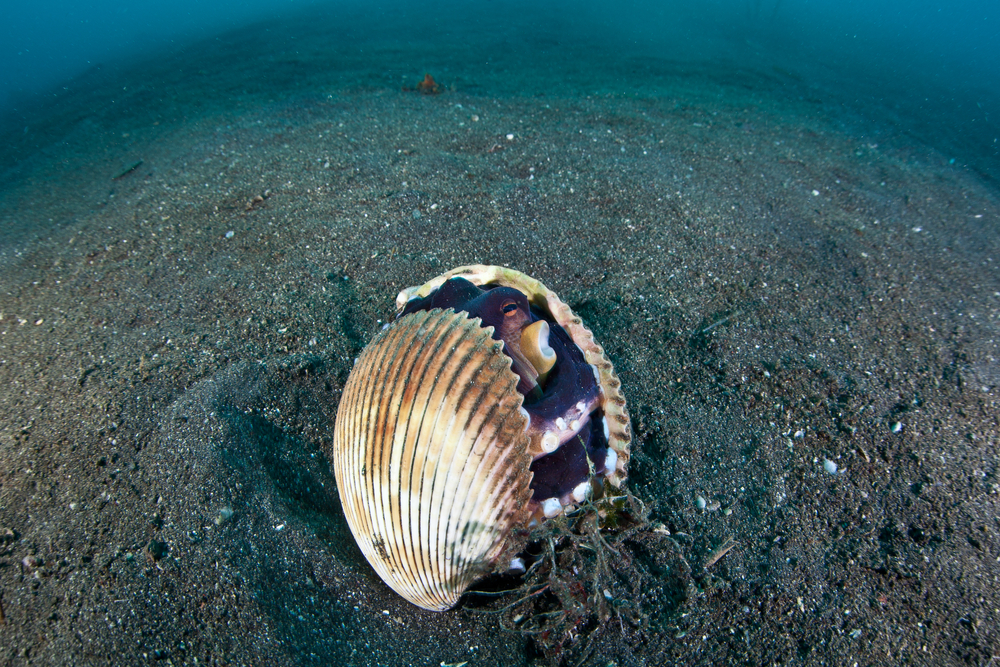
What unfolded on camera played like a slow negotiation. The octopus reached out with its tentacles to test the weight of each shell, weighing the merits of every offering as the divers searched for more. At one point, the little animal nearly left without the second half of the shell it had chosen, a small moment that drew laughs and gasps from viewers in equal measure. Time was genuinely against the group, their air supply dwindling toward the point of no return, but the octopus eventually committed to its new home, and the rescue paid off.
Why The Octopus Reached For Plastic In The First Place
Understanding why the octopus ended up in a cup at all requires a little background on the species. Coconut octopuses, which grow to only about six inches long, are born with an instinct to build themselves a mobile shelter out of coconut or clamshells scavenged from the ocean floor. That behavior is where they get their name, and finding one in the wild often means looking under exactly the right shell.
The instinct works beautifully when the right materials are available. The trouble arises when they are not. In the absence of natural shells, the octopus will grab whatever it finds on the seabed, and increasingly, what it finds is human refuse: empty cups, containers, and other plastic debris that has settled to the bottom. The animal cannot tell the difference between a protective shell and a death trap. It simply follows the same instinct into a far more dangerous outcome, trapped, in a sense, by the very behavior meant to keep it alive.
Just How Smart These Animals Are
Part of what gives the video its emotional pull is the sense that the octopus is genuinely thinking, weighing, and deciding. That impression is not far off. Octopuses are remarkably intelligent animals, capable of solving puzzles, escaping complicated mazes and traps, and taking apart nearly anything they can get their tentacles around.
That intelligence makes the footage all the more affecting, because it invites a question no one can quite answer. As the divers offered shell after shell, what was the octopus actually thinking? Was it curiosity, some form of judgment, or an attempt at connection between two very different species sharing a brief moment on the ocean floor?
Sigurdsson has captured similar instances of what looks unmistakably like communication. In another of his videos, a veined octopus showed no interest in him but became intrigued by his diver friend Gary, reaching out to touch just the tip of his finger before shyly retreating. There were no words involved, and none seemed necessary.
The Bigger Picture Beneath The Surface

As heartwarming as the rescue is, it sits against a far larger and far bleaker backdrop. Every year, somewhere between 4.8 and 12.7 million metric tons of plastic enter the world’s oceans, a figure so large it becomes difficult to hold in the mind. That scale is precisely the problem, because a number that big can feel abstract and easy to push aside.
Sigurdsson sees the reality of it firsthand, and he is candid that the single octopus in the cup is far from an isolated case. On some dives, the currents bring in so much garbage that filming sea creatures without trash in the frame becomes nearly impossible. He is also quick to correct a common misunderstanding about the problem, pointing out that most plastic actually sinks. What people see floating on the surface and tend to focus on represents only a fraction of what is really down there.
Some of what he has witnessed has stayed with him. He once came across a family of anemone fish making their home next to a corroded battery, an image he described as heartbreaking. These are the scenes that rarely make it into the polished nature footage most people see, and they are the ones he carries between dives.
Why One Small Rescue Still Matters

Sigurdsson harbors no illusion that saving one octopus will fix any of this. He has said as much himself, and the math is not on his side. Against millions of metric tons of plastic and countless animals at risk, a single shell handed to a single cephalopod barely registers.
And yet the video endures, viewed tens of millions of times, precisely because it does something the statistics cannot. It takes an overwhelming, incomprehensible problem and shrinks it down to a scale a person can actually feel, one small creature, one bad situation, one fixable outcome. The hope it offers is not that the ocean has been saved, but that it might still be worth saving.
That, in the end, is what Sigurdsson is after with his camera. He tries as hard as he can to show people the ocean when it looks its best, in the belief that those who see its beauty will have a reason to protect it. The little octopus in its new shell is not a solution to anything. It is an invitation to care, and for the millions who have watched it find a safer home, that may be enough to keep them trying.
Cephalopod, coconut octopus, Lembeh Indonesia, marine conservation, marine life rescue, ocean cleanup, ocean conservation, ocean plastic pollution, ocean wildlife, Octopus Intelligence, octopus rescue, Pall Sigurdsson, plastic pollution, scuba diving, sea creatures, underwater video, veined octopus, Viral Video