
Your cart is currently empty!
A Dog Is at the Center of a Lawsuit Asking the IRS to Recognize Pets as Dependents
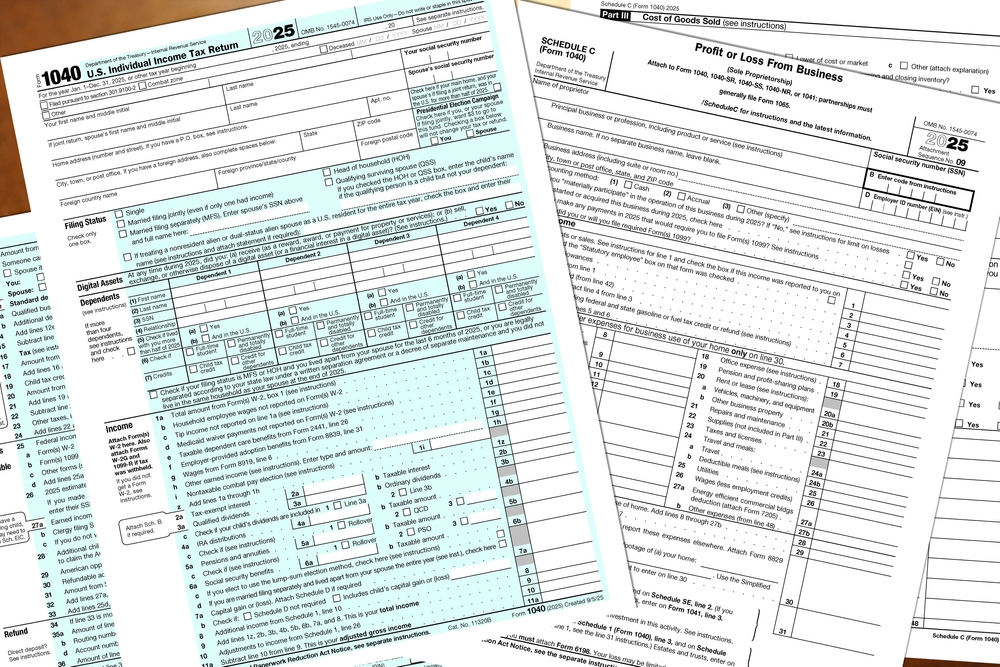
For many Americans, the idea that pets are anything less than family feels increasingly outdated in a society where animals occupy an emotional and practical role that often mirrors parenthood. Dogs and cats are integrated into daily schedules, long-term planning, and emotional support systems in ways that go far beyond casual companionship. Veterinary bills rival health insurance premiums, pet daycare replaces babysitting, and entire social lives are structured around the needs of animals who depend on their owners for everything from medical care to stability and routine. Against that backdrop, a new lawsuit challenging the IRS has struck a nerve because it gives legal voice to a belief that millions of pet owners already live by, even if the law refuses to acknowledge it.
Contents
show
The case, filed by a New York attorney on behalf of herself and her Golden Retriever, is unusual on its surface, but the logic behind it resonates deeply with modern households. The lawsuit argues that when a living being relies entirely on another for food, shelter, medical care, safety, and financial support, dependency already exists in every meaningful way. While the legal system continues to draw rigid lines around who qualifies as family, the emotional question raised by the case lingers well beyond the courtroom. If pets function as children in the daily reality of millions of homes, why does the law continue to treat them as property rather than dependents?

A Golden Retriever at the center of a federal lawsuit
Amanda Reynolds, a New York attorney, filed a complaint against the Internal Revenue Service on behalf of herself and her eight-year-old Golden Retriever, Finnegan Mary Reynolds, placing an unexpected plaintiff at the center of a federal tax dispute. Finnegan has lived with Reynolds since 2016 and, according to the lawsuit, depends entirely on her for every aspect of daily life, including food, shelter, veterinary care, training, daycare, and boarding. Reynolds describes her dog as a permanent member of her household who has no independent income, no ability to provide for herself, and no alternative caregiver, making the relationship one of total reliance.
In the filing, Reynolds argues that Finnegan meets nearly every requirement of a dependent under Section 152 of the Internal Revenue Code, aside from the requirement of being human. Pets do not earn wages, they live exclusively with their caretakers, and they require continuous financial support year after year. Reynolds emphasizes that annual costs for food, veterinary care, grooming, insurance, and supervision can easily exceed $5,000, placing pet ownership on par with many child-related expenses. From her perspective, the exclusion of pets from dependency status reflects biology rather than logic.
Reynolds captured the emotional foundation of her argument directly in the lawsuit, writing, “For all intents and purposes, Finnegan is like a daughter, and is definitely a ‘dependent.’” That sentence quickly circulated online, resonating with pet parents who recognized the sentiment immediately, even if they assumed the legal system would reject it. While the case may appear unconventional within the rigid framework of tax law, the relationship it describes is one that countless households already understand as normal.
Why the IRS still classifies pets as property
Under existing federal tax law, dependents must be human beings, a requirement that automatically excludes animals regardless of their role within a household. Pets are legally classified as personal property, which means expenses related to food, grooming, toys, boarding, and routine veterinary care are treated as personal costs and are not deductible. This classification has long frustrated pet owners who see their animals as family members rather than possessions, especially as the financial and emotional demands of pet ownership continue to grow.
There are limited exceptions that complicate this distinction. Service animals may qualify for tax benefits when their expenses are medically necessary, such as guide dogs for the visually impaired or psychiatric service animals prescribed by a physician. Reynolds argues that this exception exposes a contradiction within the tax system. From a financial standpoint, she contends, there is no meaningful difference between the cost of caring for a service animal and the cost of caring for a companion animal, as both require food, medical care, training, and daily supervision.
According to the lawsuit, denying tax recognition to companion animals places an unfair burden on pet parents who shoulder the same financial responsibilities without receiving comparable acknowledgment. Reynolds argues that the IRS already recognizes that animals can justify tax benefits in certain contexts, and therefore the refusal to extend those benefits more broadly reflects an outdated view of family structure rather than a rational assessment of modern financial realities.

Constitutional claims and the idea of pets as dependents
Beyond emotional appeals, Reynolds’ lawsuit advances constitutional arguments grounded in both the Equal Protection Clause and the Takings Clause. She argues that treating taxpayers differently based solely on whether their dependents are human or nonhuman violates fundamental principles of fairness embedded in the Constitution. According to her reasoning, families with pets shoulder comparable financial obligations to families with children but receive none of the same recognition or relief.
The Equal Protection argument focuses on the disparity between households that support dependents who qualify under the tax code and those that support animals who do not. Reynolds also invokes the Takings Clause, asserting that denying tax recognition for mandatory pet support amounts to a wrongful taking, since owners are legally and practically required to provide care without receiving any acknowledgment from the tax system. In her view, the government benefits indirectly from pet ownership through licensing, regulation, and taxation while offering no corresponding recognition.
Based on these claims, Reynolds argues that pets should be recognized as “quasi-citizens entitled to limited civil recognition, including dependency status for tax purposes.” She does not argue for full legal personhood for animals, but rather a narrow form of recognition that better reflects the reality of their integration into American households and family structures.

Early court reactions signal serious legal trouble
Despite the lawsuit’s viral appeal, early signals from the court suggest that the legal road ahead is steep. Judge James M. Wick, a magistrate overseeing the case in the Eastern District of New York, paused the discovery process, a key phase in which both sides gather and exchange evidence. When discovery is halted at an early stage, it often indicates that the court is questioning whether the case should proceed at all.
According to Forbes, Judge Wick determined that the IRS made a “substantial showing” that the lawsuit is likely to be dismissed. The IRS argued that Reynolds had not suffered a qualifying tax injury, meaning her claim could be barred under the Anti-Injunction Act. The agency also raised procedural concerns, including Reynolds’ failure to properly serve the lawsuit to the appropriate federal authorities.
Further legal analysis weakened the constitutional arguments. The court noted that the Fourteenth Amendment applies to state actors rather than federal agencies like the IRS. Regarding the Fifth Amendment claim, courts have consistently ruled that taxation does not constitute a taking of private property. While acknowledging the deep emotional bonds people form with their pets, the court concluded that animals do not qualify as tax dependents. As one legal summary bluntly stated, “this dog will not hunt.”

Why pet parents feel the law is lagging behind reality
Even with the legal challenges, the lawsuit has resonated because it reflects a broader cultural shift that the law has struggled to keep pace with. Americans are spending more on pets than ever before, often prioritizing animal care over discretionary spending. Advances in veterinary medicine, specialized diets, behavioral training, daycare services, and pet insurance have transformed animal care into a long-term financial commitment rather than a casual expense.
Changing family structures also play a significant role in this shift. Many adults are delaying or opting out of parenthood entirely, choosing instead to invest emotionally and financially in pets. For these individuals, the distinction between a child and an animal often feels symbolic rather than practical, especially when daily routines and financial sacrifices closely resemble those of traditional parenting.
Reynolds framed her own experience in deeply personal terms, telling Forbes, “I commenced this case out of a labor-of-love as a dog owner and pup-mom to a Golden Retriever whom I esteem as my own daughter, having raised her by myself while my friends got married and had children.” She described paying for daycare, medical visits, and housing, making clear that, in her life, Finnegan Mary Reynolds occupies the role of a child in every way that matters.

Other areas of law are already changing
While federal tax law remains resistant to change, other areas of the legal system are beginning to evolve in response to shifting social norms. In Pennsylvania, lawmakers passed legislation classifying pets as “living beings that are generally regarded as cherished family members” during divorce proceedings, allowing judges to consider the welfare of animals rather than treating them as objects to be divided.
In New York, a judge recently ruled that pets can be considered “immediate family” when determining compensation for emotional distress, signaling a willingness to move beyond strict property classifications. These decisions stop short of granting animals legal personhood, but they reflect a growing recognition that traditional frameworks fail to capture the reality of modern pet ownership.

Together, these developments suggest that while the IRS may remain firm, the broader legal landscape is slowly adapting to how people actually live. Tax law, however, may be one of the last institutions to reflect that cultural shift.
The bigger conversation behind the lawsuit
The viral response to this case is not truly about tax deductions or refunds. It is about recognition and legitimacy. For many pet parents, being told that their animals are legally equivalent to furniture feels dismissive of the care, responsibility, and emotional labor involved in raising them.
Critics worry about where expanded recognition could lead, raising concerns about fraud, enforcement, and the difficulty of drawing clear legal boundaries. The IRS has argued that limiting dependents to humans is rationally related to preventing abuse of the tax system, an argument courts have consistently upheld.
Still, the conversation itself has value. The lawsuit has forced public attention onto the growing disconnect between how the law defines family and how millions of people experience it in their daily lives.
A long shot that reflects a real shift
Reynolds has acknowledged that the odds of success are slim, but she remains optimistic about the broader implications of the case. She has emphasized that the lawsuit reflects not just her own relationship with her dog, but a cultural moment in which traditional legal definitions feel increasingly out of step with lived experience.
Finnegan Mary Reynolds is unlikely to be claimed as a dependent under current tax law. The IRS has made clear that animals do not qualify under existing statutes. Yet the case has already achieved something significant by articulating a belief shared by a growing segment of the population.
Whether or not the courts agree, the message from pet parents remains consistent. Love, responsibility, and family do not always fit neatly into legal categories, and the pressure to rethink those categories continues to grow.