
Your cart is currently empty!
A Federal Judge Just Froze RFK Jr.’s Vaccine Agenda
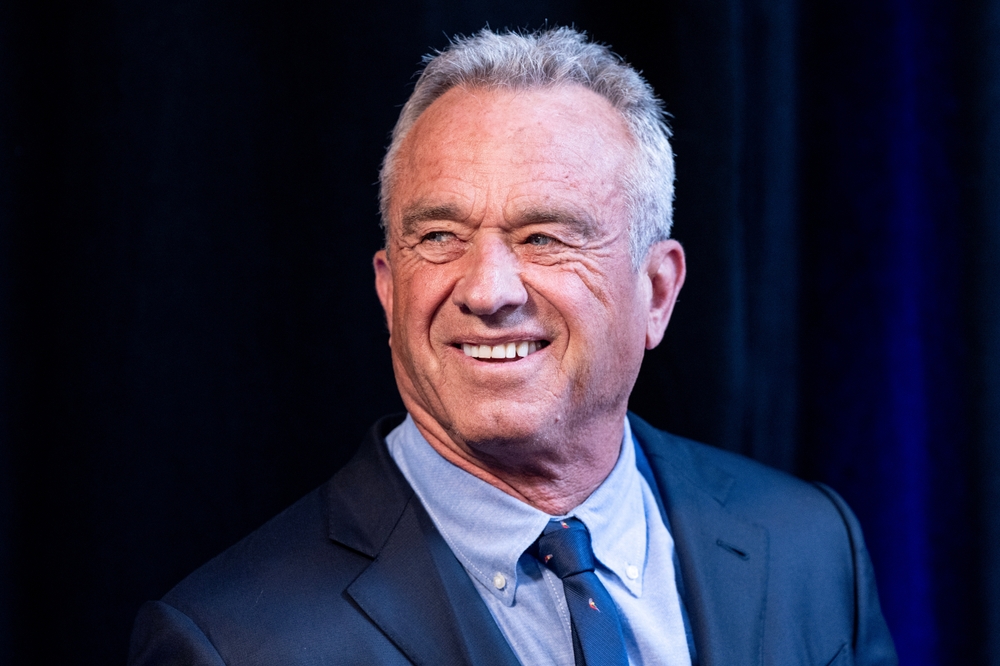
On a Monday morning in March, a federal courtroom in Boston became the center of one of the most consequential public health disputes the United States has seen in recent years. U.S. District Judge Brian Murphy had spent weeks weighing a case that put major medical organizations on one side and the federal government on the other. When he finally issued his ruling, its reach went further than most observers had anticipated. Health and Human Services Secretary Robert F. Kennedy Jr. had spent the better part of a year remaking federal vaccine policy at a pace that alarmed medical institutions across the country. By Monday’s close, several of his most significant moves had been brought to a halt. How that happened, who fought to make it happen, and what comes next is a story about science, the law, and the limits of executive authority over public health.
Contents
show
One Order, Many Consequences
Murphy’s March 16 ruling targeted several major policy shifts at once. It stayed the CDC’s January 5 decision that had cut the number of routinely recommended childhood vaccines from 17 to 11, withdrawing protections against diseases including rotavirus, influenza, and hepatitis A. At the same time, the order froze the appointments of 13 members of the Advisory Committee on Immunization Practices, or ACIP, the influential federal body that advises the CDC on vaccine schedules. All prior votes cast by those members were also invalidated, among them a move to remove the universal recommendation for the hepatitis B vaccine at birth and changes narrowing guidance on the MMRV shot, which covers protection against measles, mumps, rubella, and chickenpox.
An immediate casualty of the ruling was ACIP’s planned two-day meeting in Atlanta, scheduled to begin March 18. HHS confirmed the gathering would be postponed. Murphy also stopped short of blocking a separate Kennedy directive from May, which had instructed the CDC to cease recommending COVID-19 vaccines for pregnant women and healthy children. That matter remains outside the scope of Monday’s order.
Murphy laid out his position directly. “While the appointments of the challenged members of ACIP are stayed, ACIP as currently constituted cannot meet, for how can a committee meet without nearly the entirety of its membership?”
Twelve Months of Rapid Change
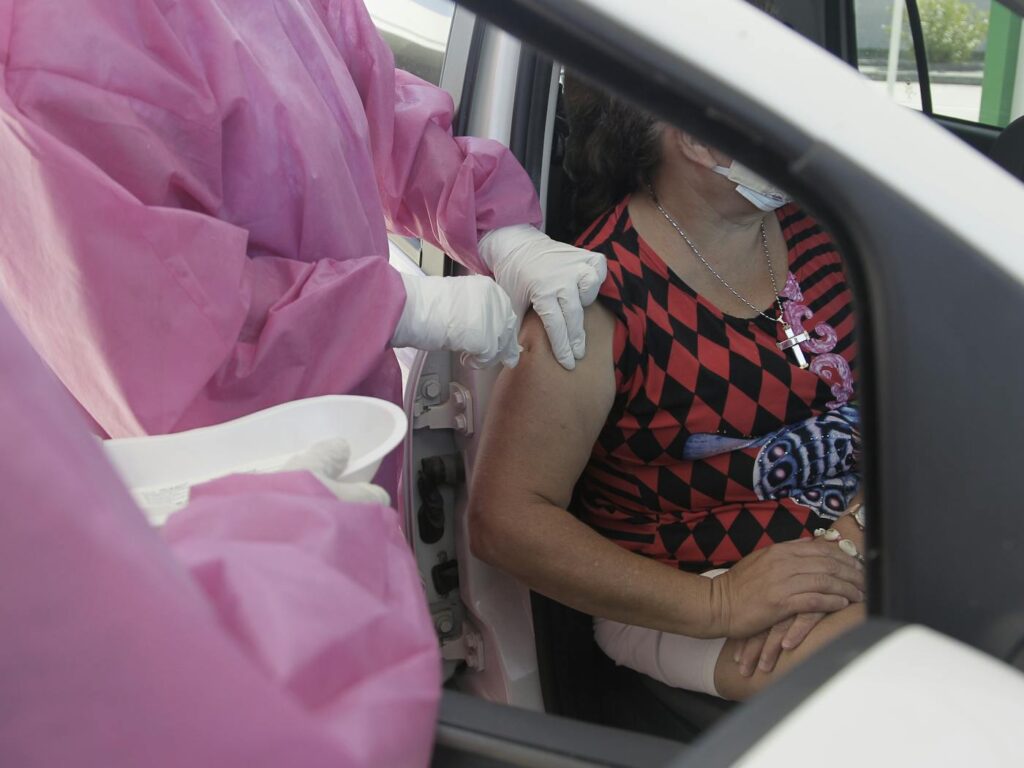
Kennedy’s arrival at HHS set off a series of actions that alarmed public health officials from the start. Appointed by President Donald Trump, Kennedy brought with him a record of vaccine skepticism that set him apart from every previous holder of the job. In the summer of 2024, he made his first major structural move against the existing vaccine advisory system. Kennedy fired all 17 independent experts on ACIP and replaced them with his own selections over the following months. His stated rationale was that prior members had served industry interests rather than public health, a charge he leveled despite the detailed conflict-of-interest disclosures those members had been required to file. Many of his new appointees had documented anti-vaccine positions or lacked relevant experience in vaccine research.
January 2025 brought the next escalation. Rather than running revisions to the immunization schedule through ACIP, the CDC issued them without committee input, withdrawing coverage recommendations for six diseases and reclassifying others. In court, government lawyers argued that ACIP held purely advisory status with no binding authority over policy, and that a December memorandum from President Trump directing Kennedy to review the schedule had given the administration sufficient legal standing for the changes. HHS also argued that U.S. vaccine recommendations had been outliers by international standards, and the review process had corrected that gap.
Medical organizations had drawn their legal battle lines months before the January changes arrived. In July 2024, following Kennedy’s first set of alterations to COVID-19 vaccine recommendations, the American Academy of Pediatrics filed a lawsuit against HHS, joined by the American College of Physicians, the Infectious Diseases Society of America, the Society for Maternal-Fetal Medicine, and other medical groups. Their central argument was direct. Federal law requires a specific, established process for changing vaccine policy, and Kennedy had bypassed it entirely.
What the Judge Found

Murphy, a Biden appointee who had previously blocked parts of the Trump administration’s immigration enforcement measures, was not moved by the government’s defense.
His ruling centered on two findings. First, he concluded that the CDC lacked legal authority to revise the childhood vaccine schedule without ACIP input. Since 1964, U.S. vaccine policy has run through that committee, an independent body of experts charged with evaluating research on vaccine safety and effectiveness before advising the CDC director. Insurance coverage decisions, both public and private, have been tied to ACIP’s recommendations for decades, and federal law has formalized that process. Cutting the committee out of the decision was, Murphy found, beyond what the CDC had authority to do.
Second, Murphy concluded that the reconstituted ACIP failed to meet the requirements of the Federal Advisory Committee Act, which mandates that advisory bodies maintain balanced membership with professional expertise relevant to their work. Of 15 current members, only six had any meaningful experience in vaccines, despite ACIP’s own charter requiring that members hold expertise in vaccine use and vaccine research. Most appeared, in Murphy’s assessment, to lack the qualifications required.
“[T]here is a method to how these decisions historically have been made — a method scientific in nature and codified into law through procedural requirements,” Murphy wrote in his opinion. “Unfortunately, the Government has disregarded those methods and thereby undermined the integrity of its actions.”
His ruling also voided earlier committee votes, including the removal of the universal hepatitis B recommendation for newborns and prior changes to COVID-19 vaccine guidance.
A Divided Response

Medical organizations responded with open relief. Richard Hughes, lead attorney for the AAP and the other plaintiff groups, called the decision a win for public health and said the opinion recognized the importance of the scientific method and the evidence-based process that vaccine recommendations had been built on over generations. Former CDC Acting Director Dr. Richard Besser, who served during the Obama administration, described the events of the past year as hard to fathom and called the ruling a great day for children’s health.
AAP President Dr. Andrew Racine put the decision in plain terms. “Today’s ruling is a historic and welcome outcome for children, communities, and pediatricians everywhere.” Racine called on parents to follow the schedule the AAP released in January and to speak with their pediatricians about any questions the ongoing policy debate had raised.
Dr. Jason Goldman, president of the American College of Physicians, called the ruling a win for public health and said that scientific consensus had long confirmed vaccines as safe and effective. Dr. Noel Brewer, a vaccine expert at the University of North Carolina who had been removed from ACIP by Kennedy, said the committee had fallen into such disrepair that its work had lost credibility in the field, and described the ruling as a return to the right path.
HHS took a sharply different position. Spokesman Andrew Nixon said the department expected the ruling to be overturned and characterized Murphy’s decision as another instance of judicial interference with the administration’s governing authority. ACIP co-chair Dr. Robert Malone criticized the ruling and said the administration held strong grounds for appeal. Kennedy-aligned organizations, including Children’s Health Defense, which Kennedy co-founded, and the Independent Medical Alliance, described the decision as judicial overreach.
Markets, Pediatricians, and What Comes Next
Vaccine manufacturers, who had grown wary of the direction Kennedy was taking U.S. policy, saw their stocks gain on Monday. Moderna closed 1.4 percent higher. Pfizer, Merck, and GSK also ended the day with modest gains. At stake for the industry are not just coverage questions but legal ones. Routine recommendations from ACIP trigger liability protections for vaccine makers and administrators under federal law, making the long-term fate of those designations a financial concern as much as a public health one. Most major private insurers had pledged to cover pediatric vaccines with no cost-sharing through the end of 2025, but questions had persisted about how the industry would treat those vaccines beyond that window.
At the practice level, Kennedy’s changes had produced friction well before Monday’s ruling. Pediatricians reported that growing parental skepticism had added extra counseling time to routine appointments, a burden the AAP cited as direct harm to its members in the lawsuit. At the state level, nearly a dozen legislatures had begun debating changes to school vaccine requirements that would loosen enrollment mandates, moves that public health experts argue would push vaccination rates lower over time.
HHS is expected to appeal Murphy’s ruling to the First Circuit Court of Appeals. Hughes acknowledged that the administration could also attempt to appoint new ACIP members not covered by Monday’s order, noting that two of Kennedy’s recent appointees fell outside the scope of the stay. He also flagged that the legal status of Kennedy’s COVID-19 vaccine changes remains unresolved.
After months of contested, fast-moving change to the country’s vaccine infrastructure, a federal court has drawn a firm line. Whether that line holds on appeal will shape what U.S. childhood vaccine policy looks like for years to come.
ACIP, Advisory Committee on Immunization Practices, American Academy of Pediatrics, Brian Murphy, CDC, childhood vaccines, federal judge, Health and Human Services, HHS, Immunization, Pediatric Health, public health, RFK Jr., Robert F. Kennedy Jr., Trump administration, vaccine law, vaccine policy, vaccine recommendations, vaccine schedule