
Your cart is currently empty!
Abandoned Great White Shark Gets Second Life After Viral Video Nearly Destroyed Her
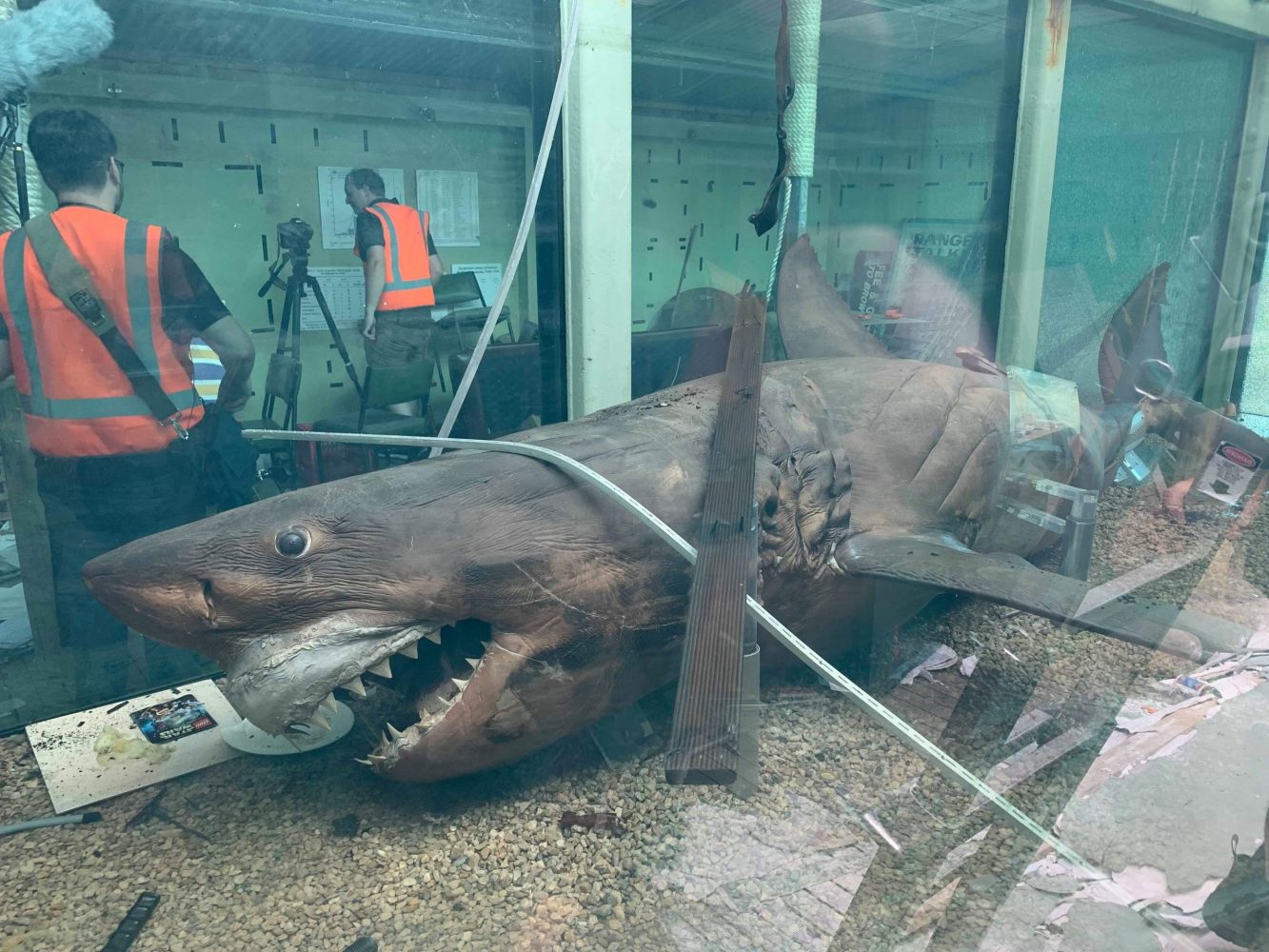
A beam of torchlight cut through the darkness inside a crumbling shed. Green liquid glowed in response. Something massive floated inside a glass tank, its pale silhouette suspended in murky preservative. When urban explorers realized what they were looking at, their footage would ignite a global sensation and nearly destroy the very thing that captivated millions.
Contents
show
Years later, Rosie, the great white shark, has found an unlikely new home. Her story stretches from Australian waters to an abandoned theme park and now to a car park in Devon Meadows, where she floats peacefully in a restored tank. But getting her there required intervention from a self-described eccentric who spent thousands to prevent her destruction.
When a Dead Shark Became an Internet Sensation
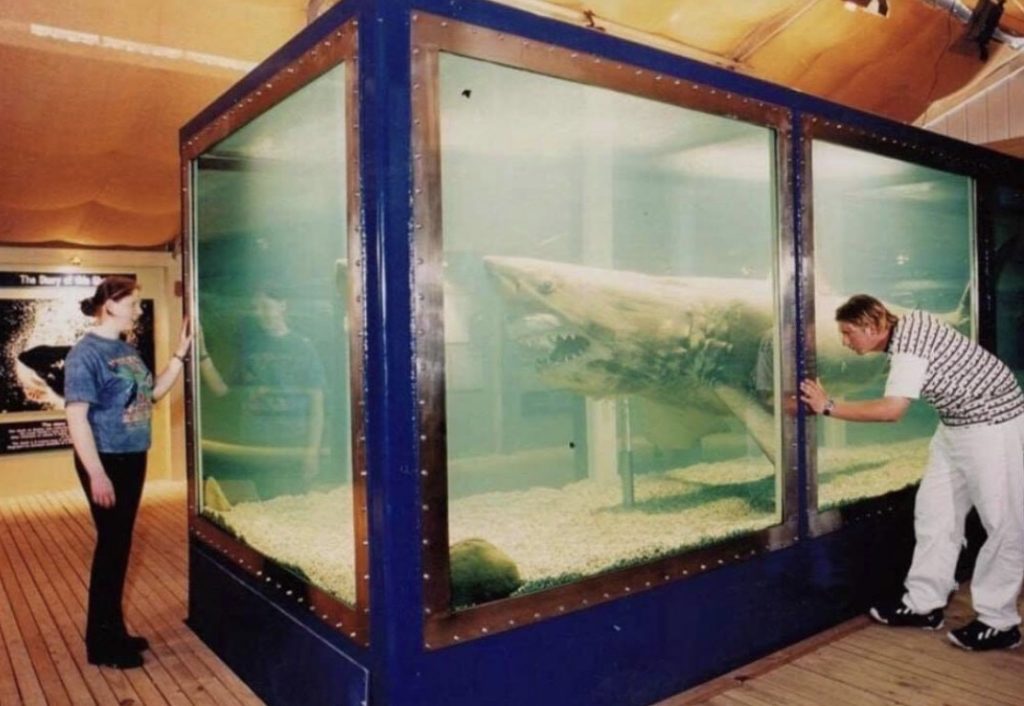
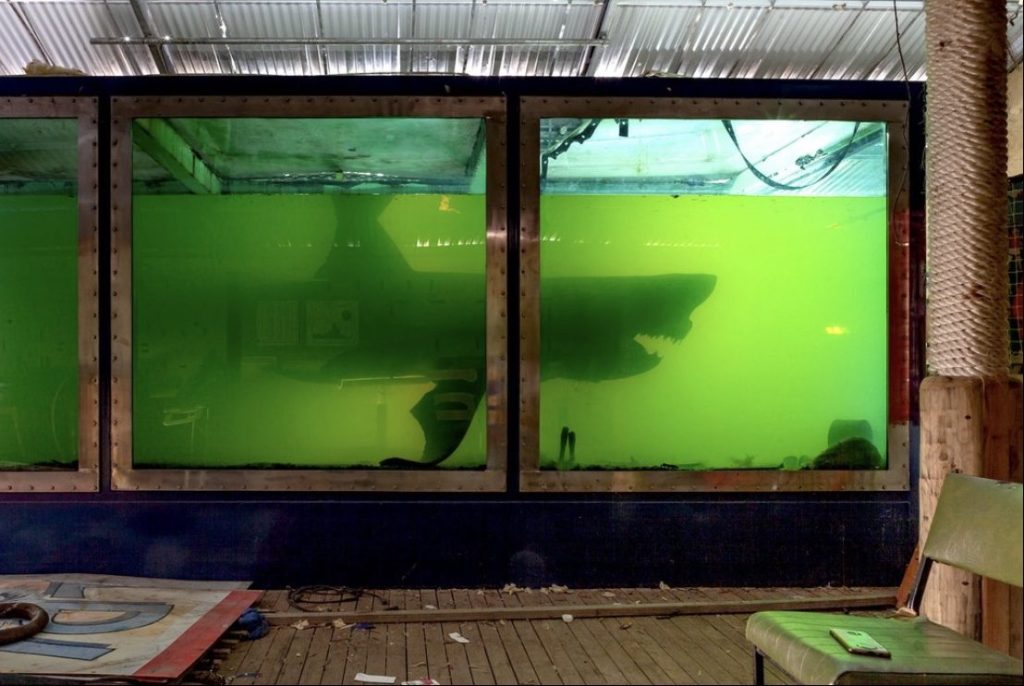
Luke McPherson uploaded his discovery to YouTube in 2018. His video showed him walking through Wildlife Wonderland in Bass, Victoria, a site that had been abandoned for six years. Pumps still circulated toxic formaldehyde through a massive tank, keeping a 16-foot great white shark from decay. Debris from collapsed buildings surrounded the enclosure. When torchlight hit the chemical-filled container, it emitted an eerie green glow.
His footage accumulated 17 million views within days. People across the world became transfixed by the sight of this forgotten apex predator floating in toxic sludge. Comments flooded in. Questions multiplied. How did a great white shark end up in a derelict Victorian wildlife park? Why was she left behind? Could anyone see her?
But viral attention brought consequences nobody anticipated. Within weeks, trespassers descended on the property. What happened next would put both vandals and the preserved specimen at serious risk.
How Rosie Met Her End in 1997
Before Rosie became an internet curiosity, she swam off the coast of Portland, South Australia. In 1997, the young shark became entangled in tuna fishing nets. Attempts to free her failed. As she thrashed, stress began affecting her body at a dangerous level. Fishermen made the difficult choice to end her life rather than let her suffer.
Her body was stored in a freezer while institutions across Australia expressed interest in acquiring such a rare specimen. Great white sharks in near-perfect condition are exceptionally difficult to obtain. Museums and educational centers wanted her. But a small wildlife attraction in Victoria would ultimately secure her.
A AU$500,000 Investment That Changed Her Fate
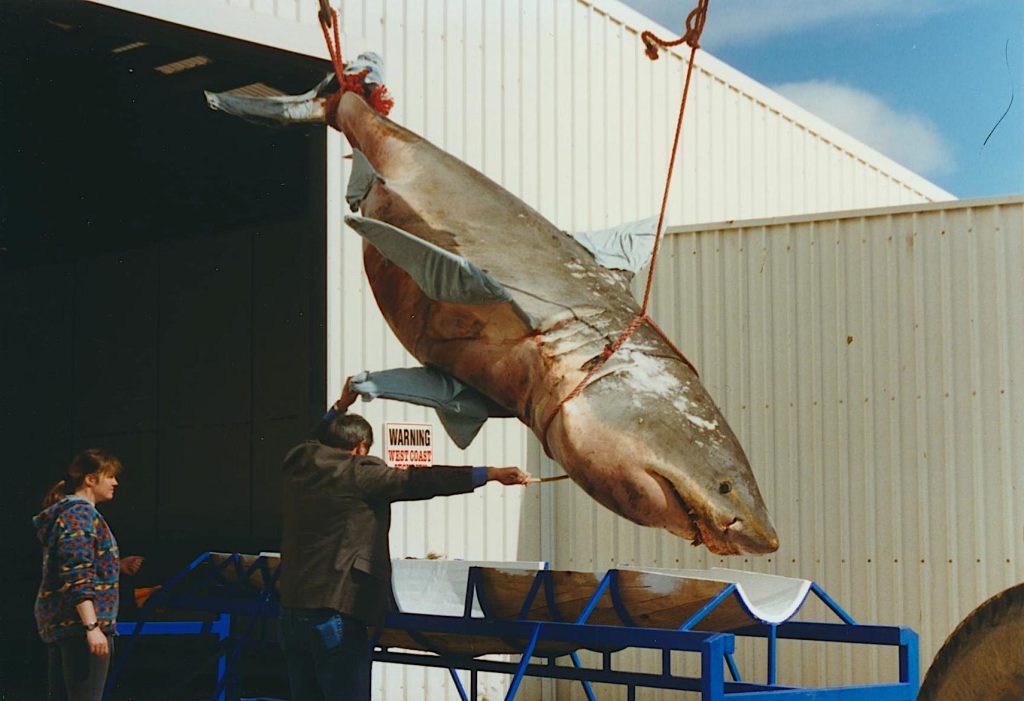
Wildlife Wonderland purchased Rosie’s preserved body in 1998 for approximately AU$500,000. Her transport required a refrigerated truck and a 900-mile journey. Halfway through that trip, authorities stopped the vehicle. Concerns had arisen about a woman missing off the South Australian coast. Officials performed an autopsy on Rosie to determine whether she had consumed human remains.
None were found. Her journey continued. At Wildlife Wonderland, staff placed Rosie into a custom-built tank filled with formaldehyde. For years, she served as one of the park’s most popular exhibits. Visitors marveled at her size and the rare opportunity to see a great white shark up close, even if she was no longer alive.
From Tourist Attraction to Forgotten Relic
Wildlife Wonderland operated until 2012, when authorities shut down the facility. Park operators lacked proper licenses. Welfare concerns about living animals prompted government intervention. Officials relocated more than 130 creatures from the property. Staff were evicted. Gates closed.
Rosie stayed behind. She was already dead, already preserved, and removing her massive tank presented logistical challenges that nobody prioritized. As weather damage and structural decay set in, she became a forgotten relic inside a darkened shed. Formaldehyde continued circulating through pumps that somehow remained functional. Years passed without anyone checking on her condition.
Only a handful of former staff and the property owner knew she was still there. For six years, she floated unseen while everything around her collapsed.
Vandals Nearly Destroyed Her After Going Viral
Screenshot
McPherson’s viral video changed everything. Suddenly, thousands of people knew where to find an abandoned great white shark. Many wanted to see her for themselves. Some wanted souvenirs.
Trespassers forced their way into the deteriorating shed. Several broke open the tank’s top hatch, exposing highly toxic formaldehyde fumes. People threw rocks at the glass panels, creating a spiderweb of cracks. Someone hurled a discarded television into the green liquid. Others attempted to steal Rosie’s teeth using hedge trimmers.
Tom Kapitany, who would later rescue her, described the vandalism bluntly. “People opened the tank up and were using hedge trimmers to try break teeth out of Rosie’s mouth,” he said. “It’s a 20ft long tank, the size of a shipping container filled with formaldehyde and kids were throwing rocks at the glass. Had they broken the glass, they would have been killed.”
Formaldehyde is carcinogenic and volatile. A breach would have released enough toxic liquid to seriously harm or kill anyone nearby. As damage mounted, the situation became genuinely dangerous.
Faced with escalating trespassing and potential liability, the landowner made a decision. Rosie would be destroyed. Better to eliminate the hazard than risk someone getting hurt.
Tom Kapitany’s Unusual Rescue Mission
Tom Kapitany first saw Rosie seven years before her scheduled destruction. In 2012, he toured the abandoned Wildlife Wonderland while considering purchasing the property. Walking through decaying buildings, he encountered the preserved shark floating in what he later called a “green slimy tank.” Although the property sale never materialized, that image stayed with him.
When he learned in 2019 that Rosie faced destruction, he acted without hesitation. Kapitany, a geologist, botanist, and entrepreneur, contacted the landowner and offered to take her. His childhood fascination with natural specimens had prepared him for this moment. Growing up in the bush, he collected unusual items and experimented with preserving snakes. His father encouraged this love of the natural world.
But rescuing Rosie presented serious challenges. Her tank needed to be carefully craned from the collapsing shed. Contaminated formaldehyde requires safe disposal. As news of the rescue spread across national media, Kapitany hired 24-hour security to protect workers and prevent further vandalism during the extraction. He spent thousands on the operation. Money was never the point.
Her New Life at Crystal World
Rosie arrived at Crystal World Exhibition Centre in Devon Meadows, about an hour outside Melbourne. Kapitany owns the facility, which specializes in crystals, fossils, and minerals. His priority was replacing the dangerous formaldehyde with something safer.
Staff cleaned the tank and filled it with approximately 5,000 liters of glycerol. Unlike formaldehyde, glycerol doesn’t release toxic fumes. It’s a natural preservative that keeps Rosie stable while allowing clear viewing. Visitors can now see her without risking chemical exposure.
She currently floats in the Crystal World car park. Kapitany awaits permits to construct a purpose-built gallery designed for educational visits and school groups. Until then, she remains accessible to anyone who wants to see her.
Charging admission never crossed his mind. “We don’t charge people to see Rosie,” Kapitany explained. “It was never about making money out of her. If anything, she’s cost me a significant amount of money.”
Global Visitors Make Pilgrimage to See Her
Rosie’s dedicated Facebook page has attracted 52,000 followers. Kapitany describes the online community as supportive and engaged. People from Brazil, India, and Canada have traveled to Devon Meadows specifically to see her. Crystal World estimates around 50,000 visitors view Rosie annually.
Some of the items stolen from her original Wildlife Wonderland display have been anonymously returned to Kapitany. He plans to include these artifacts in the future gallery alongside shark fossils and other marine specimens from across Australia.
Regular maintenance keeps her tank clean and preservation stable. Kapitany monitors glycerol levels and checks for any signs of deterioration. His goal is to create an educational space where students can learn about great white sharks and marine conservation.
A Self-Described “Crazy Old Guy” with a Mission

When asked about his motivation, Kapitany doesn’t pretend to be conventional. “I’m just a crazy old guy who likes rocks and dead sharks,” he said. His reasoning for saving Rosie reflects both pragmatism and passion. “It would be sacrilegious if she had been buried in a landfill. Doesn’t everyone want a shark preserved in their backyard?”
For Kapitany, Rosie represents something beyond curiosity. She’s a rare specimen of an endangered species and an opportunity to teach people about ocean ecosystems. He hopes her story encourages compassion rather than fear.
His approach rejects commercialization. While other attractions might capitalize on such a draw, Kapitany keeps access free. He views Rosie as a responsibility rather than an asset.
Why Rosie’s Story Still Matters Today
Great white sharks remain endangered. Specimens like Rosie offer educational value that can’t be replicated through photographs or videos alone. Seeing her suspended in glycerol creates an immediate connection to the reality of these apex predators.
Kapitany hopes visitors leave with renewed respect for marine life. “[I hope] it will help people understand that these are beautiful creatures that have lives and we shouldn’t destroy their home,” he said.
Rosie’s journey from Australian waters to a frozen storage facility to an abandoned theme park to internet fame to her current home spans decades. Her story includes tragedy, neglect, viral sensation, vandalism, and rescue. Now she rests safely in a car park, maintained by someone who refuses to let her disappear.
People still break into abandoned places. Videos still go viral. But Rosie’s tale offers a different ending than most forgotten specimens receive. She’s cared for, visited, and valued. Her preservation continues not for profit but for education and the belief that even a dead shark deserves dignity.
In Devon Meadows, suspended in clear preservative, Rosie waits for her permanent gallery. Until then, she remains where she’s been for six years now: safe, stable, and no longer abandoned.