
Your cart is currently empty!
AI Companies Are Buying Up Rare Books, And Some Are Being Destroyed
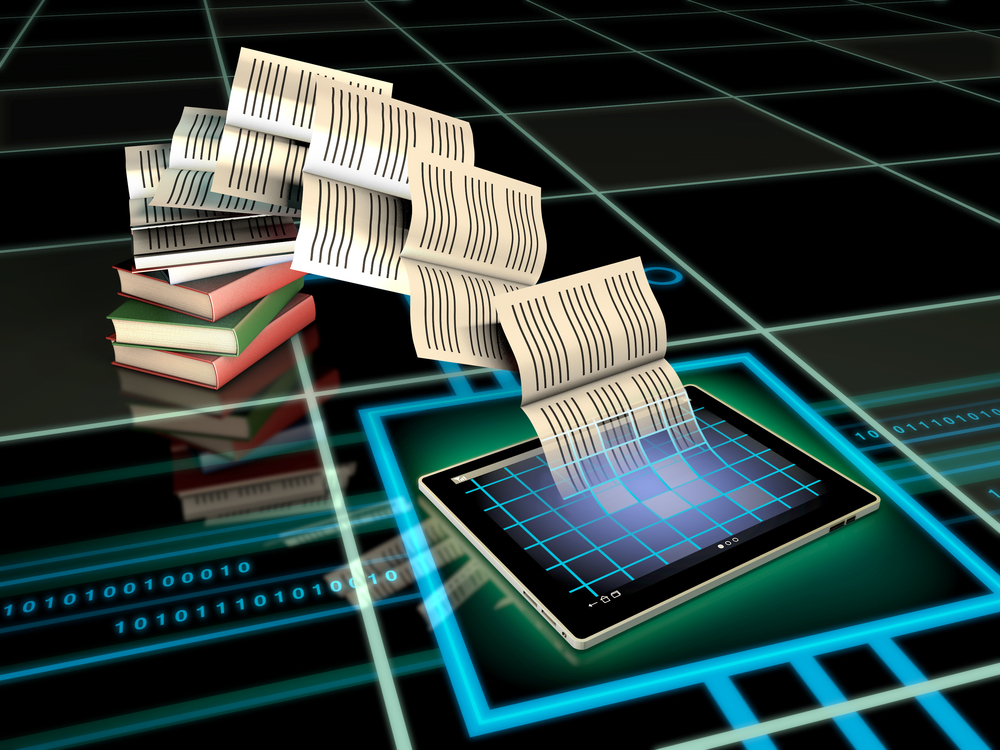
Books are having a bizarre second life in the AI boom. Companies building large language models are reportedly buying huge quantities of old and used books, not to read them or preserve them, but to strip out the pages, scan the text, and potentially destroy the originals.
Contents
show
For booksellers, the sudden demand can mean a serious payday. For rare-book collectors and anyone worried about preserving human history, the trend raises a much darker question: how many irreplaceable books could disappear while their words are being fed into machines?

The AI Industry Has Found A New Use For Old Books
Large language models need enormous quantities of text to train. Digital books are an obvious source, but companies have also discovered that physical books can be purchased in bulk, processed industrially, and converted into digital training material.
The supplied reporting describes Anthropic using a hydraulic-powered cutting machine to remove pages from books before scanning them with industrial imaging equipment. The process essentially turns a physical library into a digital dataset, leaving the original book with little value once its contents have been extracted.
Anthropic has already faced a major legal battle involving books used for AI training. The company agreed to a $1.5 billion settlement with authors in a separate copyright dispute, while the legal arguments surrounding physical books have involved the first-sale doctrine and fair-use protections.
The distinction is important. A person who buys a physical book generally has rights over that particular copy, while copyright still protects the underlying work. When the physical text is transformed into a digital format for a different purpose, courts can be asked whether that new use qualifies as fair use.

Old Books Are Suddenly Valuable To AI Companies
There is a reason companies may be particularly interested in books published before the current explosion of generative AI. The internet is increasingly filled with machine-generated writing, and companies training new models have an obvious interest in obtaining material created before that contamination became widespread.
The supplied reference cites 404 Media reporting on ISBNdb, a company that describes itself as having the world’s largest book database. The company reportedly now helps AI firms bulk-buy books, with orders ranging from around 1,000 copies to as many as one million books.
ISBNdb has reportedly marketed older print books as valuable because they were produced before the widespread use of large language models. Its website describes pre-2022 physical books as structurally clean from what it calls modern “poisoning tools.”
That gives an old paperback a strange new value. A book that might have been sitting unsold for years could suddenly become attractive because it contains human-written material that an AI company wants to process at scale.
The Books May Be Destroyed After The Scanning
The most unsettling part of the business is what happens once the pages have been converted into digital files.
If a company only wanted to read the books, the physical copies could remain intact. But when the objective is extracting the text as efficiently as possible, cutting the binding and feeding the pages through industrial scanning equipment can be faster and cheaper than carefully preserving every individual copy.
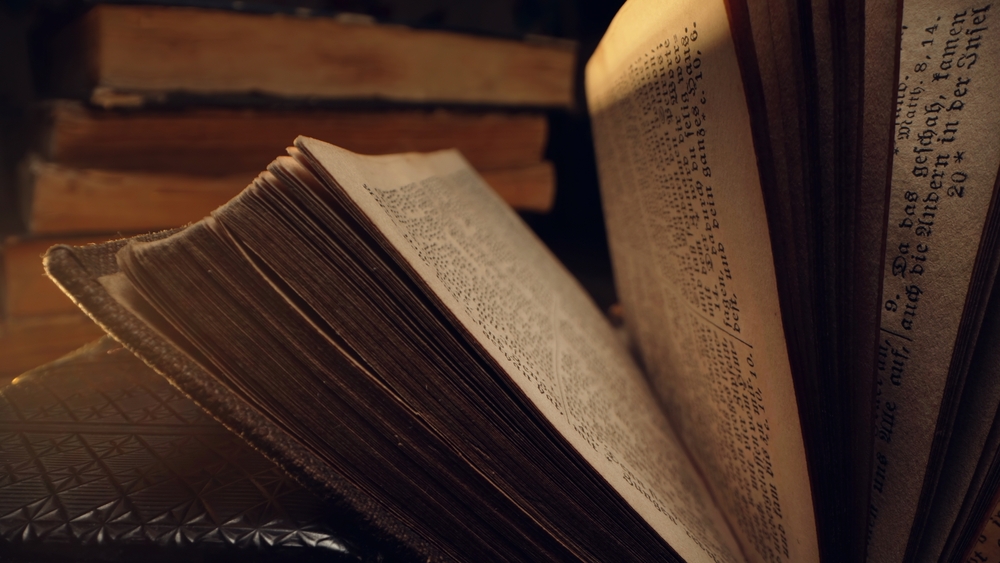
That creates very different consequences depending on what was purchased. Destroying a common mass-market novel is one thing. Destroying a rare foreign-language edition, an obscure academic text, or one of the last surviving copies of a particular printing is something else entirely.
One bookseller quoted in the supplied reference said his sales suddenly climbed from no more than 20 books a week to hundreds. He suspected AI companies were responsible because of the random selection of books and the fact that many had ISBNs.
Rare And Out-Of-Print Books Face A Bigger Risk
The seller’s inventory contained rare, foreign-language, and out-of-print books. Those are precisely the kinds of books that can become difficult to replace once existing copies disappear.
He described having mixed feelings about the sudden business. The sales were financially useful and helped clear old inventory, but he also objected to the eventual purpose and particularly disliked seeing uncommon books potentially destroyed.
That tension could become more important as AI companies search for increasingly unusual sources of text. A book that looks worthless to a retailer may be difficult or impossible to replace once the remaining copies are gone.
Book Sellers May Have No Idea Who Is Behind The Orders
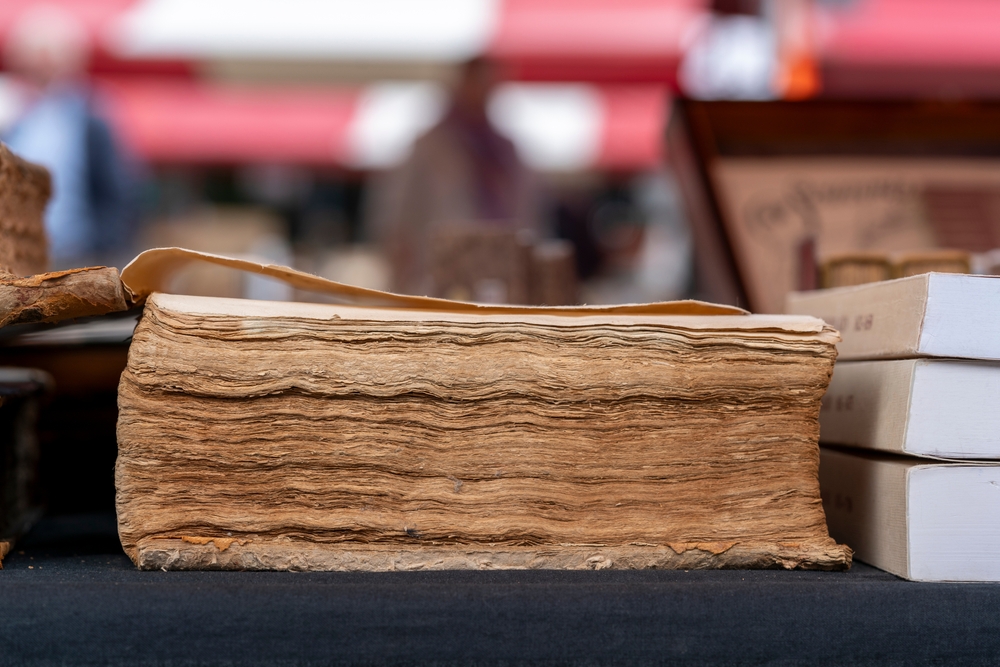
One reason the practice is difficult to track is that booksellers do not necessarily know who the final customer is.
A large order can move through a specialist service that identifies available titles and handles the purchasing process. The seller may see an unusually large transaction, but there may be no obvious indication that an AI laboratory is ultimately paying for the books.
According to the supplied reference, ISBNdb even promises to keep AI customers’ purchases confidential. That makes it much harder for the wider book industry to establish exactly how many books are being purchased for AI training or which titles are being targeted.
There can be clues, however. Huge orders containing seemingly unrelated books, particularly older titles with ISBN numbers, can look unusual enough to make sellers suspicious. But suspicion alone does not establish the identity or purpose of the buyer.
The Companies Know How Bad The Headlines Sound
The strange economics of the practice are matched by an equally strange public-relations problem. The supplied reference says ISBNdb acknowledged that concern directly on its website. “The optics problem is real,” the company reportedly wrote. “‘AI company destroys two million books’ is not a headline that generates sympathy.”
That admission is revealing because the underlying transaction can be described in two completely different ways. From a business perspective, it is an efficient way to obtain large quantities of hard-to-find training material. From a cultural perspective, it can look like an industrial operation buying up books simply to destroy them.
Both perspectives can exist at the same time. The issue becomes particularly uncomfortable when the books are rare. A company may see a cheap source of information, while a collector or historian may see one of the last physical examples of an important publication.
Rare Book Dealers Are Seeing The Same Suspicion
The concerns are not limited to one American bookseller. The supplied reference points to reporting about rare booksellers in the Netherlands who have reportedly been inundated with bulk purchases they believe could be connected to AI companies. As with the American sellers, however, the dealers cannot always prove who is behind the transactions.
That uncertainty makes the trend difficult to measure. If a bookseller sells hundreds of old books through an intermediary, the transaction may look like an ordinary wholesale purchase even when the ultimate purpose is AI training.
The result is a market where everyone can see unusual activity but few people can see the complete chain from buyer to final use.
For rare books, that lack of transparency matters. Once a physical copy is destroyed, discovering later that it was unusually scarce will not bring it back.
AI Could Change What A Book Is Worth
Traditional book collecting places value on scarcity, condition, historical importance, authorship, edition, provenance, and cultural significance. An AI company may care about something completely different: how much useful text is contained inside the pages.
That difference could create a new kind of book market. An obscure book written in another language might be valuable to an AI developer because comparable material is difficult to obtain elsewhere. A forgotten technical publication could become useful because it contains specialized language that is underrepresented online.
The physical object may be irrelevant to the company once the information has been captured.
That is where the economics become unsettling. A book can be commercially worthless to a seller while simultaneously being valuable as training data. The company buying it may therefore have a reason to purchase books that ordinary readers and collectors would never seek out.
Digital Preservation Does Not Replace The Original
A scan can preserve the words printed on a page, but it does not preserve everything about the physical object. The paper, binding, typography, annotations, stamps, inscriptions, printing quality, and evidence of ownership can all disappear when a book is reduced to digital text. For historians and collectors, those details can be part of the value.
A digital copy may preserve what a sentence says. It cannot necessarily preserve the full history of the object that carried those words. That distinction becomes especially important when only a handful of physical copies remain.
The Internet’s AI Problem Is Driving A Search For Human Text
There is an irony running through the entire market. Generative AI has produced an enormous amount of new material, and the growing presence of machine-generated writing has created concerns about what future AI systems will use as training data. Companies are now looking backward toward older human-written material because it offers something increasingly difficult to guarantee online.
Old books therefore become attractive precisely because they come from an era before today’s flood of generative AI content. The technology that is helping create an internet full of synthetic writing is also creating demand for physical evidence of writing produced by humans.
That could make older books increasingly valuable to AI developers while making some of those same books more vulnerable to destruction.
The Booksellers Are Caught In The Middle
For small booksellers, refusing this business may not be an easy decision. A sudden order for hundreds of books can provide income from inventory that might otherwise remain untouched for years. Sellers still have rent, staff, storage costs, and thousands of books competing for limited shelf space.
At the same time, they may have no control over what happens after the sale. A bookseller can sell an obscure title in good faith without knowing whether it will be read by a person, stored by a collector, or dismantled and scanned by an AI company. That creates a conflict between commerce and preservation.
The market is effectively rewarding sellers for finding books that AI companies want, while the long-term cultural cost may fall on everyone who cares about keeping those books physically available.

The Most Valuable Thing In A Book May Be What Cannot Be Replaced
AI companies are proving that old books still have enormous value. The problem is that their value may now be measured in a way that has little connection to the reason the books survived in the first place.

A common book can probably withstand the loss of a few copies. A rare book cannot. Once the last few physical examples disappear, no amount of digital training data can recreate the original object.
For now, booksellers are watching the market change in real time. Some are making money from it. Others are uneasy about where the books are going. The strange part is that the AI boom may have created a new reason to save old books at exactly the moment powerful companies have discovered a reason to consume them.