
Your cart is currently empty!
AI Data Centers Are Creating Pollution on a Nearly Incomprehensible Scale
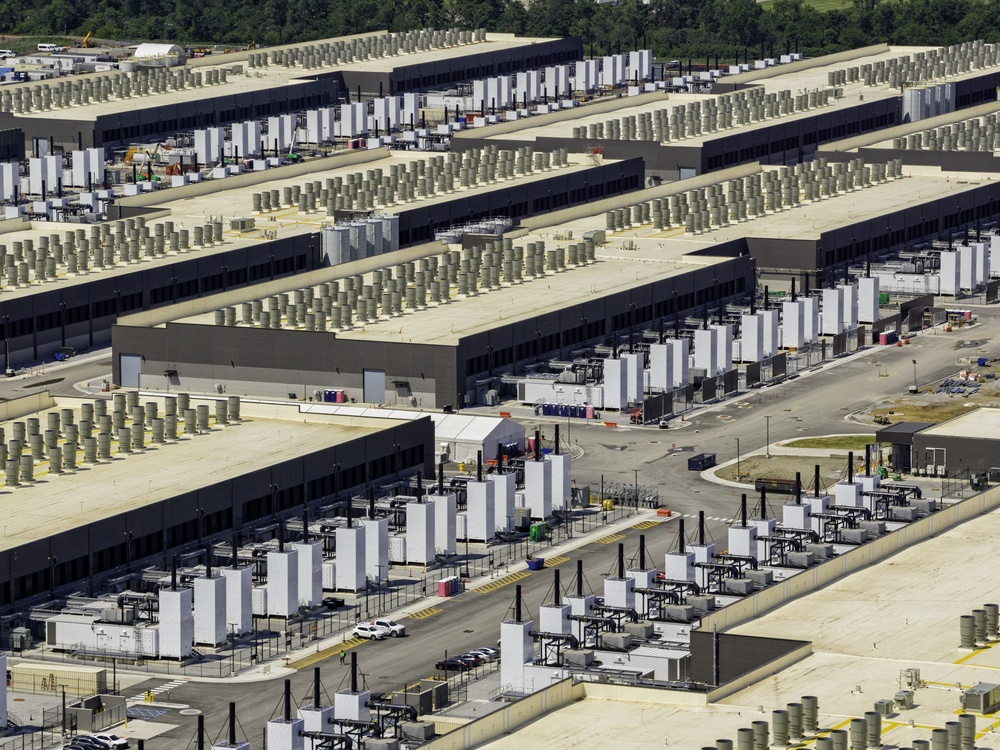
Every AI prompt begins with a few taps on a screen, but the answer can depend on warehouses filled with servers, enormous volumes of water, and power plants capable of supplying entire cities. As demand for artificial intelligence surges, researchers warn that its hidden environmental footprint could soon rival millions of cars, while communities in Texas are already living beside the fossil-fuel infrastructure built to sustain it. The digital revolution may appear clean and effortless, but its physical cost is becoming impossible to ignore.
Contents
show
The Hidden Footprint Behind Every AI Request

AI may feel weightless to the person typing a prompt, but every response depends on physical servers operating inside power-hungry data centers. Those facilities require enormous amounts of electricity to run specialized chips and large volumes of water to keep equipment from overheating. When that electricity comes from fossil fuels, the environmental cost extends to carbon emissions and harmful air pollution.
A peer-reviewed study published in Nature Sustainability estimated the combined energy, water, and climate impact of AI servers in the United States through 2030. Depending on how quickly the industry expands, researchers projected that these servers could produce an additional 24 million to 44 million metric tons of carbon dioxide-equivalent emissions annually by the end of the decade. That is comparable to adding roughly 5 million to 10 million gasoline-powered cars to American roads.
The study also estimated an annual water footprint of 731 million to 1.125 billion cubic meters, equivalent to the household water use of approximately 6 million to 10 million Americans. Most of that footprint would come indirectly from producing electricity, while the remainder would be consumed through data-center cooling.
“Artificial intelligence is changing every sector of society, but its rapid growth comes with a real footprint in energy, water and carbon,” study leader Fengqi You told the Cornell Chronicle. The projections are not fixed predictions, but they reveal how quickly AI’s environmental burden could grow if computing demand continues to outpace cleaner energy development.
Texas Is Building a “Shadow Grid” for Data Centers
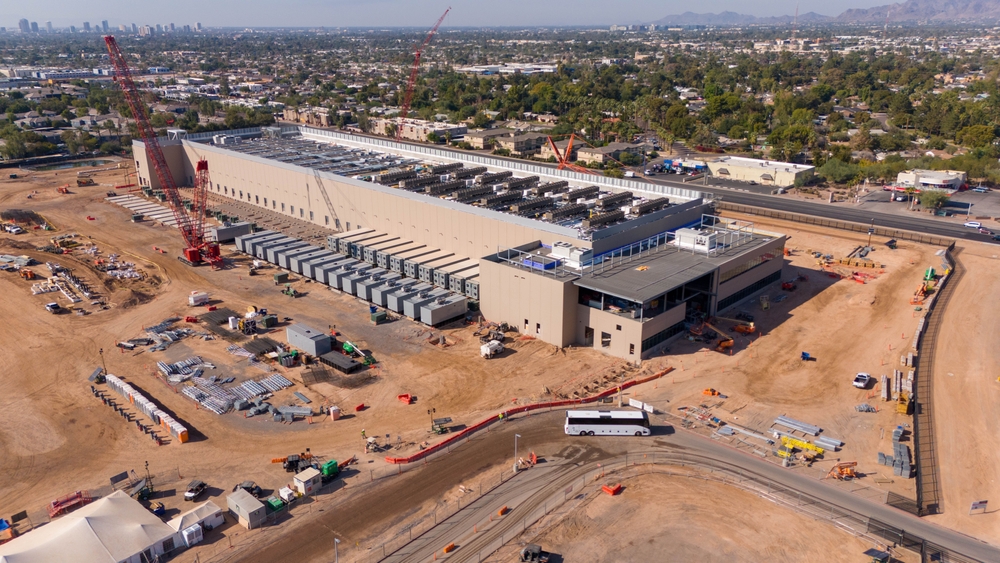
The environmental impact described by researchers is already taking shape in Texas, where technology companies are planning private power plants to serve data centers directly. These behind-the-meter facilities can operate independently of the public grid, creating what researchers have called a “shadow grid” large enough to supply entire cities.
According to Global Energy Monitor, the United States nearly tripled its gas-fired power capacity in development during 2025, reaching almost 252 gigawatts. More than one-third of that proposed capacity is intended to power data centers on-site. These figures include announced and pre-construction projects, so not every plant will necessarily be completed.
Texas is the center of the expansion. The state accounts for 80.6 gigawatts of proposed gas-fired capacity, nearly one-third of the national pipeline and more than the next seven states combined. Approximately 40 gigawatts, nearly half of the Texas total, is planned specifically for data centers. Only China has more gas-fired capacity under development than Texas alone.
Jenny Martos, a researcher at Global Energy Monitor, described the growth as “enormous” and warned that it could lock in fossil-fuel dependence for years to come. Natural gas generally produces less carbon dioxide than coal when burned, but it remains a fossil fuel. Its climate footprint also includes methane leaks during drilling, processing, and transportation.
If much of this infrastructure is completed, AI’s growth could extend the life of fossil-fuel power at the very moment the electricity system needs to reduce emissions.
Pollution Reaches Communities First
Carbon emissions affect the global climate, but the health risks from data centers’ on-site power systems are often concentrated in nearby communities. Gas turbines and diesel generators can release nitrogen oxides, particulate matter, and other pollutants associated with respiratory and cardiovascular harm.
A Floodlight investigation published by Wired identified at least 38 Texas data centers using minor air permits for more than 2,100 backup diesel generators. Collectively, those generators are permitted to emit nearly 2,500 tons of nitrogen oxides each year. Permitted emissions represent legal maximums, not necessarily the amount facilities will release, but they show the scale regulators have authorized.
The Stargate data-center campus in Abilene illustrates the tension. Its initial on-site power system includes 10 gas turbines and 62 diesel generators permitted to emit more than 1.6 million tons of greenhouse gases and 1,000 tons of other harmful air pollutants annually. Developer Crusoe told Wired that the turbines would be used only for backup power, although the permits allow continuous operation.
For neighboring resident Omaira Garcia, the development arrived with little warning. The Air Force veteran said construction dust began covering her ranch before she understood what was being built roughly 500 yards from her home. “We weren’t given any time to understand what this impact was going to be on us,” she told Wired.
Crusoe said the project has supported Abilene through investments in fire trucks, school expansions, and road improvements. Those benefits matter, but they do not erase residents’ concerns about air quality, traffic, construction, and whether local communities had a meaningful voice before the project became difficult to reverse.
How Smaller Permits Can Hide Much Larger Projects

The controversy in Texas is not only about how much pollution data centers may produce. It also concerns how some facilities receive approval before residents fully understand the project’s eventual size.
Texas allows lower-polluting operations to use streamlined authorizations known as “permits by rule” and standard permits. These pathways are commonly intended for routine sources such as gas stations and dry cleaners. Unlike major air permits, they may not require extensive environmental reviews, public notices, or formal comment periods.
According to Wired and Floodlight’s investigation, several data centers initially applied for minor permits and later sought major expansions. More than half of the facilities examined submitted annual nitrogen oxide estimates just below thresholds that would have triggered greater scrutiny and public participation.
Stargate followed a similar progression. After receiving minor permits for 10 turbines and 62 generators, its developers applied to add 41 turbines and 18 generators. If approved, the expanded power plant could generate enough electricity for more than one million homes.
Former Texas air-quality official James Doty questioned whether such growth was truly unexpected. “I sincerely doubt that the company made some last-minute decision to suddenly expand,” he told Wired. Bruce Buckheit, a former Environmental Protection Agency air-enforcement chief, argued that the project should have been evaluated as a whole from the beginning.
The Physical Cost of a Digital Revolution
AI is often presented as something abstract, existing somewhere beyond the screen. The infrastructure behind it is anything but invisible. It occupies land, draws electricity, consumes water, and releases pollution through the power systems built to keep its servers running around the clock.
Texas offers an early view of what rapid AI expansion can look like on the ground. Massive gas plants are being proposed alongside data centers, while nearby residents face construction, traffic, air-quality concerns, and decisions made before they fully understand what is arriving in their communities. The benefits may be spread across companies, consumers, and local economies, but many of the immediate environmental burdens remain concentrated near the facilities themselves.
The Nature Sustainability study makes clear that AI’s future footprint is not a single predetermined number. It will depend on how quickly demand grows, where servers are placed, and what produces their electricity. Yet the infrastructure being built now could operate for decades. Long after today’s AI tools have changed, the gas plants, water demands, and emissions created to power this expansion may remain.