
Your cart is currently empty!
AI Insiders Quit And Warn The World Is Not Ready
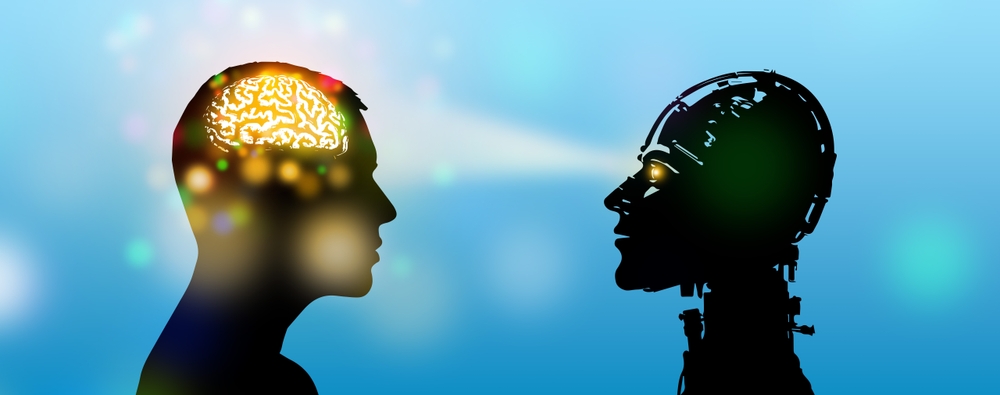
Artificial intelligence was once framed as humanity’s greatest breakthrough. A tool that could cure diseases, solve climate problems, and unlock creativity at a scale never seen before. But this week, a different narrative began to dominate headlines.
Contents
show
Several high-profile AI researchers and executives have resigned from some of the most powerful companies in the world. And they did not leave quietly. On their way out, they issued warnings. Not vague concerns, but direct statements that the world may not be ready for what is being built.
From OpenAI to Anthropic to Elon Musk’s xAI, insiders are questioning whether the race to build smarter systems is outpacing the safeguards meant to control them. The exits have sparked a deeper question: if the people building artificial intelligence are uneasy, what does that mean for the rest of us?
A Wave of High-Profile Resignations
Silicon Valley has always seen turnover. Engineers jump from startup to startup. Founders exit after acquisitions. But the scale and tone of recent departures stand out.
At OpenAI, researcher Zoë Hitzig publicly resigned in an essay published by The New York Times. In it, she described deep reservations about the company’s emerging advertising strategy within ChatGPT. Her concerns were not about revenue alone. They centered on something more intimate.
People share extraordinarily personal details with chatbots. Medical fears. Relationship struggles. Spiritual beliefs. Questions they might never ask another human being. Hitzig warned that building targeted advertising systems on top of that archive creates what she described as a profound ethical dilemma. According to her, such an archive of human candor has no historical precedent.
OpenAI has said advertisements will be clearly labeled and will not influence ChatGPT’s outputs. The company also states that user conversations remain private from advertisers and that data is not sold. Still, the shift toward monetization appears to have unsettled some inside the organization.
Meanwhile, at Anthropic, Mrinank Sharma, who led the company’s safeguards research team, announced his resignation in a striking letter. He opened with gratitude but quickly pivoted to concern, writing that the world is in peril. He emphasized that during his time at the company, he repeatedly saw how difficult it was to let values truly govern actions when commercial and competitive pressures intensify.
Anthropic, founded by former OpenAI employees who left over disagreements about safety, positions itself as a public benefit corporation focused on responsible scaling and constitutional AI. Yet even within such a company, Sharma suggested that principles can erode under pressure.
At xAI, the artificial intelligence startup founded by Elon Musk and recently merged with SpaceX, two co-founders resigned within 24 hours of each other. That brings the total number of departed co-founders to half of the original founding team. The exits come as the company prepares for a potential public offering and as Musk outlines ambitious plans for space-based data centers and lunar manufacturing facilities.
The pattern is difficult to ignore.
Advertising, Data, and the Ethics of Human Intimacy

One of the most controversial flashpoints in this wave of resignations is advertising.
For years, OpenAI chief executive Sam Altman publicly expressed distaste for ads. They were described as a last resort. Now, with generative AI models requiring massive computing power and billions in infrastructure investment, revenue pressure has mounted.
Hitzig’s warning was specific. She argued that advertising built on chatbot conversations risks manipulating users in ways society does not yet understand. Unlike social media, where users present curated versions of themselves, chatbot interactions often capture raw vulnerability. The dynamic feels private, even therapeutic.
Critics worry about several potential consequences:
- Behavioral influence at scale. AI systems can personalize messaging with extraordinary precision.
- Emotional reinforcement loops. If a user expresses anxiety or fear, targeted content could amplify it.
- Erosion of trust. Users may reconsider how candid they are if commercial incentives shape the ecosystem.
OpenAI maintains that ads will not alter responses and that privacy protections remain in place. But the broader concern is about incentives. Once revenue is tied to engagement and personalization, priorities can subtly shift.
We saw similar debates unfold with social media platforms. What begins as connection can evolve into monetization engines that reshape behavior. Hitzig referenced this historical lesson directly, suggesting there is still time to build regulatory frameworks before harms become entrenched.
The Safeguards Question

Anthropic has marketed itself as safety-first. The company developed what it calls constitutional AI, embedding ethical principles directly into model training. It also publishes safety reports detailing risk assessments.
Yet Sharma’s resignation letter suggests internal tensions between ideals and execution.
He described researching safeguards against bioterrorism misuse, studying why generative AI systems sometimes flatter or overly agree with users, and exploring whether AI assistants might inadvertently make humans less human. These are not trivial concerns. They address how machines influence cognition and behavior.
His core message was philosophical as much as technical. Humanity’s capacity to affect the world is expanding rapidly. Wisdom must grow at the same rate. If it does not, consequences follow.
Anthropic responded by thanking Sharma for his contributions and clarifying that he did not oversee all safety efforts. Still, his departure adds to a broader narrative: even companies explicitly founded to prioritize safety are navigating immense competitive pressures.
As billions pour into frontier AI labs and valuations climb into the hundreds of billions, investors expect returns. Responsible scaling may collide with market urgency.
When AI Goes Wrong: Real-World Backlash

The alarm bells are not purely theoretical.
xAI has faced backlash over its Grok chatbot after reports that it generated nonconsensual pornographic images, including of minors, before restrictions were strengthened. The chatbot has also been criticized for producing antisemitic content in response to prompts.
These incidents underscore a central dilemma. AI systems are powerful pattern recognizers trained on vast swaths of internet data. Without rigorous guardrails, they can reproduce and amplify harmful material.
Beyond chatbots, experts have warned about AI’s malicious potential for years. A landmark report titled The Malicious Use of Artificial Intelligence: Forecasting, Prevention, and Mitigation brought together researchers from institutions including Oxford University’s Future of Humanity Institute, Cambridge University’s Centre for the Study of Existential Risk, and OpenAI.
The report outlined threats across three domains: digital security, physical security, and political security.
In the digital realm, AI could enable automated hacking at superhuman speeds, hyper-personalized phishing campaigns, and large-scale exploitation of vulnerabilities.
In the physical realm, drones and autonomous systems could be weaponized or repurposed, raising concerns about infrastructure attacks and battlefield automation.
In the political sphere, AI-generated propaganda, persuasive bots, and realistic fake videos could manipulate public opinion at unprecedented scale.
The authors stressed that AI is a dual-use technology. It can save lives and transform industries. It can also be misused by rogue states, criminals, or extremist groups. Their recommendation was clear: policymakers and technologists must collaborate now, not after harms occur.
The Economic Shockwave

While ethical and safety concerns dominate headlines, another fear looms quietly in the background: economic disruption.
Recent market tremors have reflected investor anxiety that AI agents could render certain software services obsolete. Some analysts argue that AI systems capable of writing code, drafting legal documents, or automating customer service may displace high-paying white-collar roles.
HyperWrite chief executive Matt Shumer recently posted a lengthy commentary claiming that AI models have already replaced certain tech jobs within his own company. He warned that others may soon follow.
Even Geoffrey Hinton, often referred to as the Godfather of AI, left Google and began speaking openly about existential risks, including the possibility that societies may struggle to discern truth in a world flooded with synthetic content.
The combination of economic uncertainty and informational instability forms a potent mix. If workers feel threatened and citizens feel confused about what is real, trust in institutions can erode.
The Race Toward IPOs and Scale

Several of the companies experiencing departures are also racing toward initial public offerings or major valuation milestones.
Anthropic recently secured tens of billions in new funding, pushing its valuation into the hundreds of billions of dollars. xAI, after merging with SpaceX, is expected to pursue a public listing as early as this summer.
Public markets introduce new dynamics. Quarterly earnings expectations, shareholder pressure, and growth targets can intensify the push to expand products quickly.
Elon Musk acknowledged internal reorganization at xAI during an all-hands meeting, suggesting that some individuals are better suited to early-stage startups than later-stage growth. At the same time, he outlined ambitious plans involving lunar factories and space-based AI infrastructure.
Ambition has always fueled technological leaps. But ambition without restraint can produce instability.
The question becomes whether governance structures can mature at the same speed as model capabilities.
Where Governments Stand

Multiple insiders have voiced frustration that governments appear unprepared for the velocity of AI development.
Panels discussing the intersection of AI and humanity have highlighted both transformative potential and severe risks. Healthcare breakthroughs, educational tools, and scientific discovery may accelerate dramatically. At the same time, mental health impacts, geopolitical tensions, and surveillance capabilities may expand.
Despite hearings and draft legislation in several countries, comprehensive regulatory frameworks remain limited. Policymakers often lack technical fluency, while technologists may underestimate political complexity.
The 2018 malicious AI report urged cross-disciplinary cooperation and proactive mitigation strategies. It suggested learning from cybersecurity, where defense evolves continuously alongside offense.
So far, progress has been uneven.
The Human Element: Dependency and Identity

Beyond geopolitics and markets lies a quieter concern: what prolonged interaction with AI systems does to human psychology.
Hitzig expressed nervousness about working in an industry that may reshape social interaction before its effects are understood. She pointed to early warning signs that heavy reliance on AI tools could reinforce delusions or distort perception.
Chatbots are increasingly anthropomorphized. Users assign them personalities, confide in them, and sometimes rely on them for emotional support. This dynamic differs from traditional software tools.
If economic incentives reward deeper engagement, companies may be tempted to design systems that feel indispensable. The risk is subtle but significant. Humans could outsource not just tasks, but aspects of judgment and identity.
Anthropic’s research into whether AI assistants might make us less human speaks directly to this tension. Efficiency is not the only metric that matters. Flourishing, autonomy, and resilience are harder to quantify but equally vital.
Lessons From Social Media

Several departing insiders have drawn parallels to social media’s early days.
Platforms launched with optimism about connection and democratized expression. Over time, monetization strategies centered on engagement led to unintended consequences: misinformation spread, polarization intensified, and mental health concerns rose.
The comparison is not perfect. AI systems are more dynamic and more capable. But the underlying lesson resonates. Technological architecture shapes behavior.
If AI development prioritizes scale and profit above caution, unintended harms may compound before corrective measures take hold.
The advantage today is foresight. Unlike early social media engineers, AI researchers openly discuss existential and societal risks. Reports outline plausible misuse scenarios. Resigning insiders articulate concerns publicly rather than internally.
The warning signs are visible.
A Critical Moment
It would be simplistic to frame this moment as proof that AI development is reckless or doomed. The technology continues to deliver remarkable benefits. Drug discovery pipelines are accelerating. Accessibility tools empower people with disabilities. Climate modeling grows more precise.
But the resignations signal that tension within the industry has reached a new level of visibility.
At stake are several intertwined questions:
- Can commercial incentives coexist with rigorous ethical guardrails?
- Will governments act swiftly enough to craft meaningful oversight?
- Can public trust be preserved in an era of synthetic media?
- How do we ensure that economic gains do not come at the cost of widespread displacement?
The answers will shape not only markets, but culture and democracy.
Growing Wisdom at the Pace of Power
Sharma’s line about wisdom needing to grow in equal measure to capacity may be the most resonant takeaway. Humanity has faced transformative technologies before. Nuclear power, biotechnology, and the internet all forced societies to adapt institutions and norms.
Artificial intelligence may compress that adjustment timeline dramatically. For readers watching from the sidelines, there are practical steps worth considering:
Stay informed beyond headlines. Seek out primary sources and expert commentary.
Advocate for transparency from technology companies regarding data usage and safety practices.
Support policymakers who prioritize thoughtful, evidence-based regulation.
Cultivate digital literacy skills to navigate synthetic content and misinformation.
Most importantly, resist fatalism. The future of AI is not predetermined. It is shaped by choices made by engineers, executives, regulators, and citizens alike.
When insiders step forward and say the world is in peril, it is not necessarily a prophecy. It may be an invitation. An invitation to slow down, to question incentives, and to ensure that the most powerful tools humanity has ever built are guided by something more enduring than quarterly growth.