
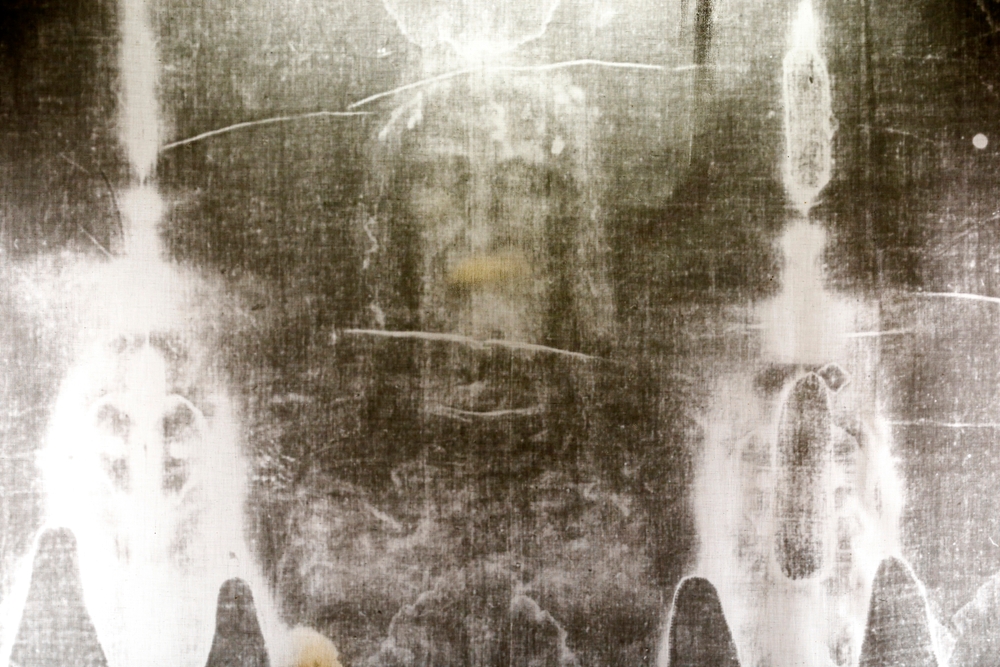
An ancient bloodstained cloth kept inside a Spanish cathedral is attracting renewed attention after researchers uncovered fresh clues about how it may have been used during a burial. The findings have also revived a fascinating question surrounding the Shroud of Turin: could two of Christianity’s most debated relics have covered the same person?
The cloth, known as the Sudarium of Oviedo, contains patterns of stains, folds and wrinkles that researchers believe may reveal how it was secured around a man’s head. Experiments have offered a possible explanation for some of those markings, while preliminary computer comparisons have raised the possibility of similarities with the Shroud. But there is still a considerable distance between an intriguing scientific observation and proof that either object belonged to Jesus.
The Ancient Cloth At The Centre Of The Investigation
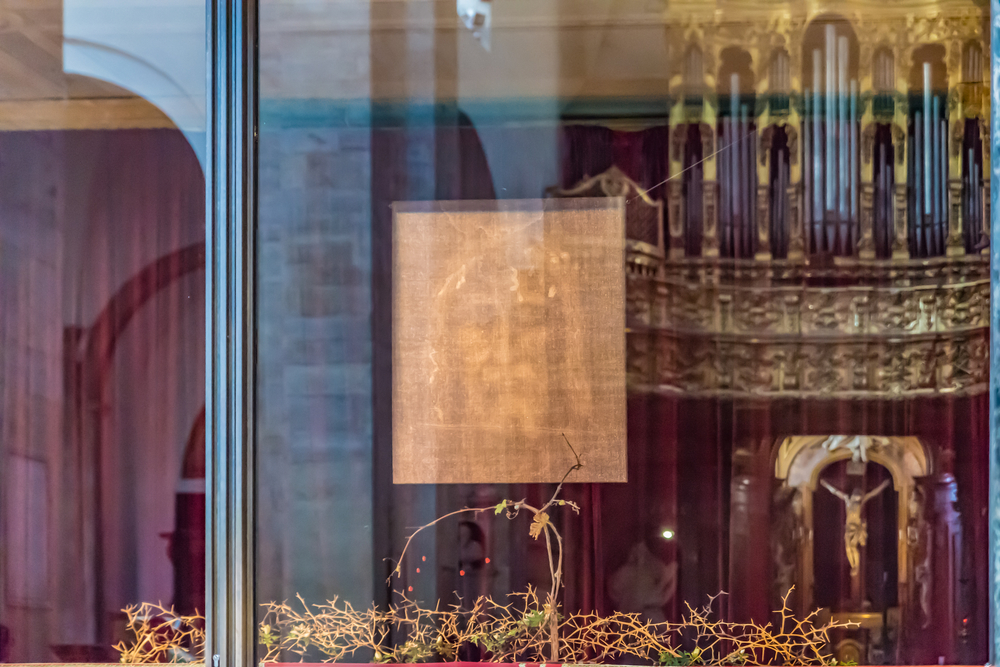
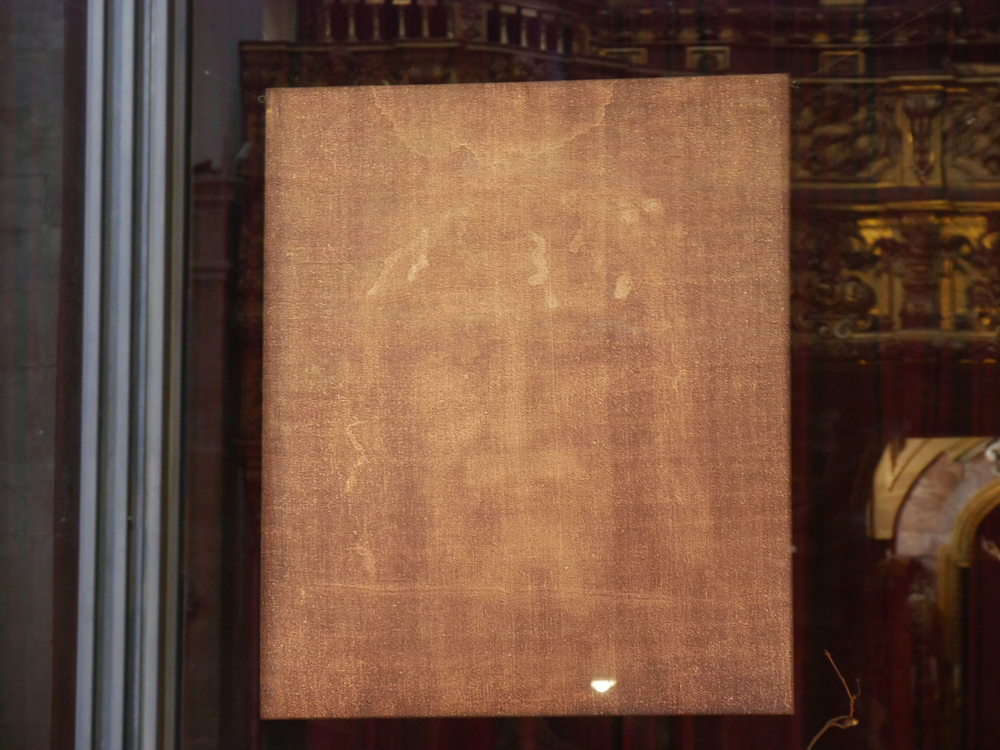
The Sudarium of Oviedo is a rectangular piece of linen measuring approximately 33 by 21 inches. It has been preserved at the Cathedral of San Salvador in Oviedo, Spain, and is traditionally believed by some Christians to be the cloth placed over Jesus’ head after his crucifixion.
Unlike the Shroud of Turin, the Sudarium does not carry a visible image of a human body. Instead, its significance lies in the bloodstains and other markings scattered across its surface. Researchers have spent years examining those patterns in an attempt to understand how the fabric was used and what might have happened to the person it covered.
The connection to the biblical account comes from the Gospel of John, which describes a separate cloth that had been around Jesus’ head. The passage mentions the head cloth alongside the linen burial cloths found in the tomb. For believers who support the relic’s traditional history, the Sudarium could be the object described in that account.
Its documented history in Oviedo stretches back at least to 1075, although that does not establish where it was made or how old it is. Researchers have therefore approached the cloth through several different lines of investigation, including its stains, chemical composition and possible relationship with the Shroud of Turin.
Experiments Offer A Possible Explanation For The Bloodstains
One of the central questions surrounding the Sudarium concerns the way its stains were formed. Researchers led by Pedro Peinado, associated with the University of Oviedo, investigated whether the cloth might have been held against a person’s head using bandages, cords or another form of external support.
To explore the possibility, the team constructed a model of a human head and covered it with linen. They then used dressings and a warmed blood substitute to simulate how bodily fluids might have moved across fabric during burial preparations. By changing the position of the model’s head, they could observe how pressure and gravity affected the resulting patterns.
The experiments produced markings that researchers considered similar to some of the stains on the original cloth. They suggested that the fabric may have been secured around the head rather than simply placed loosely over it. The position of the head and the pressure applied by dressings could have influenced where fluids collected and how they spread.
Peinado also examined the original Sudarium during a nine-hour session on July 2. The investigation involved modern imaging methods, including 3D scanning and X-ray analysis, allowing the researchers to document features of the fabric without removing samples.
Speaking about the observations, Peinado said: “The morphology of the wrinkles, in the areas we had predicted, was fully consistent with the hypothesis that the Sudarium was secured to the executed man’s head by external pressure: bandages, cords or something similar.”
That is an important distinction. The researchers found features consistent with their proposed explanation, but they did not prove that the original cloth was handled in precisely the same way as their experimental model. The replica linen was not identical to the historical fabric, and the model did not include hair. Those limitations mean the experiment should be treated as a possible reconstruction, not a definitive account of what happened.
Why The Sudarium Is Being Compared With The Shroud Of Turin
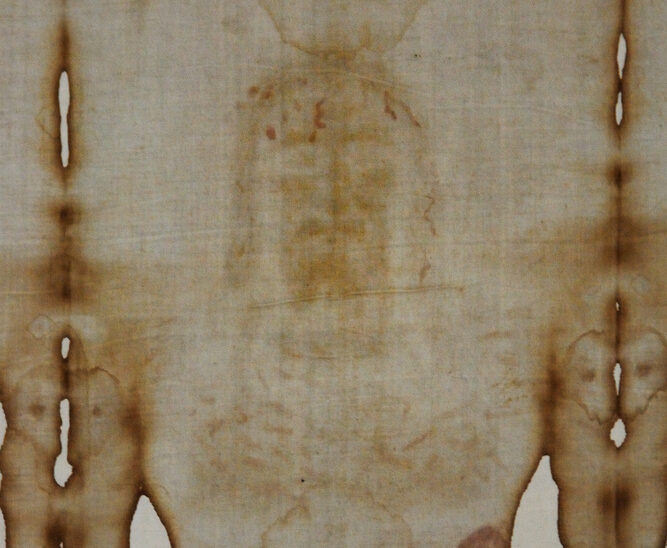
The renewed interest in the Sudarium is partly connected to its possible relationship with the Shroud of Turin, the much larger linen cloth bearing the front and back image of a man. The Shroud measures approximately 14.44 feet by 3.61 feet and has long been associated by some Christians with the burial of Jesus.
The two objects are very different in appearance. The Shroud carries a faint human image, while the Sudarium is marked by stains and wrinkles. Researchers who believe they may be connected have suggested that they could have been used at different stages of the same burial process.
Under one proposed reconstruction, the smaller cloth may initially have covered the head while the body was in a more upright or inclined position. The body could then have been laid down and covered with the larger Shroud. If that sequence were correct, the different patterns on the two fabrics might reflect their separate uses rather than contradict one another.
Peinado has also been conducting preliminary computer comparisons between the Sudarium’s stains and the injuries visible on the Shroud. The work has reportedly identified possible correspondences in the areas around the forehead and back of the head. Researchers are interested in whether the positions and shapes of the marks could indicate that both cloths were in contact with the same individual.
Peinado has described the comparison as promising, but it has not yet established a shared identity. He said: “If it is confirmed, and we are very close to publishing it, the hypothesis of the same face will be greatly strengthened.”
The distinction matters because the preliminary stain comparison is separate from the experiments examining how the Sudarium may have been secured. It should not be presented as a completed scientific finding or as proof that the two relics covered Jesus. A stronger conclusion would depend on the analysis being completed, published and independently examined.
Earlier Mineral Research Pointed Towards Jerusalem

The investigation into the Sudarium did not begin with the latest experiments. Earlier research examined mineral deposits on the cloth to see whether their chemical composition could offer clues about where it had been.
A 2015 study used X-ray fluorescence measurements to investigate deposits found in different areas of the fabric. The researchers paid particular attention to stained sections, including areas around the position where the nose may have rested. Their reasoning was that bodily fluids could have trapped dust and mineral particles against the linen.
The measurements revealed higher average calcium concentrations in stained areas than in cleaner sections. The stained spots averaged approximately 20,423 parts per million, compared with around 15,348 parts per million in the cleaner areas. One reading reached 50,393 parts per million.
The team also examined the relationship between calcium and strontium in the deposits. They compared those results with limestone samples associated with Jerusalem’s Calvary and with Oviedo Cathedral. Some of the chemical ratios appeared closer to the Jerusalem samples than to the local comparison material.
The findings were presented as a possible indication that some of the mineral deposits could have originated in Jerusalem. They did not establish that the cloth itself came from the city, however, or prove that it had been used during Jesus’ burial. Chemical similarities can provide useful clues, but they do not necessarily identify one unique geographical source.
The mineral research has nevertheless become part of the wider discussion about the Sudarium. Alongside the patterns of stains and wrinkles, it gives investigators another set of physical details to examine when considering the cloth’s history.
The Dating Evidence Still Raises Difficult Questions
For all the interest surrounding the possible connection between the Sudarium and the Shroud, dating remains one of the biggest obstacles to the traditional account. Radiocarbon testing carried out in 1988 dated the sampled Shroud of Turin linen to between 1260 and 1390 AD, placing the tested material in the medieval period.
That result has been disputed by people who question the sampling process and whether the tested section accurately represented the entire cloth. However, the research discussed here has not produced a new radiocarbon date for the Shroud or overturned the result from 1988. The medieval dating therefore remains a central part of the scientific debate.
The Sudarium has a different history. Its presence in Oviedo is documented from at least 1075, while dating evidence cited by Peinado places it as late as the seventh or eighth century. That would make it an early medieval object, but still considerably later than the traditional date of Jesus’ death.
If researchers eventually establish that the Sudarium and Shroud covered the same person, they will still need to explain how the dating evidence fits together. A similarity between stains cannot, by itself, resolve the age of either cloth. Nor does a possible connection automatically establish that the person was Jesus.
The debate therefore involves more than one question. Researchers must consider how the cloths were used, whether their markings correspond, where their materials may have originated and what the available dating evidence can actually support.
What The Bloodstains Can And Cannot Tell Us
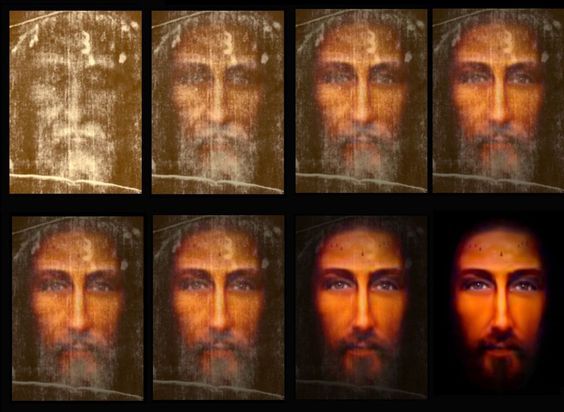
The physical characteristics of the relics have also attracted attention from biblical scholars. Jeremiah Johnston, who was not involved in the Sudarium experiments, has argued that the apparent condition of blood deposits on the Shroud deserves particular consideration.
Johnston has pointed to what he describes as undisturbed blood clots and the apparent absence of decomposition stains. He argues that removing a cloth from a wounded body would be expected to disturb some deposits or leave marks where the fabric had adhered to the skin. In his interpretation, the condition of the Shroud is consistent with the Gospel account of Jesus leaving the burial cloths behind.
He has described the evidence as a challenge for sceptics, saying: “Pull a cloth off a wounded body and you tear and smear them. That did not happen here.”
Those comments represent Johnston’s interpretation rather than a conclusion reached by the team investigating the Sudarium. The experiments did not establish what happened to the body after burial, and they were not designed to test the Resurrection. The condition of bloodstains may be examined scientifically, but connecting those observations to a supernatural event involves a separate religious interpretation.
Peinado has been careful to draw that boundary. He told the Daily Mail: “That this body was that of Jesus of Nazareth is a conclusion science cannot sign off on by itself.”
His point is that scientific research can investigate physical evidence, but identifying a person from an ancient cloth requires more than similarities between stains. The historical and religious claims surrounding the relics cannot be settled by one experiment.
The Questions Researchers Still Need To Answer

The findings have added several details to the investigation, but they have not closed the case. A number of questions remain before the proposed connection between the Sudarium and Shroud can be treated as an established conclusion.
- Did both cloths cover the same person? The preliminary computer comparison needs to be completed and published before its proposed similarities can be properly assessed. Even then, matching patterns would need careful interpretation.
- How did the Sudarium’s stains form? The experiments suggest that bandages or cords could have influenced the markings, but they do not prove that the original cloth was used in exactly that way.
- Where did the mineral deposits originate? The chemical results have been compared with Jerusalem limestone, but the similarities do not establish a unique geographical source or prove the cloth travelled from Jerusalem.
- Can the dating evidence be reconciled? The Shroud’s 1988 radiocarbon result remains a major challenge for claims that it dates from the time of Jesus. The latest Sudarium research has not resolved that problem.
- Can the person be identified as Jesus? Even if researchers eventually demonstrate that the two fabrics were used together, that would not independently prove the identity of the person they covered or establish the Resurrection.
Peinado has stressed that the research needs to be carefully checked before stronger claims are made. As he put it: “A poorly verified piece of data does more harm than one that has not yet been released.” That caution is particularly relevant when a study concerns objects with such deep religious and historical significance.
The Mystery Remains Open
For believers, the Sudarium of Oviedo and the Shroud of Turin may offer a tangible connection to the final hours of Jesus’ life. For researchers, they are historical objects whose materials, markings and origins can be examined, compared and tested. The latest work offers a possible explanation for the way the smaller cloth was secured, while earlier mineral research and preliminary stain comparisons provide further avenues for investigation.
But the evidence has not established that the Sudarium covered Jesus, that it and the Shroud belonged to the same person, or that either object proves the Resurrection. The most significant next step is the publication and independent examination of the proposed stain comparison. Until then, the ancient cloth remains an intriguing piece of a much larger historical puzzle, rather than a scientific answer to one of Christianity’s oldest mysteries.