
Your cart is currently empty!
Scientists Discover a Cellular Switch That Stops Fat Storage and Could Change Obesity Treatment

What would it take to make a body stop building fat in the first place? Not shrink it. Not punish it off in some grim January. Stop it at the source, before a single fat cell ever exists.
Contents
show
That is the question Sabita Chourasia carried into a lab at the Weizmann Institute of Science in Rehovot, Israel.
Her way of chasing it was patient to the point of stubbornness. She deleted one protein from human cells, then watched their chemistry change on a clock. “After deleting Mitch, we examined, every few hours, the effect that had on more than 100 substances taking part in metabolism in human cells,” she said.
More than a hundred readouts. Every few hours. Waiting for the moment a cell changed its mind about fuel.
It came. And what she found is stranger, and more careful, than the headline that carried it around the world.
The Protein Scientists Have Been Watching For Years
The protein at the center of the research is called mitochondrial carrier homolog 2, or MTCH2.
Inside Prof. Atan Gross’s laboratory at the Weizmann Institute of Science in Rehovot, Israel, researchers have given it a much easier name: Mitch.
MTCH2 sits on the outer membrane of mitochondria. Those structures are often described as the powerhouses of cells because they help convert nutrients into usable energy.
For years, researchers had reasons to suspect that Mitch was connected to metabolism and body weight.
Human genetic studies had already associated the MTCH2 region with body mass index. That did not prove that the protein causes obesity, but it gave researchers a reason to investigate what happens when its activity is changed.
The first clues came from experiments in mice.
In 2016, Gross’s group removed Mitch from mouse muscle. The animals responded in a way that caught researchers’ attention.
They were protected from diet-induced obesity despite being fed a high-fat diet. They also burned more energy, developed muscle fibers with greater oxidative capacity, showed improved endurance and had changes in heart function.
That experiment established an intriguing pattern.
Reducing Mitch activity appeared to change the way muscle handled fuel.
But researchers still did not know exactly what was happening inside individual cells.
That question led Sabita Chourasia and colleagues to take a much closer look.
Researchers Watched Cells Change Hour By Hour
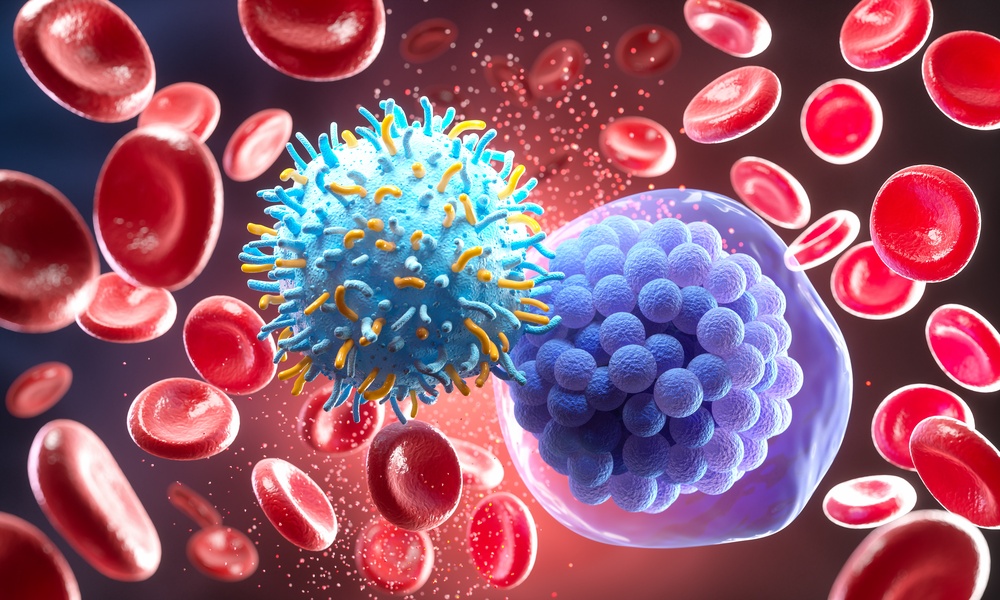
Rather than looking at one isolated metabolic measurement, the team removed Mitch from human cells and then repeatedly examined what happened to their chemistry.
The researchers tracked more than 100 substances involved in metabolism over time.
“After deleting Mitch, we examined, every few hours, the effect that had on more than 100 substances taking part in metabolism in human cells,” Chourasia said.
That approach gave the researchers something much more useful than a simple before-and-after snapshot.
They could watch the metabolic consequences develop.
The experiments showed that cells without MTCH2 had higher energy demands and increased cellular respiration. They consumed more lipids, amino acids and carbohydrates as they attempted to meet that demand.
The research team described the resulting state as involving “a high ATP demand, an oxidized cellular environment, and elevated utilization of lipids, amino acids, and carbohydrates.”
ATP is the molecule cells use to power many of their activities. When demand for it rises, cells need to keep generating energy.
That appears to be exactly what happened after Mitch was removed.
“We saw an increase in cellular respiration, the process in which the cell produces energy from nutrients, such as carbohydrates and fats, using oxygen,” Chourasia explained.
The cells were using more fuel.
And one type of fuel became particularly interesting.
Fat.
Removing Mitch Changed The Cell’s Energy System

Mitochondria are not static structures.
They can join together into larger networks or separate into smaller units. Researchers have long studied this process because mitochondrial shape is connected to how cells produce and use energy.
The source study found that removing Mitch disrupted the normal mitochondrial network.
Instead of maintaining the same interconnected structure, the mitochondria became more fragmented.
That change came with a metabolic cost.
The cells became less efficient and needed to consume more nutrients to meet their energy requirements.
This created a cellular environment in which stored fuel could be pulled into energy production rather than being directed toward building new cellular structures.
The researchers also noticed another major change.
The amount of fat contained in cellular membranes fell sharply.
“We discovered that deleting Mitch led to a major drop in fats in membranes,” Gross said.
That observation helped connect several pieces of the puzzle.
A cell needs lipids for much more than storing energy. Lipids are essential components of cell membranes, and growing cells need to manufacture those membranes as they increase in size.
If the cell is burning through available fuel while also struggling to produce the fats required to build new membrane material, its ability to grow and develop can be severely restricted.
That became especially important when the researchers looked at cells that were on their way to becoming fat cells.
The Most Surprising Result Happened Before Fat Cells Formed

Fat tissue is often imagined as a collection of existing cells that simply become larger when the body stores more energy.
The biology is more complicated.
New fat cells can develop from precursor or progenitor cells. These immature cells can receive signals that push them toward becoming mature fat-storing cells.
The researchers wanted to know what would happen if Mitch were removed before that transformation occurred.
The results were striking.
Under normal conditions, the mouse-derived progenitor cells used in the experiment readily matured into fat cells when given the appropriate signal.
Around 80% to 90% of the cells had matured by the sixth day.
When Mitch was removed, only around 5% to 10% reached that stage.
The cells had not simply died.
They remained alive, but they were much less capable of completing the process required to become fat-storing cells.
Gross described the underlying problem in straightforward terms.
“Reducing the ability to synthesize membranes prevents the cells from growing, developing and reaching the point where differentiation is possible,” he said.
That distinction is crucial.
The researchers did not discover a treatment that makes an obese person suddenly unable to store fat.
They found a cellular mechanism that appears to interfere with the development of fat cells under laboratory conditions.
That is a much earlier stage of the story.
Why The “Immune To Obesity” Claim Goes Too Far

The viral description of the discovery makes for a spectacular headline.
Human cells were not made immune to obesity.
In fact, the experiment did not involve obese people at all.
The hour-by-hour metabolic experiments were conducted using HeLa cells, a human cervical cancer cell line commonly used in laboratory research.
The fat-cell formation experiment used NIH3T3L1 cells, which are mouse-derived cells.
That means the most exciting result about preventing cells from becoming fat-storing cells was observed in a laboratory model, not in human adipose tissue inside living people.
That distinction does not make the finding unimportant.
It tells researchers what needs to happen next.
Laboratory studies can reveal mechanisms that would be almost impossible to identify by simply observing changes in people’s body weight. Once scientists understand a mechanism, they can begin asking whether it can be targeted safely in living organisms.
The gap between those stages, however, can be enormous.
A biological pathway that looks useful in a dish can behave very differently inside a complete body.
Human metabolism involves multiple organs, hormones, immune signals, nervous-system inputs and feedback mechanisms. A protein that appears harmful or unnecessary in one type of cell may be performing an essential function somewhere else.
Mitch is a particularly good example of that problem.
The Protein May Be Useful Elsewhere In The Body
The researchers have reasons to be cautious about simply shutting down MTCH2 throughout the body.
Previous research has connected Mitch with several biological processes beyond fat metabolism.
One concern involves the heart.
The heart normally relies heavily on fatty acids as an energy source. In heart failure, however, the heart’s metabolism can shift toward greater use of glucose.
Human genetic research has identified a low-MTCH2 genetic pattern that was overrepresented among people with cardiomyopathy in one study.
The researchers behind that work concluded that reduced MTCH2 activity might be beneficial in circumstances where fatty acids are the dominant fuel source, but potentially harmful when the heart has shifted toward glucose use.
That creates a major problem for any future drug.
A medication that reduces Mitch throughout the body could potentially affect tissues that depend on the protein for reasons that have nothing to do with obesity.
The brain raises another concern.
In earlier mouse research, scientists removed Mitch from neurons in the forebrain. The animals developed impairments involving spatial memory and long-term potentiation, a cellular process associated with learning and memory.
So Mitch appears to have a complicated job.
It is involved in mitochondrial behavior and energy metabolism, but those functions are not restricted to fat tissue.
A successful treatment would therefore need to be much more precise than simply switching the protein off everywhere.
The Cellular Mechanism Gives Researchers A New Target

The real significance of the study may be the mechanism rather than the promise of an immediate treatment.
Researchers now have a clearer explanation for how removing Mitch changes cellular metabolism.
The chain begins with mitochondria.
When Mitch is absent, mitochondrial organization changes. Energy demand rises. Cells increase respiration and consume more nutrients. Lipids that might otherwise contribute to membrane production are depleted.
That leaves developing cells with a serious problem.
They need membrane material to grow and mature, but the cellular environment is consuming available resources at a much higher rate.
The result is a metabolic state that appears to make fat-cell development extremely difficult.
The researchers described this as a kind of cellular energy crisis.
That discovery could allow scientists to search for ways of reproducing the useful part of the effect without causing the potentially dangerous effects of completely disabling Mitch.
A future drug might not need to eliminate the protein.
It might need to alter its activity in a particular tissue, at a particular level, for a particular period of time.
That is a much harder scientific problem.
It is also a more realistic one.
A Promising Target With A Long Road Ahead
While scientists have identified a protein that dramatically influences how cells use energy and mature into fat-storing cells, we must view this discovery with restraint. Viral claims suggesting that human cells have been made “immune to obesity” severely mischaracterize the science. In reality, no person has been made resistant to obesity, there is no approved drug that switches off MTCH2, and the approach’s safety in humans remains completely unproven.
Instead of a miracle cure, researchers have uncovered a valuable control point in cellular metabolism. Taking this discovery from laboratory experiments to a widely available medication will require years of rigorous animal studies, toxicology research, and clinical trials. Because MTCH2 plays crucial roles in the heart and brain, understanding how to harness this mechanism without disrupting the protein’s other vital functions is paramount; these safety steps simply cannot be skipped.
For now, “Mitch” represents a promising biological clue rather than an immediate solution. If scientists can eventually isolate its effects safely, this breakthrough could fundamentally change how we approach obesity. Rather than merely removing fat after it accumulates, future treatments could target the very cellular processes that create fat-storing cells in the first place.
Source:
- Chourasia, S., Petucci, C., Shoffler, C., Abbasian, D., Wang, H., Han, X., Sivan, E., Brandis, A., Mehlman, T., Malitsky, S., Itkin, M., Sharp, A., Rotkopf, R., Dassa, B., Regev, L., Zaltsman, Y., & Gross, A. (2025). MTCH2 controls energy demand and expenditure to fuel anabolism during adipogenesis. The EMBO Journal, 44(4), 1007–1038. https://doi.org/10.1038/s44318-024-00335-7