
Your cart is currently empty!
Scientists Say Earth Is Entering a More Extreme Climate Era
The warning signs are no longer confined to scientific journals or computer simulations. They are unfolding in real time through deadly heatwaves, record-breaking ocean temperatures, and weather events that continue to surpass expectations. Even researchers who have spent decades studying climate change say the pace of change is becoming increasingly difficult to explain.
Contents
show
One concern has moved to the center of that discussion: the possibility that one of Earth’s most important ocean current systems could already be heading toward an irreversible decline. While scientists are careful not to claim that collapse is certain, new research suggests there is now a meaningful chance that the world has already crossed a threshold that would eventually reshape weather patterns across several continents.
Scientists Are Increasingly Alarmed by the Speed of Climate Change
Climate scientists have warned for years that rising greenhouse gas emissions would produce hotter temperatures, stronger storms, rising seas, and more frequent extreme weather. Those broad predictions have largely proved accurate. What has surprised many experts is how quickly several of these changes now appear to be unfolding.
The summer of recent years has become a striking example.
Large parts of the United States experienced prolonged periods of dangerous heat that pushed electricity grids to their limits and disrupted public events. Across Europe, temperatures climbed above 40 degrees Celsius in several countries, breaking records that had stood for decades. Heat that was once considered exceptional has started appearing almost every year.
According to the World Health Organization, Europe’s latest heatwave has been linked to more than 1,300 excess deaths since late June. WHO Director-General Tedros Adhanom Ghebreyesus described heat stress as a “silent killer,” warning that much of Europe’s infrastructure was never designed for such sustained temperatures.
The continent is now warming at roughly twice the global average, making it one of the regions most vulnerable to escalating climate extremes.
Scientists say these events are not isolated disasters. They are part of a much broader pattern that suggests Earth’s climate system may be shifting faster than anticipated.
Atmospheric scientist Katharine Hayhoe described today’s climate as feeling like “an unexpected step change” compared with only a few years ago.
That sense of acceleration is echoed by researchers studying nearly every part of the climate system.
Record Heat Is Breaking Expectations, Not Just Records
Climate records are meant to be broken occasionally. What worries scientists is how dramatically many recent records have been surpassed.
September 2023 remains one of the clearest examples.
Global temperatures during that month exceeded the previous September record by around half a degree Celsius, an enormous margin in climate science. Researchers have spent months examining whether volcanic activity, changes in cloud cover, natural climate variability, or other factors might explain such an extraordinary jump.
No single explanation has fully accounted for the increase.
Climate scientist Tim Lenton of the University of Exeter said researchers are beginning to witness weather extremes that go well beyond previous expectations.
“We could call them super-extremes or mega-extremes,” he said. “We’re starting to see extremes on a spatial scale and a magnitude that’s really surprising.”
Friederike Otto of Imperial College London offered an equally sobering assessment.
“Extreme events are so far outside anything we have expected,” she said. “It’s not so important whether it’s what we expected as experts. It’s whether it’s what we expect as people on the ground.”
Their comments reflect a growing realization within climate science that the discussion is no longer centered only on gradual warming. Increasing attention is being paid to abrupt shifts that can fundamentally alter regional climates.
One of the biggest concerns lies beneath the surface of the Atlantic Ocean.
The Atlantic Ocean Current That Helps Regulate Global Climate Is Weakening
Hidden beneath the Atlantic is an enormous circulation system known as the Atlantic Meridional Overturning Circulation, or AMOC.
Often described as Earth’s great ocean conveyor belt, it transports warm, salty water northward from the tropics. As that water reaches colder regions near Greenland and northern Europe, it cools, becomes denser, and sinks before flowing back south through the deep ocean.
This continuous circulation helps regulate temperatures across Europe, influences rainfall throughout Africa and South America, shapes hurricane activity in the Atlantic, and affects sea levels along the eastern coast of North America.
Without it, the climate experienced by hundreds of millions of people would look very different.
Scientists have observed signs that the AMOC has been weakening in recent decades. One major reason involves Greenland.
As rising global temperatures melt more of Greenland’s massive ice sheet, fresh water pours into the North Atlantic. Unlike salty seawater, fresh water is less dense, making it harder for surface water to sink and continue the circulation that drives the current.
The process may sound gradual, but scientists worry about the possibility of crossing a tipping point.
Once certain thresholds are reached, the system could continue weakening even if temperatures stabilize later.
That possibility has become the focus of an important new modeling study.
New Research Suggests the World May Already Be Committed to an AMOC Collapse
Researchers led by Phil Holden of the Open University and Tim Lenton at the University of Exeter explored dozens of future climate scenarios to estimate how likely it is that the AMOC has already passed the point of no return.
Rather than asking when the current might collapse, they asked something more unsettling.
Has the commitment to collapse already happened?
The team ran 21 long-term climate simulations using different assumptions about greenhouse gas emissions and the rate at which Greenland’s ice continues melting.
Even under one of their most conservative scenarios, where emissions peak early and Greenland contributes relatively modest sea level rise, the researchers found roughly a 10 percent chance that collapse has already become unavoidable.
Under scenarios involving higher ice melt that better match current projections, that probability rises to around 23 percent.
Phil Holden summarized the findings plainly.
“There is a significant probability that we’re already committed to collapse, and we can’t change that even now.”
That does not mean the AMOC would suddenly stop tomorrow.
In the simulations, the average gap between crossing the commitment point and an actual collapse was about 84 years. The earliest simulated collapse occurred around 2060, while many took considerably longer.
Scientists caution that these figures come from climate models rather than direct observations, and uncertainties remain substantial.
Jonathan Baker of the UK’s Met Office noted that the simulations used lower-resolution climate models than some newer systems. While the approach allowed researchers to run centuries-long simulations, it may influence the exact probabilities.
Researchers agree that more work using multiple climate models will be necessary before firm conclusions can be drawn.
Even so, many experts believe the study deserves close attention because of what it says about climate risk.
Till Wagner of the University of Wisconsin-Madison said framing the issue around “committed collapse” offers a useful perspective for long-term planning, even if uncertainties remain about the precise outcome.
Why Scientists Say This Matters Long Before Any Collapse Happens
One of the biggest misconceptions surrounding the AMOC is that concern only begins if the circulation suddenly stops.
Scientists argue that is not how climate risk works.
A prolonged weakening can already influence weather patterns, rainfall, ocean ecosystems, and regional temperatures long before a complete shutdown occurs.
The study also highlights another important finding.
Every delay in reducing greenhouse gas emissions increases the probability that the AMOC eventually reaches collapse. According to the researchers’ simulations, postponing the path to net zero significantly raises that risk while also shortening the time between commitment and the eventual breakdown of the current.
Tim Lenton said the results reinforce the urgency of cutting emissions as quickly as possible.
“What the model is saying to me is ‘let’s do everything in our power to get to net zero as quickly as possible to try to keep this probability down at the 10 per cent level’.”
The Consequences Would Reach Far Beyond Europe
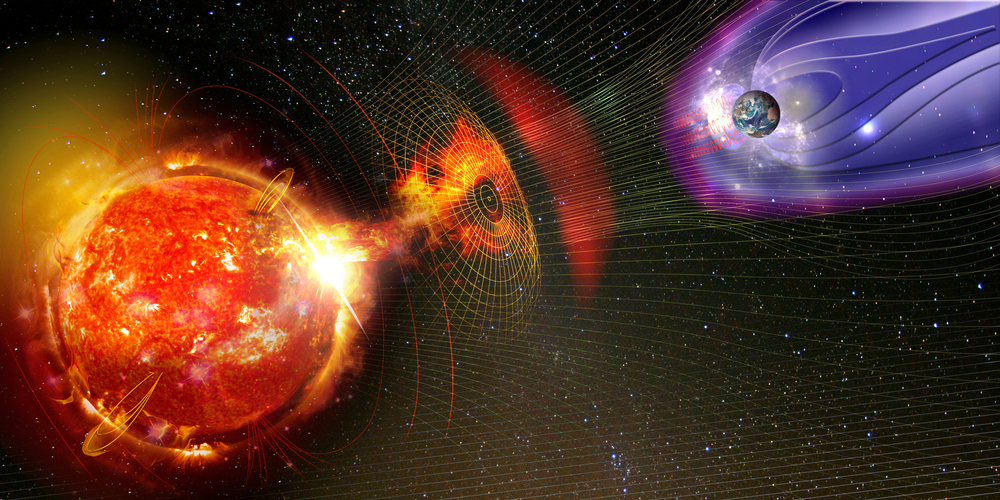
The AMOC is often described as Europe’s central heating system because it transports vast amounts of tropical heat into the North Atlantic. A major slowdown, or eventual collapse, would have consequences that stretch far beyond colder winters in northern Europe.
Climate scientists believe the circulation helps regulate rainfall across large parts of Africa, South America, and Asia. Changes to the system could weaken monsoon seasons that millions of people rely on for agriculture and drinking water. Some regions could experience longer droughts, while others may see heavier rainfall and flooding.
The current also influences hurricane activity in the Atlantic and helps control sea levels along the eastern coast of North America. A weaker AMOC could allow water to pile up along the US East Coast, increasing the risk of coastal flooding even without stronger storms.
Scientists stress that none of these changes would happen overnight. Climate systems evolve over decades. That slow pace, however, can make the danger easier to ignore until the effects become impossible to reverse.
Stefan Rahmstorf of the Potsdam Institute for Climate Impact Research has spent much of his career studying the North Atlantic. His assessment of the risk has changed considerably over time.
“In all other areas in society, we have a very different approach to risk,” Rahmstorf said. “If you want to build a bridge or a nuclear power plant, you accept maybe a one-in-10,000 risk of a bad accident happening. Whereas with the AMOC, I’ve for decades warned that a 5% risk, as we saw it then, is too high. And now we’re talking more like 50% or more.”
His comments reflect a broader debate within the scientific community. There is still no agreement on whether the AMOC will collapse this century, but there is growing concern that the possibility deserves far more attention than it once received.
Other Warning Signs Are Appearing Across the Planet
The AMOC is only one piece of a climate system that appears to be changing on multiple fronts.
Ocean temperatures have reached unprecedented levels in recent years, while Earth’s energy imbalance, the difference between incoming solar energy and outgoing heat, has grown significantly. Scientists use this measurement as one of the clearest indicators of global warming because it shows how much extra heat the planet is storing.
Researchers are still investigating why the imbalance has increased so rapidly.
One possibility is the continued loss of reflective sea ice, which exposes darker ocean water that absorbs more sunlight. Another focuses on changes in cloud cover. Low-lying clouds normally reflect sunlight back into space, helping cool the planet. If those cloud systems become less extensive, even more heat remains trapped.
Phil Duffy, chief scientist at Spark Climate Solutions, said the findings suggest climate models may be underestimating future warming, although more research is needed before drawing firm conclusions.
Meanwhile, sea levels continue rising as oceans warm and expanding water occupies more space. Melting glaciers and ice sheets now contribute more than half of global sea level rise.
Greenland alone has been losing roughly 264 gigatons of ice each year since 2002.
In Antarctica, the Thwaites Glacier, often nicknamed the “Doomsday Glacier,” continues melting at a pace several times faster than it did during the 1990s. Scientists estimate that the glacier already accounts for around 4% of global sea level rise, while also acting as a barrier that slows the loss of even larger inland ice sheets.
Each of these developments reinforces the others.
Warmer oceans accelerate ice melt. Melting ice freshens the North Atlantic. Freshwater weakens the AMOC. Rising temperatures also fuel stronger heatwaves, heavier rainfall, longer droughts, and more destructive wildfires.
Climate change is rarely a single event. It is a network of interconnected systems that influence one another.
Europe’s Recent Heatwave Shows What a Warmer Future Could Look Like
The summer’s deadly European heatwave has offered a stark reminder of how quickly extreme temperatures can overwhelm modern societies.
Germany recorded an all-time national high of 41.7 degrees Celsius, while Poland and the Czech Republic also set new temperature records. Public events were canceled, emergency services came under increasing pressure, and authorities urged people to remain indoors during the hottest parts of the day.
France reported around 1,000 more deaths than expected over several days during the heatwave, with older adults accounting for many of the fatalities.
According to the World Health Organization, more than 1,300 excess deaths across Europe have been linked to the prolonged heat.
Tedros Adhanom Ghebreyesus warned that what were once considered “once-in-a-generation” heatwaves are becoming increasingly common because of climate change.
Heat affects far more than comfort.
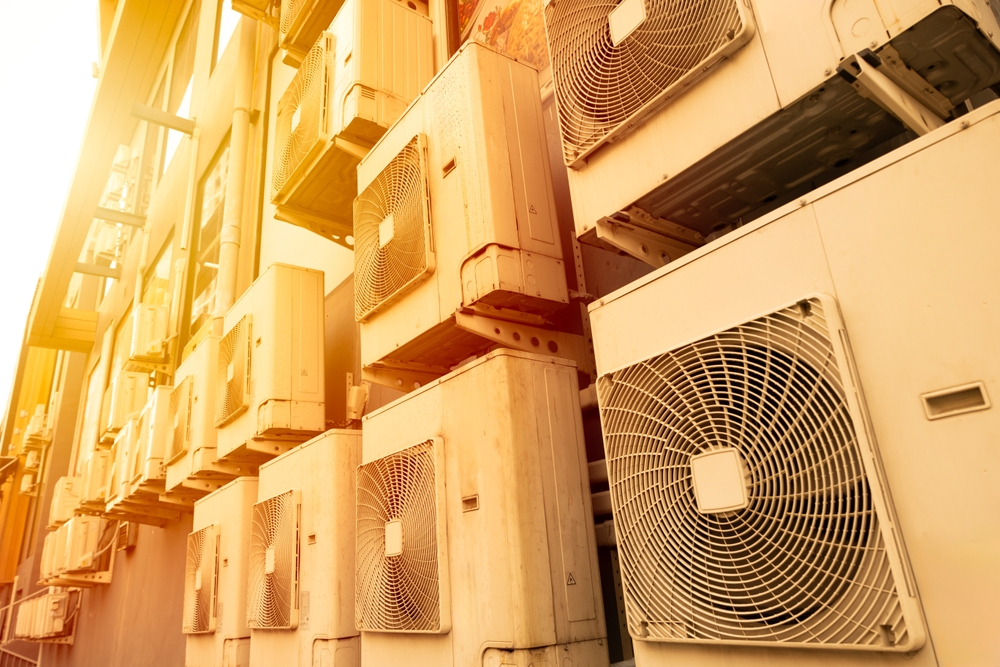
Electricity demand surges as millions rely on air conditioning. Roads and railway lines can buckle under prolonged high temperatures. Crops suffer from heat stress, reducing agricultural yields and placing additional pressure on food supplies. Rivers shrink, limiting shipping and hydropower production.
Scientists increasingly argue that planning for these events can no longer rely on historical averages.
Justin Mankin, a climate scientist at Dartmouth College, said the world is entering a period where communities must prepare for multiple overlapping climate risks instead of isolated disasters.
“That warmer world, where it’s all risk all the time, that transition to that world, that’s what we’re in right now.”
The Energy Transition Offers Hope, But Time Remains Critical
Despite the increasingly grim warnings, scientists emphasize that the future has not been fully written.
Carbon dioxide emissions have remained relatively stable in recent years, and renewable energy continues expanding rapidly around the world.
Solar power accounted for the majority of new electricity generation growth last year, while improvements in battery storage have made renewable electricity more competitive with fossil fuels across many regions.
BloombergNEF projects that solar energy could become the world’s largest source of electricity generation early in the next decade.
Electric vehicles, wind power, battery technology, and heat pumps are also steadily reducing dependence on coal, oil, and natural gas.
The transition, however, is uneven.
Trade disputes, political opposition, and changing government priorities continue slowing progress in several countries. Some governments have rolled back climate initiatives, while others have reduced funding for environmental research just as scientists argue more information is urgently needed.
Researchers say every year of delayed action increases long-term risks.
The AMOC study illustrates that point clearly. Even if uncertainty remains over the exact probabilities, the simulations consistently showed that delaying the move toward net zero raised the likelihood of collapse and shortened the time available before major changes unfolded.
Scientists often describe climate change as a problem measured over centuries. Increasingly, they are warning that many of the decisions shaping those centuries are being made today.
The climate system does not respond instantly to human activity. Carbon dioxide remains in the atmosphere for decades, oceans continue absorbing heat long after emissions occur, and ice sheets take generations to fully respond to rising temperatures.
That delay means today’s choices determine tomorrow’s climate.
The latest research does not conclude that catastrophe is inevitable. It does suggest that the margin for avoiding the most severe outcomes may be narrower than scientists believed only a few years ago.
For decades, climate warnings focused on what future generations might experience. Today, many of those projected impacts are unfolding within a single lifetime, with heat records falling, oceans warming, glaciers retreating, and extreme weather becoming more disruptive across the globe.
Whether the Atlantic’s great ocean conveyor ultimately reaches a tipping point remains uncertain. What is becoming increasingly difficult to dispute is that Earth’s climate is changing faster than many experts expected, leaving governments, businesses, and communities with less time to prepare than they once assumed.