
Your cart is currently empty!
Could an Overactive Thyroid Affect Dark Personality Traits? Scientists Investigate

A racing heart. Sleepless nights. A temper that seems to arrive without warning. Hyperthyroidism has long been linked to physical and emotional symptoms, but a new study has raised a far more uncomfortable question about whether an overactive thyroid could also influence certain darker personality traits.
Contents
show
The answer is nowhere near as simple as the headline might suggest. Researchers studying 154 adults found modest associations between hyperthyroidism and higher scores for traits including manipulation, callousness and sadism. But the study cannot prove that thyroid problems cause personality changes, and the finding involving narcissism was actually the weakest of the four traits examined.
Researchers Studied 154 Adults With Different Thyroid Conditions

Or Maimon and Tal Ben Yaacov of Ashkelon Academic College in Israel recruited 154 adults through online communities and asked participants to report their thyroid status. Forty-nine participants had hyperthyroidism, meaning their thyroid gland was overactive. Fifty-two had hypothyroidism, meaning the gland was underactive, while 53 reported having no thyroid condition. Participants ranged from 18 to 64 years old, although 140 of the 154 participants were women. The research began with a deeply personal connection to the subject. One of the researchers had lived for years with Graves’ disease and chronic hyperthyroidism, experiencing firsthand the psychological and interpersonal effects that can accompany thyroid dysfunction.
The researchers explained that the work was motivated by “one author’s long-standing diagnosis of Graves’ disease and chronic hyperthyroidism, which provided ongoing exposure to the psychological and interpersonal dimensions of thyroid dysfunction.” Graves’ disease is the most common cause of hyperthyroidism, and the National Institute of Diabetes and Digestive and Kidney Diseases lists symptoms including weight loss despite increased appetite, rapid or irregular heartbeat, nervousness, irritability, trouble sleeping, shaky hands and difficulty tolerating heat. Irritability may appear as just one item on a medical checklist, but anyone living with severe mood changes knows how much damage a short fuse can cause inside relationships and daily life.
Participants Answered 28 Questions About Dark Personality Traits

Every participant completed the Short Dark Tetrad, a 28-item questionnaire designed to measure four personality traits: Machiavellianism, narcissism, psychopathy and sadism. The questionnaire uses a five-point scale to assess characteristics associated with manipulation, self-interest, callousness and cruelty. When researchers compared the hyperthyroid group with the hypothyroid group, people with hyperthyroidism scored higher across all four traits. When the same group was compared with participants who reported no thyroid condition, however, only three traits remained statistically significant: Machiavellianism, psychopathy and sadism.
“One notable finding was that associations were observed across multiple dark personality traits rather than being limited to a single dimension,” the researchers said. The findings were published in the journal Current Psychology under the title “Dark personality traits and thyroid dysfunction: a study based on self-reported thyroid hormonal imbalance.” That wording matters because the study examined associations between hormone-related conditions and personality questionnaire scores. It did not establish that an overactive thyroid turns someone manipulative, cruel or psychopathic.
Narcissism Was Actually the Weakest Finding
The most eye-catching word in the headline is also the trait with the weakest support in the study. Participants with hyperthyroidism scored higher for narcissism than those with hypothyroidism, but they did not score meaningfully higher than participants with no thyroid condition. Of all four traits examined, narcissism was the least convincing result. The researchers also stressed that the effects they observed were small. “The effects observed were modest, but statistically significant,” they wrote. That leaves a huge gap between finding a statistical association and claiming that a medical condition can rewrite someone’s personality.
The word “common” also needs context. About 1 in 100 Americans aged 12 and over have hyperthyroidism, according to available health estimates. Hypothyroidism is considerably more common, yet it was not the group associated with the same pattern of dark personality scores. The findings therefore point toward an interesting possibility rather than a dramatic diagnosis. A person with hyperthyroidism has not suddenly undergone a personality transplant. The study only suggests that hormone imbalance may be associated with subtle differences in how some people report certain personality traits.
Thyroid Hormones Can Affect the Brain Quickly
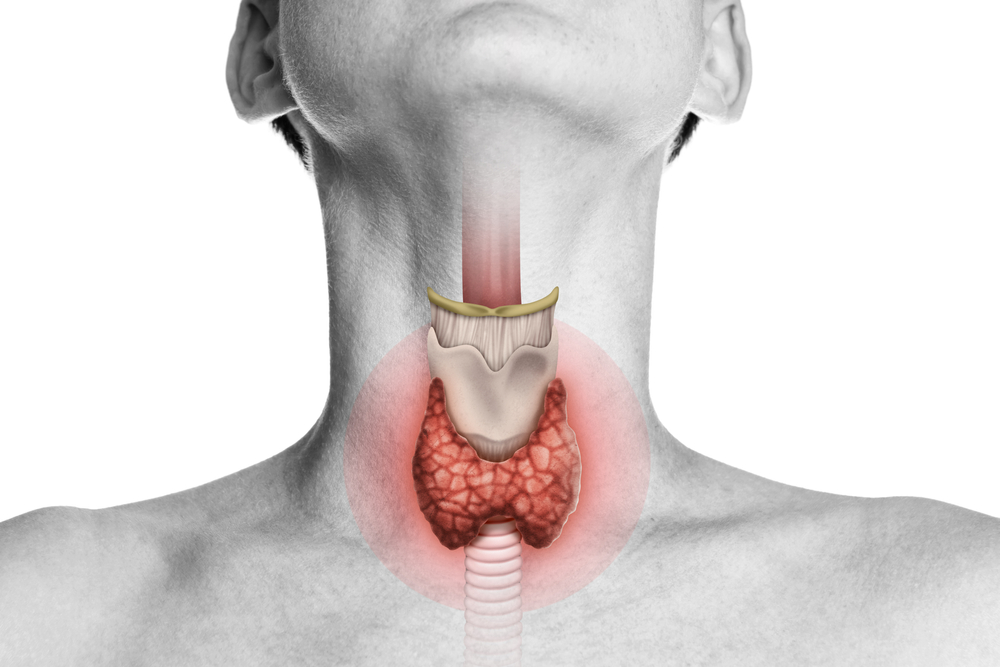
The thyroid may be located in the neck, but its hormones affect far more than metabolism. A 2023 review in Frontiers in Endocrinology by Joseph V. Martin of Rutgers University and Pradip K. Sarkar of Parker University found that thyroid hormones and their derivatives bind specifically to several major receptor systems, including GABAergic, catecholaminergic, glutamatergic, serotonergic and cholinergic systems. These systems play major roles in mood, reward, arousal and impulse control. That biological reach has led scientists to investigate whether thyroid dysfunction could influence behaviour in ways that extend beyond the familiar symptoms of anxiety or fatigue.
The speed of those effects is another reason researchers are interested. When thyroid hormones act through genetic mechanisms, changes can take one to two days. Other effects can occur over seconds or hours. Martin and Sarkar concluded that thyroid hormones “satisfy most, but not all, of the criteria for definition as neurotransmitters.” One possible explanation for the personality findings is that excessive thyroid hormone pushes the body into a heightened state of arousal, making emotional reactions and impulses harder to regulate. That remains a proposed explanation rather than a proven mechanism. Researchers have identified the association, but nobody has demonstrated a direct pathway from an overactive thyroid to dark personality traits.
Under-active Thyroids Produced a Very Different Pattern

When the thyroid slows down, the psychological picture may look very different. The E-MPATHY international patient survey, published in the Journal of Clinical Endocrinology & Metabolism in April 2024, gathered valid personality data from 3,523 people with hypothyroidism across 68 countries. Researchers were not searching for dark personality traits. Instead, they examined Type D personality, described in the study as “a predisposition to pessimism, worry, stress, negative affectivity (NA), and social inhibition (SI).” The results suggested a markedly higher prevalence of these traits among participants with hypothyroidism.
The study found a prevalence of 54.2%, compared with a world-population estimate of 21% to 38.5% cited in the paper. That creates an interesting contrast between the two studies. Hyperthyroidism was associated with higher scores for traits linked to antagonism and callousness, while hypothyroidism was associated with distress, pessimism and social withdrawal. These findings do not mean thyroid conditions create fixed personality types. They do suggest that hormone imbalance may affect emotional experience and behaviour in different ways depending on whether the thyroid is overactive or underactive.
A Hormone Problem Is Not a Personality Verdict

Maimon and Ben Yaacov did not present their findings as a judgement on people living with thyroid conditions. “The main takeaway is to raise awareness that thyroid hormonal imbalance may affect not only emotional well-being, but also the way people think and process information, as well as how individuals think, feel, and interact with others,” they said. The researchers are continuing to explore the relationship between thyroid dysfunction, mental health and personality, which could help scientists better understand how physical health and psychological experience overlap.
A hormone can influence a racing heart, a sleepless night or a sudden burst of irritability. That does not mean it defines the person experiencing those symptoms. For families who have spent years struggling to understand unexplained mood or behavioural changes, the thyroid may be one medical factor worth checking. A simple blood test can reveal whether the gland is functioning normally, and that is a far more useful takeaway than trying to turn a complex medical condition into a personality label.
Sources:
- Perros, P., Nagy, E. V., Papini, E., Abad-Madroñero, J., Lakwijk, P., Poots, A. J., Mols, F., & Hegedüs, L. (2024). Hypothyroidism and Type D personality: results from E-MPATHY, a cross-sectional international online patient survey. The Journal of Clinical Endocrinology & Metabolism, 110(1), e97–e108. https://doi.org/10.1210/clinem/dgae140
- Hyperthyroidism (Overactive thyroid). (2025, October 7). National Institute of Diabetes and Digestive and Kidney Diseases. https://www.niddk.nih.gov/health-information/endocrine-diseases/hyperthyroidism
- Martin, J. V., & Sarkar, P. K. (2023). Nongenomic roles of thyroid hormones and their derivatives in adult brain: are these compounds putative neurotransmitters? Frontiers in Endocrinology, 14, 1210540. https://doi.org/10.3389/fendo.2023.1210540