
Your cart is currently empty!
Crows Are Among the Smartest Animals on Earth. Here Is How to Make Friends With One in Four Steps
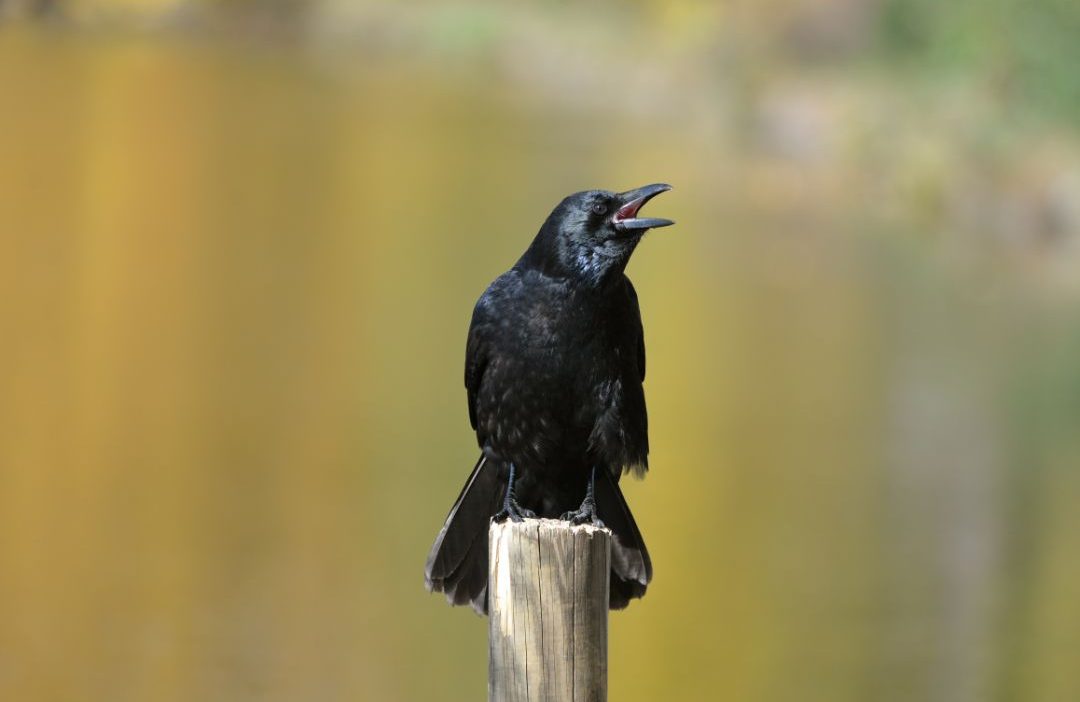
Most people walk past crows without a second glance. A black bird on a fence post or a pair of them picking through a parking lot rarely inspires much feeling beyond mild indifference. Yet scientists who study animal cognition have spent years making a quietly compelling case that the crow perched outside your window may be paying far closer attention to you than you are to it. What they have found about these birds challenges most assumptions people carry about avian intelligence, and it raises a question that not many have thought to ask. Can you actually become friends with one?
Contents
show
A YouTube creator named Alexandra, based in Germany, answered that question more than a decade ago, not in a laboratory or a wildlife sanctuary, but in her own backyard. Her story, and the four-step method she has since shared with a wide online audience, offers a rare window into what a genuine relationship between a human and a wild crow can look like. Before getting to the steps, though, it helps to understand exactly what kind of animal you would be dealing with.
Why Crows Deserve Far More Credit Than They Get
Most birds operate on instinct in ways that keep them alive but do not suggest much is going on beneath the feathers. Crows are different in ways that researchers have spent considerable effort documenting. Studies have placed them among the most cognitively capable animals outside of primates, and the list of what they can do reads less like bird behavior and more like a checklist of traits we tend to associate with mammals.
Crows can recognize individual human faces and retain those memories for years. They distinguish between people they trust and people who have wronged them, and they pass those judgments along to other crows in their group. They can use tools, a skill that for a long time was thought to mark a meaningful cognitive boundary between humans and other species. Some crows have even shown the ability to mimic human speech. Add to that a documented sense of self-awareness and a curiosity that draws them toward novelty rather than away from it, and what emerges is a portrait of a creature that is watching the world around it with genuine attention and retaining what it sees.
Knowing this makes Alexandra’s decade-long friendship with a crow named Krari feel less like an eccentric hobby and more like the logical result of a sustained, respectful effort to meet a highly intelligent animal on its own terms.
A Friendship That Has Lasted Over a Decade
Alexandra started feeding and interacting with Krari years ago, and what began as occasional contact has grown into something far more layered. Krari and other crows from the same social group now visit Alexandra’s home on a regular basis, and they bring their young along too. “They come here to get food, to play, or just hang out with me and relax,” Alexandra explains in an introductory video on her YouTube channel. Krari and her companions are, by Alexandra’s own description, considered part of the family.
What makes this account worth paying attention to is not just the warmth of it but the fact that Alexandra has been consistent over years rather than months. Crows, as the science confirms, respond to reliability. A person who shows up at the same time, in the same place, with food and calm body language, is a person worth knowing in a crow’s assessment of the world. Alexandra’s relationship with Krari is the long-term proof of that principle in action.
For anyone curious about replicating even a fraction of what she has built, she has laid out a clear process. It takes four steps, some food, and a willingness to let the bird move at its own pace.
Step One. Find a Pair With a Fixed Territory
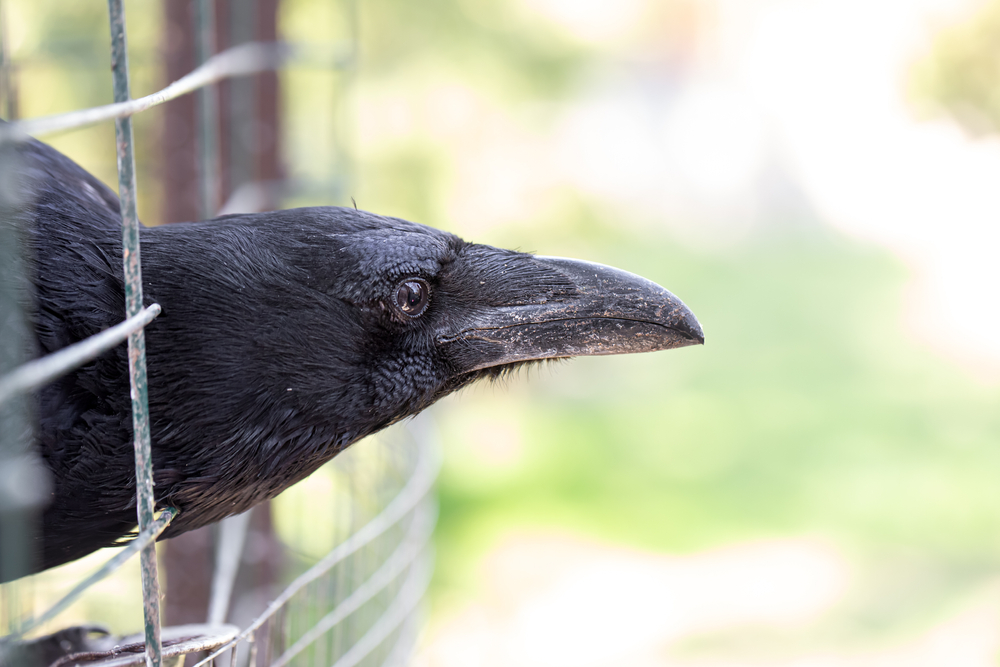
Crows tend to settle in areas where humans already live, which means most neighborhoods already have a local pair nearby. Rather than approaching random crows in different locations, the goal at the start is to identify a bonded pair that occupies a fixed territory and appears regularly in the same general area. Establishing contact with the same birds day after day allows both sides to “slowly get to know each other,” as Alexandra puts it, rather than treating every interaction as a first meeting.
Consistency at this stage is less about technique and more about showing up. A crow that sees the same person in the same spot over a period of weeks begins to build a mental file on that individual. Familiarity, even before food enters the picture, starts laying the groundwork for what comes next.
Step Two. Offer Food at the Same Time and Place Every Day
Crows are not fussy eaters. Their diet in the wild takes in insects, invertebrates, meat, nuts, worms, and vegetables, which makes it easy to offer something appealing without much preparation. Placing food in the same spot at the same time each day does something more useful than just feeding a bird. It trains the crow to anticipate your arrival, and anticipation is what converts a passing interest into a habit of returning.
Routine matters here in a way that goes beyond simple conditioning. A crow that knows food appears at a certain hour in a certain corner of the yard starts to associate that place, and the person responsible for it, with something worth checking on. Over time, the visit becomes about more than hunger.
Step Three. Read the Bird Before You Move
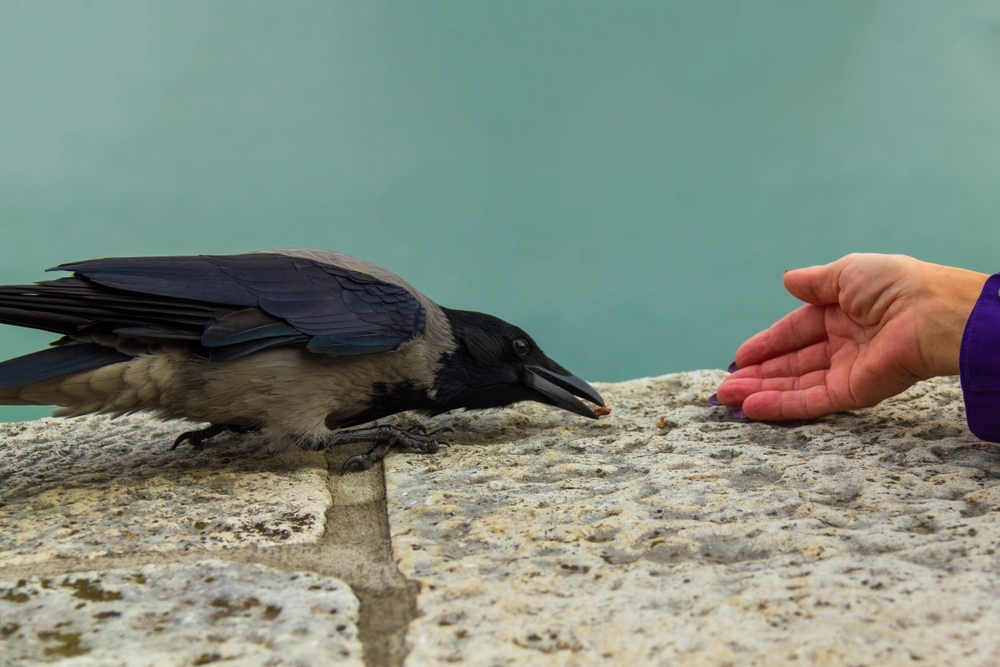
Food alone does not build a relationship. How you conduct yourself during each visit carries at least as much weight. Before approaching or attempting to get closer, watch the crow for signs of anxiety. A bird that looks tense, keeps shifting its weight, or holds its body in a way that suggests it could bolt at any moment is not ready for closer contact.
Approach with an open, indirect gaze rather than staring directly at the bird, since direct eye contact can register as a threat in crow behavior. Move without sudden shifts in direction or speed. Sit quietly while the crow takes its time observing you, and resist the impulse to push the interaction faster than the bird allows. Patience at this stage is not passive. It is a form of communication that tells the crow you are safe to be around.
Step Four. Give the Crow Time to Cross the Distance
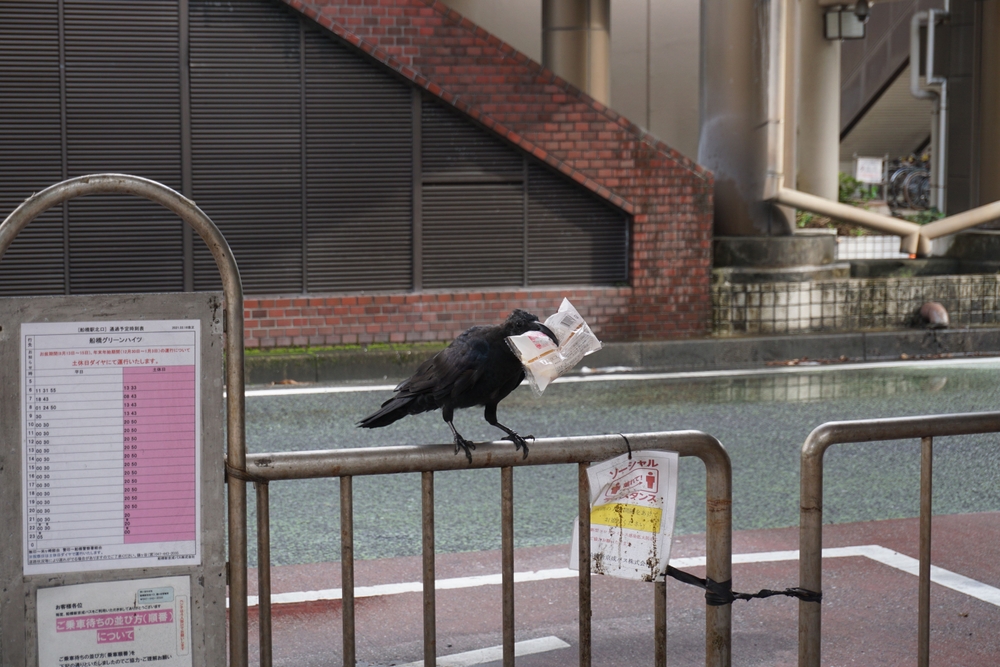
At some point, if the first three steps have gone well, the crow will begin to close the gap on its own terms. How long that takes varies, and no shortcut reliably speeds up the process. What helps is understanding what is happening from the bird’s point of view.
Crows study the people in their environment with a level of attention that most humans never apply to birds. They note faces, read body language, and track behavior across repeated encounters. Research has found that crows can hold memories of individual humans for up to 17 years, carrying both positive and negative associations for much longer than most people would expect. When a crow finally does move toward a person it has been observing, it is not acting on impulse. It is acting on accumulated evidence that the person in question can be trusted.
That context turns patience from a frustrating waiting game into something more meaningful. Every quiet morning spent sitting in the same spot with a small pile of food is another data point in the crow’s ongoing assessment of you.
One Reminder Worth Carrying Through the Process
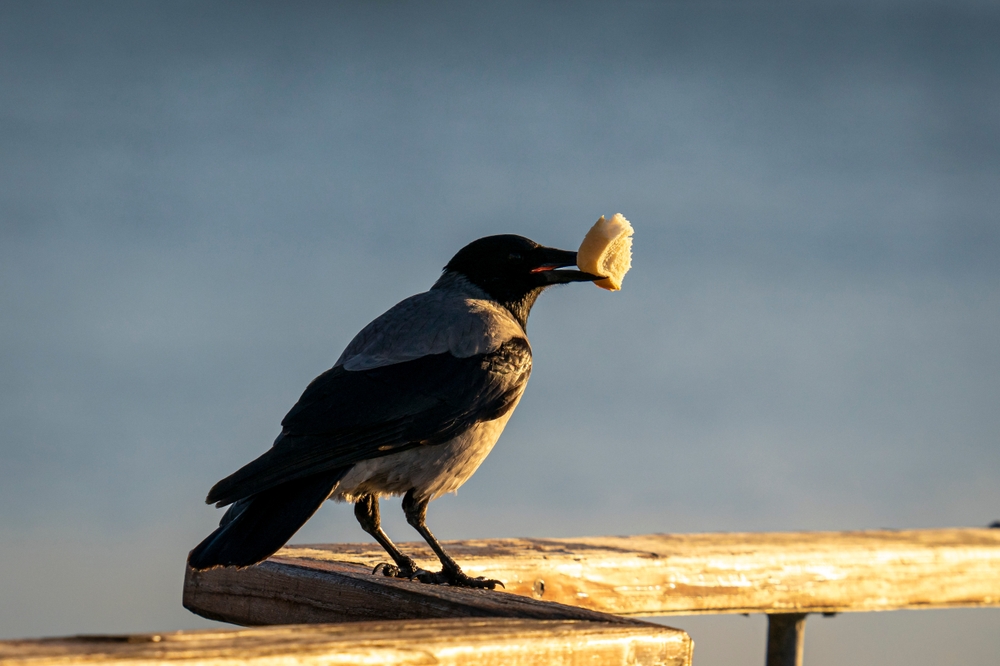
Alexandra closes her video with a message that reframes the whole endeavor. “I hope this helps you build a relationship with these fascinating birds,” she says. “They are loyal friends and have brought much joy into my life. Please let birds have their freedom. They do not belong in homes or other forms of captivity.”
Befriending a crow and keeping one are not the same thing, and for anyone who has absorbed the science of what makes these birds so worth knowing, that distinction should feel natural. A crow that chooses to return to your yard, to bring its offspring, to pick through the food you leave out, and occasionally sit nearby long after the food is gone, is doing so freely. That freedom is what gives the relationship its weight. A bird of that intelligence confined to a cage is a different situation entirely, and not one that the bird’s cognitive life can thrive within.
What a Friendship With a Crow Actually Looks Like
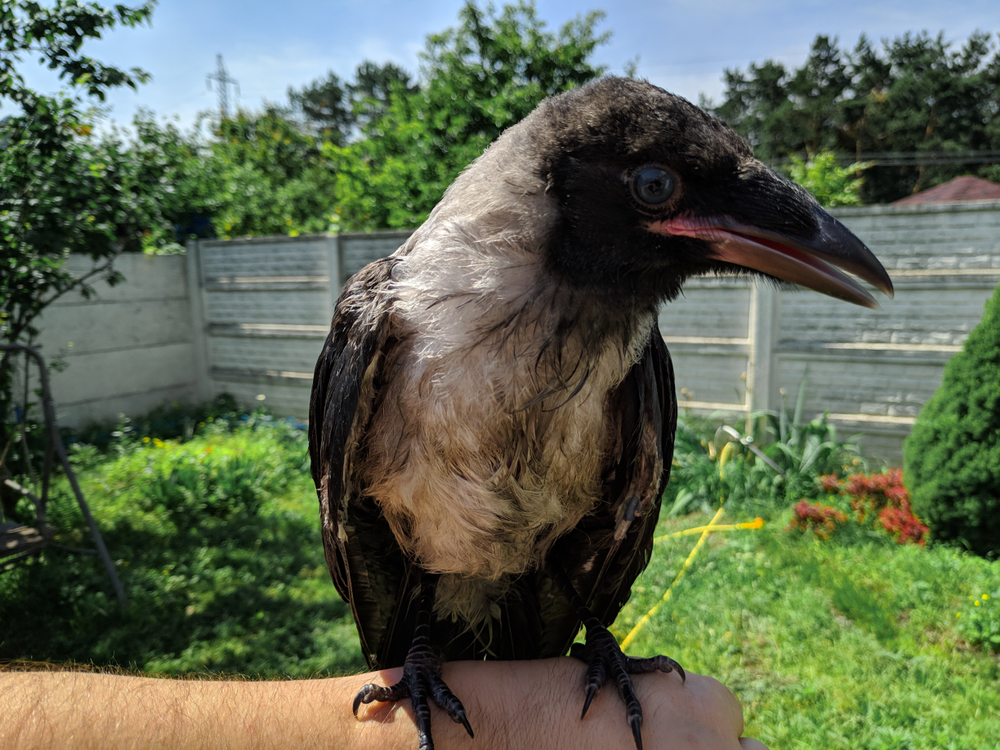
Alexandra and Krari offer the clearest available answer to that question. Visits that carry social meaning beyond hunger, young crows brought along to meet a trusted human, a relationship that has held steady for over a decade without a cage or a leash or any kind of formal arrangement. What holds it together is consistency, respect for the bird’s autonomy, and a genuine appreciation for what crows bring to any interaction they choose to enter.
For anyone willing to put in the time, a crow in the neighborhood is not just a bird on a fence post. It is a highly attentive, long-memoried creature that may already be watching you more carefully than you realize. All you have to do is give it a reason to keep coming back.
Alexandra crow YouTube, animal behavior, animal cognition, animal intelligence, backyard birds, bird behavior, bird feeding tips, birds and humans, corvids, crow and human friendship, crow facts, crow intelligence, crow memory, crow watching, crows, how to befriend a crow, Krari the crow, nature and wildlife, smart animals, wild birds