
Your cart is currently empty!
Dad Who Copied His Daughters Selfies Ended Up Becoming More Famous Than Her

A father trying to make a point about his daughter’s social media habits probably never imagined he would become an online celebrity himself. Yet that is exactly what happened when Chris “Burr” Martin began recreating his daughter Cassie’s selfies, complete with matching poses, outfits, expressions, and even hand-drawn tattoos. What started as a playful parenting experiment soon exploded across the internet, earning him hundreds of thousands of followers and transforming an ordinary family joke into one of social media’s most memorable viral stories.
Contents
show
The images were impossible to ignore. There was a middle-aged father squeezing into tank tops, puckering his lips for the camera, sporting fake belly-button piercings, and carefully recreating every detail of his daughter’s glamorous Instagram photos. While millions laughed at the side-by-side comparisons, the story sparked a much larger conversation about parenting, social media, online attention, and the fine line between humor and criticism.
A Father’s Unusual Way Of Making A Point
Chris Martin, better known online as Burr Martin, was never trying to become famous.
The Spokane, Washington, warehouse inventory worker had only a handful of Instagram followers before one particular photo of his daughter caught his attention. Cassie, then 19 years old, had posted another carefully posed selfie online. Like many teenagers and young adults, she enjoyed sharing photos of herself on social media.
What concerned Martin was not necessarily the picture itself but the type of attention it attracted.
He noticed that some of the comments left by young men were becoming increasingly crude. Rather than confronting strangers online or demanding that his daughter stop posting altogether, he decided on a completely different strategy.
Instead of telling her what not to do, he would simply copy her.
The result was equal parts ridiculous and brilliant.
Martin recreated her pose as closely as possible, matching facial expressions, camera angles, clothing, hairstyles, and even accessories whenever he could. If Cassie showed off a tattoo, he drew one on himself. If she wore a crop top, he found something similar. If she tilted her head a certain way, he mirrored every movement.
He uploaded the parody online with a caption that immediately caught people’s attention.
“So my daughter has been posting sexy selfies of herself and instead of telling her to stop, well, I thought of something better.”
The internet instantly understood the joke.
Every Recreation Became More Elaborate

What began as a single parody soon became an ongoing series.
Each new selfie posted by Cassie presented Martin with another creative challenge.
Sometimes he used washable markers to recreate tattoos.
Other times he taped on fake eyebrows, wore wigs, or added homemade props to complete the illusion.
One recreation featured Martin copying a selfie where Cassie rested her hand beneath her chin while showing off a hammerhead shark tattoo.
Rather than drawing an identical shark, he sketched Jabberjaw, the classic Hanna-Barbera cartoon shark from his own childhood.
It became one of his personal favorites.
“I did the same thing, but drew Jabberjaw from the Hanna-Barbera cartoons,” Martin later recalled while discussing the photo.
Another image required significantly more effort.
Martin recreated one of Cassie’s white tank top selfies, carefully drawing tattoos onto his own arms while trying not to laugh at himself in the bathroom mirror.
The process took nearly an hour.
He later admitted that every time he looked at himself, he would burst into laughter. His wife would laugh too, forcing both of them to stop repeatedly before he could finally finish preparing for the photograph.
The absurd commitment only made the series more entertaining.
Rather than posting low-effort copies, Martin invested time into making each recreation as accurate and ridiculous as possible.
That attention to detail became part of the appeal.
Cassie Was In On The Joke

One reason the series resonated with so many people was that it never appeared mean-spirited.
Cassie quickly embraced her father’s unusual sense of humor.
Rather than feeling embarrassed, she admitted she always knew there was a chance any new selfie could become his next target.
“Whenever I post a new selfie, I know there’s a chance he’s going to imitate it,” she explained.
Instead of asking for permission beforehand, Martin preferred surprising her.
He would recreate the image in secret before posting it directly onto her social media pages.
The unexpected reveal became part of their routine.
Cassie said one of the funniest parts was seeing the leftover evidence afterward.
“Probably the funniest thing is when he draws on a tattoo and it’s still there the next day because he couldn’t remove it.”
Their playful relationship helped separate the story from genuine online harassment.
Friends and followers could see that father and daughter were laughing together rather than laughing at one another.
That distinction became important as the story reached a much larger audience.
The Internet Couldn’t Get Enough

Social media users immediately embraced the unusual father-daughter dynamic.
Photos spread rapidly across Facebook, Reddit, Twitter, Instagram, and entertainment websites around the world.
Within weeks, Martin’s following exploded.
Before the viral series, his Instagram account had attracted only a small audience.
Soon he had tens of thousands of followers.
Then the number climbed into the hundreds of thousands.
Ironically, the father parodying selfies ended up becoming more popular online than the daughter whose photos inspired the joke.
At one stage, Martin had nearly twice as many followers as Cassie.
He later joked that people simply preferred comedy over glamour.
“Cassie reminds me of it every chance she gets,” he said. “I guess people prefer funny over pretty.”
His growing audience also meant opportunities he had never expected.
Television producers invited the family for interviews.
Major news organizations covered the story.
Entertainment websites featured his latest recreations almost every time he uploaded one.
What started as a private joke inside one family had become global entertainment.
The Message Behind The Comedy

Although millions focused on the humor, Martin repeatedly explained there had been another reason behind the photos.
He believed many teenagers felt pressured to present idealized versions of themselves online.
“I thought, ‘Wow, that should be toned down,’” he said when describing the original selfie that inspired the project.
He also expressed concern about the cycle many young people experience on social media.
“There’s too much pressure for everybody to look sexy on the Internet.”
According to Martin, many teenagers post revealing or attention-grabbing photos seeking validation, only to receive inappropriate comments that leave them uncomfortable afterward.
Instead of starting another argument about social media, he hoped comedy would make his point more effectively.
He later explained his thinking.
“Teenage girls are always posting these selfies to boost their egos, then they’ll get crude comments and regret it. But what do they do? They post again. So I thought, ‘OK, I’m going to make a point here.’”
Rather than policing every post, Martin wanted Cassie to think more carefully about the long-term impact of sharing certain images online.
His approach certainly sparked conversation, even if not everyone agreed with his methods.
A Viral Joke That Sparked A Real Debate
As Martin’s follower count continued to climb, so did the conversation surrounding his unusual parenting tactic.
Many people praised him for finding a creative way to address an issue that countless parents struggle with. Rather than grounding his daughter or demanding she delete her social media accounts, he used humor to open a discussion about online attention and the permanence of internet posts.
Others, however, saw the situation very differently.
Critics argued that publicly recreating Cassie’s photos risked embarrassing her, regardless of her willingness to laugh along. Some questioned whether the series crossed the line into shaming young women for expressing themselves online.
When the story spread across Facebook and other social media platforms, thousands of comments poured in from people taking sides.
One commenter argued that Martin was mocking his daughter instead of supporting her, writing that it encouraged others to laugh at her as well. Another described the stunt as a form of bullying rather than parenting.
Supporters pushed back just as strongly.
Many pointed out that Cassie herself had repeatedly said she found the recreations funny and never asked her father to stop. Others noted that their playful relationship was obvious in interviews, making it difficult to compare the situation to genuine online harassment.
Some even suggested the family had discovered the perfect recipe for internet success, combining comedy, relatable parenting, and social media culture into content that people could not resist sharing.
The debate became almost as popular as the photos themselves.

Cassie Said The Experience Changed Her Perspective
While opinions online remained divided, the person at the center of the story maintained that her father’s experiment had made a positive difference.
Cassie acknowledged that his recreations encouraged her to think more carefully before posting certain pictures.
“I do think a little more about which photos I post now because I know certain photos can never be erased on the internet and certain people will see it,” she explained.
That did not mean she stopped sharing selfies altogether.
Instead, she became more aware of the audience beyond friends and classmates.
Martin believed his original goal had been accomplished.
“Cassie has toned down her own selfies a little bit,” he said. “She’s now more aware of the impact of them.”
He also recognized that, as an adult, his daughter ultimately had the right to make her own decisions.
“She’s over 18 so she could do what she wanted to a point,” he explained. “But also, fighting with some of the commenters over the Internet would have been a crazy thing to do.”
Comedy, in his view, proved far more effective than confrontation.
Cassie also emphasized that her father’s personality had always blended humor with parenting.
“I think some parents should tie in some comedy with their opinions on certain life choices their kids make, but understand your child first before doing it,” she said.
Her final point resonated with many readers.
“Different families have different ways to express their voices.”
Fame Brought Unexpected Moments
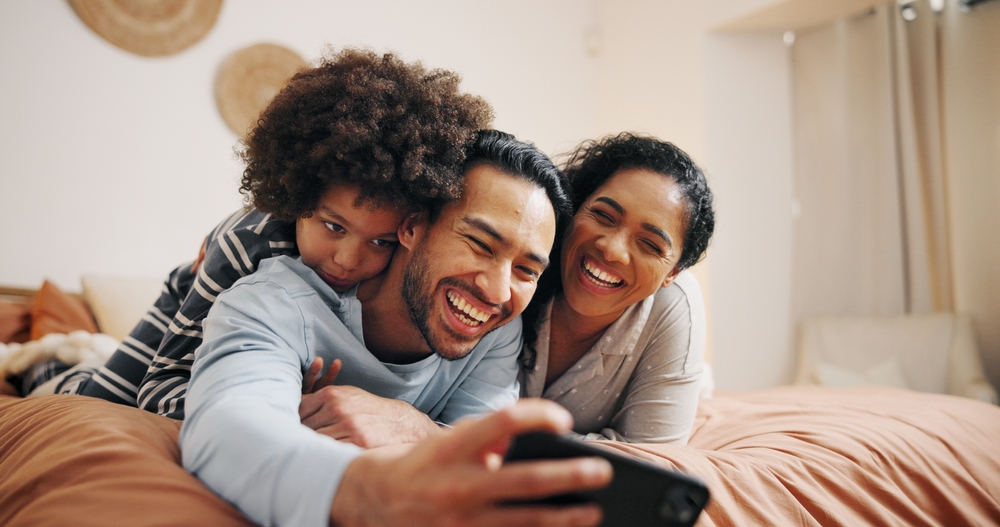
Neither Martin nor his family expected the series to travel far beyond their hometown.
Instead, the viral attention opened doors they had never imagined.
Television appearances followed.
National and international news outlets requested interviews.
Entertainment websites regularly featured Martin’s latest recreations whenever a new one appeared online.
Even simple trips around Spokane became noticeably different.
People who recognized Cassie would often stop her while shopping or at the movies.
“They’ll approach me and say, ‘Are you that girl? The girl with the funny selfie dad?’” she recalled.
Once she confirmed who she was, the reactions were almost always the same.
“They always start laughing.”
Martin experienced similar encounters, discovering that people connected with the series for reasons far beyond comedy.
One message came from a mother raising a daughter with autism.
She explained that they eagerly waited for each new photo because it brightened their day and gave them something to laugh about together.
Another message had an even greater emotional impact.
A grieving father wrote to Martin after losing his own daughter, explaining that the parody selfies had made him laugh for the first time since her death.
For Martin, those responses changed how he viewed the project.
“It was wonderful to know that this was ringing deeper than just a stupid thing that I did.”
The messages reminded him that sometimes even lighthearted internet content can provide comfort during difficult moments.
More Than Just A Social Media Gimmick
The popularity of Martin’s recreations also reflected something much larger about the culture of social media.
Platforms like Instagram encourage carefully curated images where appearance often becomes the primary measure of success.
Filters, editing apps, trending poses, and perfectly staged photographs have become routine for millions of users.
Martin’s parody worked because it disrupted that polished image.
Seeing a middle-aged father enthusiastically recreating glamorous poses exposed just how performative many online trends can become.
His photos encouraged people to laugh not only at the recreations but also at the increasingly familiar language of influencer culture.
At the same time, the series highlighted an uncomfortable reality many parents recognize.
Young people today are growing up in a world where every photo has the potential to be shared far beyond its intended audience.
Comments from strangers, viral exposure, and permanent digital footprints are challenges previous generations never experienced as teenagers.
Martin never claimed to have all the answers.
His approach happened to work because it matched his family’s sense of humor and because Cassie understood exactly what he was trying to accomplish.
The story was never presented as a parenting guide.
Instead, it became an example of how one family navigated a modern challenge in their own distinctive way.

Their Bond Became Stronger
One of the biggest surprises was how much the experience strengthened the relationship between father and daughter.
Martin’s wife, Jani, admitted she had been stunned by the attention the family received.
Yet she also noticed something unexpected.
“I’m glad it happened though because now they spend more time together.”
Their youngest daughter, Taylor, agreed.
“I think it’s really funny how a dad and daughter could bond by selfies.”
Even Cassie eventually turned the tables.
For Father’s Day, she recreated one of her dad’s own selfies, copying a photograph of him dressed as an X-Wing pilot from Star Wars.
Only after trying it herself did she fully appreciate the effort involved.
Matching another person’s smile, pose, camera angle, and expression proved far more difficult than it looked.
Martin joked that she finally understood how much work went into making fun of him.
The exchange perfectly summed up their relationship.
What began as a father trying to make a point had evolved into an inside joke that both of them could enjoy.
The Internet Still Remembers “Selfie Dad”
Years after the first parody photos appeared online, Chris “Burr” Martin remains one of the internet’s most recognizable viral dads.
His follower count eventually dwarfed the audience he had before posting that first recreation, proving that authenticity and humor can sometimes outperform carefully curated perfection.
The story continues to resurface because it taps into something familiar. Parents worry about social media. Young adults seek approval online. Families tease one another in ways that outsiders may not always understand. Martin simply combined all three in a way that captured millions of people’s attention.
Whether viewers saw his recreations as clever parenting, harmless comedy, or something more controversial, one fact remains difficult to dispute.
A father trying to protect his daughter from the stranger-filled world of social media accidentally became one of its biggest stars, all by doing his best impression of the person he was trying to look out for.