
Your cart is currently empty!
A Country Disappearing Beneath Rising Oceans
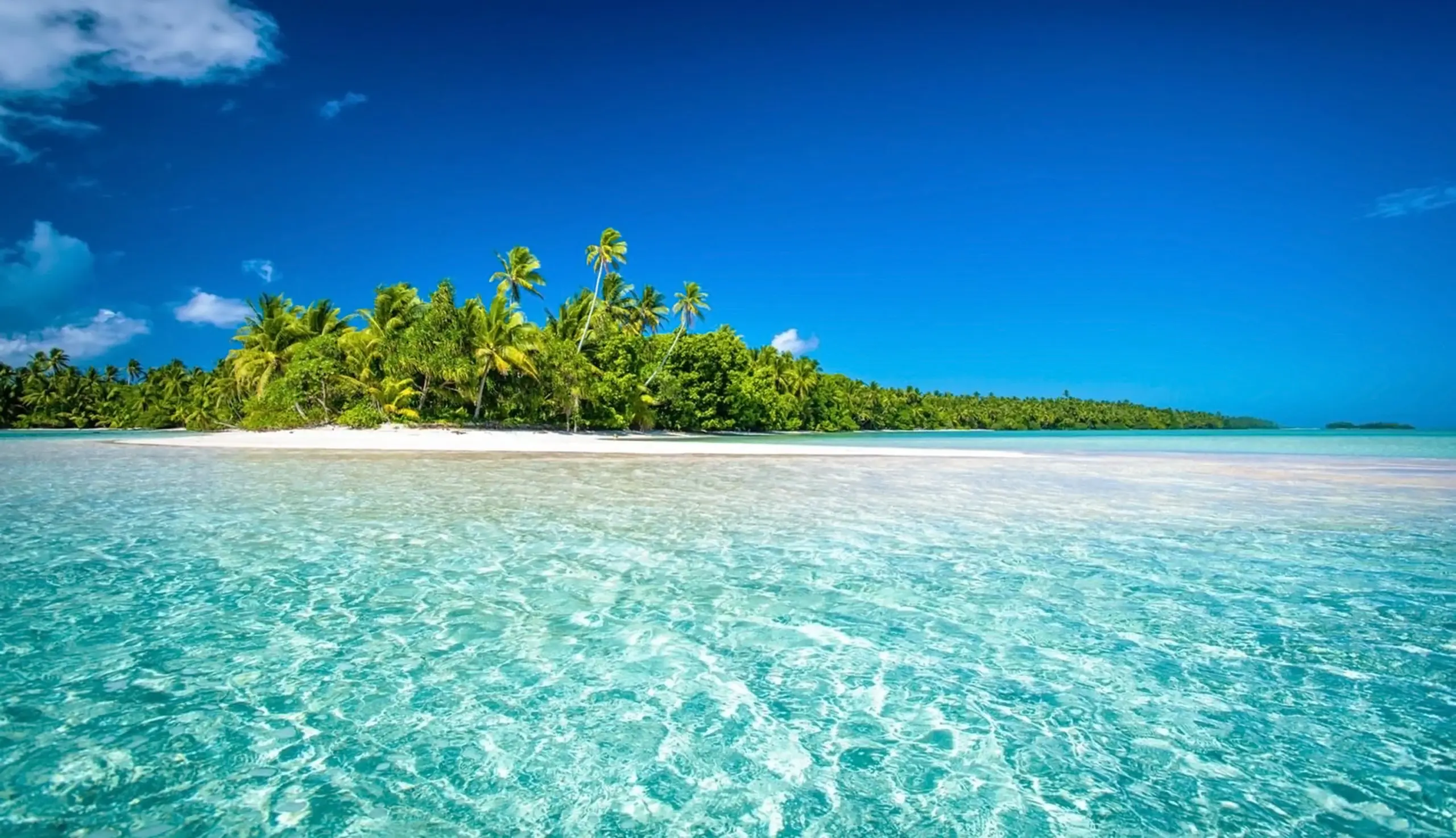
On a scattering of coral atolls in the middle of the Pacific Ocean, life still unfolds in familiar rhythms. Children walk to school along narrow roads edged by palm trees. Fishing boats leave shallow lagoons at dawn. Church services fill the humid air with song on Sundays. From a distance, Tuvalu looks like a postcard.
Contents
show
But beneath that calm surface, the country is confronting a reality unlike any faced by a sovereign state in modern history. Rising seas, intensifying storms, and creeping saltwater intrusion are steadily reshaping the land. Scientific projections suggest that by 2050, much of Tuvalu could become uninhabitable. For its 11,000 residents, the future is no longer just about adapting to climate change. It may mean leaving their homeland behind.
This is not a disaster movie script. It is a slow unfolding process already underway.
A Nation Only a Few Feet Above the Sea
Tuvalu is one of the smallest and most remote countries in the world. Spread across nine low lying islands between Australia and Hawaii, its average elevation is roughly two meters above sea level. In some places, the land is only a few hundred meters wide. There is no high ground to retreat to. No inland hills waiting to absorb rising tides.
According to NASA’s Sea Level Change team, sea levels around Tuvalu have risen approximately 15 centimeters compared with the average of the previous three decades. On paper, 15 centimeters may sound insignificant. In daily life, it has profound consequences.
High tides now push further inland. Storm surges flood roads, homes, and the airport runway more frequently. Saltwater seeps into freshwater wells, damaging crops and contaminating drinking supplies.
As oceans warm and expand, and as polar ice continues to melt, the baseline from which waves and storms strike grows higher.
Scientists have warned for years that small island states are on the frontline of climate change. Tuvalu represents an extreme case because its entire territory is low lying coral atolls. When sea levels rise, there is no internal migration option. The threat is national in scale.
The United Nations has reported that rising sea levels already affect around one billion people globally. Coastal flooding could endanger more than 70 million people in the coming decades. For many regions, adaptation may involve stronger sea walls or improved drainage. For Tuvalu, adaptation has limits.
When Climate Change Becomes an Existential Threat
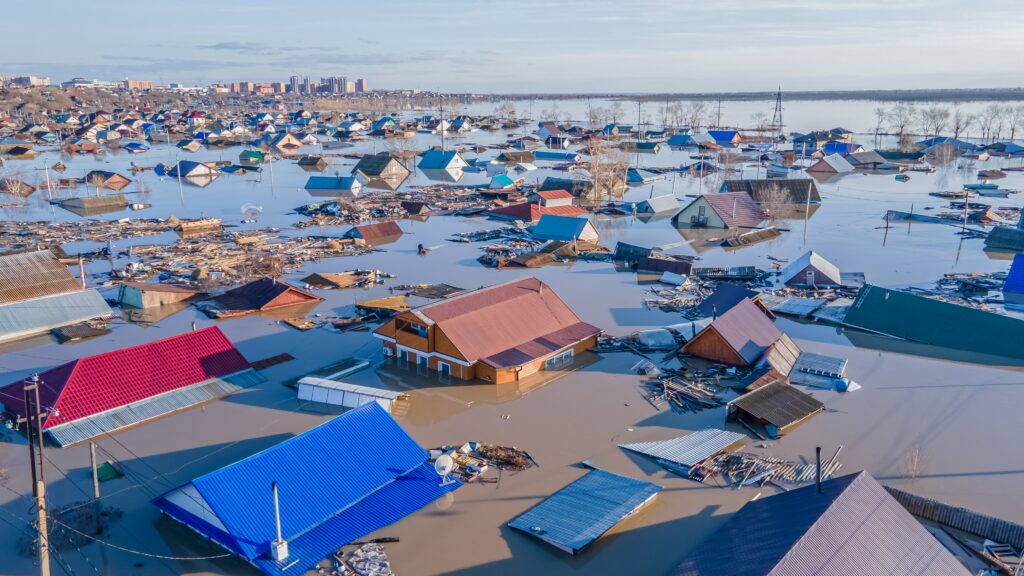
The Prime Minister of Tuvalu, Feleti Teo, has described climate change as an existential threat not of the country’s making. Tuvalu’s contribution to global greenhouse gas emissions is negligible. Yet its exposure to the consequences is immense.
The phrase existential threat is often used loosely in political speeches. In Tuvalu’s case, it is literal. International law traditionally defines a state through three elements: a permanent population, a defined territory, and a government. If territory becomes uninhabitable or submerged, what happens to statehood?
These are no longer abstract legal debates. Tuvalu’s leaders are working to secure recognition that its maritime boundaries and exclusive economic zone should remain fixed even if coastlines shift. Fishing rights in the Pacific are economically vital. Losing control over those waters would compound the crisis.
At the same time, the physical impacts intensify. Heavy storms fueled by warmer ocean temperatures hit with greater force. Coastal erosion eats away at shorelines. Burial grounds and ancestral sites, often located close to the water, are at risk. For a deeply communal society where identity is intertwined with land and lineage, this erosion carries emotional weight that cannot be measured in centimeters.
Climate change in Tuvalu is not a distant forecast. It is visible in flooded gardens, damaged homes, and the steady narrowing of beaches that once seemed endless.
The Falepili Union and the First Climate Visa of Its Kind

In 2023, Tuvalu and Australia signed the Falepili Union Treaty. The agreement marked a historic development in climate diplomacy. For the first time, a formal pathway was established for citizens of a country threatened by climate change to migrate gradually and legally to another nation.
Under the treaty, up to 280 Tuvaluans per year can settle permanently in Australia through a dedicated visa program. Those selected gain access to healthcare, education, housing, and employment opportunities comparable to other permanent residents. The program operates through a ballot system intended to ensure fairness.
The level of interest revealed both urgency and uncertainty. During the first application phase, around 8,750 registrations were recorded, including family members of primary applicants. That number represents a significant share of the total population.
For some families, the decision to apply is driven by concern for children’s futures. Access to universities, stable jobs, and advanced healthcare systems offers security that small island states often struggle to provide even without climate pressures. For others, the motivation is more immediate: fear of the next severe storm or the next season of flooding.
Researchers have noted that when combined with other Pacific migration pathways to Australia and New Zealand, nearly 4 percent of Tuvalu’s population could move abroad each year. Within a decade, a substantial portion of the population might live overseas.
This is not a chaotic evacuation after a sudden catastrophe. It is a planned, gradual relocation strategy. That distinction matters. It allows families to prepare, maintain dignity, and retain legal rights rather than becoming undocumented migrants.
Yet even a carefully managed process carries profound implications. As more working age residents depart, the domestic economy could shrink. Schools and community institutions may struggle with declining enrollment. The social fabric of island life, built on close proximity and shared responsibility, may begin to stretch across oceans.
Can a Country Exist Without Its Land?
Parallel to migration planning, Tuvalu is pursuing an ambitious digital strategy. In 2022, the government announced efforts to create a comprehensive digital replica of the nation. Islands are being 3D scanned. Government services are being digitized. The constitution is being reconsidered to define the state in ways that could endure even if territory becomes uninhabitable.
The idea of a digital nation may sound futuristic, but it reflects pragmatic foresight. If government ministries can function online and if citizens maintain legal recognition abroad, Tuvalu could continue to exist as a sovereign entity even without habitable land.
This approach raises complex legal and philosophical questions. Can a nation without territory retain a seat at the United Nations? Will other countries recognize its maritime claims? How will citizenship function if most citizens live permanently abroad?
For Tuvalu, these are not academic puzzles. They are survival strategies.
Digital preservation also serves cultural purposes. By archiving landscapes, traditional buildings, and community spaces, Tuvalu seeks to ensure that future generations can see and understand the homeland their ancestors once inhabited. Technology becomes a bridge between memory and continuity.
Still, no digital replica can fully substitute for the lived experience of place. The sound of waves against coral reefs, the smell of salt air, the shared meals under open skies cannot be fully encoded.
Culture, Identity, and the Meaning of Home
Tuvaluan culture is deeply rooted in communal life. Extended families live close together. Fishing, small scale agriculture, and church gatherings shape daily routines. Language, dance, and storytelling transmit history across generations.
Migration on this scale inevitably transforms those traditions. Diaspora communities can preserve language and customs, but distance changes dynamics. Children raised in Australian cities may feel connected to Tuvalu through stories and digital archives rather than through daily immersion in island life.
Other communities offer precedents. In 2024, approximately 1,200 members of the Indigenous Guna community relocated from a sinking island in Panama to the mainland. Nearly 300 residents of Newtok, Alaska, moved due to thawing permafrost and coastal erosion. These cases demonstrate that planned relocation is becoming more common.
Yet Tuvalu stands apart because it is a sovereign country. Its evacuation is not simply a village resettlement. It is a national transition.
Community leaders emphasize the importance of maintaining cohesion during migration. Housing arrangements that allow families to remain near one another, support for language education, and spaces for communal gatherings in host countries may help sustain identity.
The challenge lies in balancing integration with preservation. Migrants must adapt to new legal systems, job markets, and social norms. At the same time, they seek to keep alive the songs, rituals, and shared values that define them.
A Warning for the Rest of the World

It would be easy to view Tuvalu as an isolated tragedy unfolding in a remote corner of the Pacific. That interpretation would be a mistake.
Sea level rise is a global phenomenon. The Gulf of Mexico has been reported to be rising at a rate significantly faster than the global average. Coastal states in the United States, including Florida, Louisiana, Texas, Alabama, and Mississippi, face mounting risks from erosion and storm surges. Cities such as New York and parts of California are grappling with subsidence and rising waters.
Island nations like the Maldives, Kiribati, the Solomon Islands, Fiji, and Vanuatu confront similar vulnerabilities. In the Maldives, many islands sit less than four feet above sea level. Even minimal increases in water levels can lead to coastal erosion, salinization of freshwater sources, and frequent flooding.
By 2070, research suggests that billions of people could find themselves living outside the climatic conditions that have historically supported human civilization. The concept of a stable climate niche is being tested.
Tuvalu’s experience serves as a concentrated case study. It shows what happens when adaptation options narrow and relocation becomes the most viable path. Larger nations may not face total evacuation, but they may see internal displacement on a scale that challenges infrastructure, governance, and social cohesion.
The question is not whether sea levels are rising. The data confirm they are. The question is how societies respond.
Justice, Responsibility, and the Future of Climate Migration

Climate change raises issues of fairness that are difficult to ignore. Nations that have contributed least to greenhouse gas emissions often face the harshest impacts. Small island states lack the economic resources of industrialized countries, yet they are on the frontline of sea level rise.
The Falepili Union Treaty represents one model of responsibility sharing. It acknowledges that climate displacement requires structured, humane solutions. However, the scale of global risk suggests that far broader cooperation will be necessary.
International law currently does not recognize climate refugees under the same framework as those fleeing persecution. As more communities face displacement due to rising seas, droughts, and extreme weather, legal definitions may need to evolve.
Adaptation funding, emissions reductions, and relocation planning are interconnected. Cutting greenhouse gas emissions remains essential to slowing long term sea level rise. At the same time, communities already experiencing irreversible impacts need support to relocate safely and with dignity.
Tuvalu’s situation underscores a simple truth. Climate change is not only an environmental issue. It is a human issue. It touches identity, sovereignty, culture, and the right to remain in one’s homeland.
The Clock Is Ticking
For now, Tuvalu’s flag still flies over its atolls. Homes stand. Children continue to play on beaches that have not yet disappeared. Life goes on, even as uncertainty deepens.
The evacuation of an entire country is not happening overnight. It is unfolding gradually through visa applications, digital mapping projects, and diplomatic negotiations. Each ballot drawn under the climate visa program represents both opportunity and loss. Each centimeter of sea level rise marks another step in a long transition.
Whether Tuvalu ultimately becomes the first nation to lose its habitable territory to climate change will depend on global emissions trajectories, regional adaptation efforts, and the resilience of coral atolls. But the broader lesson is already clear.
Climate change is reshaping the boundaries of nations and the trajectories of lives. Tuvalu’s story forces the world to confront the reality that geography is not fixed. Coastlines can retreat. Homelands can shrink.
In the decades ahead, the way the international community responds to Tuvalu will signal how it intends to respond to others. Will migration be chaotic and reactive, or planned and dignified? Will cultural identity be supported, or allowed to fragment? Will emissions reductions accelerate in time to spare other vulnerable regions from similar fates?
Tuvalu is often described as the canary in the coal mine. That metaphor captures urgency, but it also carries responsibility. The warning is visible. The science is clear. The human stakes are undeniable.
An entire country preparing for evacuation is not just a headline. It is a turning point in how humanity understands climate change. The rising tide is testing not only shorelines, but the structures of law, solidarity, and shared responsibility that define the modern world.