
Your cart is currently empty!
The Rise of Rolex Superclones Is Worrying Luxury Watch Experts
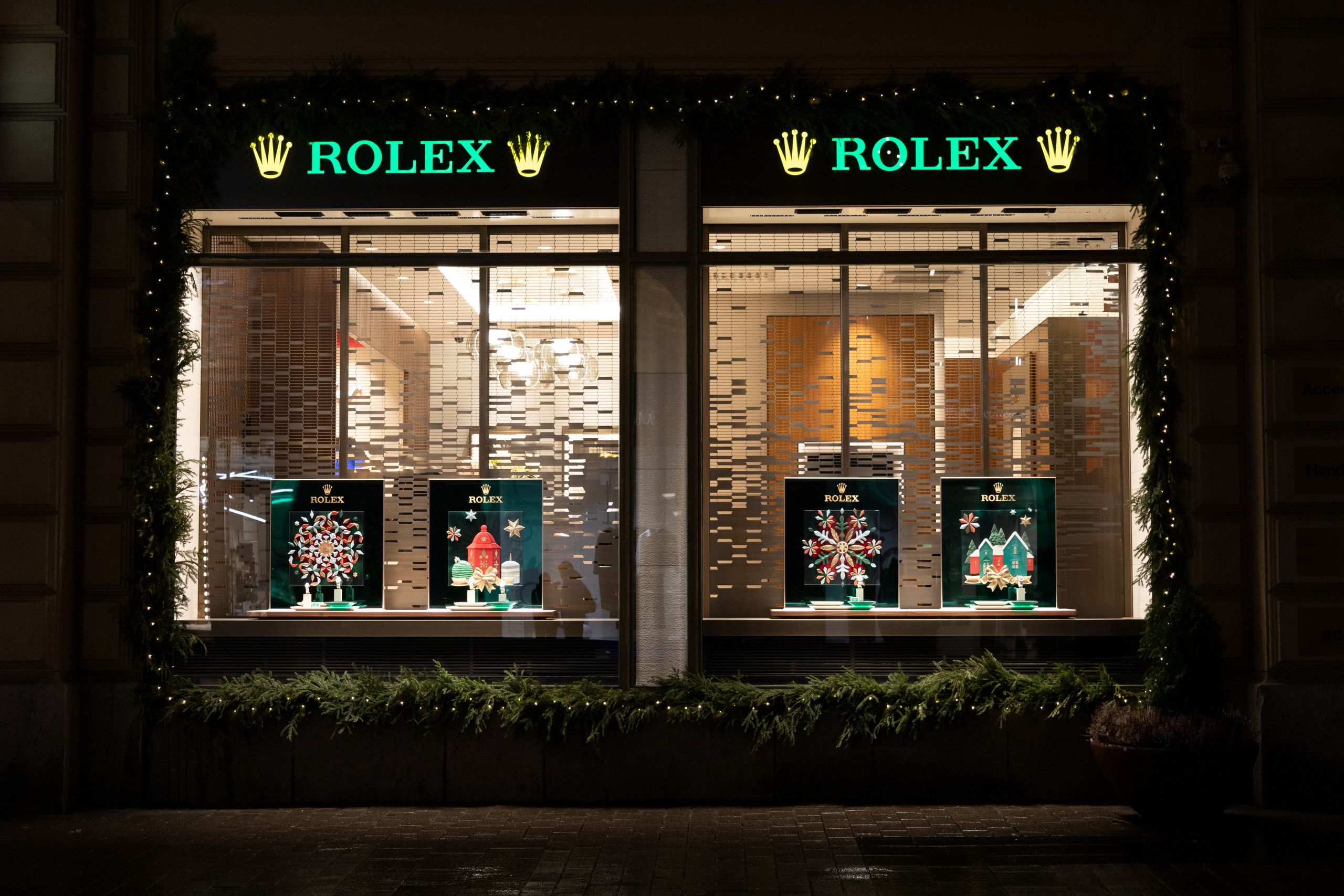
A counterfeit Rolex reportedly received a bracelet adjustment at a flagship store in London without staff identifying it as fake. The watch cost around $500, raising uncomfortable questions about how far counterfeit manufacturers have progressed.
Contents
show
Known as “superclones,” these replicas are designed to reproduce the appearance, finishing and mechanical details of expensive Swiss watches. Some are convincing enough to challenge experienced collectors, while authentication businesses are reporting rising rejection rates across the luxury-watch market.
The question facing the industry is becoming harder to ignore: when a fake can look this convincing, how can buyers know what they are actually paying for?
The $500 Rolex Replica That Raised Eyebrows
On August 22, 2026, watch enthusiast Vincent G. de Vlugt (@Vincentgdevlugt) shared a video highlighting the increasingly sophisticated world of Chinese superclone watches. His experiment focused on a counterfeit Rolex Celebration model reportedly purchased for approximately $500 to $700.
According to the account, the watch was taken to a flagship Rolex store in London for a bracelet adjustment. Staff reportedly provided the complimentary service without identifying the watch as counterfeit, and the wearer was even complimented on the timepiece.
The detail that makes this incident particularly striking is the wearer’s experience with the brand. De Vlugt reportedly owned an original Rolex Submariner for 15 years and still could not distinguish the replica from the genuine watch.
That account does not establish that Rolex staff formally authenticated the watch. A bracelet adjustment is different from a comprehensive examination of the movement, serial number and internal construction. Nevertheless, the reported encounter illustrates how a convincing counterfeit can escape notice during an ordinary interaction.
Luxury watches are often purchased for their craftsmanship, precision and reputation as much as their appearance. When a replica can fool an experienced owner, the distinction between a convincing imitation and a genuine product becomes considerably harder to judge with the naked eye.
Superclones Have Moved Beyond Cheap Imitations
For years, counterfeit watches were often identifiable through obvious mistakes. Poor finishing, incorrect lettering, cheap materials and visibly different proportions could expose a fake within minutes. Modern superclones are designed to eliminate many of those giveaways.
Manufacturers have improved their ability to reproduce watch cases, bracelets, ceramic bezels, sapphire crystals and intricate dial details. Some also produce movements intended to imitate the mechanical architecture of genuine Rolex calibres, creating replicas that look convincing both outside and inside.
Replica-watch communities frequently discuss movements such as the Dandong 3235 and 3285, which are designed to resemble movements found in genuine luxury watches. Enthusiasts compare their construction, operating characteristics and claimed power reserves, sometimes treating differences between individual factories as decisive purchasing factors.
However, claims about their performance frequently originate within the replica market itself. They should not be treated as independently verified evidence that counterfeit movements match genuine Rolex components in precision, durability or reliability.
The distinction matters because a watch that looks convincing under ordinary lighting may reveal discrepancies under close examination. Similarly, a movement that resembles an original may still differ in materials, tolerances and long-term serviceability.
The development is nevertheless significant for authenticators. Counterfeiters are attempting to reproduce the engineering behind luxury watchmaking, rather than simply copying its outward appearance. That raises the difficulty of identifying sophisticated fakes through casual visual inspection alone.
Authentication Businesses Are Rejecting More Watches
The challenge extends well beyond a single Rolex boutique encounter. Figures from Bezel, a US secondary-market watch platform, indicate that authentication teams are facing increasing pressure as more watches enter the resale market.
According to the supplied report, Bezel rejected 23% of watches submitted for sale in 2023. That figure increased to 29% in 2024 and 34% in 2025, with the rejection rate reportedly reaching 38% during the second half of 2025.
Rolex watches also featured prominently in the reporting, with 38% of Rolex submissions reportedly rejected during the 2026 reporting period cited in the source. These figures suggest that sellers face considerable scrutiny when attempting to place expensive watches on the secondary market.
However, a rejected watch is not automatically counterfeit. Bezel’s authentication process can flag stolen watches, counterfeit components, undisclosed modifications, incorrect replacement parts and discrepancies in condition. The figures therefore cannot be interpreted as direct measurements of the number of fake watches circulating in the market.
Even with that qualification, the numbers illustrate why buyers and sellers cannot rely on appearance alone. A watch may look authentic while containing incorrect components or having a history that differs from the seller’s description.
Ryan Chong, Bezel’s chief marketplace officer, highlighted the financial stakes associated with high-value transactions. A single authentication failure involving an expensive timepiece can expose a buyer to losses reaching six figures.
For collectors spending thousands or tens of thousands of dollars, a convincing exterior offers little protection if the watch’s identity or condition has been misrepresented.
Replica Collectors Have Created Their Own Buying Guides
One of the stranger developments in the superclone market is the emergence of detailed guides comparing counterfeit watches from different manufacturers. These catalogues examine replicas of luxury brands including Rolex, Patek Philippe, Audemars Piguet, Cartier, Omega, Breitling and Vacheron Constantin.
Rather than treating every counterfeit as identical, some guides distinguish between individual factories, production batches and movements. They also identify supposed flaws involving fonts, bezels, hands, clasps, screws and case construction, giving readers an unusually detailed picture of how replica products are evaluated.
The community has even developed the expression “NWBIG,” short for “Not Worth Buying in Genuine.” The phrase describes replicas that enthusiasts consider convincing enough to make purchasing the authentic version seem difficult to justify financially.
That assessment reflects the opinions of replica-watch buyers, rather than an objective determination that a counterfeit equals the genuine product. It also overlooks the legal and ethical issues associated with products that imitate protected brands without authorization.
The guides themselves reveal an unusual contradiction. Participants may devote considerable attention to microscopic design differences and mechanical construction, yet the market they are evaluating offers no consistent guarantee of quality, authenticity or long-term support.
Some entries reportedly warn readers about specific defects, including problems with screws, engravings and movement construction. One commenter described mechanical failures involving a Vacheron Constantin replica, including a misspelled engraving, screws falling from the case, a broken band screw and damage to a crown component.
These accounts are individual reports rather than a representative measure of replica quality. Still, they illustrate the uncertainty facing buyers who rely on community recommendations instead of independent testing.
The Financial Cost of Counterfeit Watches Is Enormous
The sophistication of superclones sits alongside a substantial global counterfeiting problem. An OECD analysis cited in the supplied reference material estimated that fake watches infringing Swiss brands reached a value of $1.88 billion in 2021.
The analysis also estimated $1.08 billion in lost sales for Swiss-branded watches that year, equivalent to 4.2% of the sector’s sales. The estimated employment impact included approximately 2,537 lost jobs in the Swiss watch industry.
The same OECD analysis found that watches accounted for 87% of global customs seizures involving counterfeit goods that infringed Swiss intellectual-property rights in 2020 and 2021. This figure refers to the specific category of Swiss intellectual-property infringements examined in the report, rather than every counterfeit product seized worldwide.
China accounted for nearly 54% of those seizures, while China and Hong Kong together represented 84% of the estimated value of seized counterfeit Swiss watches. The United States also featured prominently among destination markets.
These figures describe the counterfeit trade covered by the OECD analysis. They do not mean every seized watch was a sophisticated superclone, nor do they establish the precise size of the current market.
Nevertheless, they demonstrate the scale of the commercial problem facing legitimate manufacturers. Counterfeit products can divert sales, damage brand reputations and leave consumers uncertain about what they have purchased.
Online marketplaces and international parcel shipments add another complication. Smaller shipments can be harder for enforcement agencies to identify than conventional commercial consignments, creating additional challenges for authorities attempting to intercept counterfeit products before they reach buyers.
Even the Boxes and Papers Can Be Fake
A convincing watch is only one part of the problem. Counterfeiters can also reproduce packaging and documents intended to make a transaction appear legitimate, giving buyers additional reasons to trust a product that has not been properly authenticated.
According to The Watch Register, one-third of the stolen watches it locates are offered with boxes and papers, and many of those documents are themselves counterfeit. A warranty card, certificate or original-looking presentation box therefore cannot establish authenticity by itself.
Buyers face additional risks when purchasing from unfamiliar online sellers. A counterfeit watch may be accompanied by carefully presented photographs, paperwork and descriptions designed to create confidence before the buyer ever sees the product.
There is also a difference between a watch being genuine and its history being legitimate. An authentic watch could be stolen, modified or fitted with incorrect components, while counterfeit documentation may conceal important details about its origin.
Professional authentication services increasingly examine multiple aspects of a watch, including its movement, serial number, functionality and supporting documents. Chrono24’s certification process, for example, involves more than a visual assessment of the exterior.
For expensive purchases, independent verification is considerably more reliable than judging a watch by its appearance or presentation. Buyers should be particularly cautious when a seller offers a luxury timepiece at an unusually low price but cannot provide a credible explanation of its provenance.
Counterfeit Operations Continue to Face Enforcement
The counterfeit trade also carries legal risks for sellers and distributors. On September 7, Taiwan’s Criminal Investigation Bureau announced that police had dismantled a counterfeit luxury-watch operation spanning four locations.
Investigators seized 86 watches, including counterfeit Rolex and Patek Philippe products. Authorities said watches imported from mainland China had been modified and sold through social media, estimating the infringement value at more than NT$100 million, equivalent to approximately $3.15 million in the supplied report.
The case demonstrates how counterfeit watches can move through organized commercial operations rather than isolated street-market sales. Social media and online transactions can provide additional channels for reaching buyers who might otherwise purchase through established retailers.
Meanwhile, the Federation of the Swiss Watch Industry reported processing 1,860 counterfeit-related seizures in 2024, an increase of 8% from 2023. Official declarations of counterfeits reportedly rose by 28% over the same period, while 1,543 items were seized through Swiss border, postal and tourist channels.
These enforcement figures cover counterfeit-related activity more broadly. They do not establish that every seized product was manufactured to superclone standards or that all counterfeit watches present the same level of difficulty for authenticators.
However, the figures show that the industry continues to face a substantial counterfeiting problem even as authentication methods and enforcement efforts develop. Sophisticated replicas add another challenge because convincing outward appearances can make suspicious products harder to identify before detailed examinations take place.
Can a Superclone Actually Perform Like a Rolex?
This is where the comparison becomes more complicated than a simple contest of appearances. Rolex states that its watches are designed, manufactured, assembled and tested in Switzerland, and the company subjects its products to its own Superlative Chronometer standards.
According to Rolex, its watches must achieve an accuracy of −2/+2 seconds per day. Its testing also evaluates characteristics including precision, power reserve, waterproofness and self-winding performance.
A replica might reproduce the dimensions of a case, imitate a movement’s architecture and achieve acceptable timekeeping when new. That does not establish that it can meet the same standards over years of daily use.
Long-term performance depends on more than initial accuracy. Materials, component tolerances, lubrication, resistance to water, quality control and access to replacement parts all influence how a mechanical watch ages.
Replica movements can also vary significantly between manufacturers and production batches. Even enthusiasts who praise certain examples acknowledge differences in construction and serviceability, making broad claims about the entire category unreliable.
A genuine Rolex comes with an established manufacturing and servicing system. A counterfeit may have no comparable support, leaving an owner with limited options when a component fails or the movement requires specialized repair.
Without independent testing over an extended period, claims that a particular superclone performs like a genuine Rolex remain unproven. Matching the appearance of a luxury watch is one challenge; demonstrating comparable precision, durability and serviceability is another.
The Luxury Watch Market Faces a Difficult Test
The superclone phenomenon exposes a growing weakness in the idea that expensive products can be authenticated through appearance alone. A high price, familiar logo and carefully reproduced packaging can create an impression of quality, but none independently proves authenticity.
For buyers, the safest approach is to purchase through authorized retailers or reputable sellers who offer meaningful authentication procedures and clear documentation. Independent verification is especially valuable when a transaction involves an unusually attractive price or an unfamiliar seller.
The luxury-watch industry has spent decades building its reputation around precision and craftsmanship. Counterfeit manufacturers are now attempting to reproduce the visible evidence of that reputation at a fraction of the price, creating an increasingly difficult problem for buyers and authentication businesses.
The real test will be whether those imitations can withstand the scrutiny that comes with ownership, servicing and long-term use. Until that question is answered through independent evidence, a convincing fake remains exactly that: a counterfeit with an expensive-looking face.