
Your cart is currently empty!
MIT Makes Nearly All of Its Courses Available Online for Free
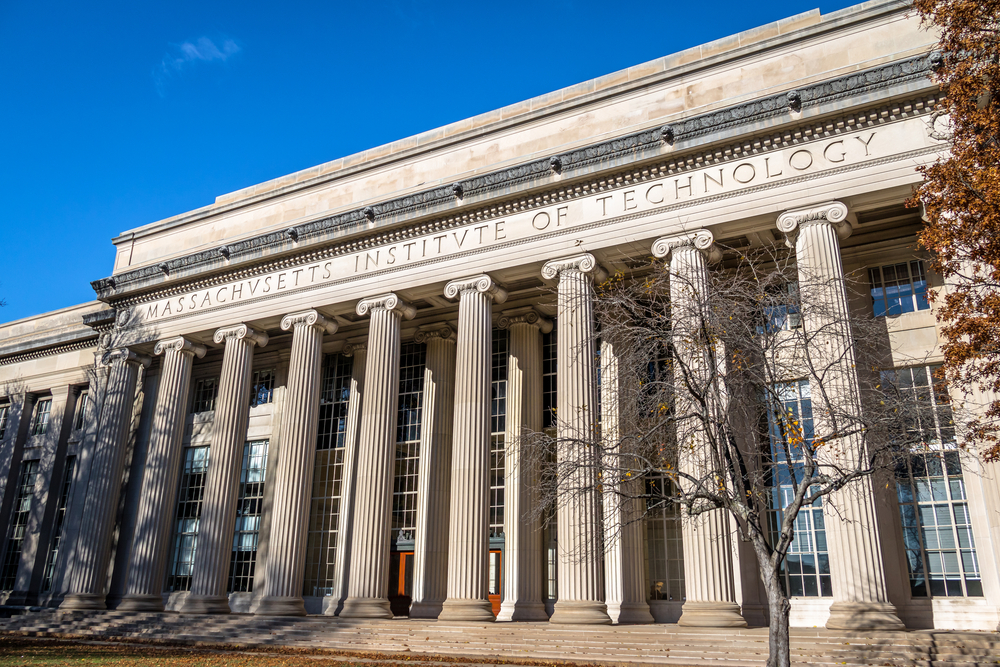
We often accept that elite knowledge is locked behind prestigious campus gates and six-figure tuition bills, treating high-level education as an exclusive privilege rather than an accessible tool for personal growth. But what if the only thing standing between an ambitious mind and a world-class curriculum was a basic internet connection?
Contents
show
25 Years of MIT’s Global Classroom
Imagine walking onto the campus of one of the world’s most prestigious universities, pulling up a chair in a lecture hall, and getting the exact same education as the students paying top-tier tuition—all without spending a dime. For a quarter of a century, the Massachusetts Institute of Technology (MIT) has made this scenario a reality for anyone with a working internet connection.
In 2001, long before the phrase “remote learning” became a household staple, MIT launched a radical initiative called OpenCourseWare (OCW). Instead of locking its world-class curriculum behind a paywall, the university simply gave it away. The institution began uploading the exact materials used on campus—from lecture notes and syllabi to full video recordings and problem sets—for nearly all of its undergraduate and graduate courses.
The move was rooted in a belief that knowledge should be treated as a public good rather than an exclusive commodity. MIT President Sally Kornbluth recently reflected on this 25-year milestone, noting that the university dared “to open its doors to the world without requiring a key.” By doing so, they dismantled the traditional barriers of geography and financial class that often block access to elite education.
Today, this single decision has fundamentally transformed how the public accesses information. The program has reached over 500 million learners globally. It serves everyone from rural high school students discovering a passion for computer science to educators in developing nations building their own lesson plans based on MIT’s rigorous frameworks.
As Dimitris Bertsimas, MIT’s vice provost for open learning, summarized during the initiative’s recent 25th-anniversary symposium: “When MIT opens its doors, the world walks in.” What started as a bold experiment has evolved into a global movement, proving that access to a premium education does not have to come with a premium price tag.
A Syllabus for Anyone, a Schedule That’s Yours

Getting started with MIT OpenCourseWare is remarkably straightforward. There are no lengthy registration forms, no entrance exams, and zero tuition fees. Anyone can open a web browser, visit the site, and immediately access the material. Because there are no official enrollment periods or rigid semester schedules, learners have the complete freedom to study entirely at their own pace.
The volume of available content is massive. The platform currently hosts materials from more than 2,500 courses, encompassing nearly the entire university curriculum. Whether a learner wants to understand the foundational algorithms of artificial intelligence, explore advanced mechanical engineering, or study modern philosophy, the resources are readily available. The system is designed to closely mirror the actual campus experience. When a user selects a class, they can view the original syllabus, read the professor’s lecture notes, tackle the exact problem sets given to enrolled students, and check their work against the provided solutions.
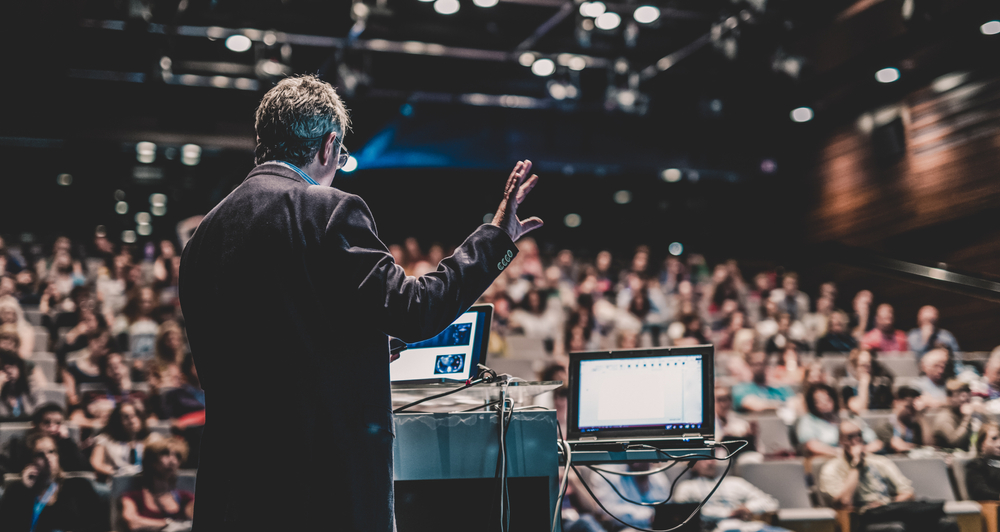
For hundreds of these classes, the experience goes even deeper by offering full video recordings of the lectures. An independent learner sitting at a desk halfway across the world can watch a distinguished expert explain complex scientific phenomena, just as if they were sitting in the front row of a university auditorium.
Learning Without Limits
The true measure of MIT OpenCourseWare is found in the people who use it. Over the past 25 years, the platform has reached more than 500 million learners in nearly every country on Earth. The demographic relying on these resources is remarkably diverse, proving that the desire to learn transcends age, background, and geographic borders.
Instead of exclusively serving traditional university students, the initiative has become a lifeline for independent learners and problem solvers. For instance, a teenager in rural Australia utilized introductory electrical engineering courses to build a virtual reality prototype. In Chile, a high school student applied pharmacology lectures to identify medicinal properties in local plants, hoping to help treat the health issues of classmates. In Turkey, a study group of medical students relied on these free materials to pursue complex, doctoral-level research agendas.
Educators also form a massive segment of the user base. Teachers around the globe use the materials to learn new teaching methods, find reference materials, and develop curricula for their own schools. The platform has actively partnered with networks of Historically Black Colleges and Universities as well as community colleges to improve educational opportunities through adapted open resources.
The real-world impact is undeniable. By removing financial and geographical barriers, the initiative empowers individuals to solve local problems, switch careers, and pursue lifelong curiosities. Whether it is an entrepreneur in Kenya creating new career paths for her community or a professional utilizing business lectures to acquire the skills needed to secure a job on Wall Street, the availability of these resources transforms individual ambition into tangible reality.
Adapting to the AI Era and On-the-Go Learning

As technology changes how people consume information, MIT OpenCourseWare is naturally evolving alongside it. Now in its third decade, the platform faces a new frontier: the explosion of artificial intelligence and the demand for mobile, on-the-go education. Rather than treating these shifts as a threat to traditional learning, the open education community is actively embracing them.
The most significant recent evolution involves how learners interact with the massive archive of materials. It is no longer just a question of whether someone can study for free; today, learners are utilizing the platform to train personal AI study assistants. Because MIT allows the materials to be downloaded freely, tech-savvy students are feeding course transcripts, dense reading lists, and problem sets into AI language models. This allows them to instantly generate customized review cards, personalized study schedules, and simplified summaries of complex lectures. By pairing MIT’s rigorous, verified data with modern AI tools, independent learners are effectively building their own interactive tutors without violating the platform’s Creative Commons licenses for non-commercial use.
Simultaneously, the platform is addressing the reality that much of the world learns on mobile devices, often with unstable internet connections. To make the 2,500-course catalog truly accessible, OCW ensures that materials are not tethered to a high-speed web browser. Almost every course features a simple function that allows users to download the entire curriculum as a compressed zip file. This means a student facing connectivity issues—whether on a subway commute or in a rural village with limited bandwidth—can download heavy PDFs, code datasets, and static resources to their phone or laptop to study completely offline.
Furthermore, MIT is using the platform to democratize the very subject of AI itself. As artificial intelligence reshapes global industries, MIT has aggressively expanded its open AI curriculum. Today, anyone can access foundational courses like Introduction to Computational Thinking or highly advanced modules like Deep Learning and How to AI (Almost) Anything. By making the mechanics of artificial intelligence free to study and providing the tools to access them anywhere, the platform ensures that the future of technology is not gatekept by a select few, but remains open to the world.
Reclaiming Education as a Public Good
The path to a world-class education has been heavily guarded by steep tuition fees, grueling admissions processes, and geographic limitations. Millions of driven individuals have been priced out of elite universities, forced to treat high-level learning as an unattainable luxury rather than a fundamental tool for personal development. Yet, quietly and consistently over the past twenty-five years, one of the most prestigious academic institutions on the planet has been systematically dismantling these barriers. The Massachusetts Institute of Technology (MIT) made an unprecedented decision to democratize its knowledge, proving that financial status should never dictate intellectual potential.
Through its pioneering OpenCourseWare initiative, MIT has made virtually its entire undergraduate and graduate curriculum available online for absolutely no cost. What began as a radical experiment in 2001 has evolved into a massive global resource, delivering everything from advanced artificial intelligence coursework to modern philosophy directly to the public. This is not a scaled-down, introductory version of academia; it provides the exact syllabi, video lectures, and problem sets utilized on the university’s physical campus. For anyone looking to pivot careers, satisfy a profound curiosity, or build a rigorous new skill set, the doors to an elite classroom are wide open—and no application is required.