
Your cart is currently empty!
Gen Z Is Filling Catholic Pews in New York City, and the Data Says It’s No Fluke
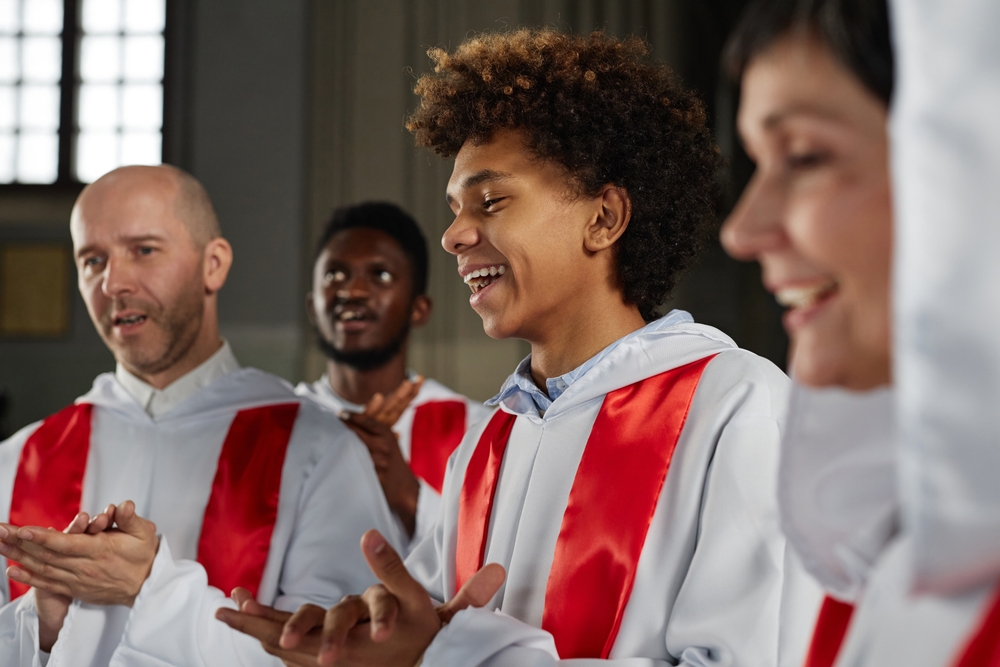
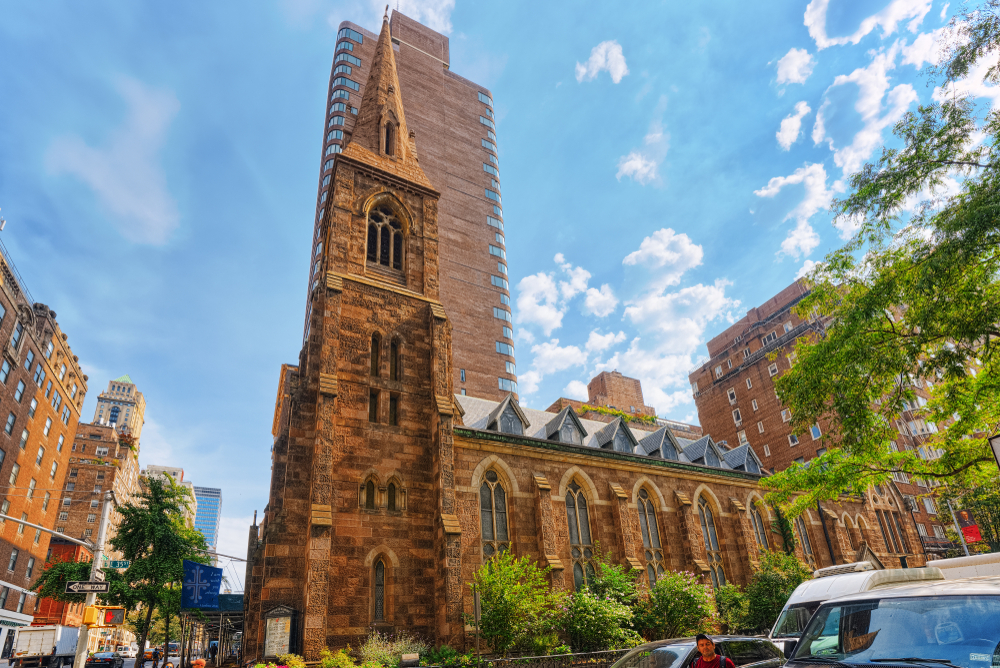
On a recent Sunday evening in Greenwich Village, something unusual was happening at St. Joseph’s Church. Not unusual in the way that draws news cameras or prompts official statements, but unusual in the way that makes longtime parishioners stop and look around. Folding chairs had been arranged in the aisles. Young adults were standing shoulder to shoulder in the foyer. Others had found spots on the balcony steps, unwilling to leave simply because every seat was taken.
Contents
show
For a country that has spent the better part of two decades reading obituaries for organized religion, it was a scene worth pausing on. New York City, one of the most secular urban centers in America, was running out of room in its Catholic churches, and the people filling them were not the generation anyone expected.
A Trend That Refused to Stay a Fluke
After the COVID-19 pandemic ended, some observers noticed a modest uptick in church attendance among younger Americans and filed it away as a temporary response to collective trauma. People had faced mortality, reassessed their priorities, and briefly returned to the institutions their parents had raised them in. When life normalized, the thinking went, attendance would drift back down.
It did not drift back down. According to data from the Barna Group, a research firm that tracks American faith trends, Gen Z Christians now attend church more frequently than Millennials, Gen X, and Baby Boomers. In 2025, the average Gen Z churchgoer attended services nearly two weekends per month, a figure that represents a 100% increase from 2020 levels and the highest rate since Barna began tracking the metric. What looked like a post-pandemic blip has hardened, through several years of consistent measurement, into a documented cultural shift. At St. Joseph’s in Greenwich Village, that shift has a face, a neighborhood, and a waiting list.
Sold Out on a Sunday Night
St. Joseph’s congregation has grown to roughly four times its usual size. A Wall Street Journal report on the scene captured what a recent 6 p.m. Mass had come to look like.
“Every inch of pew space was filled, mostly with young adults. Latecomers squeezed into makeshift rows of plastic folding chairs or stood shoulder-to-shoulder in the foyer… Others squatted on balcony steps for the 90-minute service.” a Wall Street Journal report noted.
Beyond the Mass itself, the parish has built a social infrastructure around its new arrivals. A pre-Mass gathering called “Pizza to Pews,” held at a nearby restaurant before the Sunday evening service, drew 100 attendees in its first weeks and surpassed 200 by its third. Young adults have been traveling from Long Island and, in at least some documented cases, from as far as Boston to attend. For a casual meetup built around pizza and fellowship before a church service, those numbers point to something more than curiosity.
Young Men Are Rewriting the Script
Among the most statistically striking elements of the broader trend is who is leading it. For decades, American sociology had operated on a well-established assumption: women attend religious services more frequently than men, women report higher levels of religious importance, and any revival would likely run through female participation first. A Gallup poll published in April 2025 complicated that assumption considerably.
Among Americans aged 18 to 29, 42% of young men now report that religion is “very important” in their lives, up from 28% in 2023. Young women in the same age group held steady at approximately 30% over the same period. For the first time in recent recorded history, young men have overtaken young women on this measure of religious importance, a reversal that Gallup describes as confined specifically to the 18-to-29 age group. Among all older demographics, women remain more religious than men, and religiosity across the broader adult population continues to sit at or near its historic lows.
Religious attendance among young men tells a parallel story. Monthly or more frequent attendance rose seven points between 2022-2023 and 2024-2025, reaching 40%, its highest level since 2012-2013. Young women’s attendance rose a more modest three points over the same period, landing at 39%. For the first time in the data’s history, young men and young women are statistically tied in how often they show up.
A Gender Gap That Ran in Reverse
At the start of the millennium, young women led young men by nine percentage points when asked whether religion was very important to them. That gap widened to as much as sixteen points in the mid-2000s before narrowing through the 2010s. By 2022-2023, the two groups sat within five points of each other. What happened next was something Gallup had not recorded before: young men pulled ahead.
Women aged 18 to 29 are now, by Gallup’s measurement, the least religiously engaged women of any age group in America. At 29% calling religion very important, they trail the next-least-religious group of women by 18 percentage points and are less than half as likely as senior women to describe faith as important in their lives. Young men, by contrast, now sit roughly on par with men in their thirties and forties on religious attendance, a proximity that would have seemed improbable given the data from even a decade ago.
Politics Sits Somewhere in the Picture
Gallup’s data allows researchers to look at religiosity trends across party lines, and what emerges there adds a layer of complexity to any simple narrative about generational revival. Attendance gains among young men are most pronounced among those who identify as Republican or lean that way, with a seven-point increase recorded between 2022-2023 and 2024-2025. Young Republican women showed an eight-point increase over the same period.
Young Democratic men saw a more modest three-point gain. Young Democratic women showed little meaningful change.
Part of why this affects the overall numbers so heavily is the composition of the young male population itself. In 2024-2025, 48% of young men identified as or leaned Republican, compared to 27% of young women. Given that proportion, upward trends among young Republican men carry significant weight in aggregate figures for young men overall. Among young women, the Republican-identifying segment is too small to move the overall needle by the same degree.
Gallup stops short of drawing firm conclusions about cause and effect, noting only that political dynamics appear to be playing some role in the religious changes among young adults. Whether politics is driving young men toward faith, or whether a shared set of values is driving both political and religious alignment, remains an open question.
Faith as Counter-Culture in a Digital Age
Back in New York City, the social dimension of the revival carries its own distinct character. Isabella Orlando, 23, a nutrition consultant, launched what she called the “Holy Girl Walk” in Central Park, framing it as a Catholic response to the viral “hot girl walk” fitness trend that had circulated widely on social media. Her first gathering drew 50 women. After a video of the group praying the Rosary together spread across social platforms, attendance grew to more than 150.
Young women across the city have been using the same digital channels that once carried secular lifestyle content to invite peers into Catholic fellowship and social gatherings. Faith is being promoted and passed on through TikTok and Instagram, which marks a meaningful shift from the assumption that social media and religious commitment pull in opposite directions.
Among young Catholics in New York and beyond, a preference for Traditional Latin Mass and more formal liturgy has become a recurring theme. Attendees describe it as a counter-cultural choice, a deliberate step away from the progressive values that characterize much of modern academic and corporate life toward something older, more structured, and, in their framing, more honest about what it is.
Rev. Boniface Endorf, pastor at St. Joseph’s, has watched this congregation fill well beyond its usual capacity and spent time thinking about what is drawing people in. His read on it is direct. “People are looking for more than career and consumption. What does it mean to grow up? They’re looking for guidance.”
A Revival or a Realignment?
Scholars, faith leaders, and sociologists have not reached a consensus on how to read what is happening. Some describe it as a genuine revival, a generation returning to religious life after years of being told it was unnecessary. Others frame it as a political and cultural realignment, with faith becoming one more marker of a broader identity shift among young men on the right.
Early 2026 data from Gallup shows young men’s attendance holding steady at 40%, consistent with 2025 figures. Whether that number continues to hold, rises further, or softens as the political climate shifts will go a long way toward answering whether what is happening in cities like New York represents a lasting change or a temporary clustering of trends.
What is harder to dismiss is the scene at St. Joseph’s on a Sunday evening, or the “Pizza to Pews” table that keeps needing more chairs, or the group of 150 women praying in Central Park after one video changed the size of the gathering. Data shapes the story, but the story started on the ground, in rooms that were supposed to be emptying and are instead filling up.
One young person, speaking to the New York Times about what drew them to faith, put it in terms that no survey question had quite managed to capture. “I wanted something new and something traditional and something that felt holy.” At churches across New York City, it appears a great many people their age are looking for the same thing.
Catholic church attendance, Catholic New York, Catholic social events, church conversion boom, faith and Gen Z men, Gallup religion poll, Gen Z faith trends, Gen Z religion, Holy Girl Walk, religion and politics, religious gender gap, religious revival, young adults and Christianity, young men and faith