
Your cart is currently empty!
Going to Museums and Concerts May Slow Your Biological Aging as Much as Going to the Gym, a New Study Finds
Somewhere between the standard advice to eat more vegetables and the familiar reminder to exercise regularly, a new piece of research has arrived with a finding that most people will not have seen coming. Scientists at one of the world’s most respected research universities have been studying what happens to the human body at the molecular level when people spend time making art, attending concerts, visiting museums, or dancing. What they found challenges some long-held assumptions about what counts as genuinely good for your health, and it has caught the attention of researchers well beyond the team that produced it.
Contents
show
The finding is specific enough to be striking and broad enough to apply to almost anyone. Before getting into what the study revealed, it helps to understand how researchers measured something as seemingly abstract as the rate at which a person’s body ages.
The Problem With Chronological Age
Two people can share the same birthday and age at very different rates. One might reach their sixties with the cardiovascular health of someone two decades younger, while another arrives at the same age carrying a biological burden that suggests their body has been running faster through time. Chronological age, the number printed on a birth certificate, tells you very little about which category a person falls into.
Scientists have spent years developing tools that can read aging more accurately at the cellular level. Known as epigenetic clocks, these tests analyze patterns in DNA methylation, a process in which chemical tags called methyl groups attach to DNA over time. The accumulation and arrangement of those tags creates a kind of biological timestamp that researchers can read as an indicator of how fast a person is aging, separate from how many years they have actually lived.
Steven Horvath, a geneticist and biostatistician at UCLA who developed one of the most widely used aging clocks, has spent over a decade studying what drives methylation changes. His research found that smoking, poor diet, and a sedentary lifestyle all accelerate the clock, while a diet rich in micronutrients from fruits and vegetables, a healthy body weight, and regular exercise help slow it down. A person’s chronological age is fixed. Their biological age, it turns out, is far more responsive to how they live.
What the UCL Study Set Out to Do
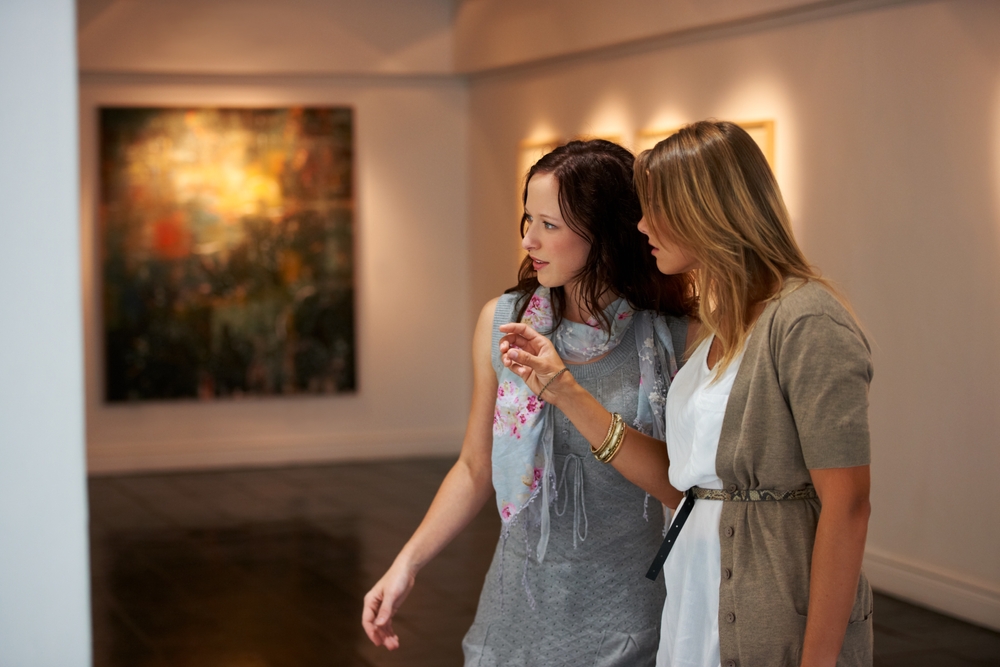
Researchers at University College London had a hunch that the benefits of creative and cultural participation went beyond the stress relief that many people already associate with making or experiencing art. To test their hypothesis, they drew on data from the UK Household Longitudinal Study, a large nationally representative cohort, analyzing survey responses and blood samples from around 3,500 adults.
Participants had answered questions covering more than 40 different arts-related activities, from singing, painting, and dancing to attending art exhibitions, visiting museums, going to the theater, and exploring heritage sites. They also reported on their exercise habits in detail. Researchers then applied seven epigenetic clocks to each participant’s blood samples, assessing their biological rate of aging across multiple measurement frameworks rather than relying on any single tool.
The approach was deliberate. Each epigenetic clock defines biological age differently, using distinct sets of DNA sites, different algorithms, and different target variables. Using seven of them together allowed the team to draw broader and more reliable conclusions than any single clock could support on its own.
The Finding That Surprised Even the Researchers
“We found in this study that ‘arts engagement’ was related to 4% slower aging rates, meaning people were about a year younger, biologically, if they were regularly engaged in the arts,” said Daisy Fancourt, the study’s lead researcher. “This is actually the same reduction in biological aging that we saw for physical activity.”
That equivalence between arts engagement and physical activity is part of the finding that has drawn the most attention. Both are well-established health behaviors, but they have rarely been placed in the same category when it comes to biological impact at the molecular level. Study co-author Feifei Bu, a research fellow in UCL’s department of behavioral science, noted that previous research had already linked cultural engagement to better outcomes in areas like cognition, depression, and mortality, but this was the first study to look directly at biological aging.
The slower aging rate appeared in both groups of arts participants. People who actively created, those who danced, sang, painted, or photographed, showed the effect, and so did those who simply attended, people who went to concerts, visited galleries, or walked through museums. Both the frequency of engagement and the variety of activities a person participated in appeared to matter. The more types of arts activities someone took part in, and the more regularly they did so, the stronger the association with slower biological aging. Results were generally stronger among adults aged 40 and above, which researchers noted is consistent with evidence that biological aging begins accelerating meaningfully from midlife onward.
Why the Arts Might Affect Your Biology

No single mechanism explains the connection, and researchers are careful not to overstate what is currently understood. Several pathways, however, offer a plausible picture of how creative and cultural participation could affect aging at the cellular level.
Chronic stress is one of the most well-documented accelerators of biological aging, and arts engagement has repeatedly been shown to reduce psychophysiological markers of stress in both clinical and non-clinical settings. When long-term stress levels fall, inflammation tends to follow, and inflammation is one of the central biological drivers of accelerated aging. Music, in particular, has been shown in experimental studies to affect gene regulation in ways that reduce inflammatory markers and support neurological function, effects that go well beyond simple relaxation.
Social interaction, sensory stimulation, cognitive engagement, and the formation of personal and collective identity all contribute in different ways depending on the activity. Bu described arts activities as carrying a range of different active ingredients, each of which may activate distinct biological pathways. Visiting a museum and painting at home are very different experiences, but both appear to move the needle in the same direction. The variety matters precisely because different activities offer access to different combinations of those ingredients.
Doug Vaughan, a cardiologist at Northwestern University who was not involved in the study, framed the implications in terms that many patients will find immediately relevant. “The arts, or being creative or enjoying the arts, is a non-pharmacological intervention,” Vaughan said, adding that many of his patients actively seek out ways to stay healthy that do not involve a prescription. When something can be genuinely enjoyable and also good for health at the biological level, it represents a different kind of option than the ones medicine has traditionally offered.
How Outside Researchers Responded
Horvath, whose aging clock was among the seven used in the study, called the research rigorous and said the finding of comparable effects between arts engagement and physical activity was genuinely new to him. He noted that it pushes the epigenetic clock field toward evaluating leisure activities as a serious health variable, a frontier the field has not yet explored in depth.
James Stark, a professor of medical humanities at the University of Leeds who reviewed the study independently, offered an assessment that went beyond the science. “As well as confirming the positive effects of cultural participation on our health, it validates the importance of investment in the arts and culture, and shows that these are not just incidental additions to our lives, but make a real difference to our health,” Stark said. His point carries weight beyond individual behavior. If arts participation produces measurable biological benefits comparable to exercise, then public funding for cultural institutions and arts access becomes, in part, a public health question.
Eamonn Mallon, a professor of evolutionary biology at the University of Leicester, praised the careful conduct of the research while raising an important caveat that the authors themselves acknowledge. Because the study captured a snapshot in time rather than following individuals across years, it cannot yet establish that arts participation causes slower aging. It is possible, Mallon noted, that people who are biologically younger for their chronological age are simply more likely to get out and engage with the world. Confirming the direction of that relationship will require longitudinal research that tracks the same individuals over time.
What Remains Open and What Comes Next
Several questions the study raises do not yet have answers. Whether someone who has had no meaningful connection to the arts could take up painting or start attending concerts in midlife and experience a measurable slowdown in biological aging remains unknown. How often a person would need to participate to produce a real effect on their epigenetic clocks has not been established. The study relied on self-reported behavior, which introduces some risk of recall bias, and the blood samples used to derive the epigenetic data were collected over a decade ago.
The research team is now planning to examine similar data across different countries and populations to test whether the findings hold beyond the UK context. They also intend to look at how other biological outcomes might be affected by cultural engagement, broadening the picture beyond the epigenetic aging measures used in this study.
Finding What You Enjoy May Be the Most Important Part

Bu has been consistent in one message throughout the discussion of the findings: there is no single best way to engage with the arts, and the research does not point toward any particular activity as superior to others. What seems to matter is finding something a person genuinely enjoys and will do with some regularity across a variety of forms. Consistency and variety together appear to produce the strongest association with slower biological aging, which means the most effective approach is probably the one a person will actually stick with.
None of this argues against exercise, a healthy diet, or any other well-established health behavior. What the study adds is a meaningful expansion of what qualifies as a contribution to long-term biological health. Going to a concert, spending an afternoon in a gallery, or sitting down to draw is not a substitute for physical activity, but it is no longer just a pleasant way to spend time either. According to the best available evidence, it may be doing something real to the rate at which your body ages, and that is a finding worth paying attention to.
Study Source: Fancourt, D., Masebo, L., Finn, S., Mak, H. W., & Bu, F. (2026). Does leisure activity matter for epigenetic ageing? Analyses of arts engagement and physical activity in the UK Household Longitudinal Study. Innovation in Aging. https://doi.org/10.1093/geroni/igag038
arts and health, arts and longevity, arts public health, arts slow aging, biological age vs chronological age, biological aging, cognitive health aging, creativity and health, cultural engagement health benefits, Daisy Fancourt research, DNA methylation aging, epigenetic aging research, epigenetic clocks, exercise vs arts health, healthy aging habits, Innovation in Ageing journal, longevity lifestyle habits, museum health benefits, non-pharmacological health, UCL study aging