
Your cart is currently empty!
Harvard’s Next Einstein Has a Name, and She’s Been Ahead of the Curve Since Age 12
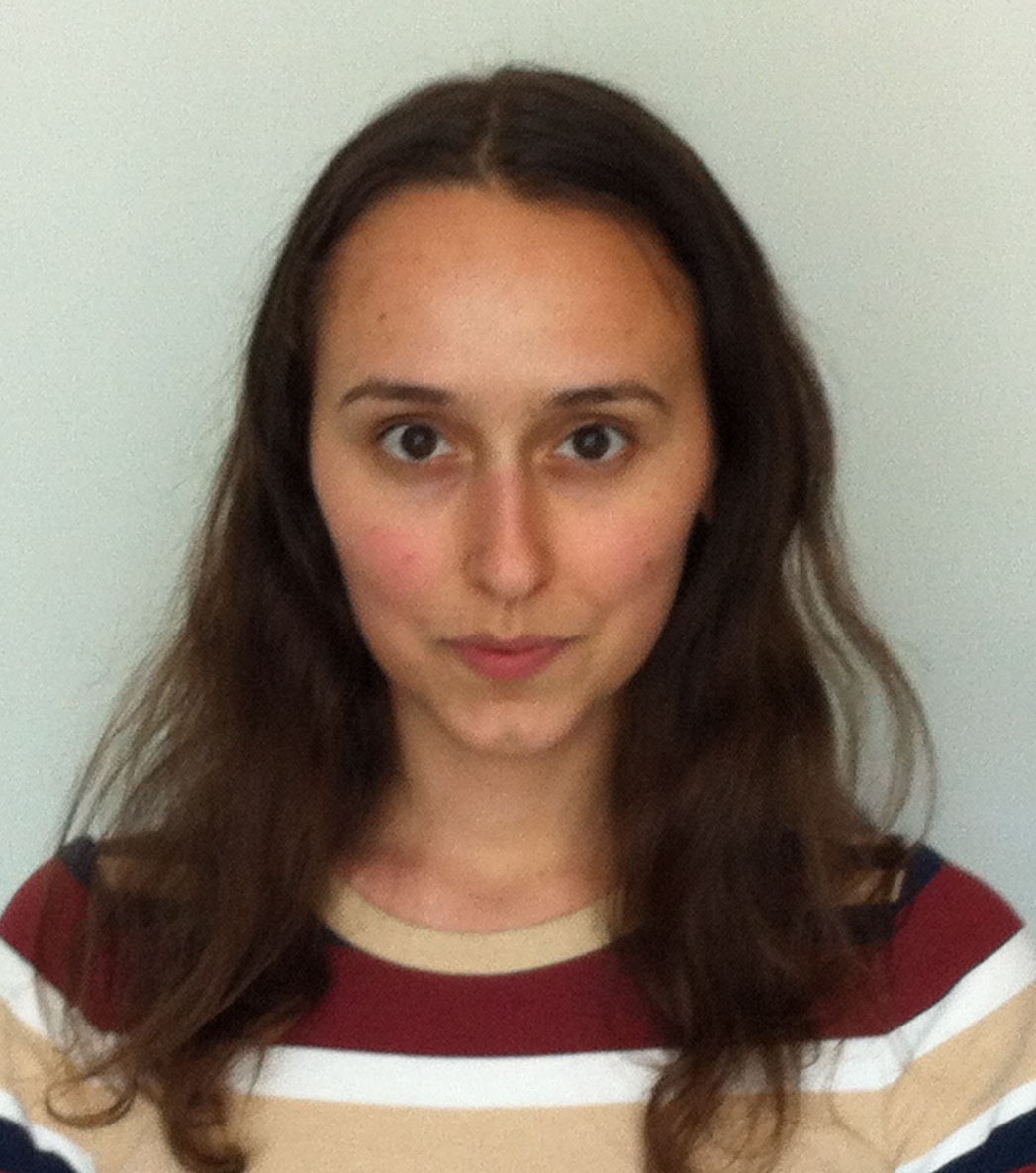
Some people are born with curiosity. Sabrina Gonzalez Pasterski was born with a blueprint. At an age when most kids are still figuring out long division, Pasterski was building engines. By the time she hit her early teens, she had already done something most adults never will. What she did next set the tone for a career that has since caught the attention of some of the most respected names in modern physics, including one who is no longer alive to see where she goes from here.
Contents
show
Pasterski, now 32, is a Cuban-American theoretical physicist whose work on black holes, spacetime, and quantum gravity has earned her a label that few scientists ever receive and even fewer deserve. Harvard, Forbes, Scientific American, and the late Stephen Hawking have all taken notice. Brown University once put $1.1 million on the table to get her attention. She said no.
To understand why any of that matters, it helps to start at the beginning in Chicago, on a runway, with a nine-year-old who had just taken her first flight and would never quite come back down to earth.
From Chicago Runways to MIT Lecture Halls
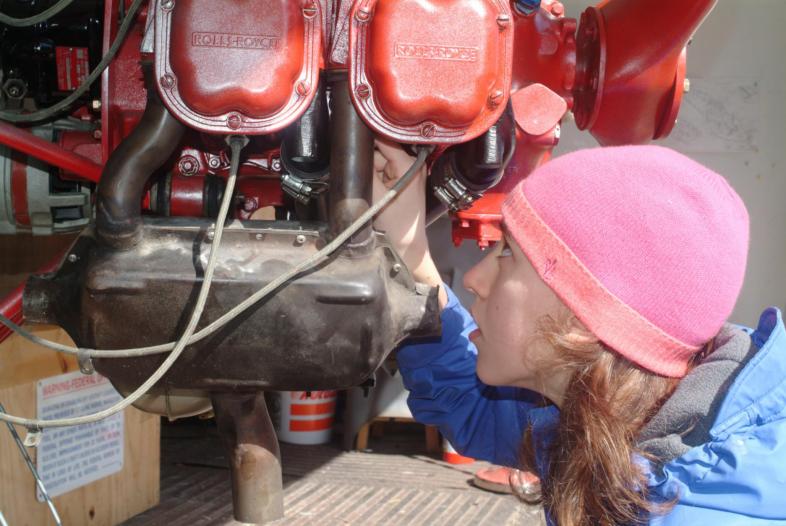
Pasterski grew up in Chicago, attending public schools as a first-generation Cuban-American. Her first airplane ride at age nine lit something in her that formal education alone could not contain. Within a year, she was building airplane engines. By 12, she had graduated to constructing a full single-engine plane from a kit. At 14, she flew it solo a full year before she was old enough to sit a driving test.
“Building an airplane from a kit and flying as a child, I longed to understand the physics, application and reach of flight,” she told Scientific American in 2012.
That hunger to understand not just to do, but to know why became her defining trait. After high school, she applied to MIT and was initially waitlisted. MIT eventually admitted her, and she made them look wise for it. Pasterski graduated first in her class in physics with a perfect 5.0 GPA, becoming the first woman ever to finish at the top of MIT’s physics program. At 21, she arrived at Harvard as a PhD candidate.
She was already on her second “30 Under 30” list before most of her peers had defended their first thesis.
Harvard Took Notice, So Did Stephen Hawking
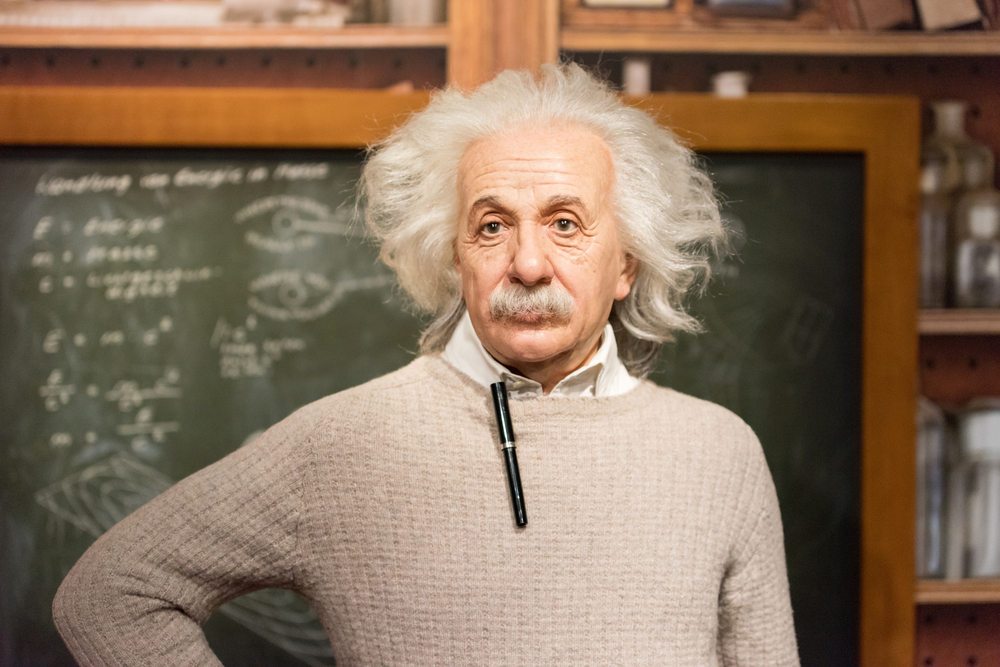
At Harvard, Pasterski worked under Andrew Strominger, the Gwill E. York Professor of Physics and director of Harvard’s Center for the Fundamental Laws of Nature. Strominger is not a man who hands out praise loosely, and yet in Pasterski’s second year as a PhD student, he gave her something rare full academic freedom to study any subject she wanted, with anyone she chose. Few PhD students ever receive that kind of latitude. Fewer still earn it by their second year.
In 2014, Pasterski and her colleagues identified what they called the “spin memory effect,” a phenomenon with real implications for detecting the net effects of gravitational waves. She published an individual paper on her findings in 2015. Two co-authored papers followed. All three were cited by Stephen Hawking in his own work in 2016.
Getting cited by one of the most recognized physicists in history is, by any measure, a significant moment in a scientist’s career. For Pasterski, it arrived before she had even finished her PhD.
Her dissertation went on to be published in Physics Report, making her only the second Harvard PhD candidate in the program’s history to earn that distinction. She completed her doctorate in 2019 and moved to Princeton for a postdoctoral fellowship at the Princeton Centre for Theoretical Science, adding another elite institution to a CV that was already difficult to believe.
What She’s Actually Working On
Pasterski’s research sits at one of the most demanding intersections in modern theoretical physics. She works on quantum gravity, holography, and the behavior of particles in asymptotically flat spacetimes. She has also done work on Low’s subleading soft theorem as a symmetry of quantum electrodynamics, or QED, a topic that sits well outside what most physicists spend their careers on.
For readers without a physics degree, a useful frame is this. Some of the biggest open questions in modern science center on why Einstein’s general relativity and quantum mechanics, two theories that both work brilliantly on their own terms, refuse to work together. General relativity governs the very large, explaining how planets, stars, and galaxies move and interact. Quantum mechanics governs the very small, describing how particles behave at the subatomic level. Each theory is internally consistent and experimentally verified. Put them side by side, however, and they contradict each other in ways that physics has not yet resolved.
Pasterski’s research attacks that problem from multiple angles. Her current work at the Perimeter Institute centers on the Celestial Holography Initiative, which she leads as founder and lead investigator. At its heart, the project attempts to encode the universe as a hologram as part of a broader effort to unite our understanding of spacetime with quantum theory. Put another way, she and her team are trying to find a shared language for two branches of physics that have been speaking past each other for decades. If that work bears out, its consequences for science would be hard to overstate.
As Harvard put it on its own website, Pasterski “studies high energy theoretical physics, believing that it holds the potential to transform multidisciplinary fields,” and she has said she sees “no limit to what we can achieve” and views the word “impossible” as a challenge. For a scientist working on some of the hardest open problems in physics, that is not bravado. It reads more like a job requirement.
She Turned Down $1.1 Million & Here’s Where She Went Instead
After Princeton, Pasterski had options. Brown University made that abundantly clear when it put a $1.1 million offer on the table for her to join as an assistant professor. She turned it down.
In 2021, she chose the Perimeter Institute for Theoretical Physics in Waterloo, Ontario one of the world’s leading centers for research in foundational physics. Money, it seems, was never the point.
“Years of pushing the bounds of what I could achieve led me to physics,” she said in an interview with Yahoo.
At the Perimeter Institute, Pasterski leads a team of physicists working on questions that sit at the frontier of what science currently knows and what it has yet to explain. For Pasterski, that open-endedness is not a source of anxiety. It’s the appeal. It always has been, from the moment she first stepped onto a plane in Chicago and started wondering how it stayed in the air.
The Lists, the White House, and the YouTube Channel
Outside the lab, Pasterski has built a public profile that extends well beyond academic circles. At 19, Scientific American named her one of its “30 Under 30.” Forbes followed with its own “30 Under 30” science list and, in 2015, added her to the All-Star edition for a second appearance that few recipients achieve.
In 2016, her work with Let Girls Learn, a government initiative launched by President Obama and First Lady Michelle Obama to help girls around the world access quality education, brought her to the White House. Pasterski has been open about her belief that access to education changes outcomes, and her advocacy in that space reflects a genuine commitment that runs parallel to her research career.
She also runs a YouTube channel under the name PhysicsGirl, where she makes her research accessible to audiences without a physics background. It’s an extension of the same instinct that has driven her career, a belief that knowledge should travel as far as it can. On that front, she has already done something Einstein never managed. He never posted a YouTube video.
Why the Einstein Comparison Sticks
Comparisons to Einstein are easy to make and rarely fair to either party. And yet, in Pasterski’s case, serious people keep making it with specific evidence to back them up.
Hawking cited her work. Strominger granted her academic freedom that most PhD students never see. Brown University offered her seven figures. None of those things happens by accident, and none of them happens to someone who is merely promising. What separates Pasterski from many prodigies is that her record does not just suggest potential. It documents output.
It is also worth noting what makes the comparison imperfect. Today’s physicists operate in a world of accumulated knowledge that Einstein never had. Pasterski works at the outer edge of that body of knowledge, which is, in many ways, a harder place to begin. She is not rewriting the rules of physics from scratch. She is working on problems that only exist because so many other problems have already been solved.
She built a plane before she could legally drive a car. She turned down $1.1 million for a research post she believed in more. Whatever comes next, Pasterski does not need a comparison to make her work matter. She just needs a problem worth solving, and by all accounts, she has found several.
Image Source: Wikimedia Commons https://upload.wikimedia.org/wikipedia/commons/7/71/Sabrina_Gonzalez_Pasterski_2017_3.jpg