
Your cart is currently empty!
Fined $25,000 Over a Roof—What They Did Next Is Brilliant

Homeownership often comes with the expectation of absolute autonomy, but buying into a regulated community introduces a rigid layer of local bureaucracy. For one Florida family, a necessary post-disaster repair did not just test their patience—it triggered a sudden, financially devastating $25,000 penalty rooted in a decades-old aesthetic bylaw.
Contents
show
What began as a routine clash over property rights quickly escalated into a high-stakes standoff that exposed hidden administrative mismanagement.
A Hurricane-Proof Upgrade
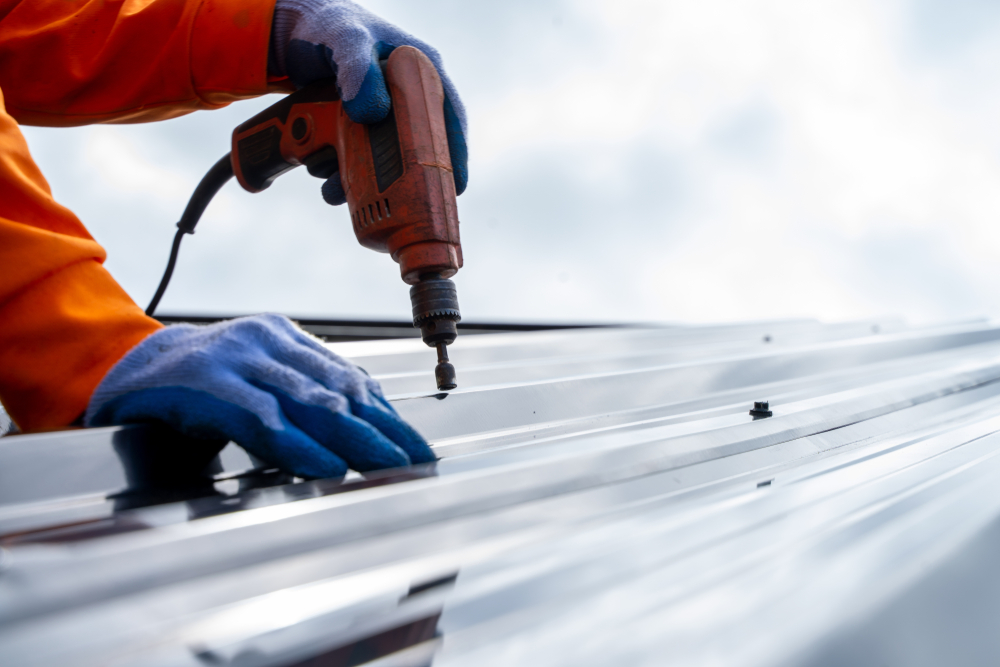
Living in a neighborhood governed by a Homeowner’s Association (HOA) is a reality for roughly one in five Americans. While HOAs are originally designed to preserve property values and manage common resources, they are not universally beloved. In fact, a YouGov poll highlights that only 14% of Americans actually prefer living in an HOA community, while 61% do not. Most residents appreciate basic regulations regarding noise and trash, but they often draw the line at excessive interference with personal property decisions like landscaping or structural renovations. This delicate balance was severely tested in a Florida community after a family’s home was battered by two consecutive hurricanes.
Faced with extensive structural damage, the homeowners took a practical, forward-thinking approach. Rather than simply replacing the old shingles with standard materials, they thoroughly researched durable, long-term roofing solutions. Their investigation led them to a clear choice: a metal roof.
The decision made perfect sense for a hurricane-prone environment. From a structural standpoint, modern metal roofing significantly reduces the risk of future weather damage and lowers ongoing maintenance requirements. Furthermore, it serves as a highly energy-efficient upgrade. Metal roofs facilitate passive solar collection and minimize thermal loss, keeping homes cooler during the sweltering Florida summers and retaining warmth during the winter. The couple’s choice was rooted in logical property protection and environmental consciousness—a responsible step for any homeowner looking to rebuild stronger after a natural disaster.
A $25,000 Fine for Two Months of Silence

Determined to do things by the book, the homeowners followed standard community protocol by submitting their architectural plans to the HOA for approval. Then, the waiting game began. Two full months passed without a single communication, clarification, or objection from the board. Faced with a vulnerable property and operating under the assumption that the extended silence indicated a lack of opposition, the family moved forward with the installation of their new roof.
It was only after the construction was completed that the HOA finally broke its silence, and it did so with aggressive punitive action. The board issued a staggering $25,000 fine against the family, accompanied by a mandate to tear down the newly installed roof and replace it entirely.
To justify this severe penalty, the HOA cited a neighborhood statute drafted in 1989 that explicitly prohibited metal roofing. From a historical perspective, such a ban was not unusual for its time. Thirty-five years ago, residential metal roofing largely consisted of corrugated tin panels that were prone to rust, lacked aesthetic appeal, and looked out of place in suburban subdivisions. However, enforcing this antiquated rule decades later ignored massive technological advancements in the construction industry, where modern architectural-grade metal roofs seamlessly mimic traditional styles while offering superior longevity.
Beyond the rigidity of the outdated rule, there appeared to be an ulterior financial motive driving the board’s heavy-handed response. According to the original Reddit poster, the community’s HOA was reportedly facing a severe cash shortage after replacing an expensive “Welcome” sign that had been destroyed in the recent hurricanes. To many observing the situation, the sudden $25,000 fine seemed less about preserving neighborhood aesthetics and more about exploiting a resident to swiftly replenish a depleted treasury.
The Eco-Friendly Loophole the HOA Couldn’t Close
Rather than capitulating to the board’s staggering demand or immediately engaging expensive legal counsel, the family fell back on their distinct strengths. The homeowner, a former Navy officer and experienced contract negotiator, was no stranger to parsing complex agreements or holding his ground under pressure. His professional background had instilled a meticulous approach to conflict, prompting the couple to thoroughly investigate the legal foundation of the HOA’s claim rather than accepting the fine at face value.
Their deep dive into property regulations and state statutes soon yielded a monumental discovery. While the HOA was relying on an insulated, decades-old neighborhood rule, the family uncovered a much broader legal mandate. Florida state law includes specific provisions designed to promote environmental sustainability, explicitly prohibiting homeowners’ associations from denying residents the right to install eco-friendly or energy-efficient property improvements.
Because modern metal roofing systems significantly reduce thermal loss and facilitate passive solar collection, they are legally recognized as energy-efficient upgrades. This classification was the family’s silver bullet. In the hierarchy of legal authority, state legislation definitively supersedes community bylaws. The 1989 rule against metal roofs was not just outdated; when applied to energy-efficient materials, it was rendered entirely unenforceable.
Accountability and the Board’s Ousting

At the disciplinary hearing, the mother executed the family’s strategy by presenting a composed, two-pronged defense. First, she addressed the procedural timeline: by ignoring the architectural request for two months, the HOA had failed to provide a timely denial. In many administrative frameworks, this delay constitutes a default approval.
Second, she presented the printed Florida statutes regarding energy-efficient home improvements. Because the metal roof legally qualified as an eco-friendly upgrade, the board’s enforcement of the 1989 bylaw directly violated state law. This rendered the $25,000 fine legally baseless.
With the fine invalidated, she shifted the focus to the board’s financial accountability. In front of the attending neighbors, she highlighted the HOA’s recent exorbitant spending on the new community welcome sign. She argued that the aggressive pursuit of a $25,000 penalty appeared to be an attempt to replenish treasury reserves depleted by the board’s own fiscal mismanagement.
This transparency immediately shifted the momentum of the meeting. Outraged by the financial mishandling and the attempt to illegally penalize a resident to cover the shortfall, the attending neighbors initiated a swift vote of no confidence. By the end of the evening, the entire sitting HOA board was ousted.
The Limits of HOA Authority
The resolution in this Florida neighborhood highlights a definitive boundary in community governance: an HOA’s power is not absolute. In the strict legal hierarchy, state laws supersede local covenants, conditions, and restrictions (CC&Rs). Associations cannot enforce neighborhood bylaws that conflict with state legislation, particularly modern mandates protecting a resident’s right to install energy-efficient or sustainable home improvements.
This outcome underscores the impact of legal literacy over blind compliance. The family successfully dismantled the $25,000 penalty not through expensive litigation, but by understanding state-level homeowner protections and exposing the board’s procedural failures. The strategy relied entirely on verifiable facts and documented timelines, proving that antiquated neighborhood rules hold no weight against established state law.
An HOA board operates as a body of elected volunteers meant to serve the collective interests of the neighborhood. When a board weaponizes outdated bylaws to compensate for fiscal mismanagement, the community retains the ultimate authority. The swift ousting of the sitting board demonstrates that informed, organized residents possess the leverage to halt local overreach and enforce immediate administrative accountability.