
Your cart is currently empty!
Iran Turns Karoline Leavitt Family Celebration Into Political Attack

White House press secretary Karoline Leavitt expected a wave of congratulations after announcing the birth of her second child. Instead, her family milestone became the center of a geopolitical clash that quickly spread across social media.
Contents
show
Within days of Leavitt posting photos of her newborn daughter, Iranian embassies used the moment to revive accusations surrounding the deadly Minab school strike that killed more than 150 people earlier this year. Their responses stunned many online because of how directly they linked Leavitt’s newborn celebration to the deaths of Iranian children.
Karoline Leavitt’s Birth Announcement Drew International Attention
Leavitt, 28, announced the birth of her daughter Viviana on X on May 7. Alongside a photo of herself holding the baby in a hospital nursery, she described the family’s excitement after welcoming their newest addition.
“On May 1st, Viviana aka ‘Vivi’ joined our family, and our hearts instantly exploded with love,” she wrote.
“She is perfect and healthy, and her big brother is joyfully adjusting to life with his new baby sister. We are enjoying every moment in our blissful newborn bubble.”
Leavitt also thanked supporters who had prayed for her during pregnancy and added, “God is Good.”
The post initially appeared to be a routine personal update from one of the Trump administration’s most visible public figures. Supporters flooded the comments with congratulations, while conservative commentators praised the White House press secretary for balancing public office with motherhood.
That changed two days later.
Iranian Embassies Responded With Messages About The Minab Strike
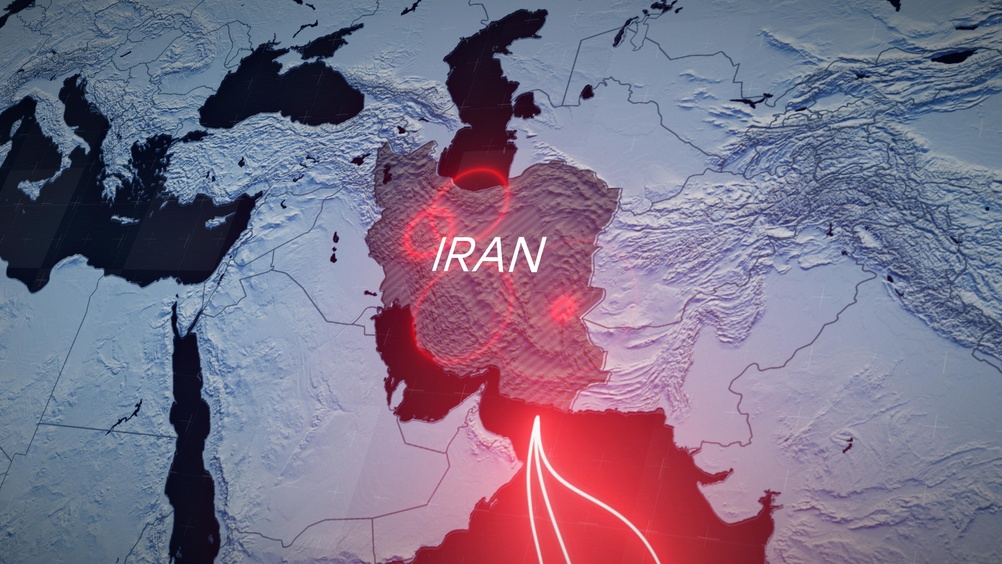
The Iranian embassy in Armenia reposted Leavitt’s message and attached a response that immediately went viral.
“Congratulations to you. Children are innocent and lovable,” the embassy wrote.
“Those 168 children that your boss killed in the school in Minab, and you justified, were also children.”
“When you kiss your baby, think of the mothers of those children.”
A separate Iranian diplomatic account in South Africa posted another sharply worded response.
“When your child grows up and reads history, she will be ashamed that you served one of the most hated governments in history,” the account wrote.
“Your hands are stained with the blood of many innocent children, like the children of Minab.”
The timing of the responses transformed what had been a personal announcement into a political flashpoint.
Screenshots of the exchanges spread rapidly across X, TikTok, Reddit, and Telegram channels connected to both Western and Middle Eastern political audiences. Some users condemned the embassies for bringing a newborn child into a geopolitical dispute. Others argued the posts reflected the anger still surrounding the Minab tragedy.
The controversy escalated because the Iranian responses directly targeted Leavitt’s previous comments defending the United States after the school strike.
What Happened In Minab?
The diplomatic clash traces back to the February 28 strike on Shajareh Tayyebeh Elementary School in Minab, a city in southern Iran.
Iranian state media reported that at least 156 people were killed when a missile struck the school during the opening phase of coordinated military operations involving the United States and Israel. Iranian outlets later claimed the death toll included 120 children.
Other reports placed the total number of children killed at 168.
According to Iranian broadcaster IRIB, the victims included:
- 73 boys
- 47 girls
- 26 teachers
- Seven parents
- A school bus driver
- A pharmacy technician working nearby
The strike reportedly happened during school hours on the first day of the Iranian school week.
Satellite imagery, expert analysis, and reporting from several international outlets suggested the missile may have been targeting an adjacent compound connected to Iran’s Islamic Revolutionary Guard Corps.
The New York Times later reported that preliminary findings from an internal Pentagon investigation suggested a US Tomahawk missile likely hit the school accidentally because of a targeting error.
That report intensified scrutiny around the incident because US officials had initially avoided directly acknowledging responsibility.
President Donald Trump first suggested Iran itself may have been behind the strike.
“Based on what I’ve seen, that was done by Iran,” Trump said during remarks in March.
The claim drew criticism because Iran does not possess Tomahawk cruise missiles.
Days later, Trump appeared less certain when questioned again.
“I don’t know about it,” he told reporters when asked about reports linking the strike to American forces.
The Pentagon has continued describing the incident as under investigation.
Leavitt Previously Defended The US Position
The Iranian embassy responses specifically referenced comments Leavitt made during a White House press briefing in March.
At the time, reporters questioned her about allegations that US forces had struck the Minab school.
Leavitt strongly denied accusations that the United States intentionally targeted civilians.
“The Department of War is investigating this matter,” she said.
“And I would just tell you very strongly the United States of America does not target civilians, unlike the rogue Iranian regime that targets civilians, that kills children, that has killed thousands of their own people in the past several weeks and uses propaganda quite effectively.”
She also accused members of the media of amplifying Iranian narratives.
“Unfortunately, many people in this room have fallen for that propaganda,” she added.
Defense Secretary Pete Hegseth made similar remarks during a Pentagon briefing.
“We, of course, never target civilian targets,” Hegseth said. “But we’re taking a look and investigating that.”
Those statements became central to the backlash directed at Leavitt after the birth announcement.
Iranian diplomatic accounts framed her earlier defense of the administration as justification for civilian deaths. Their responses attempted to connect her personal happiness as a mother to the grief experienced by families in Minab.
That emotional contrast was deliberate.
Political messaging involving children and civilian casualties often becomes especially powerful online because it bypasses technical military debates and focuses instead on human loss.
The Online Reaction Became Deeply Divided

The responses from the Iranian embassies triggered fierce debate across social media platforms.
Conservative commentators accused Iranian officials of exploiting the birth of a child for propaganda purposes. Several Trump allies described the posts as “disgusting” and “inhumane.”
Others argued that governments involved in military operations cannot separate political accountability from personal public messaging.
The discussion quickly split into several competing arguments:
- Critics of Iran said diplomatic accounts crossed a moral line by targeting a mother days after childbirth.
- Critics of the Trump administration argued the Minab strike deserved greater scrutiny regardless of timing.
- Some observers questioned why the Pentagon investigation had produced so little public information months after the attack.
- Others pointed to the broader information war between Washington and Tehran, where every public statement becomes part of a larger propaganda battle.
The exchanges also highlighted how social media has changed modern diplomacy.
Years ago, a dispute like this would likely have unfolded through official statements or press conferences. Instead, embassy accounts now engage directly with public figures in real time, often using emotionally charged language designed for viral circulation.
The Iranian responses were not written like traditional diplomatic communications. They were crafted to maximize emotional impact online.
That strategy worked.
Within hours, screenshots of the posts had spread across international media outlets and political commentary channels.
The Minab Strike Remains Surrounded By Questions
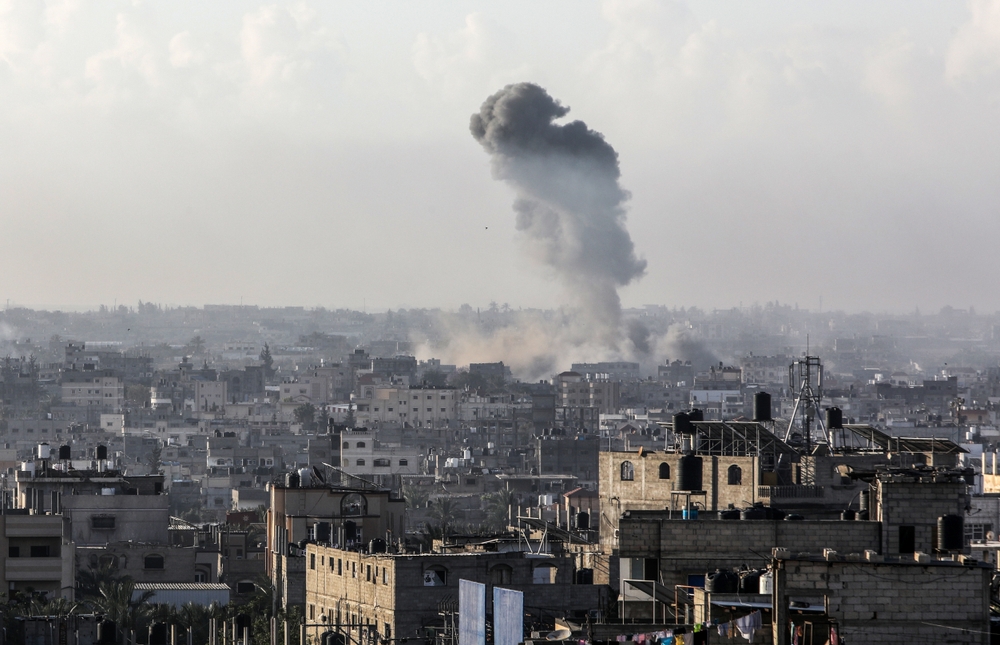
The controversy surrounding Leavitt’s post reignited debate about what exactly happened in Minab.
Despite months of reporting, several major questions remain unresolved.
Iranian officials have consistently blamed the United States and Israel for the strike.
US officials, meanwhile, have not formally accepted responsibility.
While reporting from American media outlets cited preliminary Pentagon findings pointing toward a targeting error involving a US missile, the administration has avoided publicly confirming those conclusions.
That gap has created room for competing narratives to flourish online.
Iranian state media describes the incident as evidence of deliberate aggression against civilians.
US officials continue framing the strike as an unresolved matter under review.
Trump himself appeared to shift positions multiple times after the incident.
At one point he suggested Iran may have carried out the strike. Later, he said he had not seen the evidence being referenced by reporters.
The reported civilian death toll drew condemnation from international human rights organizations and legal experts.
Former US military lawyer Lt. Col. Rachel VanLandingham criticized the administration’s handling of the incident in comments reported by international media.
“The current US stance strikingly departs from the standard response,” she said.
VanLandingham argued previous administrations had shown a greater commitment to publicly addressing incidents involving civilian casualties.
Human rights advocates have also called for the Pentagon to release additional details about the investigation, including whether outdated targeting coordinates or intelligence failures contributed to the strike.
The administration has so far released little public information beyond confirming an ongoing review.
Karoline Leavitt Has Become One Of Trump’s Most Visible Defenders
The controversy also reflects Leavitt’s growing role inside Trump’s political operation.
As the youngest White House press secretary in history, she has become one of the administration’s most aggressive public communicators.
Leavitt frequently uses combative language during press briefings and on social media, particularly when discussing foreign policy or media criticism.
Her exchanges with reporters often go viral, especially when she accuses journalists of spreading misinformation or pushing narratives favorable to US adversaries.
That visibility has made her an appealing target for foreign governments seeking to challenge the administration publicly.
The Iranian embassy responses did not target Trump directly. Instead, they focused on one of his most visible defenders during a deeply personal moment.
That choice carried symbolic value.
Leavitt’s public image has often blended her political role with her personal life. She regularly posts family photos and discusses motherhood alongside political messaging.
Critics and supporters alike have viewed her family-oriented image as part of her broader political appeal to conservative audiences.
The embassy posts attempted to weaponize that same image against her.
Social Media Has Changed How Governments Fight Information Wars

The dispute surrounding Leavitt’s baby announcement is part of a broader shift in how governments communicate during international conflicts.
Embassy accounts once operated with carefully restrained language focused on official diplomacy. Today, many governments use social media in ways that resemble political campaign tactics.
Iran, Russia, Israel, Ukraine, China, and Western governments all increasingly rely on viral messaging strategies during geopolitical disputes.
These campaigns often focus on emotional imagery and highly personal narratives because those messages travel faster online than technical policy discussions.
The Iranian embassy posts followed that pattern closely.
Rather than debating military evidence or legal standards, the responses centered on motherhood, grief, and children.
That framing turned a military controversy into a deeply emotional story capable of reaching audiences far beyond foreign policy circles.
The strategy also reflects how modern political communication increasingly blurs the line between public office and personal identity.
Public figures who share family milestones online often discover that opponents can transform those same moments into political battlegrounds.
Leavitt’s post was intended as a celebration. Within days, it became part of an international information war.
The Political Fallout May Continue
The controversy arrives at a sensitive moment for the Trump administration’s foreign policy messaging.
Questions surrounding civilian casualties have already generated criticism from international observers during the escalating conflict involving Iran and Israel.
The Minab strike remains one of the deadliest reported incidents involving children since the conflict intensified earlier this year.
As long as the Pentagon investigation remains unresolved publicly, the incident is likely to continue resurfacing in political debates.
Leavitt has not publicly responded to the Iranian embassy posts.
The White House has also not issued a formal statement addressing the controversy.
Still, the exchange illustrates how quickly deeply personal moments can become entangled in global political disputes.
A post announcing the birth of a child became a vehicle for accusations about war, civilian deaths, and political accountability. That transformation happened in less than 48 hours.
For supporters of Leavitt, the embassy responses crossed a line by targeting a new mother during a family milestone.
For critics of the administration, the responses reflected unresolved anger surrounding the deaths in Minab.
The result was one of the most emotionally charged diplomatic confrontations to emerge online this year.
And it unfolded entirely in public, one social media post at a time.