
Your cart is currently empty!
How a Baltimore Hairdresser Uncovered the Secret Behind Ancient Roman Hairstyles
Ancient Roman women wore elaborate hairstyles that seemed almost impossible to hold together without modern styling products or dozens of hairpins. For years, the intricate braids and towering arrangements depicted on Roman sculptures left researchers with questions about how these impressive styles were actually constructed.
Contents
show
The answer came from an unexpected source: Janet Stephens, a professional hairdresser from Baltimore who began investigating the mystery after visiting a museum. Without a formal archaeology degree, she spent years studying ancient texts and recreating historical hairstyles before discovering that a simple needle and thread might explain what scholars had overlooked.
A Museum Visit That Changed Everything
Stephens’s interest in ancient hairstyling grew after a visit to the Walters Art Museum in Baltimore in 2001. While examining a collection of Roman portrait busts, she noticed something unusual about the elaborate hairstyles carved into the sculptures, particularly the apparent absence of pins or other visible supports.
The busts were displayed in a way that allowed visitors to walk around them and examine their details from different angles. This arrangement helped Stephens study the hairstyles from behind, revealing details that might have been difficult to appreciate if the sculptures had been displayed against a wall.
What she saw prompted a practical question that would occupy her for years. How had Roman women managed to keep such complicated hairstyles in place when the sculptures offered few visible clues about how the hair was secured?
Stephens had spent years working professionally with real hair, so she understood the challenges involved in building and maintaining elaborate styles. Her experience made her question whether the prevailing explanations adequately accounted for the physical demands of the hairstyles shown in Roman art.
Rather than accepting the existing assumptions, she began experimenting with the techniques herself. The project eventually took her beyond the salon and into historical research, where she found a possible clue hidden in an obscure Latin word.
Why Ancient Roman Hairstyles Were So Complicated
Hairstyles in ancient Rome could involve elaborate arrangements of braids, curls, and carefully positioned sections of hair. Some styles featured multiple braids wrapped around the head, while others incorporated rows of curls or intricate woven structures that created impressive shapes.
These hairstyles were particularly associated with Roman women’s fashion during periods when elaborate arrangements became prominent. Portrait busts preserved examples of these styles, allowing modern researchers to examine how women presented themselves through their appearance.
Creating such arrangements required more than simply brushing the hair into place. The person styling it needed to understand how different sections could be positioned, supported, and secured without causing the entire structure to collapse.
Why Ordinary Hairpins Presented a Problem
Single-pronged hairpins, sometimes described as bodkins, were among the tools available to ancient Roman hairdressers. However, Stephens struggled to understand how these objects alone could hold together some of the more elaborate hairstyles represented in the sculptures.
A single pin might secure a small section of hair, but complicated arrangements created different structural challenges. Thick braids and multiple layers needed to remain connected, while rows of curls could be difficult to support using a limited number of individual pins.
The hairstyles themselves suggested that Roman hairdressers had developed methods that worked with the natural properties of hair. Stephens suspected that the answer involved a technique that could join separate sections together rather than merely pushing a pin through them.
Her first attempts to recreate the hairstyles were unsuccessful, even though she had access to modern styling tools. This failure encouraged her to investigate how the styles might have been produced using only materials available in the ancient world.
An Obscure Latin Word Offered a New Explanation
Stephens began researching academic articles about Roman fashion and beauty, alongside surviving Latin texts that discussed hair and personal appearance. She did not have specialist training in classical languages, so deciphering the historical material presented a significant challenge.
She worked through the texts with the help of Google Translate and continued comparing written descriptions with the physical details visible on the sculptures. After years of investigation, she identified a potentially important clue in the Latin term acus.
The word had several possible meanings, including a single-pronged hairpin and a needle used with thread. In discussions of ancient hairstyling, scholars had traditionally interpreted the term as referring to a hairpin, an understandable reading given that such implements were known in the Roman world.
Stephens considered another possibility, however. If acus referred to a needle and thread in the relevant context, ancient writers might have been describing a method of sewing hairstyles into place rather than simply securing them with pins.
This interpretation offered a possible solution to the problem she had encountered during her practical experiments. Sewing separate braids together could create a stable structure without requiring every section to be held independently by a hairpin.
Why Testing the Translation Was Essential
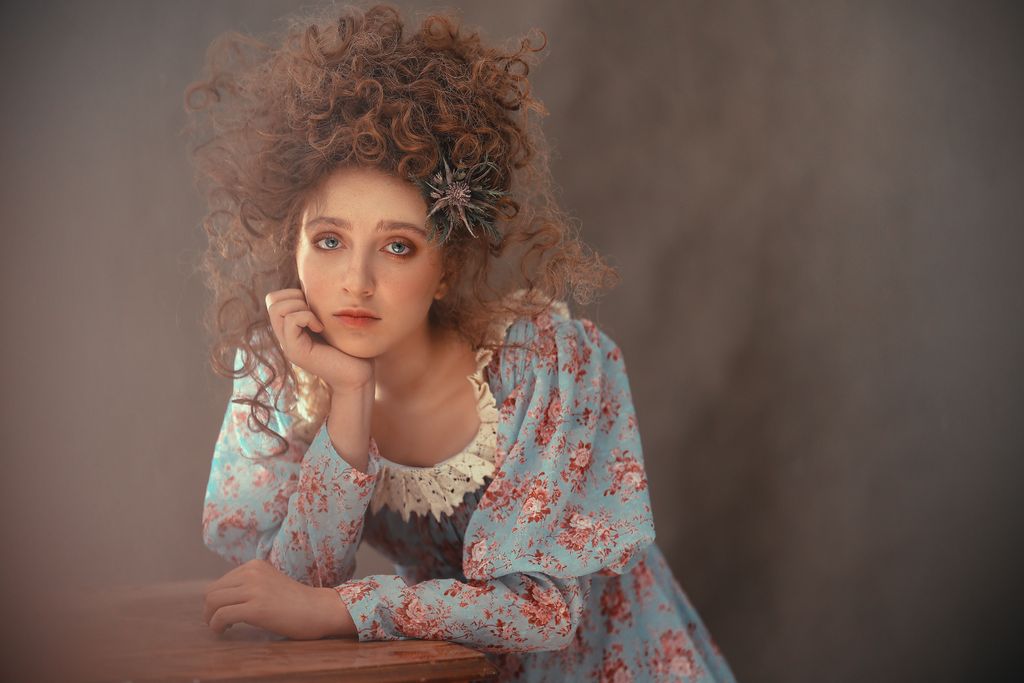
The alternative interpretation needed to work in practice before it could offer a convincing explanation for the hairstyles. Stephens therefore returned to her mannequins and began experimenting with needle and thread to determine whether the method could reproduce the structures shown in Roman art.
Her approach combined two forms of investigation. Historical texts offered clues about the tools and techniques available to Roman hairdressers, while practical experiments tested whether those techniques could achieve the desired results.
The distinction was important because a possible translation alone could not establish exactly how ancient women arranged their hair. By attempting to recreate the styles, Stephens could examine whether the proposed technique was physically workable.
Her experiments eventually produced results that supported the idea of sewing braids together. The technique provided a plausible explanation for how elaborate hairstyles could remain secure using simple equipment.
How Sewing Hair Recreated the Elaborate Styles
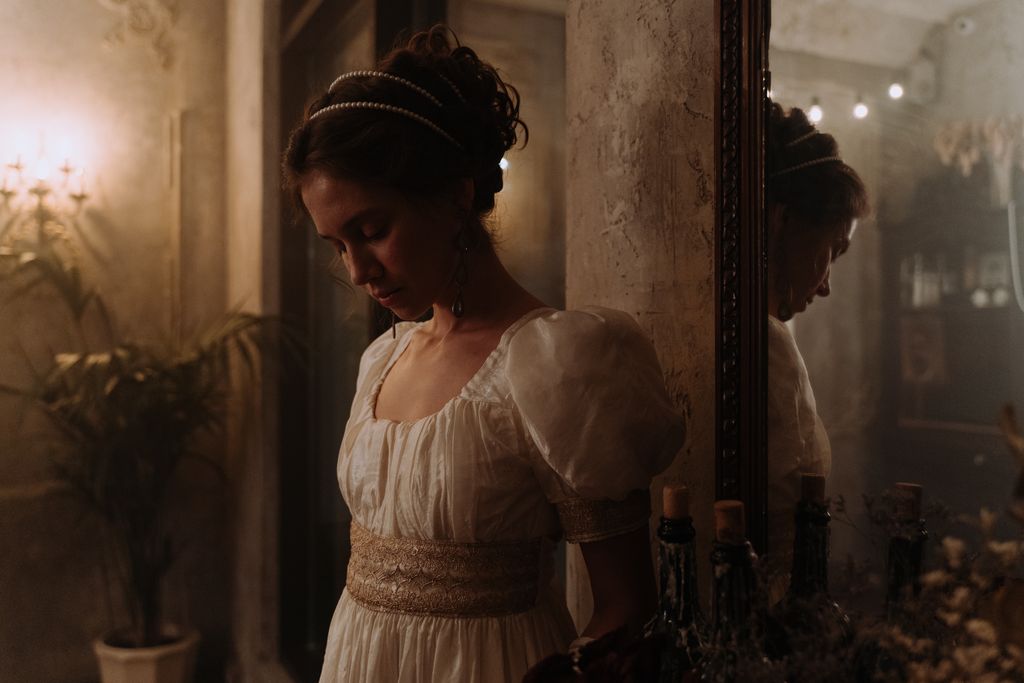
Stephens discovered that running a needle and thread through sections of braided hair could hold them together firmly. Rather than relying entirely on pins inserted into individual sections, the method connected the braids and helped preserve the overall arrangement.
The process also offered an explanation for the lack of obvious securing devices in some Roman sculptures. If the hair had been sewn together, the thread would have been less conspicuous than a collection of larger pins supporting the finished style.
Stephens used water to help manage the hair during her experiments, demonstrating that elaborate arrangements could be constructed without relying on modern hairspray. Wealthier Romans were also known to use pomade, although the precise products used for any particular hairstyle could vary.
In a 2008 study published in the Journal of Roman Archaeology, Stephens described the reasoning behind her approach. She wrote, “Using needle-and-thread to arrange female hairstyles answers the question of how they were constructed with readily available equipment.”
She also explained that the method could reproduce the complex hairstyles shown on portrait busts using real hair, without requiring expensive artificial hairpieces. Her findings gave researchers a practical alternative to explanations that depended heavily on wigs.
What Made the Technique Effective?
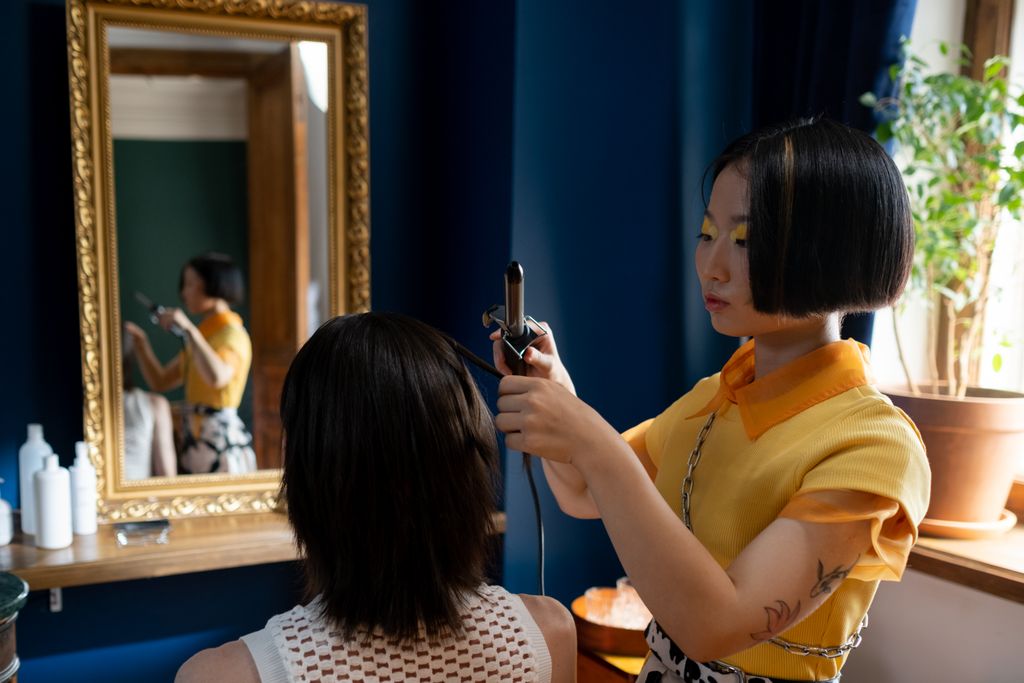
Sewing offered several potential advantages for anyone attempting to create complicated hairstyles using ancient tools and materials. The technique connected separate sections of hair and helped maintain their positions within the finished arrangement.
- Greater stability: Sewing braided sections together helped prevent the arrangement from falling apart during the reconstruction experiments.
- Simple equipment: A needle and thread provided a practical alternative to relying exclusively on individual hairpins.
- Natural hair: The technique demonstrated that real hair could be arranged into elaborate structures without necessarily requiring artificial additions.
- Careful construction: Connecting sections together allowed the stylist to build a hairstyle progressively rather than depending on a single support point.
- Long-lasting arrangements: Stephens found that the sewn styles held their shape during testing, although their precise durability in everyday ancient life remains uncertain.
The experiments did not establish that every Roman woman used the same method. They did, however, demonstrate that sewing was a workable explanation for hairstyles that had previously presented practical difficulties.
What Roman Hairstyles Revealed About Wealth and Status
The elaborate hairstyles depicted on Roman busts were more than examples of personal grooming. They also reflected the social importance of appearance in a culture where clothing, jewellery, and carefully arranged hair could communicate a person’s position.
Wealthy women could devote considerable time and resources to maintaining fashionable hairstyles. Creating complicated arrangements often required assistance, making the finished appearance an indication that the wearer had access to another person’s labour and expertise.
The ability to maintain an elaborate style could therefore communicate something about the household behind it. A carefully constructed hairstyle demonstrated not only an interest in fashion but also access to the time and assistance needed to achieve it.
The Skilled Workers Behind the Finished Look
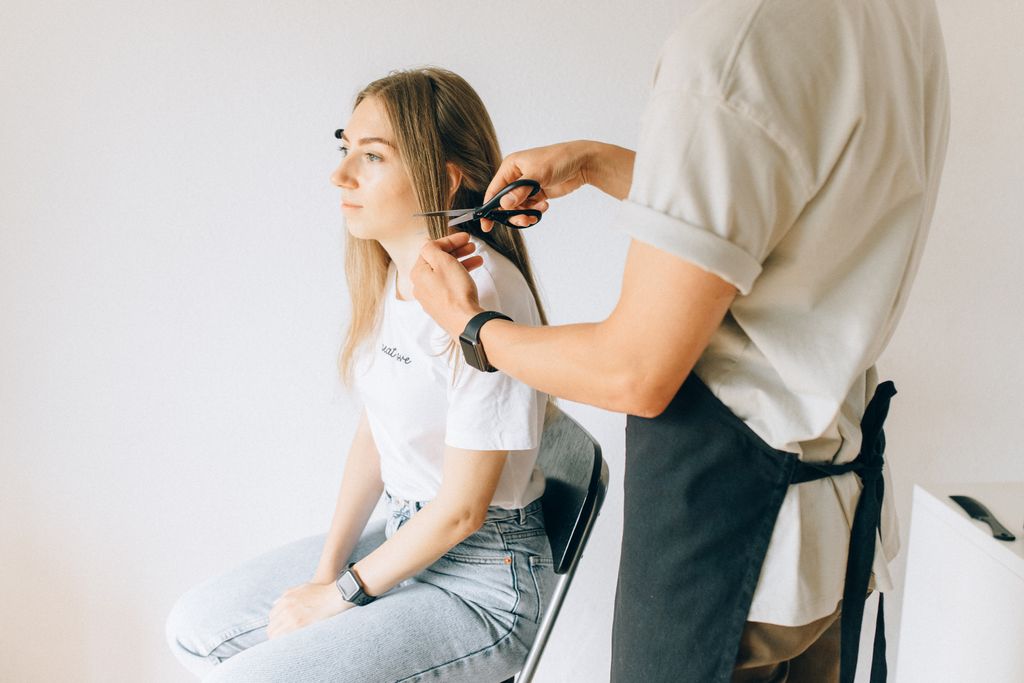
Roman hairdressers were known as ornatrices, and their work could require considerable technical skill. In wealthy households, these workers were often servants or enslaved people who were responsible for their mistresses’ appearance.
Despite the expertise involved, hairdressing was generally regarded as a low-status profession. The women who wore elaborate hairstyles could receive social recognition for their appearance, while the people who created those styles often occupied a much less privileged position.
This contrast adds another dimension to Stephens’s research. Understanding Roman hairstyles means examining the people who created them, the tools they used, and the social circumstances that made elaborate grooming possible.
The practical knowledge of hairdressers was essential to the process, even if their expertise was not always reflected in their social standing. Stephens’s work similarly demonstrates how knowledge developed through hands-on experience can contribute to historical research.
Janet Stephens Took Her Findings Beyond the Salon
Stephens’s investigation eventually reached an academic audience when her findings were published in the Journal of Roman Archaeology in 2008. The study documented her reconstruction experiments and presented sewing as a practical explanation for the construction of elaborate Roman hairstyles.
Her work continued to attract attention through demonstrations of historical hairdressing techniques. In 2012, her video “Julia Domna: forensic hairdressing” was presented at the Archaeological Institute of America.
In 2013, Stephens also became the first person to recreate the hairstyle associated with the Roman Vestal Virgins. These priestesses served the goddess Vesta, and their distinctive hairstyles provided another example of the complex grooming traditions associated with ancient Roman society.
Stephens’s online videos have allowed audiences to watch historical hairstyles being reconstructed rather than simply viewing the finished results. The demonstrations show how research into ancient practices can involve experimentation with real materials and techniques.
Her work has helped bring attention to an area of history that might otherwise appear highly specialised. Hair is familiar to almost everyone, yet recreating hairstyles from ancient sculptures requires a combination of observation, technical skill, and careful interpretation.
Could Ancient Sewing Techniques Have Inspired Modern Hairpins?
Stephens has proposed that the loops formed by sewing hairstyles together may have influenced the development of U-shaped hairpins. These familiar tools are widely used in modern hairdressing to secure buns and other updos.
The suggestion offers an interesting possible connection between ancient hairstyling and techniques used in salons today. Both approaches aim to hold sections of hair in position while keeping the supporting mechanism relatively discreet.
However, the proposed historical connection remains a theory rather than a confirmed account of how modern U-shaped pins originated. Demonstrating that sewing worked for Roman hairstyles does not independently establish that the technique directly led to the invention of a particular modern tool.
The evidence supports a narrower conclusion: sewing could provide a practical way to construct some of the elaborate hairstyles depicted in Roman art. It also shows why historians benefit from testing possible explanations rather than relying entirely on assumptions about familiar objects.
Stephens’s work challenges the idea that wigs were necessary to achieve every elaborate Roman hairstyle. Although wigs and artificial hair were known in the ancient world, her experiments suggest that many fashionable styles could be produced using natural hair and simple tools.
Why Practical Experience Can Change Our Understanding of History
Stephens’s discovery began with an observation that might have seemed minor to someone unfamiliar with hairstyling. The Roman busts showed intricate arrangements, yet the visible evidence did not clearly explain how those arrangements were held together.
Her professional experience gave her a different way to investigate the problem. She understood the behaviour of real hair and knew that a convincing explanation had to account for the physical challenges involved in creating the styles.
Rather than dismissing the existing interpretation outright, she tested an alternative through repeated experiments. Her work brought together historical texts, archaeological objects, and practical knowledge to develop an explanation that could be examined and reproduced.
The case also demonstrates the limits of relying on any single source of evidence. Written descriptions can preserve important information, but their meaning may be ambiguous, while sculptures can reveal the appearance of a hairstyle without necessarily showing how it was constructed.
By combining these forms of evidence, researchers can develop a more detailed understanding of past techniques. Stephens’s investigation shows how a practical experiment can raise new questions about historical interpretations and offer explanations that deserve further examination.
For anyone studying the ancient world, the lesson is straightforward: the people who understand how something works may notice details that others overlook. A Baltimore hairdresser’s decision to question a familiar translation helped open a new way of understanding the ingenuity behind Roman hairstyling.