
Your cart is currently empty!
Knicks Parade Stunt Leads to Termination for JPMorgan Chase Executive
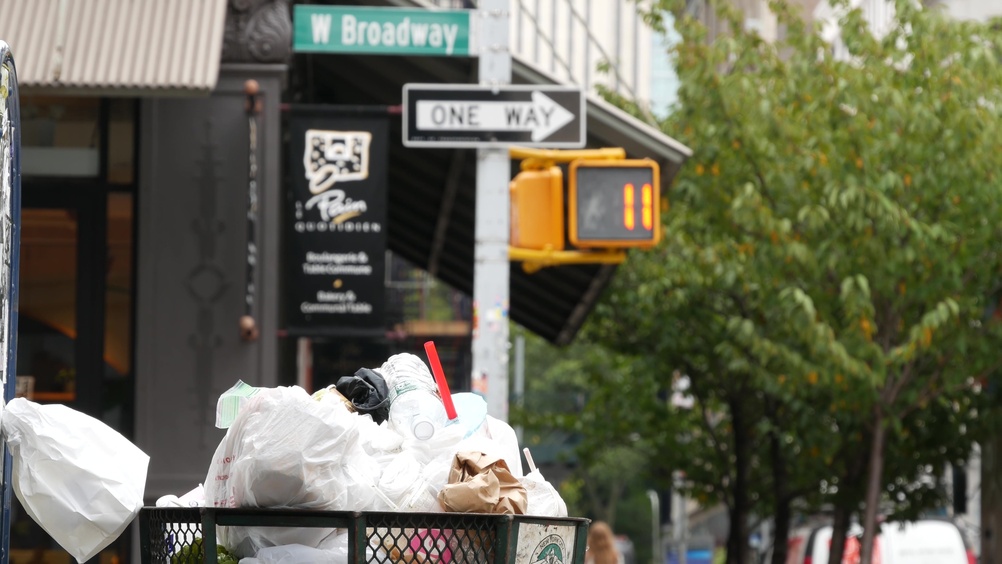
A championship parade is supposed to be about the winning team, but during the recent New York Knicks celebration, one fan’s bizarre choice completely stole the spotlight. A viral video captured a woman emptying a full city trash can directly onto the sidewalk before casually walking off with the empty bin as a souvenir.
Contents
show
In a crowded city, she might have thought she was just an anonymous face in the masses, but the internet moves fast. Within hours, online sleuths uncovered her identity, exposing a high-profile corporate career that was about to come to a very sudden halt.
A Bad Decision Goes Viral
Just like … Knicks Trash 🗑️ Bin Souvenir for your home 😂😂😂🗽🇵🇷 pic.twitter.com/NYPeBMeQyE
— World Latin Honey (@WorldLatinHoney) June 19, 2026
A championship parade is usually about celebrating a shared victory. But during the recent New York Knicks parade, one fan’s actions caught the public’s attention for entirely different reasons.
Amid the crowds in Manhattan, video footage captured a woman—later identified as 40-year-old Angie Báez—approaching a limited-edition, blue-and-orange city trash can. Instead of throwing something away, she tipped the receptacle over, emptying the garbage directly onto the sidewalk. She then walked away carrying the empty bin.
The situation didn’t end on the street. Additional videos soon surfaced showing Báez carrying the trash can onto the New York City subway system.
The incident was recorded and uploaded almost immediately. The clips spread rapidly across social media platforms, accumulating millions of views in a matter of hours. Soon after, online users crowdsourced her identity, turning a careless moment at a parade into a highly visible controversy.
Swift Professional Repercussions
The internet moves fast, and it did not take long for online sleuths to connect the viral videos to Báez’s professional life. Social media users located her LinkedIn profile, identifying her as an executive working in Diversity, Equity, and Inclusion for JPMorgan Chase.
The financial institution responded rapidly to the growing public outcry. A spokesperson for JPMorgan Chase confirmed to multiple news outlets that Báez was no longer employed by the firm following the incident. While companies often remain quiet on personnel matters, the bank made it clear that they expect employees to maintain high standards of conduct, whether they are on or off the clock.
The situation drew particular scrutiny because of Báez’s specific corporate role. As a DEI executive, her job centered on fostering community, respect, and corporate responsibility. The sharp contrast between her professional duties and her actions on a city sidewalk amplified the public criticism. It served as a harsh reminder that public behavior can have immediate and severe career consequences, regardless of a person’s corporate title.
Public Backlash

The backlash against Báez extended beyond her immediate employment status. For many New Yorkers and online observers, the incident touched a nerve regarding basic civic duty and respect for shared spaces.
A championship parade already requires a massive, coordinated cleanup effort from city sanitation departments. Intentionally dumping garbage onto a crowded sidewalk added an unnecessary burden to workers who were already managing the aftermath of a large-scale event. People expressing their frustration online frequently pointed out this specific disrespect toward the city’s essential workers.
The situation also sparked broader conversations about digital accountability. The speed at which social media users identified the woman in the video shows how public life has fundamentally changed. Anonymity in a large crowd is mostly a thing of the past. When individuals act disruptively in public spaces today, the internet often functions as an immediate neighborhood watch. This collective scrutiny brings actions to light and enforces consequences long before traditional authorities get involved.
The Reality of the Digital Footprint

The fallout from the Knicks parade highlights an unavoidable modern truth. A single poor decision can easily outlive the moment it happens. In previous decades, a momentary lapse in judgment in a massive crowd might have resulted in a minor citation or a brief reprimand from a police officer. Today, it creates a permanent digital record.
With smartphones acting as an ever-present network of cameras, public spaces offer zero privacy. When someone acts disruptively, bystanders are almost certainly recording the event. This footage rarely disappears. Instead, it gets archived, shared widely across multiple platforms, and forever tied to a person’s name in search engine results.
Human resources professionals consistently warn that employers routinely monitor the internet when evaluating current staff or potential hires. A viral video showing a lack of respect for community spaces quickly becomes a major professional liability. Overcoming this type of digital baggage requires more than just waiting for the news cycle to move on. Rebuilding professional credibility after a highly public mistake demands a clear, documented effort to regain trust and demonstrate genuine accountability.
Character in Plain Sight
Woman who emptied Knicks trashcan on street then stole it was DEI exec, worked at JPMorgan Chase https://t.co/rKAAbiZQHv pic.twitter.com/vog04JUwOE
— New York Post (@nypost) June 23, 2026
This situation is about more than just dealing with internet backlash or facing consequences at work. It brings up a very basic question: how do people treat the places they live? It is incredibly easy to get swept up in the energy of a massive celebration, but basic respect for the community should not disappear just because the crowd gets loud.
Cities rely on an unspoken rule that residents will pick up after themselves and treat shared spaces well. Tipping over a full trash bin leaves a frustrating mess for someone else to handle—often sanitation workers who are already pulling long hours to keep the streets clean during a major event. It turns public property into a personal joke, at the expense of everyone else trying to enjoy the day.
The ultimate lesson here is simple. Enjoy the big wins, celebrate loudly, and have fun. But remember that character is not just defined by a corporate title or a professional summary online. It is defined by how people treat the sidewalk, the subway car, and the neighborhood. Before acting on a sudden impulse for a quick laugh, take a second to think about the people who have to clean up the aftermath. Treating public spaces with the same care given to a personal home is the easiest, most practical way to show real respect for the community.